Of SAMR and SAMRitans – How the adoption of the SAMR model as a reference framework may be detrimental to foreign language learning

Of SAMR and SAMRitans – How the adoption of the SAMR model as a reference framework may be detrimental to foreign language learning
images (3)

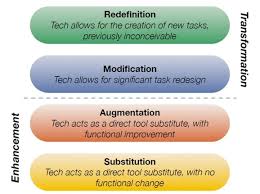
I was about to write an article about the SAMR model when I stumbled into a blogpost that encapsulated most of what I meant to say – http://ictevangelist.com/samr-is-not-a-ladder-purposeful-use-of-tech/. What the article points out is that far too often Puentedura’s model is used as a ladder, with Redefinition as the level of student engagement with technology we should aspire to in lessons. The most crucial point the author makes is that App Smashing every day in order to hit the Redefinition level can be a waste of valuable learning time. Another great point is that technology is only as good as the person who uses it; technology will not make you a more effective teacher.

In this article I will discuss, why, in the light of what we know about language acquisition and of my first-hand experience of the SAMRization of language learning on L2 proficiency, we should definitely not use the SAMR model as a framework to guide our teaching.

Issue n. 1: The kind of activities that the SAMR model implicitly advocates are detrimental to the development of speaking skills unless we are working at high levels of language proficiency

The kind of learning activities Professor Puentedura and other SAMR model supporters advocate put a lot of emphasis on the production of a digital artifact (a video, recording, game, etc.). None of such activities is conducive to the enhancement of oral fluency (not even speech recording), unless we are working with fluent L2 speakers who can conduct collaborative group-work in the target language. The same applies to aural skills, as listening skill practice can only receive a marginal focus in the kind of class-work envisaged by the model. Finally, lots of emphasis seems to be placed on writing, a skill that, in order to optimize the use of classroom time, should be preferably practised at home.

I have experienced first-hand how badly excessive focus on high-tech digital artifacts can damage learning whilst teaching students who had spent hours and hours, week in week out on iPad or computer work on ‘projects’ (e.g. making an iMovies about a theme) in the past: not much vocabulary learnt, poor pronunciation and oral fluency, over-reliance on google translator to generate language and, most importantly, low self-efficacy as learners. But, beautifully-looking and highly complex digital artefacts produced, indicators that ‘redefinition’ happened.

Issue n. 2: Divided attention

In terms of surrender value and learning gains, unless the students have automatized the use of the digital devices/media they are using and there are absolutely no technical glitches in the process, the learners, especially at the higher levels of the SAMR model hierarchy, ‘waste’ way too much time on handling the digital media (editing, choosing the right theme, background, photo, app smashing, uploading videos,ect.). I use the verb ‘waste’ because in a typical secondary school a class would get two hours – maybe three? – of teacher contact time per week. In such contexts every minute counts. Hence, unless course administrators double the time allocation for MFL teaching, the time lost in dealing with the technology, especially at Redefinition level, is not justified by the learning gains – which, in an MFL learning context MUST be measured in terms of language proficiency and not of enhanced ICT dexterity.

Moreover, from a Cognitive point of view, one shouldn’t discount the negative effects on learning of divided attention caused by the simultaneous focus of the learner’s Working Memory on the content s/he is generating and on the digital medium. I have often heard complaints from students that they spent so much time on the product looking as good as possible that the language became but a peripheral concern.

Issue n. 3:  The non-ladder ladder

In the SAMR model, Redefinition happens when, in Puentedura’s words “Computer technology allows for new tasks that were previously inconceivable”. As already mentioned above, although some supporters of the SAMR model warn that the model is not a ladder, it does look like a hierarchy with a clear progression, in which Redefinition features as an aspirational goal. This may have negative implications for learning when the teacher – as I have seen on several occasions – does not focus on the progression that sound language teaching and learning requires, but aims for the top level of the SAMR model ladder in order to tap into the learners’ digital creativity. At lower levels of proficiency, this can equate to jumping to unstructured output production way too soon, when the learners are not developmentally ready and would benefit from more exposure to aural/written comprehensible input and more structured practice in the productive skills. In my experience, this is quite common in ‘techy’ MFL classrooms.

Issue n. 4 : Affective issues

The SAMR model states that at modification level “Common classroom tasks are being accomplished through the use of computer technology’. I know that the model is meant only as a heuristic and not as a pedagogic manifesto. However, it does seem to incite teachers to replace more traditional non-technological tools with digital devices. Whereas I have personally no problems with that, having myself created a whole language learning website (www.language-gym.com), I know that a fair amount of learners do have an issue with that. As a very good friend of mine has found out in the course of her Master’s degree research, a substantial number of students do not enjoy executing certain tasks using iPads or other digital devices all of the time.

As long as this model is used for what it should be, as a heuristic, a framework to gauge at what level of student engagement through technology a teacher is working, there is no harm done. But when course administrators or teachers misuse the SAMR model to advocate totally doing away with non-digital approaches to learning one has to worry, unless there is absolute evidence that every single stake-holder is on board.

Issue n. 5: No research evidence to support any claim that redefinition enhances language acquisition

The implementation of any new instructional approach should be based on credible research which demonstrates that it has a significantly higher potential to affect language acquisition than the methodology it is intended to replace. There is absolutely no solid and credible evidence that any integrated approach to foreign language learning corresponding to Puentedura’s Redefinition actually enhances language acquisition.

Issue n. 6: And how about things that cannot be replaced?

One ethical issue was already hinted at, above. What if students and/or parents do not want for technology to COMPLETELY replace traditional tools? Although I personally prefer writing on a computer or iPad, and I use iPads in every single lesson of mine, there are indeed several students I know who would prefer sticking to using a pen when taking notes or writing an essay and prefer worksheets to revise to digitally stored notes. How about personalized learning, then? If we advocate it, should we not have to heed this aspect of individual learner preference?

Issue n. 7: Metaphors we live by

Every single one of us lives by metaphors, behavioural templates that we assimilate from our caregivers, siblings, media and our entourage, including teachers. If we are developing lifelong learners, ICT skills must be learnt and dexterity and creativity with technology developed. However, lifelong learning skills in the realm of language learning relate more to human-to-human communication (whether by chatting face to face, on social medias, Skype or Watsapp), negotiation of meaning and the acquisition of life-long language learning strategies. The learning behavioural templates that constantly working at the Redefinition level models are dangerously conducive to overly technology-reliant life-long language learners. I accept that this may not necessarily seem a bad thing to some, as maybe that is what society is headed for: a totally digitally-assisted existence where we delegate the execution of an important part of our cognitive, motor and sensorial skills to electronic devices.

In conclusion, the SAMR model is for me of no great utility as a reference framework for teaching. It is just a taxonomy to describe the extent to which technology is integrated in lessons. It should categorically not be used to guide progression in any foreign language teaching classroom if our aim is to enhance our student’s balanced progression along the L2 proficiency continuum. In addition, it surely should not be used as a reference framework to impose a value judgement on MFL lessons unless there is credible evidence that redefinition enhances language learning. Thirdly, there is no credible research evidence that learning that occurs at the Redefinition level of the SAMR taxonomy actually enhances L2 acquisition. A model for the effective integration of MFL digital technology at the Redefinition level should be created and tested through rigorous research.

Finally, my belief is that technology can be a great learning enhancer if used by effective teachers who can inspire and motivate their students and understand the true nature of learning. It should not be a ‘crutch’ for lack of classroom presence and/or creativity and should serve not dominate what in my view should be the end-goal of our teaching: an all-round reflective and autonomous language learner who masters all four language skills effectively, is able to empathize with target language speakers and whose digital literacy allow him/her to function effectively in the work-place and society at large.

How lexis is stored and organized in our brains and implications for the MFL classroom

During my MA TEFL at Reading University, nearly 20 years ago, I stumbled into a book called ‘Words in the mind’ by  Aitchison’ (1986; but latest edition: 2012). That book changed the way I teach vocabulary forever because understanding the way our brain stores, organizes and forgets the words we learn meant being able to come up with strategies to speed up and consolidate lexical learning. In this article, I intend to share some of the knowledge I acquired from that book and through many other subsequent readings (e.g. McCarthy, 1990, Eysenck,2000; Nation, 2001; Macaro, 2007) and how it can enhance L2 vocabulary acquisition. Although I intend to discuss the implications for the classroom, I will do so very concisely, reserving to elaborate on them in a future article, for reasons of space. Before discussing how vocabulary is organized in Long-term memory (LTM) one need to understand a few important facts about it.

1.Long-term memory (LTM) and Spread of Activation

As you may know, once information is learnt, it is stored in LTM, a vast neural network connecting every single piece of information we have acquired in our lives. Thus, in actual fact, our LTM makes us what we are as it contains all our emotional and sensorial experiences, every cognitive and motor skill we have learnt and, basically, all we know about the world, including lexis and grammar rules.

The LTM ‘space’ where we store lexical items is referred to as ‘Mental lexicon’. Contrary to what scientist believed in the past, any information that makes it to LTM, is stored there permanently, and forgetting does not occur due to decay of the memory trace (see below).

When we need to translate a given ‘thought’ (or ‘proposition’, as psycholinguists call it) into words, the brain fires electrical impulses which travel at very high speed through LTM’s neural pathways in search of the words that match that thought. During this process, every single word associated with that thought receives activation.

2.1 How first language words are organized in our brain

When a lexical item is stored in LTM, the brain does not place it in just any random place along our neural networks. Insight form research on the slip-of-the-tongue phenomenon and aphasia indicates that the neural connections between the lexical items in our mental lexicon are determined by specific associative mechanisms which involve the physical aspect of a word as well as the metalinguistic, semantic, sociolinguistic and emotional domain.

2.2 Physical associations

Words are associated at the ‘physical level’ based on their spelling (graphemic level) and sound (phonological representation). Thus, words that look and sound similar (alliterate, rhyme and chime with each other) are more likely to be very strongly associated. Consequently, when our brain (our Working Memory) attempts to retrieve the word ‘dog’ from LTM, for example, and activation spreads in order to ‘fetch’ it, all the monosyllabic  words starting with ‘d’ and ending in ‘g’ will receive strong activation (e.g. Doug, dig, door, etc.). Interestingly, even the anagram of ‘dog’, ‘god’ will be highly activated.

This phenomenon explain slip-of-the-tongue errors, which are basically ‘computing mistakes’ often due to processing inefficiency, whereby instead of retrieving the word we need, we retrieve a ‘near homophone’. That’s why alliterations, rhymes, para-rhymes and other phonetic devices used by prose writers and poets are so effective in reinforcing the impact of two words in their texts which are already related in terms of meaning and thereby receive greater emphasis by their phonological connection.

2.3 Semantic Association (Field theory)

Words are very strongly linked to each other, based on their meaning (Field theory). Synonyms and other words that refer to items frequently associated in real life will also receive strong activation during the retrieval process. Going back to the ‘dog’ example, words like ‘pet, ‘bone, ‘puppy, ‘tail’ and ‘bite’, amongst others, will be activated during the retrieval process, each receiving more or less activation in our brain depending on: (1) how often I will have processed (receptively or productively) those words in conjunction with the word ‘dog’ in the past; (2) how frequently, in my personal life, the items those words refer to, are associated with the notion of ‘dog’.

Semantic associations will also be affected by the connotative meaning that a specific culture of sub-culture attaches to it. Thus, whereas the word ‘fox’ is associate both in Italian and English with the notion of ‘shrewdness ‘ and consequently to the related nouns and adjectives, the word ‘chicken’ will be related to cowardice in English but to gullibility in Italian.

2.4 Linguistic context

This point sort of relates to the previous one but deserves separate treatment because it specifically refers to the linguistic contexts in which two or three given words are used in a specific language and which may differ across languages. So for instance, the word ‘dog’ will bring about different associations to an English native speaker’s brain compared to, say, an Italian native speaker’s by virtue of the linguistic context they are found in a number of set phrases/idioms. An English person will associate ‘dog’ with the phrase ‘a dog’s life’ or ‘to work like a dog’ for example; an Italian, on the other hand will associate it with the idiom ‘solo come un cane’ (‘as lonely as a dog’) or ‘fa un freddo cane’ (‘it’s freezing’ or literally: ‘it’s dog cold’).

2.5 Word-class

Words are also organized by word-class, adjectives with adjectives, nouns with nouns, etc.

2.6 Emotional and sensorial connections

Every lexical item is also strongly associated to personal experiences and memories stored in our Episodic Memory. So if we had a very traumatic experience in our life which involves a dog (being bitten or scared by one when we were small, for example) ‘dog’ will evoke strong negative emotions and words describing objects, people or feelings related to that traumatic experience will receive strong activation.

Words will also be associated with sensorial perceptions (taste, smell, images, etc.)  based on one’s life experiences.

3. The foreign language mental lexicon

In a fluent foreign language learner with a sizeable vocabulary repertoire, the way words are stored in their L2 mental lexicon will be pretty much the same, except that there is another very important association, the one between an L2 word and its L1 (and L3,L4, etc.) translation(s). So the word ‘dog’ in the brain of a speaker of Italian, French and German will be connected with the words ‘chien’ , ‘cane’, hund, etc.  Consequently, when spread of activation occurs in search for the word ‘dog’ in one language, say ‘French’, all the words in the other languages will be activated too (Parallel activation theory); all languages one speaks will be activated simultaneously with different levels of activation, with the language in use being the most activated, and the weaker language(s) being the least activated. This explains the phenomenon whereby some learners when experiencing cognitive-processing issues in the target language, will retrieve an L1 word instead of its target language equivalent.

When the foreign language learner is not fluent, there will be fewer L2-to-L2 word connections as the mental lexicon will be smaller and many of the other connections that we discussed above might not be formed as yet – since the learner might have not internalized the word-class of all the words they acquired and/or their meaning might be fuzzy. This means that when spread of activation occurs, fewer linguistic items will be activated.

The fact that in a less fluent learner with a relatively small vocabulary repertoire there are fewer and weaker connections of the kind outlined above and therefore fewer neural pathways, majorly affects recall in that the more connections we have, the more likely we are to retrieve any word we need successfully and with little cost on Working Memory efficiency. Why? Because the successful retrieval of a word depends on two factors; (a) the strength of the memory trace, that is how often we have processed that word and (b) the use of an effective cue which helps Working Memory find that information in the brain; the more the connections a word has with other information stored in LTM the greater the chances of its successful recall will be.

4. How forgetting happens

In order to better understand the implications for teaching and learning one needs to be familiar with the notion of ‘Cue-dependent forgetting’.

4.1 Cue-dependent forgetting

The reason why we often fail to retrieve a word that we learnt is usually due less to a weakening of the memory trace than to failure to find that word. The factors that determine such failure refer to the context in which that word was encoded (‘learnt’) as that very context  provides the cues crucial to its retrieval. For example: if we learn a word highlighted in red, on our teacher’s whiteboard whilst sitting near a specific classmate,the colour red, the teacher’s whiteboard and that classmate have the potential to be effective retrieval cues for that word. The absence of these three factors may prevent recall of the same word.

In the context of vocabulary learning, this implies that the more associations are created by the foreign language learner in learning a word, the more likely s/he will be to remember it, because each association will have the potential to serve as a retrieval cue.

4.2 Forgetting from consolidation

Another possible reason why we forget is that when we take in new information, a certain amount of time is necessary for changes to the nervous system to take place – the consolidation process – so that it is properly recorded. If this consolidation process is not completed we will lose the information. As I have already pointed out in my article ‘The fundamentals of vocabulary teaching’ (elsewhere on this blog), without rehearsal of the target vocabulary, 60 % of it will be forgotten within 48 hours of having ‘learnt’ it. For this reason we need to recycle the information over and over again until this information is stored permanently in LTM.

5. Pedagogic implications

In view of the way words are organized in our brain, these may be some useful teaching strategies:

  • In any given lesson we ought to teach words that are as closely related as possible at semantic and grammatical level. This is often done by textbooks.
  • When teaching new words, in order to facilitate their storage and recall, teachers should try as much as possible to hook them with previously learnt lexis which alliterates, chimes or rhyme with the new vocabulary. This can be turned into a game whereby students are given the task to find (under time constraints) a rhyming or alliterating word for the new target vocabulary;
  • We should also ensure that, from the early stages of acquisition students are aware of the word class an item belongs to. This will provide the learner with an added retrieval cue in the recall process. For instance, students could be asked to categorize the target words into Adjectives, Nouns, Adverbs, etc. or to brainstorm as many words they learnt on the day in those categories;
  • As many opportunities as possible should be found for learners to relate words, especially the challenging ones, to their personal and emotional life. For instance, whilst learning colours the students may be asked to match each colour to an emotion or physical state. Or, when learning food ask the learners to say which fruit, pastry, drink. etc. they identify with and why ( e.g. a ‘raviolo’ because I am full of goodness);
  • The learners should also be involved in activities requiring them to perform more elaborate semantic associations (deep processing) between the new target vocabulary and previously learnt lexis. For instance, by asking students to create ‘lexical chains’, i.e. given two words quite far apart in meaning, learners need to produce an associative chain of lexis that links those two items logically or pseudo-logically. For example: old lady, cats, cat food, cans, aluminum, factories, pollution) This activity can be fun and does not require knowledge of complex vocabulary.
  • Activities involving semantic analysis of words, such as odd one out, definitions games, sorting vocabulary into semantic categories, matching lexical items of similar or opposite meanings, should also be performed as they create further associations, although less explicit than the ones envisaged in point (5) (see http://www.language-gym.com for self-marking online examples of these);
  • Teachers should be careful when teaching cognates that are graphemically or phonologically very close in the two languages. This sort of L2-cognates can be ‘tricky’ as they are so closely associated with their L1 translation that they can give rise, under processing-inefficiency conditions to the retrieval of first language form. I often experience this phenomenon (called cross-association) myself when speaking or writing in Spanish.
  • Finally – this has more to do with forgetting than word storage – teachers and learners should ensure they go back/recycle the target vocabulary across as many contexts as possible and as often as possible until it has been fully acquired – especially during the two days following the initial uptake, when most of the forgetting usually occurs.

As I have already mentioned above, I will discuss the classroom implications in greater depth in a future blog post in which I will also suggest a vast array of vocabulary building activities.

Useful follow-up to this article can be found here:

(1) Ten commonly made mistakes in L2-vocabulary instruction 

(2) Thirteen steps to effective vocabulary instruction 

Please note: more on the above can also be found in the book I have recently co-authored with Steve Smith: The Language Teacher Toolkit, available for purchase at www.amazon.com 

Six contexts in which language teachers may NOT want to use the target language

Introduction

A few weeks ago, an American educational guru gave a talk to some colleagues of mine about target language use in the classroom. She was categorical – reportedly – about the fact that teachers should talk in the target language ALL of the time. Although, I can see some benefits to this practice, if teacher classroom talk is carefully planned and executed (so as to include specific linguistic features one aims to model and/or recycle), I do believe that the positive impact of masses of fronted classroom talk on L2-language development overall is overrated by many.

In what follows, I will not discuss the advantages or disadvantages of 100% or less target language use by the teacher, as it is a topic that has been debated to death. Moreover, frankly speaking, as far as I am concerned, whether teachers should use or not the target language when they talk to their students should not even be an issue, as in my view unless the teacher is modelling (in the MAR phase of MARS EARS) they should talk as little as possible and limit their L2 use in the classroom solely to instructions and to very basic structural explanations. It is the students who should do ALL of the talking, in the context of learner-to-learner interaction involving meaning negotiation or more ludic activities such role-plays, find-someone-who, board games, etc.

However, since lessons in which a significant amount of time is devoted to fronted teacher-to-student/class communication do exist, I thought it would be helpful to at least point out six contexts in which, in my opinion, there are strong enough reasons for target-language teacher talk to be ruled out or drastically minimized, as it would have negative cognitive and/or affective impact on the learners. The reader should heed the following caveat before proceeding: the typical foreign language classroom I will be referring to, here, is a classroom where the four language macro-skills, Listening, Reading, Speaking and Writing are given more or less equal emphasis and where teacher contact time amounts to 2 or 3 hours maximum a week and where grammar is taught explicitly. Hence, if the reader espoused teaching methodology is TPRS, C.I. or any other methodology rooted in Nativist theories of language acquisition, my discussion may not be particularly relevant (apart from Context 1, below, I guess).

Here are six scenarios – but I can think of quite a few more – in which teachers may not want to use the target language in fronted communication with individual students or the class as a whole.

Context 1: With absolute beginners, when teachers do not have a good command of the target language pronunciation

The best French teacher I have ever met is an Irish lady, for whom French is the least strong language (English and German being her dominant languages) and whose accent is good but not near-native. You do not need to be a target-language native or near-native speaker to be an excellent L2-teacher. However, when it comes to teaching absolute beginners, unless we do not lay much emphasis on accurate pronunciation as a long-term goal of our teaching, language instructors who do not have a good (e.g. 70% and above accurate) language pronunciation should refrain from producing masses of aural input.

The reason is that during the early stages of L2 acquisition there is a perceptual mismatch between a given target language sound we hear (as uttered by a native speaker) and its internal representation in our brain. Why? Because our brain, in order to try and make sense of it, automatically matches it with the closest approximation it can find in Long-term Memory, i.e.: the nearest equivalent in the languages we know. Hence, if we are monolingual L1 English learners, when attempting to imitate the French uvular trill /R/, we shall depend on our first language ‘phonological system’ to reproduce it and will pronounce it as ‘/r/.

Consequently,  if our teacher’s first language is the same as ours and s/he pronounces certain sounds with a strong English accent, we will continue to rely on our first language phonological representations and our brain will not feel the need to try and create new revised more target-language-like versions (efferent copies) of those sounds. If this is not corrected early on, after some time, we will fossilize those sounds and carry them for rest of our lives with us in unmonitored speech.

Sadly, too often, language teachers are asked to teach beginner classes languages which they are not specialised in with the argument that ‘it doesn’t matter if it’s not you best language, it’s only year 7…’

Context 2: When one is teaching challenging grammar points

When we perform a task in a foreign language we are not highly fluent in, we experience some degree of cognitive deficit compared to when we carry out the same task in our first language. Such deficit will be higher, the lower our level of proficiency. It goes without saying that when, as teachers often do, deliver an explanation of a challenging grammar structure they should preferably do so in the students’ dominant language(s) in order to prevent cognitive overload and facilitate understanding – and, ultimately, learning. This applies to oral feedback on error, too, obviously.

Context 3: When one wants to otpimise learning time

In most schools MFLs are not allocated sufficient contact time for languages to be learnt effectively. Hence, time has to be used as productively and efficiently as possible. Using solely the target language to explain the instructions for an activity you want the students to engage in (e.g. a board game, an inquiry based task, a simulation or the use of an App, etc. ) can be considerably more time-consuming than doing it in the learners’ dominant language(s) – and one wonders whether the proficiency gains the learner gets from passive exposure to the kind of target language used in task briefs actually justify this practice.

During my teacher training (PGCE) one of my supervisors told me off for not explaining the instructions for a complex communicative task I was staging in my lesson in the target language. In all earnest I had practised it in the target language at home and I had calculated that it would have taken me at least ten minutes to explain it to my students without a word of English; not to mention that I would have had to produce props – a waste of valuable teacher time for just a one-off learning activity. After listening to her ‘lecture’ on the importance of target language use in the MFL classroom, I asked her if she was absolutely confident that the students would have learnt more from me talking (giving instructions) for 10 minutes in the target language about how to perform the task or from having 10 more minutes (learner-to-learner) talking time. She said she was not 100% sure but that was not the point. MFL students need to get used to the teacher speaking in the target language all the time. It is a must – was her final line. The truth is, as know from tons of research, that unless input (any input) is at least 95% comprehensible, language learners are unlikely to learn much from it. 

The above applies to corrective feedback, of course.

Context 4: When one feels one might ‘lose’ a few students in the process

I have observed many lessons in which a fair number of the students could understand what the teacher was saying but several others seemed lost and looking quite anxious. Is it worth to engender learner anxiety just for the sake of a dogma (i.e. target language at all costs!) or in the belief that they have to learn to cope and will eventually adapt and understand? When I worked in England I witnessed many cases in which students did adapt and loved to hear their teacher talk 100 % TL all the time; but I also came across many who – with exactly the same teacher – did not learn to adapt and kept complaining all year long about the 100 % target-language-in-the-classroom policy until they became completely ‘switched off’ as a result. Affective/Cognitive empathy with our students should be crucial in determining our course of action and we should be prepared to negotiate with our students when and for how long the target language should be used if we identify serious issues with our practice.

Context 5: When providing affective feedback

I am a near-native speaker of English, have lived in England for 15 years and have been working in a British international school for 14 in a country whose official language is English. Still, when someone praises me in English it does not feel as good as when I am praised in my mother tongue (Italian). I have asked many of my students who are mostly fully bilingual if they preferred to be praised in the target foreign language or English and the vast majority said that it felt more authentic in English. This was particularly true of my L1 English students. It would be interesting if colleagues investigated the validity of this hypothesis of mine with their own students and fed-back.

Context 6: When you know you are going to translate it into English anyway a few seconds later

This is a more common scenario than one may expect. Not much point talking to the students in French or Spanish if you are then going to translate it into English – especially if you do not challenge the students to show their understanding of what you said. Some students will pick up on that and after a while they will not try to understand your instructions/questions in the target language and will simply wait for the translation.

Conclusion:

In conclusion, the debate over the use of target language by teachers in the classroom should be less about rigid adherence to dogma and more about strategic decision-making that enhances learning outcomes. While there are undeniable benefits to immersive target language use, it is crucial to recognize that one size does not fit all. The contexts outlined—ranging from teaching absolute beginners and complex grammar points to managing cognitive load, optimizing learning time, and providing affective feedback—illustrate scenarios where the exclusive use of the target language may hinder rather than help student progress.

It is clear that maximizing student talking time and fostering learner-to-learner interactions are key to effective language acquisition. Teacher talk should be deliberate, purposeful, and appropriately gauged to the students’ proficiency level to ensure comprehensibility and avoid unnecessary anxiety or cognitive overload. Additionally, empathetic and adaptive teaching practices, which consider the emotional and cognitive needs of learners, are essential for maintaining engagement and motivation.

Ultimately, the decision to use the target language should be guided not by ideological commitments but by a pragmatic assessment of how it will best support student learning in each specific context. By adopting a flexible, student-centered approach, educators can create a balanced and effective language learning environment that maximizes both input and output opportunities.

Should we always be unconditionally open to change? What about “If it ain’t broke, don’t fix it?”

We live in an era in which, more than ever, ‘slogans’ dominate our lives. In the old days ‘Sloganism’ was mainly the language of adverts and politicians. Nowadays, courtesy of myriads of social networks and chatrooms, they are everywhere and are seriously affecting the very fabric of our thinking. ‘Sloganism’ – it is true – suits us in many ways, living as we do, in a very busy society with a short concentration span. However, on the other hand, they tend to ‘shrink’ and ‘trivialize’ thinking by aiming at quick, strong emotional responses rather than encouraging deeper thinking and analysis of an issue.

I don’t have a problem when slogans stay embedded in Tweets or Facebook posts or pinned to a virtual board. I have a problem, however, when people, especially those with some degree of decisional power, start adopting these slogans because they sound intuitively correct or arouse strong positive emotions or seem to have some sort of demagogic impact on the masses.

One such slogan which is very recurrent is ‘you must be open to change’. No-one could agree more than me on the value of openness to change. But, and this is what I mean by the thought-shrinking power of sloganism, one must be open to change occurring at the right time, in the right context and, most importantly, for a very good reason.

The old saying ‘if it ain’t broke don’t fix it’ is very topical, here. In foreign language learning we have seen many educational fads come and go and; let us be honest, how many of them have actually improved teaching and learning?

Any transformational change of a thinking, organizational, technological and educational system or approach must be supported by a valid rationale which demonstrates its potential benefits to the stakeholders (in education: the course administrators, teachers, students, their parents, etc.).

In education, the issue is complicated by ethical concerns that any proponents of significant changes must have in mind: the potential negative consequences of changing what is currently working well with something which may work less well. Hence, the ethical imperative is to ensure that any initiative one wants to implement has a rationale solidly rooted in credible research and has been extensively piloted in similar educational settings operating in comparable socio-cultural contexts. If an approach has worked well in a run-down comprehensive in the London, Paris or New York suburbs it doesn’t follow that it will work everywhere else in the world.

Please ‘note’ that by ‘credible research’ I mean research carried out by independent academics not affiliated to any government or corporation with a political/economic agenda; research that is based on valid and generalizable data.

A typical example of non-credible research which has affected many teachers around the world and has no significantly enhanced learning is the research on learning styles and multiple intelligences, carried out by Professor Gardener and his followers. No reputable academic apart from Gardener and his students has ever endorsed his theories and findings. However, every school in Britain and many others around the world adopted and still adopt his framework, and I still hear colleagues swear by the importance of taking into consideration our students’ learning styles in planning a lesson…

The advent of technology has further complicated the picture because of the revenue that technological devices can generate and the power that the corporations that manufacture computers, tablets and mobile phones hold. Nowadays, educational fads are determined by bigger players than politicians: multibillionaire businesses of the likes of Google, Apple and Samsung.

In order to thrive, such businesses MUST advocate significant changes in the way children learn EVERY subject, including foreign languages, which involve as much as possible the use of technology and as little as possible the input of the teacher. Does this mean that teachers will end up becoming redundant? In my opinion that will never be the case, as no computer or app will ever be able to provide a substitute for the affective input that a teacher brings to bear on learning and which is so crucial to it – especially in foreign language instruction.

As teachers, we have to learn to adapt and integrate what we know works best in foreign language learning and find ways to ensure that any new approach that governments or course administrators impose on us incorporate that. In the case of new technologies, we must learn to ‘know’ them as well as we can so that we can master them effectively and use them to serve us, rather than be dominated by them.

As one of my Twitter slogans go: “Technology can be very effective in the hands of effective teachers who can inspire and motivate and understand the true nature of learning.” Sadly, a lot of Modern Foreign Language teacher training courses do not lay much emphasis on making their trainees understand the true nature of learning. They usually provide them with teaching templates and then ‘throw them’ into schools where busy teachers need to show them the ropes and often help them to cope with rather than master the demands of teaching. In the absence of any solid knowledge of how languages are really learnt, it is difficult to dispute any imposed theory or technology in terms of its pedagogic value.

What can teachers, small cogs in a gigantic machine ruled by huge economic and political interests do? Not much, I am afraid. We could at least, though, instead of blindly embracing intuitively appealing educational fads and exciting technological advances, take a step back and being more discerning of what is really conducive to learning and what is not; to what is dictated by passion for learning and what is triggered by economic interest.

What makes our job great is its end goal: to be able to make the children in our care better individuals. We owe to this noble objective to try and be extremely reflective on and inquisitive about the promises made by any initiative or technology we embrace.

In conclusion, we must always keep our hearts and minds open to change. But change must have a very solid rationale behind it which demonstrates that its implementation has substantial benefits for all the parties most affected by it – especilly the students. Educators must be as conversant as possible with the way humans learn and consider that what can impact favorably students in a particular set of schools in one part of the world might not work in another. Finally, Twittering educators should keep using their catchy and impactful slogans (I certain will) as they are fun to read, – especially when they are at odds with the professional history and behavior of their authors.

Why do learners – in the same essay – sometimes make an error in the use of a specific target-language structure and sometimes they don’t?

Teenage girl (16-17) lying on bed, writing, close-up

This morning, whilst correcting Spanish essays written my year 8 students (12-13 year olds if you are not familiar with the British school system) one mistake attracted my attention : a girl had written – on the same line, but within different sentences – ‘llevé una camiseta’ (I wore a T-shirt) and ‘llevo una camiseta’ (I wear a T-shirt) to mean, in both cases, ‘I wear a T-shirt’.  When asked to self-correct, she noticed her mistake immediately and changed the ‘é’ in ‘llevé’ to ‘o’ (a sign that she had declarative knowledge of the first person of the Preterite and Present in Spanish).

But why would a student produce the present tense correctly in one sentence and not in another within the same essay? And how could my year 8 student get the verb right on the second instance when she had just got it wrong a few words before on the same line?

As I often do in my one-to-one corrective conferences, I asked the student in question why she thought she had made that mistake. She shrugged and said: “No idea, sir’. Maybe I was tired”. A plausible explanation considering that she had written a long essay and that the error occurred in last paragraph. But how can tiredness cause such mistakes?

The answer to this question relates to what applied linguists call Interlanguage Variability, a widely documented phenomenon that causes frustration to a lot of teachers but which is actually a developmental feature of L2 acquisition. What is Interlanguage variability? What causes it?

To fully understand this phenomenon, the reader will benefit from getting acquainted with two important concepts: Interlanguage and Spread of Activation. I will take for granted that the reader is familiar with the concept of Working Memory, already explained in some detail in a previous post (see below: “Why do our learners get prepositions, articles and verb and adjectival agreement wrong?”). Please note that in what follows I will focus only on the cause of variability which, in my view, are more relevant to teachers operating in explicit foreign language instruction settings and that I will not venture into sociolinguistic theories of the likes of Labov’s nor into nativist accounts of the phenomenon.

Interlanguage

Interlanguage is the name given by Selinker (1972) to the internal representation the L2-learner builds of the target language system in his/her Long Term Memory. How does s/he build it? Mainly through hypothesis-testing, often using his/her dominant language as a reference framework in an attempt to decode and make sense of the target foreign language. Since L2-acquisition occurs through trial and error, Interlanguage is not an exact system, but rather an approximation of the target language system one is acquiring.

It should be noted that the cognitive and affective feedback the learner receives from the target language speakers/knowers plays a pivotal role in the construction of the Interlanguage system, as it will ultimately determine which Interlanguage forms will be automatized and acquired. So, if a given Interlanguage form receives a lot of positive cognitive and affective feedback from the environment, it will eventually be internalized after the brain will have repeatedly been given reassurance that it is accurate.

What often happens, though, during the early stages of L2 acquisition, is that learners do not always receive consistently negative/positive cognitive or affective feedback on their errors; and even when they do receive it, it doesn’t necessarily follow that they will internalize it. This happens for a number of reasons to do with the corrective approach used in the classroom (e.g. selective or no correction); its quality (e.g. ambiguous feedback); strong interference from their first language which makes the Interlanguage structure more resistant to correction; etc.

Moreover, when students engage in unmonitored L2-production (in or outside the classroom), as happens in the course of unstructured communicative activities, their output is likely to contain more errors.

Although errors made at this stage are not automatized immediately, they will not be discarded by the brain straight away either, especially when they are repeated several times – and errors due to L1 transfer are likely to occur quite frequently at the early stages of L2 learning.  Hence, it is very common for the Interlanguage of an L2 learner to ‘contain’ more than one representation of a given target language structure: the correct one and one or more incorrect ones. Example: ‘I went’ in French is ‘je suis allé’, however, L2 students often say ‘j’ai allé’ at the early stages of French acquisition because they overgeneralize the dominant way of forming the Perfect Indicative in French. These two forms ‘j’ai allé’ and ‘je suis allé’ often coexist in L2 learners’ of French Interlanguage and compete with one another for retrieval. I will come back to this example. Now with this in mind let us look at the concept of ‘spread of activation’.

Spread of activation and Variability from processing inefficiency

When we are attending to a task, like forming the Perfect tense of ‘Aller’ in French, as in the above example, Working Memory will have to retrieve from Long-term Memory the correct match for ‘I went’ in French. As Working Memory attends to this tasks, every single bit of information (lexis, grammar, imagery)  related to the concept ‘I went’ stored in our Long Term Memory gets activated. ‘Electrical impulses’ run through semantic memory’s neural networks and the information or ‘nodes’ along the network get more or less activation based on the strength of their associations with the proposition we mean to ‘translate’ into French – the so-called ‘fan effect’. The items along the activated neural networks which will receive the greatest activation will be ‘‘j’ai allé’ and ‘je suis allé’ and, possibly, in my experience, ‘j’allé’. Which one of the three forms will be retrieved and used in the written/oral performance will depend on the ‘weight’ of each form (i.e. the strength of the memory trace) and on the context.

If the learner knows the correct French translation of ‘I went’ and Working Memory is not experiencing cognitive overload thereby having enough free space to monitor the output, even though s/he might have an initial moment of indecision due to the concurrent activation of the other two activated forms, s/he will be likely to apply the correct Interlanguage form. However, if his/her Working Memory is experiencing cognitive overload (processing inefficiency) due to a challenging task-in-hand, in the absence of close monitoring, any of the three forms may be retrieved (pretty much randomly) if their ‘weights’ are more or less equivalent. Hence the importance, at the early stages of learning, not to engage in overly unstructured oral or writing tasks.

Variability as caused by formulaic language

Variability can also be caused by formulaic-language learning that is to say the acquisition of unanalyzed chunks or set phrases memorized without really knowing what each constituent of the phrase actually means or how the grammar rules which ‘holds’ them together actually work. Thus, if a learner uses ‘je suis allé au cinema’ correctly in a written piece because s/he has learnt that sentence as an unanalyzed chunk, it will not mean that s/he masters the use of the Perfect Tense of verbs requiring the auxiliary ‘Etre’ in the Perfect Tense. Hence, when, a few lines below, in the same essay, s/he translates ‘I went’ incorrectly in a different context (e.g. I went to the park) we should not be particularly surprised by the occurrence of variability.

Variability as caused by learner strategies

Variability can also be caused by the learner’s attempt at testing a specific hypothesis they formulated about a given target language structure. Let us look at Muskaan’s hypothesis-testing strategy. Muskaan is a year 9 student of Spanish I teach who, today, told me that when she is not sure whether her assumptions about how to use a given structure are correct, tries them all out deliberately in order to get feedback from me as to which one is correct. In the essay we were marking together today, for instance, she had used a conditional and an imperfect form to translate two very similar sentences which should have required the imperfect. She wanted to tested the hypothesis that, just like in English you would use the conditional tense in sentences like “when I was young I would play the guitar in my free time’ one can do the same in Spanish. In Muskaan’s case, the retrieval of the two concurrent Interlanguage forms is not automatic / subconscious, but is triggered by a deliberate risk-taking strategy.

Risk-taking is another frequent cause of variability in our learners’ output and a phenomenon that must not be discouraged as it has great potential for learning.

In conclusion, Variability is a complete normal phenomenon that should not cause us too much frustration, even when it seem to be caused by our teaching. The most important implication of this phenomenon for the MFL classroom is that we need to be cognitively empathetic with our learners when we find this kind of mistakes and while addressing them through appropriate remedial learning, we must not stigmatize them. Secondly, teachers must give students enough time to monitor their output and encourage them to edit their written work carefully and in ways which lessen the cognitive load on their Working Memories (as the problem which triggered the error in production is likely to hinder its detection whilst proofreading). One such strategy is to have several runs through the same text, each one aimed at checking a particular type of item at a time (e.g. first time, adjectival agreement; second time, verb agreement; third time, omissions of copulas; fourth time ‘small function words’). Sentences that are particularly long and require complex processing should be dealt with by investing more time and focus.

Listening -the often ‘mis-taught’ skill. Part one: the issues undermining aural skills instruction

download (6)

Listening is a very important skill, definitely the most crucial to first language acquisition. Yet, in my experience and in my review of the relevant literature, I have found it to be the one that is possibly taught and resourced least effectively. This is hardly surprising, in that of all four macro language skills, listening is  the most ‘obscure’ in terms of what we know about the processes it involves. Why? Because it is difficult for researchers and teachers to decode what ‘goes on’ in the listener’s head as s/he attends to aural input. Hence, there is little valid research evidence on which to build a reliable pedagogic reference framework for listening skills instruction.

I have decided to split this article in two parts as the subject matter requires more extensive treatment than other topics I have previously tackled in my blog and because the psycholinguistic rationales for the arguments are complex and require lengthier explanations. Let us look at the main issues undermining effective listening skills instruction

The issues

Chambers (1996), cited in Macaro (2003), provides an interesting list of the issues undermining the development of the skill of listening in the typical modern foreign language classroom (in England):

  1. Typically, classroom listening activities involve listening to a recorded extract in conjunction with an exercise – which is not the way we usually listen in real life;
  2. Correcting of the exercise is the final stage of the activity. There is rarely a logical link to the next classroom activity;
  3. Listening becomes a test of comprehension rather than a learning experience;
  4. Progression in listening follows the sequence found in the course-book which does not include important steps, especially the building up of listening strategies;
  5. Listening is not integrated with other skills or to other tasks such as role-play;
  6. Listeners are not encouraged by the teacher to use inferencing from localized information and prior knowledge;
  7. Lack of differentiation: the whole class is set to work at an identical speed, which generates anxiety in less confident learners
  8. The stop-start button is misused by the teacher interrupting the listening track. This denies the learners the opportunity to listen to enough text to be able to put it into some sort of global context (by using top-down processing skills)

Another issue that undermines the effectiveness of listening skills instruction relates to the top-down processing vs bottom-up processing dichotomy. Until recently (the late 90s) most cognitive accounts of L2 listening comprehension posited that we understand aural input mainly through the use of our knowledge of the world (or ‘schemata’ as they are called in psychology). Thus, if we are listening to a text about a house, we apply our knowledge of what a house looks like and what usually happens in a house. By matching our expectations with key words we grasp here and there, we can infer the gist of the text.

More recent research, however, especially Ross (1997), Tsui and Fullilove (1998) and Wu,Y. (1998) have found that bottom-up processing, that is the understanding of the lexis and grammar/syntax of a text is as – if not more – important. This finding is crucial to the effectiveness of any sound listening-skills instruction approach, since – unless we stage listening activities simply as comprehension tests – it implies that listening activities should be preceded by a pre-listening phase in which the students have the opportunities to be acquainted with at least some of the vocabulary and grammar structures present in the to-be-listened-to text in order to ease up learner cognitive load and facilitate comprehension.

The issue of cognitive load in listening comprehension tasks refers to another serious pitfall of listening skill instruction, especially vis-à-vis the materials available in books and specialized websites: the fact that the progression of the listening activities employed on most courses is less mindful of the cognitive challenges they pose to the learner than of the (usually fairly vague) evaluative criteria set by the Ministry of Education of a country (e.g. the English national curriculum) or by examination boards.

One cognitive challenge which is usually ignored by course-book authors/publishers is speed of delivery. Speed of delivery should start from relatively slow at the beginning of a unit, when the target lexis and grammatical / syntactic structures have not been automatized (thereby enhancing cognitive load on Working Memory) to near-native speed at much later stages. However, not to sacrifice the feel of authenticity that many teacher wants to find in the listening extracts, I guess, this never happens and progression occurs along other dimensions of cognitive challenge, mostly lexical and syntactic complexity and length. This is a serious shortcoming, as both in first and second language acquisition contexts, caregivers/teachers talk to children/students at a slower pace and with greater clarity than they would to L1/L2 expert speakers.

Brown (1995) identified other challenging features of listening texts which increase the listener’s cognitive load, which, in my view, all authors of published courses should heed when planning for progression:

  1. How many individuals (participant in discourse) and objects are involved; the fewer the easier;
  2. How clearly distinct the individuals or objects are from one another;
  3. How simple the spatial relations are in the text (for example when listening to directions);
  4. Whether the chronological order of the telling matched the sequence of events in the text;
  5. Whether inferencing is necessaryto relate each sentence to the preceding text; the less inferencing the easier;
  6. How self-consistent is the new information with itself and with the information the listener already has.

Moreover, teachers need to consider two important factors when staging listening comprehension activities which, according to Rubin (1994) will affect students’ performance. One is the fact that tasks requiring the deployment of a different skill or make demands on the listener’s memory pose added challenges to our learners. Let us not forget that the learner-listener has to hold in his working memory the information s/he needs to complete the listening comprehension task whilst noting down the answers and simultaneously attend to the ongoing text – an impossible task for many beginner or less able learners. The second factor noted by Rubin was the fact that apprehension/anxiety correlates significantly to lower performance in listening comprehension. These two factors, in my experience are often not heeded by some language instructors.

Another important issue that often undermines successful listening skills instruction is the range of listening tasks students are usually involved in which is usually fairly narrow. As already discussed above, students are usually involved in closed-questions listening comprehension tasks (e.g. true or false). This lack of variety may affect students’ motivation to engage in listening activities in the classroom and at home. As I will explain in the second part of this article, there is more to listening activities than the test-like approach to aural comprehension found in most textbooks.

And how about videos? Videos are very beneficial in helping learner to access text. One problem, though, which often undermines their impact on listening proficiency; often, the visual support may lead to undermining the need to actually listen. What they see – especially in videos aimed at beginners – often cues them so patently as to what the actors are saying, that the learners are not really processing languages to grasp meaning, but images.

Last, but not least, many of us – including myself, in recent years – do not involve students as often as we should in (cognitive and metacognitive) listening strategies instruction aimed at enhancing their performance in listening tasks. Researchers (e.g Bacon,1992) have identified a vast array of strategies learners can deploy prior to listening and while listening, which appear to be conducive to enhanced comprehension skills.

In conclusion, I have outlined a number of issues that undermine listening skills instruction in the typical secondary school classroom (at least in British educational settings). The second part of this article will concern itself with the possible approach L2 educators may want to take in order to address such issues effectively in their teaching settings.

Why asking our students to self-correct the errors in their essays is a waste of time…

images (2)

In this very concise article I will argue that involving our learners in Indirect Error Correction on its own is an absolute waste of valuable teacher and learner time. By Indirect Error Correction (henceforth IEC), I mean highlighting or underlining the errors in our students’ written pieces (with or without error coding), pass the essay back to our students who will make the corrections and pass it back to us for any necessary amendments to be made. In addition, some of us will ask the students to rewrite the whole essay incorporating the corrections.

It sounds like a very time-consuming activity!

The pedagogic rationale behind this approach seems pretty clear: the students get cognitively involved in the correction process. They are not just the passive recipients of the teacher’s correction but they are actually doing something about it. Moreover, by working on their mistakes they will become more aware of their problems and in the long term they will stop making them.

Unfortunately, in actual fact, the learning our students get out of this corrective technique in terms of language acquisition and error reduction do not justify the above effort at all. Several studies, (e.g. Semke, 1984; Robb, Ross and Shortreed, 1986; Ashwell, 2000; Chandler, 2003) have shown that it is not significantly more effective than direct correction or even than no correction at all. Why?

The first reason why it does not significantly enhance acquisition, relates to the distinction between Errors (mistakes due to lack of declarative knowledge) and Mistakes ( inaccuracies due to processing inefficiency, i.e. Working Memory’s failure to cope with the demands of the task – see previous blog post “why our learners make mistakes with preposition, articles….”). Errors (lack of declarative knowledge) are caused by not knowing the rule which governs the language item we got wrong. So, for instance, if I write ‘Ayer voy al cine’ (intended meaning: yesterday I went to the cinema) because I do not know the Preterite in Spanish, I used the present ‘voy’ simply because I do not master (declaratively) the Preterite tense – as my teacher has not taught it to me yet, for instance. However, there might be another reason: I know the preterite tense, but because my brain (my Working Memory) was busy simultaneously trying ‘to sort out’ vocabulary choice, word order, agreement as well planning the content, I chose the wrong tense – but if someone asks me to translate ‘I went’ into Spanish, in isolation, I can do it correctly.

As it is clear, if the teacher highlights the mistake in the first scenario (i.e. the learner does not know the rule) the student will not be able to correct it – unless prompted to find out about the Preterite by the instructor. In the second scenario, the learner might be able to. What am I getting at is that, unless the teacher goes through the essay thoroughly with the students, s/he will never find out what the real reason for the mistake is, which may lead to underlining a mistake the learner will never be able to correct.

Another important implication of the dichotomy Errors vs Mistakes for the ineffectiveness of IEC refers to the surrender value of this corrective practice. If the student has the knowledge to correct the errors pointed out by teacher, s/he is not really learning anything new, right? Someone might argue that s/he will learn not to make that error again, that s/he will pay more attention in the future. Chances are s/he will not because, as it is obvious, self-correcting when you are cued to a mistake is totally different to self-correcting whilst you are proofreading without anyone telling you ‘hey there is a mistake right there’. Especially for beginners whose Working Memory, when they are proof-reading, is loaded with so much information to attend to, that they will not have enough cognitive space to spot every single mistake they made. Especially if under pressure.

In my research, Conti (2001, 2004) I found that students’ ability to self-correct effectively when they are told that a given sentence contains errors, is very low. In my experiments they managed to get less than 30 % right. However, when cued to the word where the errors was, they managed to self-correct more than double that.

To make things worse, past studies have found out that IEC can have a negative impact on students’ motivation in that it causes learner’s anxiety and frustration. Imagine being a weak learner and being given your essay back with lots of errors to self-correct and not having the slightest clue of how to correct half of them…

Another issue with IEC that I identified during my study as well as in my teaching practice refers to what I call the ‘if not X then Y’ correction strategy. This refers to a common scenario where, when cued to the presence of an error the students can self-correct NOT because s/he knows or understand the rule or the context that caused the mistake, but rather because there is only ONE possible change that can be made. Example: If a student writes ‘la chien’ (‘dog’ in French) and the teacher underlines the definite article ‘la’ because the noun ‘chien’ is masculine and should therefore be preceded by the masculine definite article ‘le’, the student will correct because there is no other option, not because he has an internalized mastery of that context. Nor can we assume that by self-correcting this way he will never make the same mistake again, as, in the absence of follow-up (recycling of that information) and depth of processing, this information is likely to be lost after a few hours.

On the other hand, if IEC is only the prelude, the first step in a more complex and, most importantly, long-term approach like the one of Lalande’s (1982) study, the impact of the corrective process can be more beneficial. Lalande (1982) compared the effects of two different types of feedback on the writing of FL German learners: Direct and Indirect error correction. Upon reception of the marked essays the learners were asked to correct their mistakes and re-write the entire essay. For the experimental group, this involved interpreting the codes. As the course progressed, the experimental group learners monitored the frequency and recurrence of error types by referring to Error Awareness Sheets (error charts in which students logged their mistakes). Lalande found that “the combination of error awareness and problem solving techniques had a significant beneficial effect on the development of writing skills” and “effectively prevented students from making more grammatical and orthographic errors.” (Lalande, 1982: 78).

The simple addition to the traditional IEC approach of the extra steps of having to interpret the code and log errors in the Error Awareness Sheets makes the process more valuable from a learning point of view, in that it enhances the learners’ metacognition (self-knowledge) and, consistently keeping a log of their errors causes them to be more sensitized to the issue of accuracy and, possibly, more motivated to eradicate those errors in order to see their error-chart stop growing. In my view, though, even Lalande’s approach is way too laborious and time-consuming for the result obtained.

In conclusion, teachers should not waste so much valuable time – that could be devoted to planning or teaching or to more fruitful feedback activities – on Indirect Error Correction.

Please note that I am not advocatinng doing away with error correction altogether. Not at all – I do believe negative feedback can indeed be useful. I do believe, however, that traditional forms of corrective intervention such as Direct and Indirect Error Correction are too consuming for the very modest results they yield in terms of enhanced proficiency and acquisition.

If you would like to find out more on Error Correction research and what I believe to be the best way forward, read my blog post : “Why teachers should not bother correcting errors in their students’ writing (not the traditional way at least)

Why do our learners often get prepositions, articles and verb endings wrong?

images

This article was prompted by a question (the one in the title) a colleague asked me recently at finding lots of mistakes in their students’ essays relating not solely to prepositions, but also to definite/indefinite articles, copulas (e.g. is and are) and other function words. The answer to that question is relatively simple, but in order for the reader to fully grasp its implications for classroom instruction, one has to first get acquainted with the concept of Working Memory and Executive Control.

Working Memory

To put it as simply as possible – since one of my colleagues keeps complaining about the complex jargon in my blogposts – Working Memory is the space activated in our brain when we process information, what in the old days was called Short-Term memory. Working Memory is a ‘buffer’ between the outside world and Long-Term memory which ‘holds’ any information we are trying to decode and retrieves the information we need from Long-term memory which we need to carry out the task-in-hand (e.g. writing a sentence or understanding a text). So, for example, when we are writing a sentence in a foreign language, Working Memory is the ‘place’ along our neural network in which we actually construct that sentence (i.e. where we choose the words we need from our mental lexicon, arrange them together in a grammatically correct sequence, make sure the spelling is correct and edit the final product).

Working memory has very limited channel capacity, in other words can only store a limited number of images, words and numbers at any one time and unless we keep rehearsing it, the information will be lost easily after a few seconds only (a word stays in our brain only 2-3 seconds unless we make a conscious effort to retain in through rehearsal). That is why, in order to keep a phone number in our head as we frantically try to key it in our phone we need to repeat it in our heads (or rehearse it) a few times. Miller’s (1965) magic number 7+/- 2 indicates the number of digits we can hold in our Working Memory at any one time – a very short number indeed.

The challenges posed by foreign language writing

Writing in a foreign language is much harder than a lot of us may think, especially under communicative pressure. Let us have a closer look at how a sentence is produced in writing. First of all, it is important to point out that the starting point, both in the first and the second language is a Proposition, in other words a representation in our brain (in Semantic Memory to be precise) of the concept or idea we are trying to convey. A Proposition, unlike what we may intuitively think, is not made up of words, thus, the brain has to translate into words, whether we are operating in the first language or second language.

According to Cognitive research (e.g. Cooper and Matsuhashi, 1983), the Translation process consists of four stages: Wording, Presenting, Storing and Transcribing. In the first stage, the brain transforms the Propositions into words (lexis). Although at this stage the pre-lexical decisions the writer made at earlier stages and the preceding discourse limit lexical choice, Wording the proposition is still a complex task: ‘the choice seems infinite, especially when we begin considering all the possibilities for modifying or qualifying the main verb and affected nouns’ (Cooper and Matsuhashi, 1983: 32).

Once s/he has selected the lexical items needed, the writer has to tackle the task of Presenting the proposition in standard written language. This involves making a series of decisions in the areas of genre and grammar. In the area of grammar, Agreement and Tense will be the main issues, especially in languages like French, or German where a lot of permutations are required.

The proposition, as planned so far, is then temporarily stored in Working Memory while Transcribing takes place. Propositions longer than just a few words will have to be rehearsed and re-rehearsed in Working Memory for parts of it not to be lost before the transcription is complete.

The limitations of Working Memory create serious disadvantages for unskilled writers. Until they gain some confidence and fluency with spelling, their Working Memory may have to be loaded up with letter sequences of single words or with only 2 or 3 words (Hotopf, 1980). This not only slows down the writing process, but it also means that all other planning must be suspended during the transcriptions of short letter or word sequences.

The physical act of Transcribing the fully formed proposition begins once the graphic image of the output (what the sentence physically looks like) has been stored in Working Memory.

In L1-writing the decisions taken at any of the four stages outlined above are taken automatically, thereby occupying little or no space at all in Working Memory. However, in L2-writing, especially in beginner to intermediate writer, every decision will take a lot of Working Memory space, making the process slow, cumbersome and difficult to monitor because the process happens mostly consciously.

Hence, the adaptive response of the brain, especially in beginner writers, is to prioritize the most important features of each proposition (the principle of ‘Saliency first’ being at play here), i.e. : the items that are most important in terms of conveying the intended meaning. The most semantically salient elements will include mainly: Nouns, Verbs and Adjectives. Function words, which carry considerably less meaning, will be relatively neglected by Working Memory’s attentional systems as, let’s face it, even if the writer gets them wrong, they won’t impede comprehension massively (example: whether I say, in French “Je vais au cinema’ or ‘je vais à la cinema’ I will be readily understood by a reader/listener).

This phenomenon is exacerbated by linguistic distance between the first language and the target foreign language. For instance gender (masculine and feminine) as well as verb endings are not likely to be perceived as salient by an English native speaker (as they do not exist in their language), which means that they are likely to be less monitored.

The less proficient the foreign language writer is and the less time he has to monitor his/her output, the more likely he/she will be to make mistakes with function words. Hence, errors are bound to be even more frequent in oral performance, where the self-monitoring capacity of Working Memory is drastically reduced compared to the written medium.

As the learner becomes more proficient, his/her ability to juggle the demands posed to his/her Working Memory by the processes outlined above will increase. This is due to the fact that with a lot of writing practice in the target foreign language a lot of sub-processes become automatized and require only peripheral attention, freeing up Working Memory space. This enhanced processing efficiency will also allow for more accuracy, too, in the production of less salient features unless Error Fossilization throws the spanner in the works.

The danger of fossilization

When errors go unmonitored a bit too often, they become automatized and it is very difficult to ‘unlearn’ or eradicate. Mukkatesh (1986) found that despite many remedial interventions such errors cannot be eliminate at all from L2 learners’ Interlanguage. This phenomenon, called by Selinker (1972) Fossilization, is obvious in a lot of foreign language speakers, especially when it comes to pronunciation; that is why, according to Selinker, only 5 % of foreign language speakers can be said to sound 100% native-like. Their second language will always contain some fossilized item. A very good friend of mine, for instance, speaks perfect English, with accurate pronunciation and grammar and an impressive lexical repertoire wider to that of an average native speaker; however, he cannot help voicing the ‘p’ in the word ‘psychology’ (influence of his first language: Italian), despite many corrections. Such is the power of Fossilization.

Function words and any other less salient L2 features (e.g. gender, plural and verb endings and minor pronunciation inaccuracies) are particularly amenable to fossilization as they are more likely to go unmonitored and uncorrected. Therefore, the danger is that when learners do not get enough negative (cognitive) feedback at the early stages of L2 acquisition, they are likely to fossilize mistakes with the above L2 structures and to keep making these mistakes all the way to A-Level and university – as I have often witnessed in my university lecturer days.

Communicative language teaching, especially in its strong version, by prioritizing fluency over accuracy, often leads to fossilization (and pidginization) especially when the students are asked to perform in unstructured oral practice, at a level of proficiency they are not developmentally ready for and under communicative pressure. (Skehan, 1994)

Implications for MFL teaching


The implications for the MFL classroom are manifold but hinge mainly on the teacher’s pedagogy and on the course end-goals. If we are teaching GCSE level students and we are happy for them to make a few minor mistakes as far as they can convey their intended meaning effectively, we should not worry too much about error and we can exercise a relatively high degree of tolerance. However, if we are dealing with individuals who want to make language their career and become one day interpreters, translators or teachers, then the attitude has to be less lax and mistakes with articles, prepositions, copulas and gender agreement WILL matter.

If we do want to address this issue radically, we need to keep students focused on the importance of accuracy from the very early stages of language acquisition whilst keeping the main focus of our teaching on the development of fluency. This is not easy, even for experienced teachers. Editing instruction – through games, quiz and other fun activities – should become part of almost every lesson (through snappy starters or plenaries, for example) to remind students of the importance of accuracy and to raise their awareness of which mistakes are more likely to occur at their current level of proficiency.

More importantly, the written tasks we involve are students in must pitched to the correct level, especially in terms of the cognitive challenges they pose to an inexperienced writer. If we do not, we are likely to engender more error than we and the students can effectively deal with in the remedial phase. Fluency, as I said above, has priority, it is true; however, fluent output that is rife with errors can be stigmatizing and irritating for the reader/interlocutor and we need to be aware of that in a global era in which, more than ever before, our learners are more likely to use the target language in the workplace.

Finally, Error correction – or rather Error remediation – can also play an important role if it engages the learners in a sustained long-term self-monitoring process initially moderated by the teacher which aims at focusing them on their most frequent mistakes.

How to lessen the negative interference of our learners’ mother tongue on their target language pronunciation

speechorgans

This article suggests teaching strategies based on sensory-motor research findings on bilingual speech aimed at reducing the impact of negative first language transfer on L2 target language speech. I will start by examining the process involved in language transfer and its consequence on the acquisition of L2 pronunciation in light of the latest recent research evidence. I shall then proceed to discuss the implications for the foreign language classroom.

Language Transfer

As we all know, our first language (or any other language we know for that matter) can cause interference in the process of acquiring a new one. We refer to this phenomenon as language transfer. Language transfer can be positive (i.e. facilitating learning or performance) or negative (i.e. impeding learning or performance) depending on the similarity/distance between the pre-existing language and the new language one is learning.

For instance, an English native speaker will experience negative transfer when it comes to pronouncing ‘P’ in Spanish ( negative transfer), because in this language the ‘p’ sound is a non-aspirated labial sound with a short onset time, whereas in English it is an aspirated sound with a relatively long onset time. On the other hand, a native speaker of Italian will have no problem with that sound as in his/her language it is pronounced in exactly the same way as it is in Spanish (positive transfer)

The main cognitive cause of Language Transfer is that when we learn a new language our brain uses our default language(s) – more than often our first language – as the starting point for the hypotheses we formulate to make sense of that language and/or as a communicative strategy to fill in any communicative gaps. In the specifics of foreign language pronunciation L2-learners transfer refers to the L2-learners’ application of their L1-phonological categories to decode and represent the foreign language sound system. This phenomenon is exacerbated by the fact that their motor commands (their control over larynx, phrarynx and articulators) have been conditioned by years and years of first language pronunciation. Hence, especially at the early stages, the ‘phonological distance’ (differences in pronunciation) between two languages will play a very important role in determining the accuracy of L2- learner pronunciation.

Negative transfer is more likely to cause error at pronunciation level, when speech occurs in contexts that are difficult to monitor or which require a greater mastery of motor skills. So, for instance, a beginner foreign language learner talking spontaneously in the context of uncontrolled communicative practice will have less time to monitor pronunciation because his/her Working Memory is focused on higher metacomponents such as meaning and grammar; in this kind of context, the target language sounds that s/he finds problematic will be seriously affected by the lack of monitoring. On the other hand, the pronunciation of those problematic sounds is usually much more accurate when they are uttered in isolation, as discrete items – just like a toddler’s blabbing – due to the absence of articulatory interference from the preceding and following sounds in the word/surrounding words and ease of monitoring.

Another way in which L1-transfer affects pronunciation pertains to the fact that skilled L1-readers are very familiar with the written form of their native language, and automatically decode every grapheme (i.e. letter or cluster of letters) they read by producing a phonological representation of the sound (Snow,2002). This means that, when a learner reads a foreign language word its Working Memory will automatically match that sound with a first language phonological representation (i.e. will pronounce it the first language way). Thus, even if that learner reads a given word aloud following the teacher’s rendition of it, the L1 phonological representation of that word in the learner’s Working Memory will cause interference, with negative consequences for learning.

Another less recent finding (Neufeld, 1979) suggests that second language learners’ pronunciation might benefit from a mute period – a period of intense auditory exposure to L2 before attempting to produce the sounds. In Neufeld (1979) students were trained on pronunciation of sounds from Inuktitut, a language to which they had not been exposed previously. The learning process involved intensive listening to the language, with no attempt at producing the sounds. They were later instructed to produce the sounds and their attempts were rated as being mostly native-like. Neufeld claimed that the silent period at the beginning helped the students to accurately produce the language later. Removing students’ own attempts allowed perception to remain more plastic, such that the L2 acoustic template is heard accurately before erroneous phonetic utterances in L2 become fossilised. Producing the sound too early, and therefore incorrectly, would have influenced this acoustic template and thus hindered their production.

A mute period may prove beneficial in enabling the learner to hear (and thus produce) subtly different phonetic features, new phoneme distinctions and unfamiliar sequences of stress patterns. One possibility is that an artificially induced mute period may protect the learner from using first language phonological categories to represent the L2 system, thus enabling higher levels of production performance and avoiding L1 transfer or interference.

The threats posed by L1- language transfer to the correct uptake of  L2- pronunciation at the earlier stages of language acquisition are worrying only if we are aiming at 100 % accuracy due to the risk of fossilization, a phenomenon which, as explained in a previous post refers to the automatisation – often impervious to correction – of L2 learner errors. In most L2- classroom settings, unless we are training future international spies, we will be mostly aiming at clear and intelligible pronunciation with the majority of our learners and near-native accent only with a few talented ones.

How can we reduce the negative impact of L2-transfer on pronunciation?

Firstly, in order to avoid interference from a grapheme’s L1 phonological encoding (see the point made five paragraphs ago) on first introducing a new word it would be preferable not to expose the learners to its written form – this would avoid automated representation of the native phonological representation in Working Memory. In other words, it is better to present it orally, first in association with an image and, after some listening practice, to show it in its written form.

Secondly, L2 learners should be exposed to as much listening as possible in the context of a mute period before engaging in oral activities. Realistically speaking, in a typical state school classroom setting the pre-communicative mute period cannot be that long; but the most important lesson to be learnt from Neufeld’s (1979) research is that students should not be thrown into unstructured communicative practice straight away after presenting the target lexical items. The listening activities the students should be engaged in during this mute period should not only include test-like listening comprehension activities in the traditional sense: e.g. question and answer or true or false which focus solely on meaning. They should also include bottom-up processing activities that focus students on pronunciation and intonation, which involve matching words to sounds,  such as jigsaw listening, gap-fills with options to choose from or , at the basic level, circling a word or phrase from a choice of three or four options.

Thirdly, the observation that students seem to perform challenging L2 phonemes (sounds) more effectively when pronounced in isolation would seem to suggest – according to Simmonds, Wise and Leech (2011) that a babbling phase in which students imitate the target speech sounds in isolation might also improve non-native pronunciation. This can be done at the beginning of a lesson as a warm-up activity – I have done it quite often and it can be fun, depending on how you pitch it to the student and how you conduct it. Or, it can be set a homework activity to be carried out at home for a few minutes, recorded and sent to the teacher for feedback (were the  target sounds performed correctly? What could be done to improve them, etc.)

Finally, students need lots of practice in the context of structured and unstructured communicative activities. Such activities should, in my view, be staged after:

(a) effective modelling of the correct pronunciation;

(b) the mute listening period discussed above;

(c) extensive vocabulary practice through plenty of deep processing learning activities (e.g. the work-outs found on www.language-gym.com);

(d) Structured oral activities (e.g. find someone who; structured surveys; role-plays with prompts; timed oral translations) preceded by sufficient preparation time

(e) Less structured oral activities (at a later stage) in which students, through interviews, simulations, improvised role-plays, etc. converse freely about the topic-in-hand.

Traditional pronunciation drills (audiolingual style), minimal pairs and tongue-twisters or any other activities focusing students on pronunciation can be thrown in at the pre-communicative stage, provided that they maintain students motivation high and the students understand and accept the rationale behind them.

In conclusion, it is up to teachers to decide – with the course requirement they teach on as well as the interest of the stakeholders in mind, of course – how much emphasis they should put on accuracy. What research shows is that plunging students into unstructured oral communicative practice straight away is not beneficial to the development of accurate pronunciation. The above strategies may not always be easy or practical to implement but are in my experience very effective in enhancing student grasp and execution of the target language pronunciation.