by Gianfranco Conti, PhD. Co-author of 'The Language Teacher toolkit', 'Breaking the sound barrier: teaching learners how to listen', 'Memory: what every teacher should know' and of the 'Sentence Builders' book series. Winner of the 2015 TES best resource contributor award, founder and CEO of www.language-gym.com, co-founder of www.sentencebuilders.com and creator of the E.P.I. approach.
As I prepare a series of workshops for MFL teachers in Australia, I’ve taken the opportunity to delve deeply into some of the most recent and relevant research on vocabulary acquisition—specifically focusing on studies published over the last ten years. This review is not just academic: it’s been prompted by an increasing number of schools, teacher associations, and training providers asking me to share evidence-informed strategies for vocabulary instruction. The fact that so many are requesting input in this area speaks volumes about the growing awareness that vocabulary is not just one part of the curriculum—it is the foundation upon which comprehension, fluency, and spontaneous speech are built.
The findings presented below are not abstract or theoretical. They speak directly to the reality of MFL classrooms: mixed-ability learners, time constraints, and pressure to deliver measurable progress. What unites these ten insights is their practical value. They can be embedded in daily practice, whether we’re planning a Key Stage 3 scheme of work or reviewing how vocabulary is recycled and assessed at GCSE.
Most of the findings reinforce practices many experienced MFL teachers already use—structured input, chunking, sentence-level modelling. Others offer opportunities to tweak, challenge, or strengthen what we do. All are grounded in robust research and point toward the same goal: helping learners retain and use words more effectively, more confidently, and more independently.
1. Repetition Through Speaking and Listening Strengthens Memory
(Carter, 2017; Chien & Chen, 2020)
When vocabulary is encountered and reused through speaking and listening tasks, it is retained more effectively (50% better!) than vocabulary encountered only in written form. This is partly due to the way the brain encodes sound through the phonological loop—a system that favours oral and aural input for long-term memory formation.
In MFL classrooms, this has major implications. Learning vocabulary through listening activities (e.g. through circling, multiple-choice quizzes, ‘Listen and Draw, ‘Gapped translation’, ‘Faulty translation’) and speaking ones (paired speaking tasks, drills, speaking frames, and oral question-answer routines) don’t just build fluency—they deepen retention. Hearing and saying phrases like “je vais aller” repeatedly in context (e.g. during information-gap tasks or speed dating activities) anchors them in memory far more effectively than copying them into a book.
2. Timely Feedback on Word Use Makes a Difference
(Schmitt & McCarthy, 2019; Carrol, 2017)
Timely, specific feedback on vocabulary use—whether oral or written—can lead to a 20% increase in future accuracy. This is because feedback delivered close to the point of error helps learners notice and adjust their internal language models before misconceptions become entrenched.
In MFL lessons, this might involve live marking during extended writing, highlighting commonly misused words after a speaking assessment, or using peer correction with model answers. It also reinforces the importance of activities that make learner thinking visible—such as mini whiteboards or sentence-building tasks—so that misconceptions can be addressed immediately.
3. Digital Tools Can Help—If Used Consistently
(Godwin-Jones, 2017; Stockwell, 2020)
Digital platforms that use spaced repetition have been shown to improve vocabulary retention by up to 40%, especially when they are used regularly and linked to classroom learning. These tools support memory by prompting recall at increasingly spaced intervals, just as learners are about to forget.
For MFL departments, this suggests value in embedding digital vocabulary tools into weekly routines—not just recommending them for homework, but explicitly training pupils how to use them well. Creating class sets aligned with schemes of work or homework review quizzes on digital platforms can turn receptive vocabulary exposure into active recall practice. Make sure, however, that the exposure to the target vocabulary is as multimodal as possible (i.e. encompassing all four skills) as happens, for instance, on http://www.language-gym.com.
Motivated learners retain up to 50% more vocabulary than their less engaged peers. This is because motivation increases attention, effort, and willingness to review and reuse vocabulary over time. Crucially, it also increases the likelihood that learners will use words spontaneously.
In the MFL classroom, motivation can be nurtured through small but meaningful strategies: building in student choice, celebrating visible progress (e.g. class word count trackers) and linking vocabulary tasks to topics learners care about. For example, letting learners describe their own weekend plans rather than invented characters makes vocabulary personal, which in turn makes it stick. Engaging interactive vocabulary games involving mini whiteboard use and fun retrieval practice activities such as ‘Faster’, the ‘4,3,2 technique’ and digital games (e.g. the Language Gym’s ‘Boxing game’ and the ‘Vocab Trainer’) will help too, of course.
5. Receptive Vocabulary Develops 1.5 Times Faster than Productive Vocabulary
(Gyllstad, 2020; Nation, 2020)
It is entirely natural for learners to recognise and understand vocabulary long before they are able to use it themselves. Receptive vocabulary develops 1.5 times faster than productive vocabulary because it places less demand on syntax, spelling, pronunciation, and retrieval.
This finding validates the use of input-focused tasks—narrow reading, listening with targeted vocabulary, and teacher-led modelling—before expecting learners to write or speak. It also supports the use of structured scaffolds (sentence builders, gapped texts, writing frames) that help bridge the gap from passive recognition to active production over time.
6. Learners Need to Encounter a Word 15–20 Times Before It Sticks
(Webb, 2016; Elgort, 2018)
A few encounters with a new word are not enough. Learners typically need between 15 and 20 meaningful, spaced exposures before a word moves into long-term memory. These encounters must be varied and multimodal—reading, hearing, saying, and writing the word in different contexts.
This underscores the importance of recycling vocabulary not just across lessons, but across units and terms. A word like “parce que” should appear not just in Year 7 but in every subsequent year. Activities such as sentence transformation, low-stakes quizzes, retrieval grids, and structured translation can ensure repeated exposure over time.
7. Vocabulary in Context Is Remembered Better
(Hulstijn, 2018; Coxhead, 2018)
Words are learnt more effectively (30% better retention!) when they are taught in meaningful context rather than in isolation. Context helps learners understand usage, grammar, and connotation. It also provides semantic and syntactic cues that aid retention.
In practice, this means presenting vocabulary within phrases and full sentences—not just as English–French pairs. Model sentences, listening texts, and reading activities that repeat key phrases provide both form and function. Sentence builders, in particular, allow learners to see how vocabulary fits grammatically within familiar structures.
8. Collocations and Chunks Reduce Errors and Build Fluency
(Laufer & Goldstein, 2020; Schmitt, 2019)
Learners who are taught vocabulary in the form of collocations (e.g. “avoir faim”, “faire une promenade”) or multi-word chunks (e.g. “il y a”, “je suis en train de”) make fewer errors (30% accuracy improvement!) and produce more fluent speech. These combinations are stored and retrieved as whole units, reducing cognitive load during speaking and writing.
For MFL teachers, this supports focusing less on isolated nouns and more on useful chunks that include verbs, prepositions, and time expressions. Teaching “je vais + infinitive” or “normalement je + present tense” as building blocks helps learners speak more fluently and write more accurately.
9. Explicit Instruction Improves Accuracy by Around 25%
(Gass, 2019; Macaro, 2021)
When vocabulary is taught explicitly—rather than left to be inferred through exposure—learners show a 25% improvement in accuracy. This includes clear explanations of meaning, form, grammar, pronunciation, and common collocations.
In the MFL classroom, this reinforces the value of modelling pronunciation, pointing out tricky gender rules, and explicitly teaching the difference between similar words. Rather than relying solely on discovery learning, it encourages deliberate instruction through worked examples and teacher-led practice.
10. Vocabulary Size Drives Comprehension
(Meara, 2017; Nation, 2020)
Learners need to know approximately 2,000 to 3,000 word families to understand 85% of general texts. This is a threshold for independent comprehension. Below it, learners are likely to become discouraged due to too many unknowns.
For MFL teachers, this highlights the importance of focusing on high-frequency vocabulary across all key stages. It’s tempting to focus on topic-specific words, but the bulk of our time should be spent on the most common verbs, connectors, and adjectives. Structured vocabulary progression models and high-frequency word trackers can help ensure systematic exposure and development.
11. Summary of the findings
Conclusions
As I prepare to share these findings with colleagues during my workshops in Australia, I’m reminded that vocabulary learning is rarely immediate. It is a slow-building process that depends on repetition, motivation, context, and structure. Teaching vocabulary effectively means helping learners meet the same word multiple times, in meaningful ways, and with the support they need to process and retrieve it.
These ten findings, taken together, point us toward a vocabulary curriculum that is cumulative, focused, and deeply rooted in how memory works. They validate many of the techniques MFL teachers already use—retrieval practice, chunk teaching, sentence-level work—and offer encouragement that these approaches are not only intuitive, but research-backed.
In the realm of second language acquisition, not all grammar structures are created equal—some present intricate challenges for learners, while others are picked up with relative ease. Knowing what makes a particular structure tough is crucial for effective grammar teaching. When curriculum designers and classroom teachers recognize these underlying complexities, they can tailor instructional strategies to prevent common errors and sequence grammar content in a logical, progressive way that fits learners’ needs. This awareness not only helps in error prevention but also streamlines the learning process by anchoring new information to a solid foundation, ultimately empowering learners to build their language skills with confidence and clarity.
1. Crosslinguistic Interference
Crosslinguistic interference refers to the influence of a learner’s first language (L1) on acquiring a second language (L2). When grammatical rules in the L2 differ significantly from those in the L1, learners might inadvertently transfer structures from their native language, which can result in errors or even avoidance of unfamiliar forms. This challenge has been extensively discussed by Odlin (1989) and Lado (1957), who argue that structural mismatches are a primary source of difficulty in L2 grammar acquisition.
For example, in French, the use of the subjunctive mood (e.g., Il faut que tu viennes) has no direct counterpart in English and can be confusing. In Spanish, object pronouns precede the verb (Lo vi), which is contrary to English word order. German employs case markings and flexible word order (e.g., Ich gebe dem Mann das Buch), while Italian permits clitic pronouns attached to infinitives (e.g., voglio vederlo), which may seem opaque to English speakers.
Solutions: Teachers should use contrastive analysis and metalinguistic explanations to highlight differences between the L1 and L2 (Jarvis & Pavlenko, 2008). Translation tasks can reveal subtle distinctions, while bilingual glossaries with grammar notes can serve as ongoing reference tools. Corrective feedback focused on typical L1-based errors helps learners refine their usage. Teachers can also incorporate task-based learning activities that require students to actively compare and contrast grammatical structures between languages. Peer feedback sessions and guided discovery tasks enable learners to identify L1 interference patterns themselves, thereby deepening their metalinguistic awareness.
2.Low Saliency
Some grammatical elements are hard for learners to notice because they are either phonetically reduced or carry little semantic weight. These include structural words , gender markers, auxiliary verbs, and clitics. Schmidt (1990) emphasized the importance of noticing in second language acquisition, arguing that forms not salient in the input are often not acquired.
In French, articles such as le and la are often unstressed. Spanish pronouns like me and se can be hard to catch in rapid speech. German articles (der, die, das) indicate gender and case but are easily overlooked. In Italian, contractions such as al (from a + il) may be indistinct in conversation.
Solutions: Increase saliency through visual cues, color coding, and emphasis in speech (input enhancement). Slowed-down recordings, subtitled media, and grammar highlighting tools can help learners perceive and internalize these subtle forms (Schmidt, 1990). When working on a text, make sure you include one or more activities which elicit a focus on less salient items (e.g. Gapped dictations, Sentence puzzles, Tick or cross, Tangled translations)
3. Irregularity
Irregular grammatical patterns defy the logical systems learners rely on to deduce rules. This inconsistency often necessitates rote memorization and increases the likelihood of errors. Ellis (2006) notes that irregular forms resist rule generalization and demand increased memorization, making them particularly taxing for learners.
Examples include French verbs like avoir, être, and aller, which do not follow regular conjugation patterns. In Spanish, preterite forms such as tuve (from tener) and hice (from hacer) deviate significantly. German strong verbs and Italian verbs like essere and avere also exhibit irregularities across tenses.
In my experience, a motivated beginner learner might start to reliably use aller in the present tense, in context, after approximately 10 to 20 hours of practice spread over several weeks. This has to be factored in in your curriculum planning.
Solutions: Provide frequent, contextual exposure to irregular forms and distributed retrieval practice. Use songs, rhymes, and interactive games to boost engagement. Encourage learners to teach one another and use mnemonics to make irregular patterns more memorable (Ellis, 2006). Use online verb trainers, like the one on http://www.language-gym.com.
4. Challenging Processability Grammatical structures that require a sequence of processing steps are harder for learners to produce accurately. These include multi-step verb constructions, reflexive forms, and subordinate clauses. According to Pienemann (1998), such structures exceed a learner’s current processing capacity until they have acquired the necessary grammatical procedures. For instance, French compound tenses with reflexive verbs (Je me suis levé), Spanish compound tenses (He comido), German subordinate clause word order (weil er das Buch gelesen hat), and Italian modal constructions (Devo mangiarlo) are cognitively demanding.
Solutions: Scaffold learning by isolating each component of the structure. Visual aids, flowcharts, and sentence diagrams help learners conceptualize the construction. Role-playing and contextual practice solidify these forms in memory (Pienemann, 1998). Modeling, scaffolded peer interactions, and encouraging learners to create their own mind maps or flowcharts to break down complex sentences are effective. Additionally, reflective self-monitoring techniques can help students track their progress in mastering these multi-step constructions. The key thing is not to teach a complex structure when your students are not ready for, just because it is in the textbook or in the schemes of learning. You will just set up your students for failure !
5. High Element Interactivity Some grammatical forms depend on the interaction of multiple features such as gender, number, case, and verb agreement. Learners must coordinate these elements, which increases the cognitive load. VanPatten (2007) suggests that learners struggle when multiple grammatical features require simultaneous attention, especially if they have not yet become automatized.
French past participle agreement (Elles sont parties), German adjective endings (dem kleinen Kind), Spanish reflexive sentences (Se lo di), and Italian relative clauses (Il libro che ho letto) all involve multi-layered agreement.
Solutions: Use color-coded sentence templates and scaffolded sentence-building activities. Group tasks and collaborative construction exercises reinforce understanding through guided repetition and peer feedback (VanPatten, 2007). Complement these strategies with technology-based interactive exercises that allow students to manipulate sentence components on digital platforms (e.g. The Language Gym Grammar workouts). Stage ‘Spot and correct the error’ activities quite frequently. When providing translation practice, ensure that the sentences containing such structures do not contain unfamiliar vocabulary in order to lessen the cognitive load.
6. Intralinguistic Interference This occurs when learners confuse similar-looking or similar-sounding forms within the L2. Such interference arises not from the L1, but from the internal complexity of the target language. Lado (1957) and Wierzbicka (1988) highlight how internal grammatical ambiguity can confuse learners and hinder acquisition.
In French, verb endings like parle, parles, and parlent sound similar but differ in meaning. Spanish verbs can have similar endings (e.g., hablamos, hablan). German pronouns like sie can mean “she,” “they,” or “you” (formal). Italian prepositions like a and da are easily confused.
Solutions: Mitigate the issue by not introducing too many similar sounding words (e.g. full verb paradigms) simultaneously. Use minimal pair drills, cloze exercises, and spelling-focused tasks to distinguish similar forms. Mnemonics and dictation can further aid in consolidating these differences (Wierzbicka, 1988). Structured pair work and small-group discussions centered on error analysis can also help learners develop clearer distinctions.
7. Low Frequency of Exposure and Use When learners rarely encounter certain grammatical forms, acquisition is delayed or incomplete. These forms may be limited to specific registers, such as literature or formal speech. Ellis & Larsen-Freeman (2006) emphasize that frequency of input is critical in usage-based models of acquisition.
Some French negatives (e.g. ni…ni…), the Spanish future perfect tense, the German subjunctive mood (Konjunktiv II), and the Italian passato remoto are examples of such low-frequency items.
Solutions: If you believe that such structures are must-learns, make sure you create frequent practice opportunities both receptively and productively. Integrate these forms into retrieval practice routines, classroom narratives, themed projects, and authentic texts as often as possible. Use spaced repetition flashcards and target listening/reading to boost exposure and retention (Ellis & Larsen-Freeman, 2006).
8. Optionality
Grammatical optionality allows for variability, which can lead to inconsistent usage. Learners may omit or misapply optional elements if their functional purpose is unclear. Sorace (2011) notes that optional forms are particularly difficult to master because their use often involves an interface between syntax and pragmatics.
In Spanish, subject pronouns are often dropped (e.g., Yo hablo → Hablo). In French, informal negation drops ne (e.g., Je sais pas). German and Italian also exhibit optional structures depending on formality and context.
Solutions: Explicitly teach when and why forms are optional. Contrast obligatory and optional uses through corpus-informed examples. Drills and feedback that focus on stylistic and pragmatic appropriateness are key (Sorace, 2011).
9. Functional/Semantic Unreliability
Grammatical forms that serve multiple functions across contexts can confuse learners. They may struggle to assign correct meanings without sufficient contextual cues. Wierzbicka (1988) argues that such multifunctional elements obscure clear mappings between form and meaning, hindering acquisition.
French en, Spanish se, German doch, and Italian ci each fulfill several roles, varying by sentence context and syntactic placement.
Solutions: Demonstrate each function with clear contextual examples. Use semantic maps to visualize relationships between meanings. Gradually expand the range of usage scenarios to build reliable application (Wierzbicka, 1988).
Conclusion
In light of the diverse challenges posed by grammar structures—from crosslinguistic interference to functional unreliability—it’s clear that both classroom teaching and curriculum design need to be flexible and responsive. For classroom teachers, this means mixing things up with targeted, varied strategies that directly address each structure’s challenges. Whether it’s using contrastive analysis, scaffolded exercises, or interactive, real-world practice, teachers can help students overcome common hurdles while making grammar feel more accessible and less intimidating.
For curriculum designers, the key takeaway is to build a program that gradually ramps up the complexity of grammar content. This means sequencing lessons in a way that respects the natural cognitive challenges learners face, offering regular and spaced practice, and ensuring that even those tricky, irregular forms get plenty of contextual exposure. By designing a curriculum that is both research-informed and flexible enough to adapt to students’ needs, educators can create a learning environment where error prevention and gradual skill development go hand in hand.
Overall, when both teachers and curriculum designers keep these implications in mind, they can build a more effective, learner-centered approach to second language acquisition—one that makes the journey through the complex world of grammar not only manageable but also engaging and enjoyable.
References
Ellis, R. (2006). The study of second language acquisition (2nd ed.). Oxford University Press.
Ellis, R., & Larsen-Freeman, D. (2006). Constructing a second language: Introduction to the special section on usage-based models. Language Learning, 56(1), 1–36.
Jarvis, S., & Pavlenko, A. (2008). Crosslinguistic influence in language and cognition. Routledge.
Lado, R. (1957). Linguistics across cultures: Applied linguistics for language teachers. University of Michigan Press.
Odlin, T. (1989). Language transfer: Cross-linguistic influence in language learning. Cambridge University Press.
Pienemann, M. (1998). Processability theory: A linguistic theory of second language acquisition. John Benjamins.
Schmidt, R. (1990). The role of consciousness in second language learning. Applied Linguistics, 11(2), 129–158.
Sorace, A. (2011). Optionality and learning in bilingual development. Bilingualism: Language and Cognition, 14(2), 201–214.
VanPatten, B. (2007). Input processing and grammar instruction: Theory and research [Note: Please verify the exact title and publication details based on the source you consulted].
Wierzbicka, A. (1988). Semantics, culture, and cognition: Universal human concepts in culture-specific configurations. Cambridge University Press.
Alongside listening, speaking is the skill that scares learners the most—and rightly so. Unlike writing, where you can take your time and carefully polish your words, speaking happens on the fly. There’s no backspace key. No time to hesitate. Everything has to come together in real-time: the message you want to convey, the grammar to wrap it in, the vocabulary to fill it out, and the sounds to articulate it. And if you’re learning a second language, the load becomes even heavier. Each sub-process—planning, retrieving, encoding, monitoring—takes up your mental energy like separate strings pulling in different directions
In this article, I focus primarily on teaching speaking to lower-intermediate learners, corresponding roughly to the B1 level of the CEFR. At this level, learners can communicate in everyday situations, handle short social exchanges, and describe experiences or events in simple terms, but often struggle with fluidity, accuracy, and vocabulary depth. In the UK, many GCSE students—particularly in their final year—fall somewhere between A2 and low B1, depending on exposure, instruction quality, and individual aptitude. While GCSE specifications may claim alignment with B1 outcomes, most learners operate with far more limited productive fluency, especially in spontaneous speech.
For learners operating at lower-intermediate or intermediate level, this makes speaking a cognitively exhausting endeavour. Planning what to say in a foreign language under time pressure—while also keeping track of how you’re being understood—is no easy feat at this level of proficiency where vocabulary is limited and grammar and pronunciation are far for being proceduralised thereby requiring a lot of simultaneous juggling of challenging cognitive operations.
One of the most influential frameworks for understanding how speaking unfolds is Levelt’s (1989) model of speech production. Originally designed to describe L1 speaking processes, the model has been widely adopted and adapted within L2 acquisition research. It outlines four key stages: conceptualisation, formulation, articulation, and monitoring. In L2 contexts, scholars such as Kormos (2006) have extended the model to include the impact of limited attentional resources, slower lexical retrieval, and interference from the learner’s first language. These modifications are crucial, as they highlight that L2 speech is not simply “slower L1 speech,” but involves qualitatively different challenges, particularly in the coordination of sub-processes under pressure.
This article outlines the cognitive sub-processes involved in the act of speaking, referring to Levelt’s original model and L2-specific extensions. Each stage will be examined in detail, with a focus on the time it unfolds, its cognitive demands, and how it affects L2 speakers. Finally, we explore how a process-oriented approach to listening and speaking instruction—beginning with lexical chunks and culminating in fluency training—can mitigate these challenges.
How the speaking process unfolds in the brain
The flow chart below visually represents the key sub-processes involved in speaking, starting with conceptualisation, where the speaker decides what to say. It then moves to formulation, where vocabulary and sentence structure are selected. Phonological encoding follows, as the speaker prepares the sounds for articulation, including aspects like stress and intonation. The articulation step represents the physical production of speech. Finally, monitoring occurs, where the speaker checks for errors and makes corrections if needed. Each of these stages presents unique challenges for second language learners, such as difficulties in vocabulary recall, grammar application, pronunciation, and maintaining speech flow while self-monitoring.
Let’s zoom in
Conceptualisation: From Intention to Preverbal Message
According to Levelt’s (1989) influential speech production model, the first stage in speaking is conceptualisation—the process of formulating an intention and generating a ‘preverbal message’. This is where the speaker decides what they want to say based on their communicative goals, the context, and their interlocutor.
This stage is largely non-linguistic and draws heavily on working memory and attention (Baddeley, 2000). In L2 users, this phase is often slowed by limited automaticity in accessing ideas or by difficulties in filtering what is relevant for the context. Lower-intermediate learners in particular struggle with task schemata—knowing what content is expected in specific interactions (Bygate, 2001). The typical time window for this initial conceptual preparation is 200–400 milliseconds (Indefrey & Levelt, 2004).
Formulation: Lexical Selection and Grammatical Encoding
Sticking with our French weekend example, the learner now attempts to say something like “J’ai regardé un film avec mes amis.” To do this, they must retrieve verbs in the passé composé, choose the correct auxiliary, recall agreement rules, and access the noun and modifiers. For lower-intermediate learners, this is where it often falls apart. They might know the verb “regarder” but hesitate on the auxiliary—avoir or être? They might reach for “copains” instead of “amis,” or get stuck trying to recall the correct article.
Once the preverbal message is ready, the speaker moves into formulation, where the message is encoded linguistically. This involves:
• Lexical selection: choosing appropriate content and function words
• Grammatical encoding: applying morphological and syntactic rules to create well-formed utterances.
This phase is cognitively taxing, particularly for L2 learners. Vocabulary retrieval in an L2 is significantly slower (Segalowitz, 2010), and grammatical encoding is often interrupted by underdeveloped procedural knowledge (DeKeyser, 2007). Moreover, lexical access in L2 speakers is more susceptible to interference from the L1, which can cause lexical or structural errors.
The time estimates for lexical selection are roughly 150–250 milliseconds per word, depending on familiarity and fluency (Levelt et al., 1999; Indefrey & Levelt, 2004). Sentence-level formulation can take longer, especially in less automatized learners. In this very narrow time window the language learner needs to retrieve the correct vocabulary, apply any morphological rule and then sequence the words in the correct order. Unsuprisingly, many students who have not been taught vocabulary and grammar orally fail at this stage in the process. Imagine a year 8 or 9 students having to retrieve the words required to describe what they and their friends did last weekend whilst simultaneously having to apply the rules of the perfect tense of verbs requiring the auxiliary Etre in 250 milliseconds! No wonder they usually answer using prefabricated chunks !
Phonological Encoding and Articulation
Assuming the formulation phase is successful, the learner must now articulate: “J’ai regardé un film avec mes amis.” But here too, things get tricky. Mispronunciation of “regardé,” deaccentuation of “mes amis,” or poor rhythm can impair intelligibility. A frequent issue is the liaison in “mes amis”—if not made, the learner’s speech sounds choppy or unclear. Or the learner might struggle with the uvular [ʁ] in “regardé,” substituting a harder English-like ‘r’ that interferes with intelligibility. These phonological glitches are common even when vocabulary and syntax are intact.
In this stage, the speaker organises the phonological form of the utterance. This includes retrieving the correct pronunciation, applying prosodic features (intonation, rhythm), and preparing motor plans for articulation.
Fluent L1 speakers can initiate articulation within 600–750 milliseconds of conceptualisation (Meyer, 2000), but L2 learners may hesitate, pause, or mispronounce words due to weak phonological encoding. This is especially evident in learners with low exposure to authentic spoken input or limited phonological memory (Service, 1992).
Lower-intermediate learners often struggle with:
• Phoneme discrimination and recall • Prosody (especially in stress-timed languages like English) • Applying correct intonation in real-time
These issues compound when learners are under pressure to speak fluently, increasing their cognitive load and sometimes causing breakdowns in communication.
Monitoring: Self-Regulation and Repair
The final sub-process is monitoring, where the speaker evaluates their output for accuracy and appropriateness. Levelt (1989) conceptualised this as an internal speech comprehension loop: the speaker hears their own output and compares it with their intention.
Even if the learner says “J’ai regardé un film avec mes amis,” they might instantly second-guess themselves. Was it regardé or regardais? Should they have said copains instead of amis? This internal checking process can lead to unnecessary corrections or hesitations—”J’ai… euh… j’ai regardé… non, j’ai vu un film…” These repairs slow down speech and can reduce fluency, especially if the learner is preoccupied with form over communication. Encouraging learners to tolerate minor slips and correct after speaking can reduce this form-focused overload.
In L2 learners, the monitoring system is often overloaded. Lower-intermediate speakers may lack the fluency to detect errors in real-time, or they may be too focused on accuracy, causing frequent self-repairs, hesitations, and a loss of fluency (Kormos, 2006). The balance between fluency and accuracy in self-monitoring is often skewed towards caution, leading to reduced confidence and processing speed.
Cognitive Bottlenecks for L2 Speakers
For lower-intermediate to intermediate learners, the real-time nature of speaking creates several cognitive bottlenecks: • Slow lexical retrieval: due to lack of automaticity and limited exposure • Grammatical processing overload: conscious rule-application slows down encoding • Phonological instability: weak sound representations affect fluency and intelligibility • Overactive monitoring: learners focus too much on error-avoidance rather than message delivery As a result, these learners often rely on formulaic expressions, pauses, fillers, and simplified syntax to manage cognitive load.
Implications for a Process-Based Approach: the FIVE PILLARS of speaking instruction
Understanding the cognitive complexity of speaking has major implications for classroom instruction—particularly if we truly want to go beyond ‘speaking practice’ and actually develop real-time speech competence. Rather than treating speaking as a single monolithic skill, we need to see it as a layered process. Each sub-skill—conceptualising, retrieving lexis, applying grammar, encoding phonology, articulating and monitoring—must be nurtured in its own right, and gradually automatized through carefully scaffolded instruction.
One key implication is this: if we’re serious about helping our learners speak fluently, we must abandon the traditional ‘accuracy-first’ model that floods learners with grammar rules, then expects them to string words together on the fly. It simply doesn’t work—not in real-time conditions where cognitive load is already through the roof. Instead, learners need repeated, structured exposure to lexis and grammar in context, followed by masses of retrieval and recycling across the modes. This includes input processing, controlled output, guided fluency training and carefully spaced retrieval. Each phase of this cycle must map clearly onto a specific stage of the speech production model. And, most importantly, it must feel safe and doable for the learner.
In my own practice, I’ve found that modelling language through high-frequency lexical chunks, sentence builders and communicative routines creates a reliable scaffold. When learners can plug content into predictable structures, they’re free to focus their cognitive energy on message construction and pronunciation. That’s when real fluency starts to emerge—not when they’re mentally conjugating verbs while trying to hold a conversation.
Monitoring, too, deserves special attention. Learners at this level often monitor too much—pausing, correcting, second-guessing. We need to re-train them to delay monitoring until after their message is out. Recording, re-listening, summarising, peer editing—all of these build confidence and reduce the urge to self-correct mid-sentence.
Finally, let’s not forget the bigger picture: speaking proficiency is deeply rooted in listening. You can’t produce what you haven’t processed. That’s why I always recommend beginning with listening-as-modelling—intensive, scaffolded, chunk-based listening input that feeds into structured oral output. Only when input is rich, patterned, and digestible can output become fluent.
In what follows, I outline five pillars of process-based instruction that address the major bottlenecks identified above. Rather than viewing speaking as a single monolithic skill, instruction should address each sub-process through targeted practice and gradual automatization.
1. Begin with Lexical Chunks
Let’s start with the basics. If we want to reduce the cognitive load associated with formulation, we must give learners language they can draw on quickly and easily. This is where teaching lexical chunks—pre-assembled word sequences—makes all the difference. Following Wray (2002) and Nation (2013), instruction should start with frequent, high-utility lexical chunks that serve communicative functions. These bypass the need to assemble utterances from scratch and give learners the scaffolding they need to speak more fluently from the start.
In my own approach, sentence builders and oral fluency routines built around these chunks are core. When learners can retrieve and manipulate these ready-made building blocks, they’re no longer paralysed by the need to “find the right word” or mentally conjugate verbs mid-sentence. The end result? Increased fluency, confidence, and willingness to engage.
Following Wray (2002) and Nation (2013), instruction should start with frequent, functional lexical chunks. These bypass the formulation phase by providing ready-made building blocks. In my approach, for instance, sentence builders, retrieval practice and oral fluency tasks built around these chunks are used in order to reduce planning time and boost fluency.
2. Support Grammar Proceduralisation
Grammar doesn’t just need to be learned—it needs to be automatised. Far too often, learners are expected to remember isolated rules and apply them in real time, under pressure. Unsurprisingly, they struggle. What we need instead is a gradual shift from declarative to procedural knowledge—what DeKeyser (2007) and Ellis (2002) have long advocated.
In practical terms, this means designing tasks where learners are repeatedly exposed to key structures in varied, meaningful contexts. One set of activities in this process is repetitive oral drills, or “chunking aloud,” where students repeatedly practise grammatical structures in varied contexts to reinforce their automatic recall. This may be followed by oral retrieval practice tasks where students tests one another on the target chunks of language (e.g. Oral ping-pong, Battleship, Snaked and Ladders or No snakes no ladders). This is complemented by controlled speaking practice, where learners engage in structured dialogues or speaking tasks that focus on a specific grammar point, providing the opportunity to use the form in context. Additionally, sentence expansion and transformation exercises encourage learners to manipulate sentences by changing components or structures, which helps them internalise grammar rules through active use. Communicative activities, such as information gaps and role-plays, further promote the use of grammar in real-life contexts, enhancing both fluency and accuracy. Feedback, both immediate and delayed, plays a key role in identifying errors and reinforcing correct grammatical usage, ensuring that learners are able to reflect on their mistakes and adjust their use of grammar in future speaking tasks. These activities work together to support grammar proceduralization, allowing learners to move from conscious rule application to the automatic use of grammatical structures in spontaneous communication.
In the above tasks the target grammar structures are made ‘task essential’, i.e. necessary for the completion of a task. For instance, you may design a Mind-reading and Sentence Stealer game followed by an ‘Oral Ping-Pong’ and a ‘No snake no ladder task’, and by a short dialogue (with L1 prompts) to be translated orally where the French verb Faire in the present features in every single sentence. This may be followed by a Spot the difference task where Partner 1 and 2 have to describe their respective pictures still using Faire in the present. Finally, you could stage a game of Faster recycling the same verb. You would hope, at the end of this sequence to have reached a degree of proceduralization of the target verb in the present, wouldn’t you?
In essence, grammar instruction should aim at proceduralisation—not just rule explanation. This can be achieved through repeated use in familiar contexts (Ellis, 2002), pattern drills, and structured input tasks where grammar is embedded in meaningful communication.
3. Enhance Phonological Awareness
Phonological encoding is the silent saboteur of L2 fluency. Learners might know what they want to say—but if they can’t retrieve the sounds or stress patterns of the words, their message stalls. This is especially true for learners from syllable-timed L1 backgrounds trying to speak stress-timed languages like English.
So what’s the fix? Learners need systematic training in phonological decoding and encoding. Activities like minimal pair discrimination, prosody shadowing, and rhythm tapping are not ‘nice extras’—they are essential. Listening-as-modelling, one of the key pillars of my instructional framework, plays a central role here. By repeatedly hearing and mimicking well-modelled input, learners internalise the rhythm and stress patterns that underpin fluent delivery. Chunking aloud and other reading-aloud techniques, too, of course, play a key role.
4. Train Strategic Monitoring
Learners often monitor their speech too much—and too early. The result? Frequent pauses, self-corrections, and disrupted communication. What they need is training in strategic monitoring: learning when and how to correct themselves in a way that supports fluency rather than undermines it.
One way to do this is by using recording and playback tasks, where learners speak first and evaluate later. Another is to apply fluency-then-accuracy sequences, where learners produce language freely before revisiting their output for improvement. As Kormos (2006) suggests, shifting monitoring to a post-production phase can free up working memory and reduce performance anxiety. Of course, not every learner will need this level of scaffolding, but it can be transformative for those at risk of fossilising or losing confidence.
Do we have the time to do the above with every student and class? Maybe not, maybe only with your exam classes, but it is well worth the time you are prepared to invest in these activities.
5. Prioritise Fluency Training
Fluency doesn’t just happen. It must be explicitly taught, nurtured, and rehearsed systematically. And no, fluency isn’t just about speaking fast—it’s about the seamless coordination of all sub-processes under time pressure. This is what makes it so cognitively demanding and what makes explicit fluency training such a pedagogical priority.
Drawing on the work of Nation (1989, 2013), we must treat fluency as a skill in its own right, with structured and repeated opportunities for learners to speak under progressively less scaffolded, more time-sensitive conditions. Time-limited speaking tasks, repeated performance activities (such as the 4-3-2 technique), and familiar-task recycling allow learners to gradually speed up the retrieval and formulation process.
In my own framework, fluency is the final stage of a cycle that begins with highly scaffolded input (listening as modelling), builds through structured output (with sentence builders and oral frames), and culminates in ‘pushed output’. Here, learners are encouraged to retrieve and manipulate language chunks quickly and spontaneously in a controlled environment. Activities such as ‘Messengers’, the ‘4,3,2 technique’, ‘Market place’, ‘Faster’ and ‘Fast and Furious’ are great ways to work on oral fluency. We gradually increase the demands—not just on speed, but also on accuracy and complexity—as learners’ confidence grows.
When learners know the lexis, the grammar is proceduralised, the pronunciation is modelled, and the task is clear, they can focus on flow. That is the true goal of fluency training—not speed for its own sake, but smooth, confident, and intelligible communication.
Conclusion
Speaking is not a single act but a series of fast-paced, overlapping cognitive operations. Each sub-process—conceptualisation, formulation, phonological encoding, articulation, and monitoring—presents unique challenges for L2 learners, particularly at the lower-intermediate and intermediate levels. By recognising these challenges and targeting instruction accordingly, we can build learners’ capacity to speak fluently, accurately, and confidently.
Whwther you embrace EPI or not, a process-based approach, beginning with chunks and leading toward fluent, spontaneous production, provides a roadmap for overcoming cognitive bottlenecks and enabling real communicative competence.
Assessment is the area of language teaching where theory and classroom practice often collide. We all want to assess fairly, meaningfully, and efficiently—but tight timetables, systemic pressures, and time constraints frequently pull us in other directions. For many of us, assessment becomes a stressful afterthought—rushed, inconsistent, and often disconnected from the learning we so carefully plan.
This article offers a set of ten key principles to guide classroom-based assessment in a way that both supports learning and aligns with research. The aim is not to provide a rigid checklist, but a set of flexible reminders: principles we can strive for when designing, adapting, or reflecting on assessment practices.
Importantly, these principles are aspirational. Many teachers, including myself, often lack the time and resources to implement them all fully. But knowing what “better” looks like can help us make informed trade-offs, tweak existing practices, and build assessment routines that actually support learning.
If I’ve learned anything about language testing, it’s thanks to the late Professor Cyril Weir, whose clarity of thought and deep understanding of assessment shaped my thinking when I studied under him over 30 years ago.
1. Validity – Test What You Actually Taught
What it means
Validity means your assessment measures what it claims to. If you say you’re testing listening skills, but the real challenge lies in understanding unfamiliar vocabulary, cultural references, or decoding poor-quality audio, the task is not valid.
In language classrooms, invalid assessments happen all the time:
A listening task inthe textbook asks learners to infer whether a character is happy or sad—but students struggle because the audio includes many unfamiliar structures (e.g., passé composé forms not yet taught
A writing task asks students to “describe a past holiday” before they’ve learned the passé composé with être or irregular verbs like faire. Most learners will either write in the present or produce error-ridden texts.
You mark “grammar accuracy” but test includes structures never modelled in class.
According to Messick (1989), a valid assessment must measure the intended construct without interference from unrelated skills or knowledge. In L2 contexts, Fulcher and Davidson (2007) also warn against “construct-irrelevant variance”—where results are skewed by factors that shouldn’t matter (e.g., background knowledge, decoding ability, handwriting).
Possible solution
Make sure assessment tasks reflect what learners have actually practised. Recycle taught language, limit new vocabulary, and avoid assessing grammar that hasn’t been modelled repeatedly. Use familiar task formats to reduce cognitive load. When teaching using sentence builders or substitution tables (as in the EPI approach), assess those same patterns—not “creative writing” from scratch.
2. Reliability – Be Consistent and Fair
What it means
Reliability refers to how consistent assessment results are across time, teachers, or contexts. If the same piece of work would earn different marks from different teachers—or from you on different days—your system isn’t reliable.
This is a well-documented problem. Research by Alderson et al. (2000) and Barkaoui (2007) shows that in language assessments, scoring variation is high, especially in writing and speaking.
In practice, we see this in:
Teachers applying mark schemes inconsistently in GCSE-style writing tasks.
Oral assessments where confidence or accent sways scores more than structure use.
Comments like “Nice effort” for one learner and “Needs more complexity” for another—despite similar output.
Inconsistency undermines trust in assessment. Learners can’t improve if they don’t know what counts as “good” and why.
Possible solution
Use transparent success criteria (e.g., “Includes at least three time phrases,” “Connects ideas using et, mais, parce que”) instead of vague rubrics. Moderate samples with colleagues, or cross-check with exemplar responses (e.g., AQA/Edexcel sample responses for the GCSE). Use whole-class marking codes to streamline and reduce subjectivity.
3. Authenticity – Make Tasks Feel Real
What it means
Authentic tasks mirror real-life language use. They feel purposeful, relevant, and engaging. When assessments are too artificial or contrived, learners don’t see the point—and often perform poorly because the situation feels unfamiliar.
Examples of poor authenticity:
Writing a postcard from a theme park—when learners have never seen or written a postcard.
Listening to a contrived conversation between “two cousins visiting the Eiffel Tower” in exaggerated accents and stilted dialogue.
Reading an article about “Why children should avoid too much screen time” in formal register—impossible to relate to for Year 8 students.
Gilmore (2007) highlights that authentic tasks increase motivation and better reflect communicative competence. When learners can imagine themselves using the language, their engagement and performance improve.
Possible solution
Use purpose-driven tasks that reflect real communication: voice messages, roleplays for booking or complaining, WhatsApp-style exchanges, social media posts. Avoid tasks that only serve the test. Adapt textbook prompts if needed (e.g., turn “write about your school” into “write a review for an exchange partner”).
4. Washback – Make Assessment Drive Good Learning
What it means
Washback refers to the impact assessment has on teaching and learning. Hughes (2003) and Bailey (1996) show that learners focus on what they think will be tested. So if your assessments reward memorisation and neatness over fluency and risk-taking, that’s what students will prioritise.
Negative washback examples:
Marking only grammatical accuracy in writing—but encouraging creative use of chunks in lessons.
Testing only reading and writing—so students disengage from speaking tasks.
Giving “fill-the-gap” tests every term—so learners memorise phrases rather than learn how to manipulate language.
Possible solution
Design assessments that reflect and reward the habits you value: recall, improvisation, clarity, range. If you’re using retrieval practice in lessons, assess it. If fluency-building is a goal, include spontaneous speaking. Use assessment as a continuation of teaching, not a switch in focus.
5. Transparency – Be Clear About What Counts
What it means
Transparency means that learners understand what they’re being assessed on, and what success looks like. Without this clarity, they can’t prepare effectively or act on feedback.
Research by Sadler (1989) and Black & Wiliam (1998) shows that learner understanding of criteria is essential for progress.
No explanation of how tasks are graded—learners focus only on the number.
Tasks set without clear models, so students are shooting in the dark.
Possible solution
Before assessments, show worked examples at different levels and ask students to annotate what works and why. Use visual rubrics or traffic-light criteria (“must include a time phrase, an opinion, a justified reason”). After assessments, give feedback aligned to the criteria—not just a number.
6. Practicality – Keep It Manageable
What it means
Practicality is about whether your assessment system is sustainable. If you’re drowning in marking, or learners are overwhelmed, something’s got to give.
Poor practicality examples:
Termly assessments that take weeks to mark but give little insight.
Tasks that require long periods to explain or complete—leaving little teaching time.
A speaking test where only one pair speaks while the rest of the class waits.
Research by Brindley (2001) and Green (2014) confirms that assessments must fit operationally into teaching. Otherwise, they’ll be done infrequently—or poorly.
Possible solution
Assess little and often. Use mini-tasks (e.g., one-minute oral summaries, sentence corrections, 40-word writing bursts). Use retrieval-based assessment (e.g., do-now tasks, hinge questions) for a snapshot of learning. Share the load with peer- or self-assessment.
Also, avoid high-stakes “mega-tests.” Use a portfolio of smaller, focused assessments over time. That’s how real learning is best captured.
7. Inclusivity – Remove Unnecessary Barriers
What it means
Inclusivity means all learners—regardless of SEN, EAL background, or cognitive processing style—can access and succeed in assessments if they know the material.
In practice, exclusion often comes from:
Listening once at full speed with no visual support.
Writing prompts that require imaginative thinking but don’t scaffold basic sentence formation.
Tasks that rely on background knowledge learners may not have.
Research by Kormos & Smith (2012) and Mitchell (2014) stresses that inclusive assessment isn’t about lowering expectations—it’s about designing assessments that test the language, not processing speed or inferencing.
Possible solution
Slow down audio or allow two listens.
Use images or brief context to support listening/reading.
Provide writing scaffolds (sentence starters, vocabulary boxes).
Offer tiered task options (e.g., basic/extended) to allow learners to challenge themselves.
8. Formative Usefulness – Make Assessment Feed Learning
What it means
Formative assessment is assessment for learning, not just of learning. If the feedback you give never gets used, it’s wasted effort. One common piftall of feedback on assessment is that the students are not actively engaged in it.
Sadler (1989) and Wiliam (2011) show that feedback only works when learners are trained to understand and respond to it.
Common classroom fails:
Red-pen marking with no time to respond.
“You’re working at a 6” comments—without next steps.
Feedback that’s generic (“use more detail”) or unclear.
Possible solution
Build in DIRT time (Dedicated Improvement and Reflection Time) in the feedback-handling phase of the assessment process with a very narrow focus (focus on 2 or 3 key issues only). Ask students to act on feedback immediately:
“Fix these 3 sentences.”
“Add a second reason to this opinion.”
“Re-record your oral answer including a time phrase.”
Also, teach students how to interpret and use feedback. Otherwise, we’re just commenting into the void.
9. Constructive Alignment – Match Teaching and Testing
What it means
Constructive alignment means your assessments reflect how and what you’ve taught. If students prepare for tasks one way, and the test demands another, that’s not fair.
Examples of misalignment:
Teaching sentence builders, then removing them completely in writing assessments.
Practising oral fluency, but testing only reading comprehension.
Focusing on vocabulary sets, then testing unseen grammar.
Biggs (2003) emphasises that aligned assessment helps learners transfer classroom knowledge into successful performance.
Possible solution
Assess the language routines learners have been taught: sentence frames, structures, collocations. If you’ve used retrieval activities and repetition in class, design your tests accordingly.
Include familiar scaffolds in assessments and gradually remove them as learners grow in confidence—not all at once.
10. Balanced Assessment – Don’t Let One Skill Dominate
What it means
Assessment should reflect the full skillset of language learning—not just writing or grammar.
In many English MFL classrooms, speaking and listening are neglected in favour of writing. This creates a distorted view of progress.
Examples:
Only written work is formally assessed each term.
Speaking is practised but never assessed.
Listening is sidelined because “they find it too hard.”
As noted by Macaro (2003) and Turnbull & Arnett (2002), unbalanced assessment demotivates students and provides an incomplete picture of what they can do.
Possible solution
Track which skills you assess. Aim for at least one task per skill each half-term, even informally. Record speaking via Flip, use live listening tasks, and mark comprehension through gist or detail tasks.
Summary Table: Ten Key Principles
Principle
What it means (in plain English)
Validity
Test what you taught—don’t sneak in surprises
Reliability
Mark consistently and fairly, not on gut instinct
Authenticity
Use tasks that feel real, not made-up or schooly
Washback
Make sure tests encourage the habits you want
Transparency
Tell students what counts and what to expect
Practicality
Don’t overcomplicate—make it doable for all
Inclusivity
Give everyone a fair shot at showing what they know
Formative Usefulness
Make sure feedback leads to change, not just a tick
Constructive Alignment
Match what you test to how you’ve taught it
Balanced Assessment
Assess all four skills—don’t let writing rule the roost
Conclusion
Assessment, when done right, drives learning, improves motivation, and gives you an accurate picture of what your students can do. Done wrong, it frustrates, confuses, and demoralises.
These ten principles don’t require perfect conditions. Just better thinking, smarter choices, and small tweaks over time. Even adjusting one of them in your next assessment can make a meaningful difference.
We owe it to our learners to make assessment not just something that happens to them—but something that happens for them.
References
Alderson, J. C., Clapham, C., & Wall, D. (2000). Language Test Construction and Evaluation. Cambridge University Press.
Bailey, K. M. (1996). Working for washback: A review of the washback concept. Language Testing, 13(3), 257–279.
Barkaoui, K. (2007). Rating scale impact on ESL essay scores. Language Testing, 24(1), 51–72.
Biggs, J. (2003). Teaching for Quality Learning at University. Open University Press.
Black, P., & Wiliam, D. (1998). Inside the black box. Phi Delta Kappan, 80(2), 139–148.
Brindley, G. (2001). Language assessment and professional development. Cambridge.
Fulcher, G., & Davidson, F. (2007). Language Testing and Assessment. Routledge.
Gilmore, A. (2007). Authentic materials and authenticity in foreign language learning. Language Teaching, 40(2), 97–118.
Green, A. (2014). Exploring language assessment and testing. Routledge.
Hughes, A. (2003). Testing for Language Teachers (2nd ed.). Cambridge.
Kormos, J., & Smith, A. M. (2012). Teaching languages to students with specific learning differences. Multilingual Matters.
Macaro, E. (2003). Teaching and Learning a Second Language. Continuum.
Messick, S. (1989). Validity. In R. L. Linn (Ed.), Educational Measurement.
Sadler, D. R. (1989). Formative assessment and the design of instructional systems. Instructional Science, 18, 119–144.
Turnbull, M., & Arnett, K. (2002). Teachers’ uses of the target and first languages in second and foreign language classrooms. Annual Review of Applied Linguistics, 22, 204–218.
Wiliam, D. (2011). Embedded Formative Assessment. Solution Tree Press.
In this article, I aim to provide practical, research-informed guidance on how written corrective feedback (WCF) in second language (L2) classrooms can be implemented more effectively and meaningfully—particularly under real-world teaching constraints.
This is a topic I’ve been personally invested in for over two decades. More than 20 years ago, I conducted my PhD research on the role of metacognitive strategies in error correction and the impact of self-monitoring on L2 writing.
My review of the specialised literature during the first year of my study made it all too clear to me that WCF is a far more complex issue than it appears on the surface. It is much more than simply marking errors, it must empower learners to become active, intentional, self-monitoring agents. Easier said than done!, you may think to yourself as you read this. Can’t blame you. Yet, the success of WCF is all about student intentionality.
My PhD study also taught me a very hard lesson: doing WCF well requires a lot of time, the one commodity busy teachers in secondary schools around the world are very poor in! It also requires training that many teachers may not be able to access.
Given these practical realities, one cannot expect that language educators implement every ideal practice suggested by research! Hence, the guidelines below are intended as a roadmap for gradual improvementrather than as a strict checklist or a criticism of current practice.
Here are twelve common shortcomings of WCF practice, many of which I have been guilty of myself.
11 common pitfalls evidenced by research into WCF
1. Reduced Learner Intentionality
When learners receive a barrage of corrections without clear guidance on which errors are most significant, they tend to become passive recipients of feedback. Swain (1995) argues that for effective error correction, learners must actively notice the gap between their interlanguage and the target language. Intentional engagement—where students compare their output with the correct form—builds metacognitive skills and reinforces self-correction. Ellis (2006) confirms that intentional self-correction promotes deeper processing and helps prevent fossilisation (Ferris, 2018).
Research by Lalande, Ferris, and Conti (2004) demonstrates that explicit instruction in self-monitoring strategies significantly improves learners’ error awareness and independence. Multiple classroom studies (e.g., Hyland & Hyland, 2006) have reported that students often feel overwhelmed by unstructured corrections, reducing their willingness to engage in self-initiated revision.
Figure 1 – WCF practices which foste rintentionality according to research
2. Insufficient Promotion of Self-Monitoring Strategies
Feedback that merely supplies the correct answer without prompting reflective comparison limits the development of metacognitive skills. Swain (1995) emphasizes that self-monitoring is critical; learners must be encouraged to actively compare their output with target forms. Studies by Vandergrift (2007) and Lalande, Ferris, and Conti (2004) indicate that learners trained in self-monitoring strategies become better at detecting and addressing recurring errors independently.
Empirical classroom research (Hyland & Hyland, 2006) documents that many teachers continue to provide corrections without engaging students in the reflective process. This omission prevents the development of independent editing skills, underscoring the need for explicit self-monitoring prompts in corrective feedback.
Figure 2 – Self-Monitoring Strategy Training in WCF
3. Overcorrection Leading to Cognitive Overload
Correcting every minor error can overwhelm learners’ limited working memory. Research consistently shows that correcting too many errors at once can lead to cognitive overload and reduced learning gains (Miller, 1965; Baddeley, 2003). Learners, especially those at lower proficiency levels, often struggle to process an excessive amount of feedback simultaneously. Bitchener (2008) and Ferris (2018) argue that focusing on high-priority or recurring errors—such as those that impede communication or reflect underlying gaps in knowledge—is more beneficial than marking every minor slip. Ellis (2006) supports this by advocating for focused feedback, which has been shown to result in greater long-term accuracy than unfocused correction. In short, quality over quantity is essential: teachers must strategically choose which errors to address in order to support deeper processing and reduce learner frustration.
Hyland and Hyland (2006) found that many teachers tend to mark nearly every error without filtering for significance. This unselective approach, documented in studies such as Bitchener (2008), increases cognitive demands and hinders the internalisation of corrections.
4. Differentiating Error Sources: Treating Errors Based on Their Origin
Errors in L2 writing often stem from different underlying issues. Some mistakes occur due to a lack of correct declarative knowledge—for instance, when a learner has not fully internalised an explicit grammar rule (Ellis, 2006). Other errors arise from insufficient procedural knowledge, where the learner knows the rule in theory but cannot consistently apply it automatically under real-time conditions (Swain, 1995; Norris & Ortega, 2000). Research indicates that these error types require different remedial approaches: explicit instruction and explanation are most effective for declarative knowledge gaps, while extensive practice and recycling promote the proceduralisation of rules. This differentiation is crucial; by tailoring feedback to the source of the error, teachers can provide more targeted and effective corrective strategies, as supported by Lalande, Ferris, and Conti (2004).
5. Lack of Clarity and Intelligibility
Ambiguous correction symbols or overly technical language in feedback can leave students confused about what is wrong and why. Ferris (2018) notes that clear, accessible feedback is essential for helping learners understand the nature of their errors, while Lee (2008) found that when corrections are explained in straightforward terms, students are more likely to grasp the intended meaning and apply the changes successfully.
Research by Hyland and Hyland (2006) consistently shows that many teachers use unclear or inconsistent symbols and comments, which undermines the corrective process and reduces the likelihood that learners will internalise the correct forms.
6. Delayed Feedback
When corrections are provided long after the writing task, the link between the error and its correction can weaken considerably. Long (2015) emphasizes that timely feedback is critical so that learners can immediately rehearse the correct forms while the context is still fresh in memory. Bitchener and Knipe (2008) support this view by demonstrating that prompt feedback is significantly more effective for error correction than delayed responses.
Classroom studies (Hyland & Hyland, 2006) indicate that many teachers delay feedback due to workload constraints or scheduling issues, thereby diminishing the impact of corrective information.
7. Inconsistency in Correction Methods
Using varied correction styles within or across texts can confuse students about which errors to address. Lyster and Ranta (1997) recommend that consistent correction techniques help establish stable error patterns, making it easier for learners to recognise and correct recurring mistakes. Inconsistent feedback dilutes the corrective message and leaves students uncertain about the relative importance of different errors.
Research by Bitchener (2008) documents that many teachers employ multiple correction systems simultaneously, and classroom observations (Hyland & Hyland, 2006) indicate that such inconsistency is a common issue that hinders students’ ability to develop a systematic approach to self-correction.
8. Missed Opportunities for Reprocessing and Revision
Without structured revision tasks or follow-up activities, students do not have sufficient opportunities to reprocess and internalise corrective feedback. Ferris (2018) and Swain (1995) note that learning from corrective feedback is not an instantaneous “aha” moment but a gradual process that benefits from deliberate re-engagement with the material. Follow-up revision tasks—such as re-writing exercises or peer review sessions—allow students to revisit corrections and strengthen the connection between error and resolution.
Studies by Lee (2008) consistently find that many teachers neglect to incorporate systematic revision activities after providing feedback, limiting the potential for long-term improvement.
9. Failure to Tailor Feedback to Individual Needs
Uniform feedback that does not account for differences in proficiency or individual learning strategies is less effective. Ellis (2006) has shown that customised feedback—addressed to a learner’s specific error patterns—supports better self-regulated learning and targeted improvement. Tailored feedback ensures that students receive the most relevant information for their own language development, thereby supporting more effective error correction.
Surveys and interviews by Norris and Ortega (2000) reveal that many teachers still adopt a one-size-fits-all approach, ignoring individual differences. This common shortcoming is linked to lower overall improvement rates among diverse learners.
10. Neglecting the Prevention of Fossilisation
When feedback is not clear, timely, or consistently managed, persistent errors can become fossilised in the learner’s interlanguage. Selinker’s (1972) seminal work, along with subsequent studies (Norris & Ortega, 2000), demonstrates that without strategic and ongoing corrective feedback, errors tend to become entrenched and resistant to change. Fossilised errors hinder long-term language development and are particularly difficult to eradicate once established.
Multiple studies (Ferris, 2018; Swain, 1995) document that many teachers fail to provide the continuous, focused feedback necessary to prevent fossilisation, underscoring the need for systematic, sustained error correction strategies.
11. Overemphasis on Remediation Instead of Prevention
A common pitfall in L2 writing instruction is focusing too much on remedial correction—reacting to errors after they occur—instead of preventing errors through careful instructional design and curriculum planning. While remedial feedback is necessary, a heavy reliance on it can result in reactive teaching that fails to address the root causes of errors. Research by VanPatten (2004) and Ellis (2006) suggests that integrating prevention strategies—such as designing scaffolded tasks, providing ample practice with target forms, and ensuring consistent recycling of language elements—can significantly reduce the overall error incidence. Norris and Ortega (2000) have shown that a curriculum focused on prevention leads to fewer errors and a smoother learning process. By shifting the focus from remediation to prevention, teachers create a learning environment where correct language forms are reinforced before errors become ingrained, thereby reducing the need for later correction and supporting long-term language development.
Implications for L2 pedagogy: I.M.P.A.C.T.E.D.
I.M.P.A.C.T.E.D. (see figure 1 below) is an acronym I have come up with which encapsules the main recommendations by researchers.
Figure 2 – the IMPACTED framework for WCF
Informed feedback must respond to the learner’s needs and the specific context of the task. Research underscores the importance of tailoring feedback to learner proficiency and developmental readiness (Ellis, 2006; Ferris, 2018). Generic correction is rarely as effective as feedback based on diagnostic insight into the learner’s interlanguage and common error patterns (Lalande, Ferris & Conti, 2004).
Manageable feedback recognises the reality of teacher workload and the cognitive limits of learners. Overloading either party compromises learning. Miller’s (1965) classic findings on working memory capacity (7 ± 2 items) and Baddeley’s (2003) work on cognitive load stress the need for focus. Bitchener (2008) also highlights that teachers must be selective, correcting only what is most useful for long-term development.
Planned feedback aligns with long-term instructional goals rather than being merely reactive. VanPatten (2004) and Swain (1995) stress the need for integrating feedback within structured learning cycles. When feedback is anticipated and followed up by recycling and revision tasks, learners process it more deeply (Ferris, 2018).
Accessible feedback should be clear and learnable. Studies by Lee (2008) and Hyland & Hyland (2006) demonstrate that learners benefit most from feedback that uses student-friendly language and models corrections clearly. Ambiguity reduces the effectiveness of even well-intended feedback.
Constant feedback must be part of a continuous loop. Research supports the idea that revision and reprocessing are essential for internalisation (Swain, 1995; Ferris, 2018). Lalande, Ferris & Conti (2004) found that sustained engagement with feedback over time enhances self-monitoring and long-term gains.
Timely feedback helps prevent fossilisation of errors (Long, 2015; Bitchener & Knipe, 2008). When feedback is delivered while the task is still cognitively present, learners are more likely to reflect and revise meaningfully. Delayed correction often loses its pedagogical power.
Evidence-based feedback is grounded in a substantial body of SLA research. Focused feedback (Ellis, 2006), metalinguistic correction (Lyster & Ranta, 1997), and self-monitoring routines (Lalande, Ferris & Conti, 2004) have all been shown to support learner development. Using research-backed strategies ensures that feedback efforts are not wasted.
Deeply processed feedback demands active engagement. Wray (2002), Schmidt (1990), and Swain (1995) argue that noticing and reflection are prerequisites for acquisition. Simply reading corrections is not enough—learners must cognitively work through them, revise, and apply corrections in new contexts for lasting learning to occur.
Conclusion
Effective L2 written corrective feedback must do more than simply correct errors; it must foster intentional engagement that transforms feedback into an active learning process. When learners actively notice discrepancies between their writing and the target language, they build the metacognitive skills necessary for self-monitoring and independent improvement. Clear, timely, and prioritised feedback—combined with structured revision tasks—reduces cognitive overload and helps ensure that corrections are gradually internalised, preventing error fossilisation (Ferris, 2018; Swain, 1995).
It is also important to recognise that teachers face significant time constraints and heavy workloads. Research by Lalande, Ferris, and Conti (2004) underscores that while promoting self-monitoring and strategic feedback is highly beneficial, not every ideal practice can be implemented in every classroom. Teachers should not feel guilty or as if they are being criticised for not doing everything perfectly—there is only so much that can be accomplished given practical realities. Instead, these guidelines offer a roadmap for gradual, intentional improvement in feedback practices, including an emphasis on preventing errors through proactive instructional design.
In essence, intentional engagement in the feedback process is the foundation of long-term success. As students learn to understand and work through their mistakes with clear, structured, and manageable feedback, they develop greater autonomy and become more effective communicators. This holistic approach not only improves written proficiency but also contributes to a sustainable, self-regulated language learning process.
References
• Baddeley, A. (2003). Working memory: Looking back and looking forward. Nature Reviews Neuroscience, 4(10), 829–839.
• Bitchener, J. (2008). Written corrective feedback in second language acquisition and writing. Language Teaching, 41(2), 159–182.
• Ellis, R. (2006). The Study of Second Language Acquisition. Oxford University Press.
• Ferris, D. R. (2018). Response to Student Writing: Implications for Second Language Learners. Routledge.
• Hyland, F., & Hyland, K. (2006). Feedback in second language writing: Contexts and issues. Cambridge University Press.
• Kormos, J., & Csizér, K. (2014). The interaction of motivation, self-regulatory strategies, and language proficiency. Language Learning, 64(2), 285–310.
• Lalande, D., Ferris, D. R., & Conti, G. (2004). Promoting self-monitoring in second language writing. Journal of Second Language Writing, 13(2), 123–139.
• Lee, I. (2008). Effects of corrective feedback on second language writing development. Journal of Second Language Writing, 17(2), 102–118.
• Lyster, R., & Ranta, L. (1997). Corrective feedback and learner uptake: Negotiation of form in communicative classrooms. Studies in Second Language Acquisition, 19(1), 37–66.
• Long, M. H. (2015). How Languages are Learned. Oxford University Press.
• Miller, G. A. (1965). The magical number seven, plus or minus two: Some limits on our capacity for processing information. Psychological Review, 72(2), 343–352.
• Norris, J. M., & Ortega, L. (2000). Effectiveness of L2 instruction: A research synthesis and quantitative meta-analysis. Language Learning, 50(3), 417–528.
• Schmidt, R. (1990). The role of consciousness in second language learning. Applied Linguistics, 11(2), 129–158.
• Selinker, L. (1972). Interlanguage. IRAL – International Review of Applied Linguistics in Language Teaching, 10(3–4), 209–232.
• Swain, M. (1995). Three functions of output in second language learning. In G. Cook & B. Seidlhofer (Eds.), Principle and Practice in Applied Linguistics (pp. 125–144). Oxford University Press.
• VanPatten, B. (2004). Processing instruction and grammar teaching: A case for explicit training. In M. H. Long (Ed.), Key Issues in Second Language Acquisition (pp. 157–176). Routledge.
• Vandergrift, L. (2007). Extensive listening practice: An experimental study. The Modern Language Journal, 91(4), 605–621.



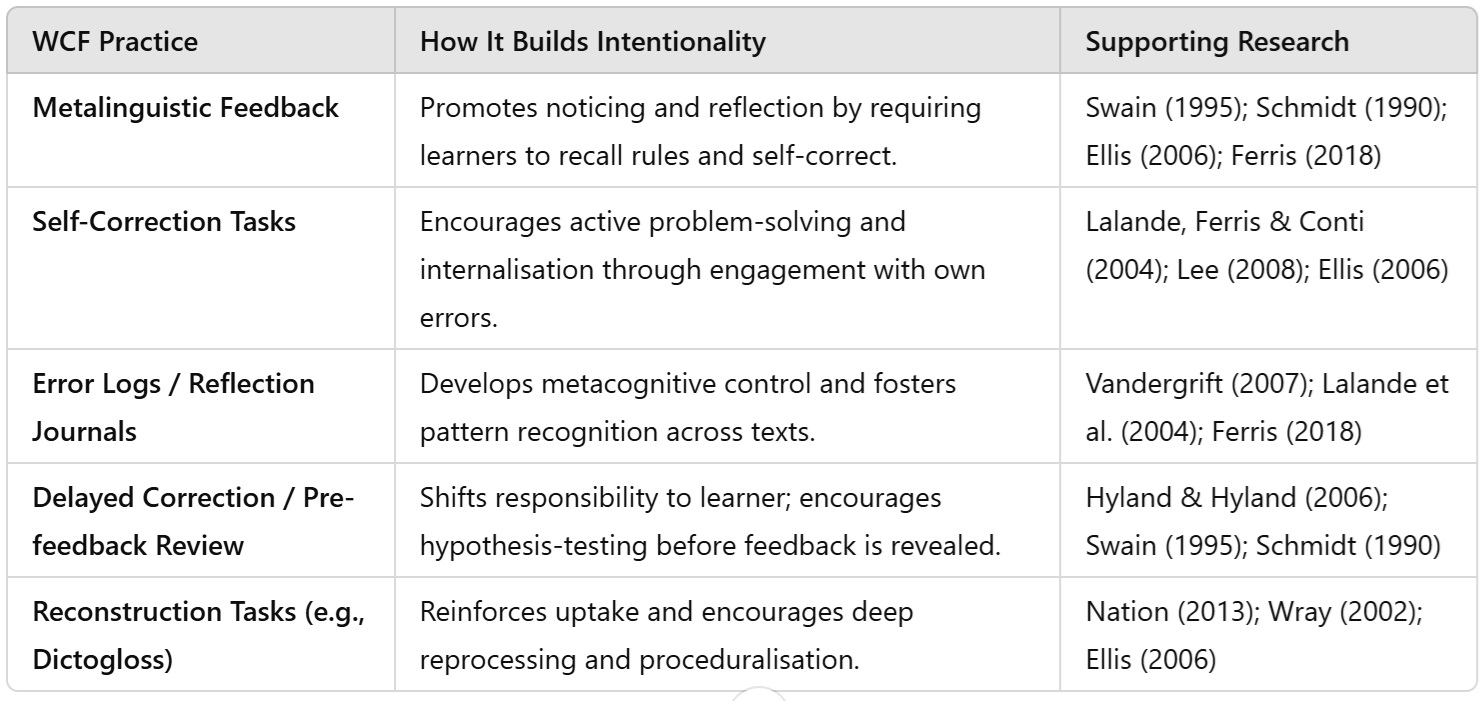
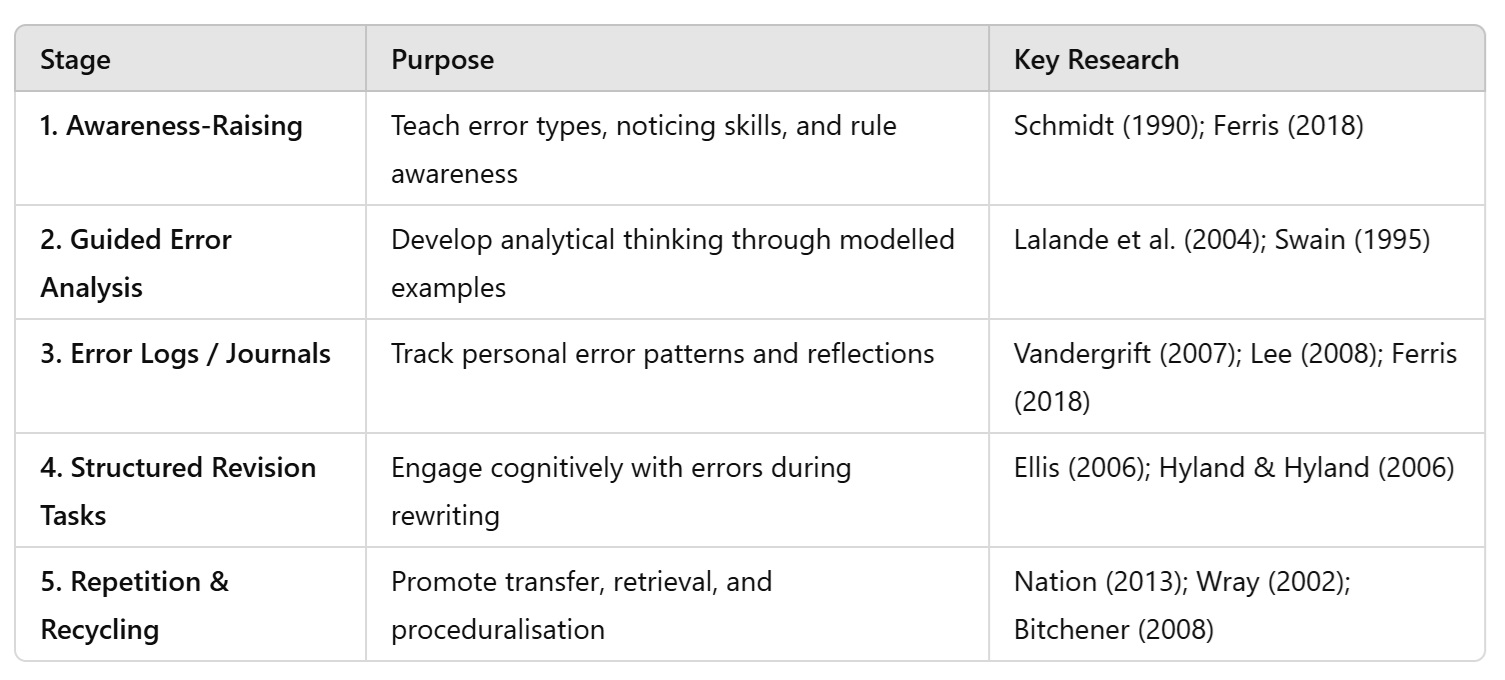

 The Language Gym
You must be logged in to post a comment.