What Makes an Outstanding Language Teacher? A Research-Based Perspective

0. Introduction

In the field of second language education, the question of what constitutes an outstanding language teacher has been widely investigated. In this article I synthesise findings from leading researchers, including Simon Borg, Diane Larsen-Freeman, Rod Ellis, Jim Scrivener, and several other renowned researchers in the field, to outline the key attributes that define excellence in language teaching.

1. Pedagogical Content Knowledge

According to research, outstanding language teachers demonstrate a nuanced understanding of the language they teach—including grammar, phonology, lexis, and discourse—and know how to break that knowledge down in ways that suit the needs of learners at different stages. Shulman’s (1987) foundational concept of “pedagogical content knowledge” underscores the importance of being able to transform content into forms that learners can grasp and internalise. In one of the best books I have read on L2 teacher cognition, Simon Borg (2006) applies this idea specifically to language educators, arguing that great teachers understand both what to teach and how to teach it so that learners can develop communicative competence. They use models, metaphors, real-life tasks, and context-sensitive strategies to promote deep learning.

Moreover, expert teachers are aware of how different language skills (listening, speaking, reading, writing) interact and can integrate them effectively in lessons. In nearly three decades of language teaching, I have seen quite a few teachers struggle with this. Yet, designing effective input-to-output sequences is key.

Expert teachers also know when and how to use explicit instruction, inductive approaches, and guided discovery, drawing from evidence-based methods aligned with SLA principles.

2. Reflective Practice and Teacher Cognition

An outstanding language teacher is a reflective practitioner. According to Borg (2003), what teachers think, know, and believe—their cognition—plays a central role in how they teach. Great teachers routinely reflect on their practice: they think critically about what worked, what didn’t, and why. They use learner feedback, self-evaluation, classroom observations, and even journals to analyse their methods and decisions. Farrell (2015) emphasizes that reflective practice isn’t just a skill but a habit that contributes to sustained professional growth.

Reflection also means adapting one’s teaching in response to the evolving dynamics of the classroom. For example, if a communicative activity repeatedly fails to engage learners, a reflective teacher will explore alternatives rather than persist for the sake of consistency. This level of awareness and responsiveness is a hallmark of expert teaching.

The best educators I have worked with were highly reflective and constantly evaluated their practice in order to improve their teaching. One of the most able language teachers I have ever worked with and watched in action, never stopped doing this until the day before they retired!

3. Language Awareness

An outstanding language teacher is highly language-aware. Andrews (2007) notes that language awareness goes beyond knowing grammar rules; it includes being attuned to how language is used, how meaning is conveyed, and how learners process language. A language-aware teacher can recognise learner errors not merely as mistakes, but as insights into learners’ developing interlanguage. They can offer clear explanations and feedback tailored to individual learner needs.

Ellis (2001, 2006) supports the use of form-focused instruction (FFI), particularly when it is meaningfully integrated into communicative practice. Great teachers know when to draw attention to form and when to prioritise fluency. For instance, they may introduce a structure explicitly, then provide ample practice through communicative tasks and scaffolded production. They create environments where learners notice and recycle language in context, which research shows promotes retention and automatization.

4. Interpersonal Skills and rapport with the learners

Beyond content and pedagogy, what often distinguishes an outstanding teacher is their ability to build trust and rapport. Mercer and Kostoulas (2018) argue that language teachers play an emotional as well as instructional role. Effective teachers foster psychological safety, where learners feel supported and are willing to take risks. They greet students warmly, show interest in their lives, and provide affirming, constructive feedback.

Dörnyei and Murphey (2003) highlight how social dynamics in the classroom influence motivation and participation. A teacher who knows how to manage group cohesion, reduce learner anxiety, and foster collaboration sets the stage for meaningful interaction and deeper learning. The interpersonal domain is often where teachers leave the most lasting impression on students.

5. Learning Management and Instructional Clarity

An organised, well-managed classroom allows learning to flourish. Scrivener (2005) defines classroom management as the invisible framework that supports learning: clear instructions, smooth transitions, and logical sequencing of tasks. Harmer (2015) adds that clarity and consistency in teacher behaviour reduce learner uncertainty and increase engagement.

Outstanding teachers also make excellent use of time and space. They anticipate potential disruptions, manage pair/group dynamics, and create a rhythm that balances activity and reflection. Instructional clarity is another cornerstone—successful teachers check comprehension of instructions, model tasks, and monitor learning without overwhelming learners.

6. Adaptability, Creativity, and Professional Development

Teaching is not static, and neither are outstanding teachers. Larsen-Freeman (2000) describes language teaching as a complex, adaptive system. Great teachers welcome feedback, stay curious, and continually update their knowledge base. They reflect on their own growth and are open to trying new approaches—from integrating technology to reshaping lesson structures.

Borg (2009) and Farrell (2015) both emphasize the importance of lifelong professional learning. This may include action research, peer collaboration, conferences, or engaging with practitioner literature. Creative teachers bring freshness into the classroom—not just through fun activities, but through thoughtful adaptations that make learning more meaningful and personalised.

7. Teacher Self-Efficacy

A crucial yet often underemphasized trait of outstanding language teachers is their sense of self-efficacy—the belief in their own ability to plan, execute, and assess successful teaching strategies. Drawing from the work of Bandura (1997), teacher self-efficacy has been linked to persistence, resilience, and a greater willingness to try innovative practices, especially in challenging classroom environments. Teachers with high self-efficacy are more likely to set ambitious goals for their learners, maintain motivation when faced with setbacks, and adopt a solution-oriented mindset.

Tschannen-Moran and Hoy (2001) argue that teacher self-efficacy influences not only the effort teachers invest in planning and delivering lessons, but also their openness to collaboration and reflective practice. In the language classroom, this means that confident teachers are more likely to create communicative tasks, experiment with new methodologies, and maintain a positive classroom climate. They also tend to encourage learner autonomy and foster resilience among students, modeling the kind of attitudes that support long-term language acquisition.

Moreover, self-efficacy plays a mediating role in how teachers respond to institutional demands, curriculum changes, or diverse learner needs. A teacher who believes in their capacity to adapt is more likely to succeed in implementing inclusive and differentiated practices, reinforcing the interconnected nature of the attributes discussed throughout this article.

8. Charisma

While often overlooked in academic literature, teacher charisma—understood as a teacher’s personal presence, energy, and ability to emotionally connect with students—has emerged as a powerful factor in motivating and engaging language learners. Charismatic teachers are not necessarily extroverted or theatrical, but they exhibit passion, clarity, humour, and authenticity that make their classes memorable and emotionally engaging.

Research in educational psychology supports the influence of teacher charisma. Patrick, Turner, Meyer, and Midgley (2003) found that students respond more positively to instructors who are perceived as enthusiastic and expressive. In the language classroom, charisma can facilitate emotional connection, reduce learner anxiety, and increase participation. Dörnyei (2001) also acknowledges the motivational power of the teacher’s personality, suggesting that learners often attribute their success to teachers who create a dynamic and emotionally charged learning environment.

Moreover, charismatic teachers tend to project confidence, use varied vocal delivery, and maintain purposeful eye contact and body language—elements that contribute to perceived credibility and trustworthiness (Zhang, 2009). These qualities help create the kind of interpersonal energy that sustains learner attention and builds a positive group dynamic.

While charisma cannot be taught in the conventional sense, it can be nurtured through self-awareness, practice, and the development of authentic communication styles. The most effective teachers find a way to channel their natural personalities into a presence that resonates with learners.

9. Pronunciation, Accent, and Phonological Awareness

A commonly debated topic in language teaching is whether having a native-like accent or ‘good’ pronunciation is necessary for outstanding teaching. Research in Instructed Second Language Acquisition (ISLA) suggests that while a perfect accent is not essential, strong phonological awareness and intelligible pronunciation are important traits for effective language models (Derwing & Munro, 2005). Learners benefit when teachers model clear, accurate speech, especially during early stages of language acquisition.

In fact, Munro and Derwing (1999) distinguish between accent and intelligibility, noting that even speakers with noticeable accents can be effective communicators as long as their speech is easily understood. This supports the idea that non-native teachers, who may not speak with native-like pronunciation, can still provide excellent input and serve as effective role models for learners.

Moreover, teachers with good pronunciation awareness can better help learners notice key phonological contrasts, develop listening skills, and gain confidence in their own speech. Teaching pronunciation explicitly—through stress, intonation, rhythm, and segmental features—is increasingly recognized as a vital part of communicative competence (Celce-Murcia et al., 2010).

Therefore, while an outstanding teacher does not need to sound like a native speaker, they should possess a solid understanding of pronunciation systems and be able to model intelligible, clear speech that supports learners’ development.

10. Cultural Competence and Inclusiveness

In today’s diverse classrooms, cultural sensitivity is essential. Effective teachers acknowledge learners’ cultural identities and foster an inclusive environment. They choose materials that reflect different perspectives, use culturally relevant examples, and respect linguistic diversity. Research in intercultural competence (Byram, 1997) supports the idea that understanding students’ backgrounds enhances engagement and reduces barriers to learning.

Teachers who value inclusivity also adapt their methods to accommodate neurodiverse learners and those with special educational needs. This includes differentiating instruction and being aware of how cultural and cognitive differences influence participation.

A Note on Gaps and Research Cautions

While the qualities outlined above are widely supported in the research literature, it’s worth noting that not all of them carry equal empirical weight. For instance, the concept of teacher charisma—though undeniably impactful from a learner perspective—remains underexplored in rigorous language education research. While studies in general education (e.g., Patrick et al., 2003; Zhang, 2009) suggest links between charismatic presence and student engagement, the evidence in second language acquisition contexts is less extensive and largely anecdotal. Similarly, the emphasis placed on pronunciation and accent, while supported by studies on intelligibility (Derwing & Munro, 2005), can sometimes overshadow the broader communicative competencies that learners need to develop.

This isn’t to say these traits aren’t valuable—on the contrary, they often distinguish memorable teachers. But it’s important to approach them with nuance and to be mindful that more robust, longitudinal studies are needed to fully understand their long-term impact on language acquisition outcomes. A balanced interpretation of research can help educators reflect not only on what to cultivate, but also on how to contextualise these traits within their own teaching realities.

What the Research Says About What Matters Most

While all of the attributes discussed contribute meaningfully to effective language teaching, several stand out as especially significant in the research literature. Pedagogical content knowledge, language awareness, and teacher cognition (including reflective practice) consistently emerge as strong predictors of teaching effectiveness (Borg, 2006; Ellis, 2006; Shulman, 1987). These elements influence how well teachers can deliver input, respond to learner needs, and make informed, adaptive choices in real time.

Interpersonal skills and classroom climate also play a crucial role. Studies by Mercer and Kostoulas (2018) and Dörnyei and Murphey (2003) highlight how learner motivation and engagement are often driven more by relational dynamics than by teaching methods alone. When learners feel safe, valued, and connected, their willingness to take risks—and therefore learn—significantly increases.

Teacher self-efficacy is another particularly influential attribute. High self-efficacy correlates with increased resilience, better classroom management, and a stronger orientation toward student success (Tschannen-Moran & Hoy, 2001). These findings suggest that supporting teacher confidence and autonomy can have powerful ripple effects throughout the learning environment.

Conclusion

Outstanding language teachers bring together a powerful mix of knowledge, reflection, interpersonal sensitivity, and adaptive expertise. They are not defined by a single method or credential but by their commitment to student-centred, informed, and evolving practice. Through deep content knowledge, strong interpersonal skills, and a passion for professional development, these teachers transform classrooms into inclusive, engaging spaces where language learning thrives. By grounding our understanding of excellent teaching in empirical research, we can move beyond myths and surface impressions to build meaningful professional growth.


References

  • Andrews, S. (2007). Teacher Language Awareness. Cambridge University Press.
  • Bandura, A. (1997). Self-Efficacy: The Exercise of Control. W.H. Freeman and Company.
  • Borg, S. (2003). Teacher cognition in language teaching: A review of research on what language teachers think, know, believe, and do. Language Teaching, 36(2), 81–109.
  • Borg, S. (2006). Teacher Cognition and Language Education. Continuum.
  • Borg, S. (2009). The nature of teacher research. English Language Teaching Journal, 63(3), 169–176.
  • Byram, M. (1997). Teaching and Assessing Intercultural Communicative Competence. Multilingual Matters.
  • Celce-Murcia, M., Brinton, D. M., & Goodwin, J. M. (2010). Teaching Pronunciation: A Course Book and Reference Guide (2nd ed.). Cambridge University Press.
  • Derwing, T. M., & Munro, M. J. (2005). Second language accent and pronunciation teaching: A research-based approach. TESOL Quarterly, 39(3), 379–397.
  • Dörnyei, Z. (2001). Motivational Strategies in the Language Classroom. Cambridge University Press.
  • Dörnyei, Z., & Murphey, T. (2003). Group Dynamics in the Language Classroom. Cambridge University Press.
  • Ellis, R. (2001). Investigating form-focused instruction. Language Learning, 51(Suppl. 1), 1–46.
  • Ellis, R. (2006). Current issues in the teaching of grammar: An SLA perspective. TESOL Quarterly, 40(1), 83–107.
  • Farrell, T. S. C. (2015). Reflective Language Teaching: From Research to Practice. Bloomsbury.
  • Harmer, J. (2015). The Practice of English Language Teaching (5th ed.). Pearson.
  • Larsen-Freeman, D. (2000). Techniques and Principles in Language Teaching (2nd ed.). Oxford University Press.
  • Mercer, S., & Kostoulas, A. (Eds.). (2018). Language Teacher Psychology: Exploring the Complexities of Individual Differences. Multilingual Matters.
  • Munro, M. J., & Derwing, T. M. (1999). Foreign accent, comprehensibility, and intelligibility in the speech of second language learners. Language Learning, 49(S1), 285–310.
  • Patrick, H., Turner, J. C., Meyer, D. K., & Midgley, C. (2003). How teachers establish psychological environments during the first days of school: Associations with avoidance in mathematics. Teachers College Record, 105(8), 1521–1558.
  • Scrivener, J. (2005). Learning Teaching: A Guidebook for English Language Teachers. Macmillan.
  • Shulman, L. S. (1987). Knowledge and teaching: Foundations of the new reform. Harvard Educational Review, 57(1), 1–22.
  • Tschannen-Moran, M., & Hoy, A. W. (2001). Teacher efficacy: Capturing an elusive construct. Teaching and Teacher Education, 17(7), 783–805.
  • Zhang, Q. (2009). Delivery matters: The effects of instructor expressive nonverbal behavior and immediacy on student evaluations. Communication Education, 58(3), 335–352.

How does IQ affect Language Learning? – A Cognitive Perspective

1. Introduction Let’s face it—language learning is a messy, multi-layered business. It’s not just about memorising vocabulary lists or drilling verb conjugations. Beneath the surface, there’s a tangle of mental gears whirring away: memory, attention, logic, emotion, and more. And while we’d love to think that anyone can master a new language through sheer willpower and good teaching, the reality is more complex.

One factor that consistently crops up in the research? Intelligence—or more specifically, IQ. In this post, I’ll explore the sometimes uncomfortable questions:

  • Does having a high IQ really give you an edge in instructed second language acquisition?
  • Does a low IQ prevent you from being successful?
  • If so, what are the implications for the classroom?

Language learning being a complex, multifaceted cognitive process influenced by a combination of innate ability and environmental factors, the answer is not that simple. In the below, I will deep dive into the literature on the topic in search for a solid and research-based account of the way in which IQ impacts second language learning.

2. Language Aptitude, Attitude, and IQ

Before we zoom in on how IQ shapes specific language learning abilities, it’s worth stepping back and looking at two key concepts that often get tangled up: aptitude and attitude. They might sound similar, but they pull the learner in very different ways—and understanding how IQ relates to both helps set the stage for the rest of the discussion. They aren’t just academic terms—they’re at the heart of what makes learners tick. And for us language teachers, understanding how they relate to IQ can change the way we approach planning, feedback, and support in the classroom.

Language aptitude and attitude are distinct yet complementary constructs in second language learning. Language aptitude refers to a learner’s cognitive ability to acquire language, including phonemic coding, grammatical sensitivity, inductive language learning, and memory. In contrast, language attitude encompasses a learner’s emotional and motivational disposition toward the target language, its speakers, and the learning process (Gardner & Lambert, 1972). Recent large-scale studies (e.g., Dörnyei & Skehan, 2003) have shown that aptitude encompasses a wide range of abilities including memory for language sounds, grammatical sensitivity, and the ability to infer language rules quickly. It’s not fixed in stone, but it tends to be relatively stable. Learners with high IQ tend to score better on aptitude tests, especially those involving reasoning and memory.

Figure 1 – Skehan’s (1998) model of language aptitude

While IQ is more closely related to aptitude—particularly the analytical and memory-based components—it plays little direct role in shaping attitude. Research by Skehan (1998) and Carroll (1990) has emphasized that aptitude is partly heritable and largely cognitive, aligning closely with IQ. Attitude, however, is more influenced by sociocultural context, personal experiences, and affective factors. Importantly, high aptitude may enhance performance in formal learning environments (especially where the curriculum is grammar-heavy), but positive attitude is often a stronger predictor of sustained effort and long-term success, especially in immersive and communicative settings.

Figure 2: A visual representation of the role of attitude in language learning and how it interacts with various factors. The diagram illustrates: Attitude influencing motivation, anxiety, and self-efficacy, which shape learning behaviors. Motivation leading to effort and engagement, essential for L2 exposure. Self-efficacy boosting confidence and enjoyment, which affect classroom interaction. Classroom environment, teacher influence, and L2 exposure contributing to L2 learning success. This aligns with Dörnyei’s (2005) L2 Motivational Self System and Gardner’s (1985) Socio-Educational Mode

Understanding the interplay between aptitude, attitude, and IQ is essential for educators designing second language instruction. It is also crucial in light of research connecting IQ with socio-economic status. Studies such as those by Nisbett et al. (2012) and Sirin (2005) indicate that learners from lower-SES backgrounds are statistically more likely to score lower on IQ and aptitude tests—not necessarily due to innate ability, but due to factors like reduced exposure to literacy, nutrition, and educational opportunities. This raises important questions about equity and access in language education. Learners with high IQ may benefit from structured grammar and vocabulary tasks, while those with high motivation and positive attitudes may excel in communicative tasks—even if their cognitive aptitude is average, as attitude drives engagement, effort, and resilience in the face of setbacks. Gardner (2010) and Masgoret & Gardner (2003) found that motivation and positive attitudes often predict long-term language achievement more strongly than aptitude—particularly in less structured, immersive learning environments. A balanced approach that nurtures both dimensions can therefore optimize outcomes across diverse learner profiles.

2. Cognitive Dimensions Influenced by High IQ

2.1 Pattern Recognition
High-IQ individuals tend to excel at identifying patterns, a skill that underlies grammatical inference and syntactic comprehension. Pattern recognition facilitates faster internalization of rules governing sentence structure and morphological changes. Studies have shown that individuals with higher IQs often demonstrate superior abilities in recognizing linguistic patterns and structures. For example, Rostami et al. (2013) found a significant positive correlation between general intelligence and success in acquiring vocabulary and grammar among EFL learners.

2.2 Working Memory
Working memory is the capacity to hold and manipulate information over short durations—a function vital to real-time language comprehension and use. High IQ is frequently associated with enhanced working memory capacity. In their seminal work, Baddeley and Hitch (1974) first conceptualized working memory as a core component of language processing, highlighting its role in temporarily storing and processing linguistic input. More recently, Miyake and Friedman (1998) demonstrated that working memory capacity strongly predicts success in second language acquisition, particularly in mastering syntax and vocabulary.

2.3 Processing Speed
Faster cognitive processing enables learners to decode and respond to linguistic input with greater efficiency. This is especially beneficial for tasks involving listening comprehension and conversational fluency. In a fascinating study, Sheppard and Vernon (2008) established a clear link between processing speed and intelligence, indicating that faster processors tend to achieve better outcomes in language learning. Similarly, Kail and Salthouse (1994) demonstrated that processing speed supports various cognitive functions that are essential in second language acquisition.

2.4 Metalinguistic Awareness
Metalinguistic awareness—the ability to reflect on and manipulate language as a system—is often more developed in individuals with high IQ. This skill facilitates the recognition and correction of errors and supports abstract rule learning. In a very insightful study, Bialystok and Ryan (1985) found that high-IQ children exhibited superior abilities in detecting and correcting grammatical errors. Gombert (1992) further emphasized that metalinguistic development plays a crucial role in formal language instruction, particularly in structured learning environments.

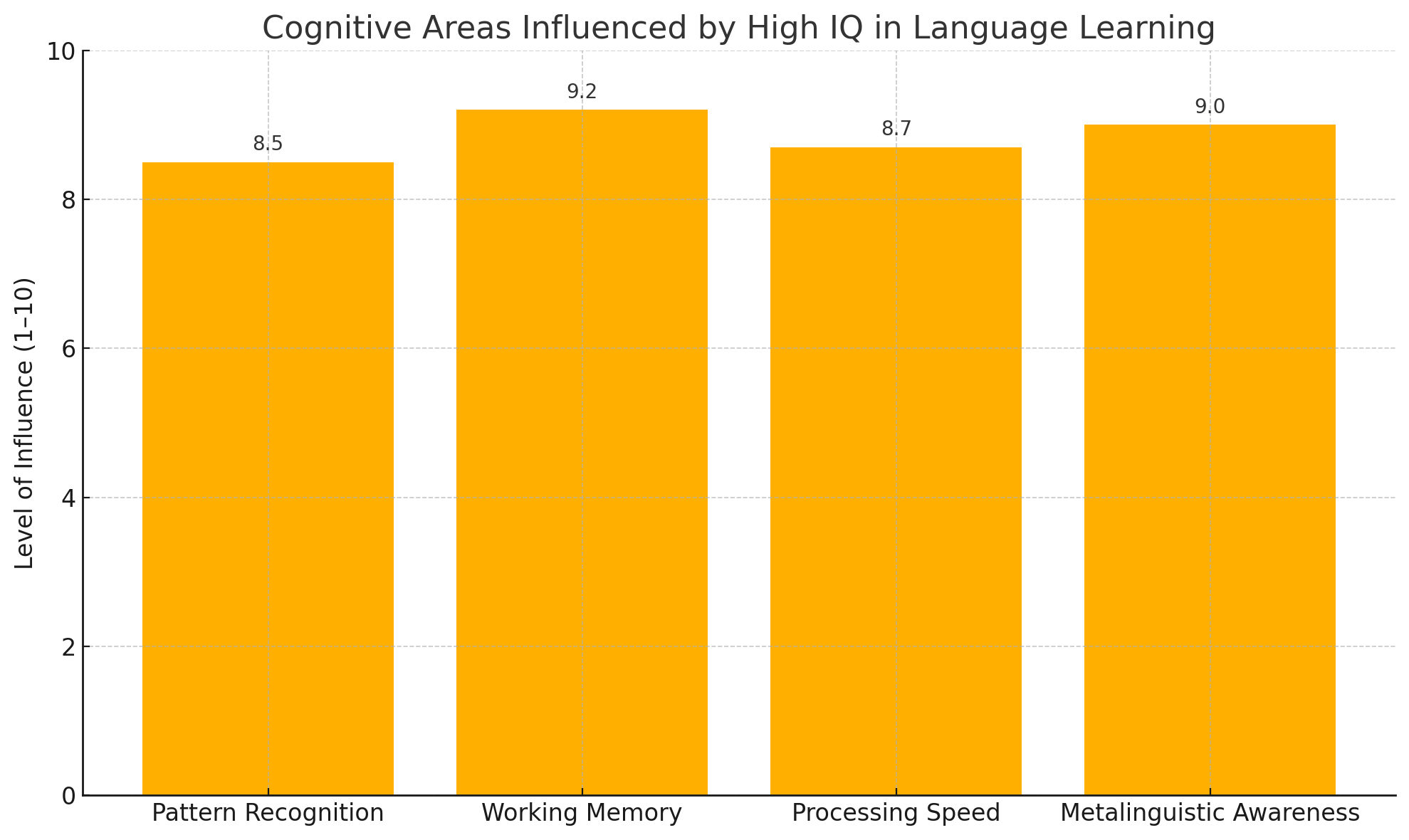
Figure 2 below provides a visual summary showing how high IQ influences key cognitive areas involved in language learning. Each bar represents the estimated strength of IQ’s influence in that domain on a scale from 1 to 10. Remember:

  • Pattern Recognition: Helps identify grammar and structure.
  • Working Memory: Supports holding and manipulating language input.
  • Processing Speed: Aids quick comprehension and response.
  • Metalinguistic Awareness: Enhances understanding of language as a system

Figure 3. Estimated Influence of IQ Across Language-Related Cognitive Domains

3. How Low IQ Interacts with Language Learning

These cognitive advantages for high-IQ learners, however, highlight a deeper concern: what happens when learners do not possess high IQ? Research shows that students with lower IQs may find it more difficult to infer grammar rules, retain complex sentence structures, or apply learned rules with consistency in productive skills like writing (Sparks, Patton, & Ganschow, 2012). For example, a student who struggles with working memory might be able to complete a gap-fill grammar task accurately when focused but fail to apply the same rule when writing a paragraph. This disconnect is not due to laziness or lack of motivation—it’s a cognitive bottleneck.

Learners with lower IQs may not simply be ‘slower’; their challenges often stem from genuine cognitive constraints that affect how they process, store, and retrieve language.

In grammar acquisition, for instance, low-IQ learners may struggle with rule abstraction and pattern generalisation. Hulstijn (2015) suggests that such learners often benefit more from implicit instruction and exposure than from formal grammar explanations. Rather than asking them to deduce when to use the past perfect, for example, it’s more effective to flood their input with natural, meaningful examples of that structures – preferably through listening and interaction. Routines are particularly effective as well as highly patterned texts such as narrow listening and narrow reading.

Writing is another area where difficulties become more visible. Studies such as Sparks et al. (2012) show that low-IQ learners often display persistent challenges with syntactic accuracy, organisation, and lexical variety. A practical classroom example: a learner may be able to write “I go school every day” with confidence but fail to incorporate a new structure like “I’ve been going to school since January” without significant, repeated modelling.

Importantly, success is still possible—just on different terms. Long-term studies (e.g., Ganschow & Sparks, 1995) demonstrate that with repetition, scaffolding, and high-frequency exposure, low-IQ learners can achieve communicative competence. To help such learners, teachers can draw on strategies from Ellis (2005) and VanPatten (2002). For instance, instead of lengthy explanations of grammar rules, input-based approaches such as ‘input flood‘ (where learners are exposed to many examples of a structure) or ‘input enhancement‘ (highlighting target forms in reading or emphasizing them vocally in listening activities) can offer repeated, low-stress exposure.

Careful and thorough modelling through Sentence builders, lots of repeated processing, masses of throughtfully scaffolded retrieval practice, sufficient planning time before challenging tasks, intensive vocabulary teaching before tacking challenging texts, etc, also allow learners with limited processing speed to build automaticity over time. Writing tasks should be scaffolded with models, checklists, and sentence stems. A lower-IQ learner, for instance, may benefit from a writing frame that structures a paragraph: “First, I usually ___. Then, I like to ___. Finally, I ___.” Over time, these supports can be gradually removed as learners gain confidence and fluency.

What often matters most is not cognitive firepower but consistency, clarity, and emotional support from teachers. Recasting errors positively, chunking input, and gradually increasing task complexity are all essential strategies.

This is not about lowering expectations—it’s about adjusting the path. When instruction meets learners where they are, the journey becomes not just possible, but rewarding.

4. Mixed-Ability Classrooms: Pros and Cons of Grouping Learners Across the IQ Spectrum

Bringing together learners with widely differing IQ levels into a single language classroom is increasingly common, especially in inclusive education settings. This approach carries both potential benefits and significant challenges.

On the positive side, mixed-ability classrooms can foster peer learning and collaborative growth. Vygotsky’s (1978) concept of the Zone of Proximal Development (ZPD) supports the idea that less advanced learners can benefit from interacting with more capable peers. High-IQ students often provide linguistic models, expose others to more sophisticated structures, and, in doing so, reinforce their own knowledge through teaching. Meanwhile, learners with lower IQ may benefit from simplified explanations and indirect scaffolding via peer talk.

However, research also highlights several limitations. Sweller’s (1988) cognitive load theory warns that low-IQ learners may experience overload when required to process input at the level of their more advanced peers, especially without sufficient differentiation. This can lead to frustration, disengagement, or fossilisation of errors. High-IQ learners, on the other hand, may feel held back or insufficiently challenged, particularly if tasks are overly simplified to accommodate others. Additionally, the classroom dynamics can suffer when learners perceive inequity—either in terms of pace or teacher attention. Research by Kulik and Kulik (1992) on ability grouping suggests that high-achieving students in mixed-ability settings may show diminished gains compared to those in homogeneous groups. Simultaneously, low-IQ learners may develop learned helplessness if they are frequently exposed to performance gaps that feel insurmountable (Dweck, 2006). Teachers might inadvertently lower expectations for some students, which can reduce both challenge and opportunity for growth across the class.

The key to successful mixed-ability teaching lies in targeted differentiation, flexible grouping, and scaffolded instruction. As Tomlinson (2014) argues, differentiation isn’t about creating separate curricula but about adjusting inputs, tasks, and supports so that each learner can access the same core content meaningfully. In practice, this might mean giving high-IQ learners more open-ended writing prompts or inductive grammar puzzles, while offering lower-IQ students structured sentence frames and more guided input tasks. When planned thoughtfully, mixed-ability classes can be inclusive, empowering, and pedagogically sound.

However, the promise of differentiation in mixed-ability classrooms often falls short in real-world language teaching contexts. Several studies have raised doubts about the practical effectiveness of differentiation, particularly in language education. For example, Westwood (2013) and Hattie (2009) argue that while differentiation sounds ideal in theory, it is difficult to implement with sufficient depth and consistency in classrooms with large student numbers, time constraints, and curriculum demands. Language teachers, in particular, report struggling to create tiered tasks that are cognitively appropriate, linguistically accessible, and pedagogically sound for all learners simultaneously (Connor, Morrison, & Katch, 2004).

Furthermore, research from the OECD (2012) suggests that attempts at differentiation often result in ‘teaching to the middle’—whereby high-achieving learners are insufficiently stretched and lower-achieving learners remain unsupported. In language classrooms, where progression is cumulative and requires automatization through repetition, the attempt to customise content for every ability level can dilute the intensity of exposure and reduce opportunities for recycling key structures—an essential condition for acquisition (VanPatten, 2002). In practice, this means that the intended support mechanisms may not reach the learners who need them most, and that instruction can become fragmented and less impactful overall. Even when differentiation is attempted, it is often superficial—focused more on varying task difficulty than on tailoring learning trajectories in a way that is both linguistically meaningful and cognitively appropriate. Tatzl (2013) found that teachers frequently rely on the same materials for all learners, with only minor adjustments, due to time, training, and resource constraints. This often leaves both ends of the learner spectrum underserved.

Moreover, differentiation can inadvertently create a “labelling effect,” reinforcing perceptions of fixed ability among learners (Boaler, 2013). When students are consistently grouped or given tasks based on perceived aptitude, it can shape their self-concept and influence motivation. For language learners, where confidence and willingness to communicate are critical, this can have lasting implications.

Ultimately, while differentiation remains a well-intentioned strategy, the evidence suggests that without sustained support, ongoing professional development, and appropriate structural conditions – which schools more than often do not get! – it is often more aspirational than effective in the reality of language classrooms.

Based on my 28 years of teaching languages in a wide range of contexts—from top-performing schools to mixed-ability state settings—I can confidently say that differentiation, while noble in intent, often collapses under the weight of classroom reality. In practice, differentiation is frequently superficial and reactive rather than embedded and strategic. It tends to favour the middle ability range, leaving the most and least cognitively able learners underserved. Teachers are often not given the training, planning time, or resources to differentiate meaningfully, and the result is either watered-down content or overly complex tasks repackaged with minor tweaks. That said, in my experience, mixed-ability teaching can work reasonably well when the spread of ability in the classroom is not too wide. When learners fall within a manageable cognitive range, differentiation becomes more feasible, peer support is more balanced, and instructional planning remains realistic. It’s when the gap becomes extreme that the cracks begin to show—making approaches like EPI, which naturally embed scaffolding for all, a far more sustainable solution.

All considered, though, I firmly believe that what truly makes a difference is not splitting learners into tiers, but giving everyone access to high-quality input, extensive modelling, and tasks that build up from controlled to freer practice over time—principles that approaches like EPI embody far more effectively than ad-hoc differentiation ever could.

5. Concluding remarks
This article has explored the complex interplay between IQ and second language acquisition. The evidence suggests that high IQ can support language learning in several key areas—pattern recognition, working memory, processing speed, and metalinguistic awareness—often leading to quicker uptake of grammar and vocabulary, better processing of input, and more efficient use of explicit instruction. However, IQ is not destiny. Learners with lower IQ may struggle more with rule abstraction and memory-heavy tasks, particularly in grammar and writing, but they can still succeed through well-designed instruction, repetition, and emotional support.

One framework that accommodates both ends of the cognitive spectrum is Extensive Processing Instruction (EPI). Grounded in ISLA principles, EPI provides structured input, controlled output, and scaffolded repetition. It plays to the strengths of high-IQ learners through inductive reasoning and pattern recycling, while supporting lower-IQ learners with sentence builders, input flood, and low-stakes, repeated practice. Rather than dumbing down the content, EPI simplifies the processing—making language acquisition accessible, meaningful, and rewarding for everyone.

High IQ can provide significant cognitive advantages in language learning, particularly in areas like pattern recognition, working memory, processing speed, and metalinguistic awareness. However, intelligence is not the sole determinant of language learning success. Motivation, exposure, resilience, and cultural immersion are equally, if not more, influential in many contexts. For learners with lower IQs, adaptive instruction and supportive learning environments play a critical role in promoting success.

References

  • Boaler, J. (2013). Ability and Mathematics: The Mindset Revolution That Is Reshaping Education. Forum, 55(1), 143–152.
  • Connor, C. M., Morrison, F. J., & Katch, L. E. (2004). Beyond the Reading Wars: Exploring the Effect of Child-Instruction Interactions on Growth in Early Reading. Scientific Studies of Reading, 8(4), 305–336.
  • Dweck, C. S. (2006). Mindset: The New Psychology of Success. Random House.
  • Ellis, N. C. (2002). Frequency effects in language processing: A review with implications for theories of implicit and explicit language acquisition. Studies in Second Language Acquisition, 24(2), 143–188.
  • Ellis, R. (2005). Principles of instructed language learning. System, 33(2), 209–224.
  • Ganschow, L., & Sparks, R. (1995). Effects of Direct Instruction in Spanish Phonology on the Native-Language Skills and Foreign-Language Aptitude of At-Risk Foreign-Language Learners. Journal of Learning Disabilities, 28(2), 107–120.
  • Hattie, J. (2009). Visible Learning: A Synthesis of Over 800 Meta-Analyses Relating to Achievement. Routledge.
  • Hulstijn, J. H. (2015). Language proficiency in native and non-native speakers: Theory and research. John Benjamins Publishing Company.
  • Kulik, C.-L. C., & Kulik, J. A. (1992). Meta-analytic findings on grouping programs. Gifted Child Quarterly, 36(2), 73–77.
  • OECD (2012). Equity and Quality in Education: Supporting Disadvantaged Students and Schools. OECD Publishing.
  • Sparks, R., Patton, J., & Ganschow, L. (2012). Profiles of More and Less Successful L2 Learners: A Cluster Analysis Study. Learning and Individual Differences, 22(4), 463–472.
  • Swain, M. (2000). The output hypothesis and beyond: Mediating acquisition through collaborative dialogue. Sociocultural theory and second language learning, 97–114.
  • Sweller, J. (1988). Cognitive load during problem solving: Effects on learning. Cognitive Science, 12(2), 257–285.
  • Tatzl, D. (2013). Engineering students’ beliefs about language learning and their proficiency in English for specific purposes. English for Specific Purposes, 32(1), 1–11.
  • Tomlinson, C. A. (2014). The Differentiated Classroom: Responding to the Needs of All Learners (2nd ed.). ASCD.
  • VanPatten, B. (2002). Processing instruction: An update. Language Learning, 52(4), 755–803.
  • Vygotsky, L. S. (1978). Mind in Society: The Development of Higher Psychological Processes. Harvard University Press.
  • Baddeley, A. D., & Hitch, G. (1974). Working memory. Psychology of Learning and Motivation.
  • Bialystok, E., & Ryan, E. B. (1985). A metacognitive framework for the development of first and second language skills. Applied Psycholinguistics.
  • Carroll, J. B. (1990). Cognitive abilities in foreign language aptitude: Then and now. Language Aptitude Research.
  • Gardner, R. C., & Lambert, W. E. (1972). Attitudes and Motivation in Second-Language Learning. Newbury House Publishers.
  • Gombert, J. E. (1992). Metalinguistic Development. University of Chicago Press.
  • Kail, R., & Salthouse, T. A. (1994). Processing speed as a mental capacity. Acta Psychologica.
  • Miyake, A., & Friedman, N. P. (1998). Individual differences in second language proficiency: Working memory as language aptitude. Psychological Science.
  • Rostami, M., Rezaabadi, O. T., & Gholami, J. (2013). On the relationship between intelligence and English language learning. Journal of Language, Culture, and Translation.
  • Sheppard, L. D., & Vernon, P. A. (2008). Intelligence and speed of information-processing: A review of 50 years of research. Personality and Individual Differences.
  • Skehan, P. (1998). A Cognitive Approach to Language Learning. Oxford University Press.

If you do want to find out more on the topic and on my approach to instructed second language acquisition, do get hold of my books (here). I would especially recommend the following tomes, co-authored with Steve Smiths: Breaking the sound barrier: teaching language learners how to listen, ‘The language teacher toolkit’ and ‘Memory: what every language learner should know’.

Transforming L2 Listening Instruction: Powerful Insights from Prof. John Field, the leading expert in the field.

Introduction

Effective listening is a cornerstone of language learning, yet it is often overlooked or taught superficially. In this post I will summarise the content of a chapter in the Cambridge Handbook of Second Language Learning authored by John Field, a leading researcher in the field in 2019.

John Field’s insights into second language listening instruction offer powerful guidance for educators aiming to deepen learners’ comprehension skills. By emphasizing cognitive processes, vocabulary acquisition, strategic interventions, and targeted practice, Field provides a clear roadmap for transforming listening instruction from passive comprehension checks into active, skill-building opportunities.

The process-based approach to aural instruction adopted in the Receptive Phase in EPI’s MARSEARS (KS3) and PIRCO (KS4/5) pedagogical cycles, is largely based on John Field’s work.

Going Beyond Correct Answers—Focusing on the Process

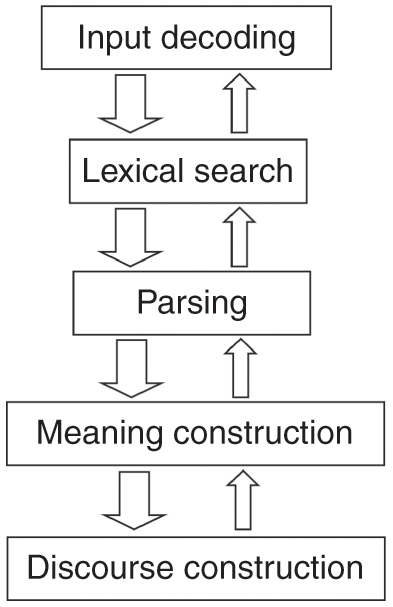
Traditionally, second language listening lessons have revolved around students’ ability to produce correct answers to comprehension questions. Yet, John Field encourages teachers to rethink this model. He introduces a comprehensive cognitive model of listening, breaking down the listening process into distinct stages:

  • Sound recognition: Identifying and distinguishing individual sounds.
  • Input decoding: Recognizing individual sounds (phonemes).
  • Segmentation: Identifying the boundaries of words within continuous speech.
  • Lexical search: Matching sounds to known words in memory.
  • Parsing: Constructing grammatical meaning from groups of words.
  • Meaning construction: Interpreting the immediate contextual meaning of utterances.
  • Discourse construction: Understanding the overall coherence and intention of the entire conversation or text.

Field emphasizes the importance of bottom-up processing skills (accurate decoding, rapid lexical recognition, syntactic parsing) as essential foundations for higher-level comprehension. He advocates specific micro-skill activities tailored for each listening phase, such as phoneme discrimination, vocabulary recognition tasks, syntactic exercises, contextual inference tasks, and discourse-level summarization activities.

What stands out here is that traditional listening tasks excessively emphasize outcomes rather than the actual listening process.

Figure 1 – John’Field’s account of the listening process. In his process-based approach, the instructor will include in their instructional sequences tasks deliberately targeting the sub-processes in the model

Vocabulary—Why It Matters More Than You Think

Field strongly emphasizes that the vocabulary students need for effective listening is often underestimated. Success depends largely (>70%) on vocabulary recognition! Learners typically find spoken vocabulary more challenging than written vocabulary, as they encounter words in variable spoken forms. Field highlights the necessity of explicitly teaching vocabulary through listening activities, emphasizing phonological familiarity and recognition in authentic speech. Activities such as listening cloze exercises or focused listening for lexical recognition are recommended.

What stands out is Field’s assertion that vocabulary knowledge acquired through listening is essential for successful comprehension.

Cracking the Code of Connected Speech

One of the major hurdles learners face is connected speech, the fluid nature of spoken language where words blend, sounds disappear, and pronunciation shifts drastically from textbook forms. Field identifies several issues here, including unclear word boundaries, elision (omission of sounds), assimilation (sounds adapting to adjacent sounds), and variability in pronunciation.

Field advocates using targeted transcription exercises highlighting natural speech patterns, enabling learners to decode authentic spoken language effectively. Exercises might include transcribing short extracts featuring challenging pronunciation phenomena.

The standout insight is that connected speech variability presents significant comprehension challenges for learners.

The Challenge of Speed—A Race Against Time

Another significant issue highlighted by Field is the speed of spoken input. Unlike reading, listeners cannot control the pace at which information arrives, resulting in potential overload and anxiety. Field stresses that teachers need to help students practice managing real-time processing through tasks that gradually increase speed and complexity, thereby building learners’ automaticity and processing efficiency.

What stands out here is the need for practice activities designed specifically to help students cope with the demands of real-time listening.

Visual Aids—Are They Helpful or Distracting?

Field discusses the mixed effectiveness of visual aids like videos or PowerPoint slides. While visuals provide context and clarity for advanced listeners, they might overwhelm beginners already struggling with perceptual demands. Teachers should carefully select visuals directly supporting the spoken input, initially introducing simple visuals (as we do in EPI) and gradually progressing to more complex multimodal inputs.

Thus, a key insight here is that visuals must be integrated thoughtfully, matching the learners’ proficiency level to avoid cognitive overload.

Empowering Learners—Autonomous Listening Practice

Field strongly advocates promoting autonomy in listening practice. Recognizing the diversity in individual learner challenges, he suggests personalized, self-access listening resources. This approach encourages learners to independently identify difficult segments, replay them, and practice until comprehension improves. Digital self-access resources enable learners to pinpoint difficult sections and replay them as often as necessary.

Notably, Field emphasizes personalized listening practice through self-access tasks, empowering learners to address their specific comprehension challenges.

Strategic Listening—Equipping Students for Real-life Communication

Field underscores the importance of explicitly teaching listening strategies, distinguishing clearly between fundamental listening skills and compensatory strategies. He advocates direct instruction of strategies such as metacognitive strategies (planning, monitoring, evaluating), cognitive strategies (inferring meanings, guessing from context), and social-affective strategies (managing anxiety, collaborative listening). Specifically, for teaching metacognitive strategies, Field suggests combining direct teaching (explicitly naming and demonstrating strategies) with indirect teaching (discussing strategies after task completion).

The notable takeaway is the clear role strategy instruction plays in managing comprehension gaps, thus improving overall listening proficiency.

Common Obstacles in Listening Comprehension

Field clearly outlines several common obstacles L2 listeners face:

  • Difficulty recognizing phonemes due to variability in pronunciation.
  • Unclear word boundaries in continuous speech.
  • Challenges in decoding connected speech (elision, assimilation).
  • Limited automaticity in spoken vocabulary recognition.
  • Cognitive overload from rapid speech input.
  • Additional cognitive load from visual inputs.
  • Anxiety related to real-time processing without replay opportunities.

Implications for Pedagogy

Drawing from Field’s insights, several key pedagogical implications emerge:

  • Teachers should move away from comprehension checks towards diagnostic listening instruction, aimed at identifying the obstacles in comprehension
  • Practice tasks should include activities targeting the micro-skills of listening, with a strong emphasis on decoding skills (phonemes, syllables and word-boundaries recognition), especially, but not exclusively, at lower levels of proficiency
  • Listening instruction should explicitly teach and reinforce vocabulary through listening-specific tasks. This is KEY
  • Incorporating transcription tasks highlighting features of connected speech
  • Provide explicit strategy training, focusing on both direct and indirect instruction of metacognitive strategies like planning, monitoring, and evaluating aimed at enabling students to be more invested in the listening process and understand which strategies works best for them. Note: effective strategy training takes months of systematic practice of the target strategies
  • Practice tasks should systematically develop learners’ ability to cope with authentic speech speeds by gradually increasing speed and complexity. ‘Gradually’ is the key word here!
  • Use visual aids judiciously, matching the complexity to learners’ proficiency.
  • Strategically allow replaying audio, particularly at early proficiency levels, to reduce anxiety. Note: replaying audio is likely to be more effective when you pause at the end of problematic sentences, as any new incoming speech signal will erase the previous one; hence, pausing will lessen the cognitive load. Also, it is likely to be more effective when the students are directed to listen selectively, i.e. for specific details which you have found to be more challenging to comprehend. Gapped translation tasks can be good in this respect.

Towards the Future—Personalized Listening Instruction

Looking forward, Field predicts a shift in listening instruction towards personalized and autonomous learning environments, largely driven by digital technologies. These tools will allow students to tailor their listening practice according to their individual needs. Teachers will increasingly facilitate personalized listening experiences, thus enhancing real-world communicative competence.

Concluding remarks

John Field’s approach to second language listening challenges traditional methods by advocating a shift from testing comprehension to actively teaching listening. His recommendations cover detailed cognitive processes, strategic instruction, authentic exposure, and careful scaffolding.

Notably, the Extensive Processing Instruction (EPI) framework naturally embodies these recommendations, focusing deeply on bottom-up skills, extensive vocabulary practice through listening, meaningful repetition with careful segmentation and strategic management of cognitive load and anxiety. EPI integrates the essence of Field’s findings into practical classroom strategies, ensuring learners develop robust, transferable listening skills for effective real-world communication.

If you want to know more on the listening process, do get hold of my book with Steve Smith, ‘Breaking the sound barrier: teaching learners how to listen’ or attend one my workshops on listening instruction on http://www.networkforlearning.org.uk

BEYOND sentence builders: the process, the research and principles underpinning Extensive Processing Instruction

Introduction

Extensive Processing Instruction (EPI) approach has gained recognition in the field of Modern Foreign Language (MFL) teaching as an innovative methodology that promotes long-term retention, fluency, and communicative competence.

However, less informed language educators equates EPI with the use of sentence builders, some of them even calling EPI the ‘sentence builders method’. While Sentence Builders are a well-known component of EPI, the approach extends far beyond structured input activities. It encompasses a wide range of principles and strategies that facilitate deep processing, automatization, and meaningful interaction in language learning.

PLEASE NOTE: one could teach EPI even without using sentence builders! The only reason why their use is recommended is because they constitute a very effective way to present the target language chunks and one that, according to a recent study (Trafford, 2023), students aged 11 to 16 find very helpful.

A key aspect often overlooked in discussions about EPI is the role of grammar within the MARSEARS framework. While grammar is not the primary focus at the initial stages, it does play a crucial supporting role. Grammar in EPI is not frontloaded, but rather introduced after intensive receptive and productive practice, ensuring that learners have first internalized the target lexical chunks. In this way, grammar enhances the generative power of these chunks, allowing students to manipulate and extend their language more flexibly.

I have written this post for two main reasons. Firstly, a colleague and friend of mine, having just attended a big language conference, relayed to me how many teachers she met keep misunderstanding what EPI is about. Secondly, many colleagues have asked me over the years to provide them with the research which underpins the EPI principles and pedagogical framework. Hopefully, this post will address both issues.

In the below I outline the core components of the EPI approach, demonstrating that it is a holistic, research-driven methodology that goes beyond sentence builders and significantly enhances second-language acquisition. I also cite the key research that underpins the MARSEARS pedagogical framework.

1. Lexicogrammar and Extensive Processing

EPI integrates lexis (vocabulary) and grammar rather than treating them as separate domains. The approach encourages learners to process target structures multiple times in different contexts, ensuring deep learning and retention (Ellis, 2002; Nation, 2007). Unlike traditional grammar drills, EPI contextualizes grammatical structures within meaningful lexical chunks, fostering implicit acquisition over time (Lyster & Sato, 2013).

Grammar plays a supporting role by enabling learners to manipulate and extend these chunks once they are well embedded. In the MARSEARS sequence, grammar instruction comes after learners have had ample exposure to structured input and controlled output, allowing them to internalize patterns before explicit grammar explanations are introduced.

2. Meaningful and Repeated Input

The EPI approach relies on high-frequency, structured exposure to language through listening and reading activities. This aligns with research on the importance of comprehensible input in second-language acquisition (Krashen, 1982). Repetition is embedded within varied tasks and interactions, ensuring that learners encounter and process structures in different contexts (VanPatten, 2015). By the time grammar is explicitly addressed, students have already subconsciously acquired key structures, making grammatical explanations more meaningful and intuitive.

Repetition is obtained by applying a process-based approach, whereby the tasks within the Receptive Phase (the first R in MARSEARS) deliberately target all or most of the micro-skills of listening and reading in order to achieve two objectives. One is, of course, better retention through multimodality. The other one is enhanced reading and aural fluency.

3.Process-Based Instruction Across the Four Language Skills

One of the core principles underpinning EPI is process-based instruction, which focuses on developing learners’ ability to handle real-world communication through structured and scaffolded skill development. Instead of treating language learning as the mere accumulation of knowledge, process-based instruction emphasizes the progressive mastery of language skills through guided stages of cognitive and communicative processing. EPI applies this approach across listening, speaking, reading, and writing, ensuring that learners engage with each skill in a way that mirrors authentic language use.

4. The Role of Listening as a Foundational Skill

EPI emphasizes the importance of listening as an essential component of language processing. The methodology incorporates activities that train learners to process spoken language efficiently, reducing cognitive overload. Research suggests that listening comprehension precedes and supports language production, making it a vital step in fluency development (Field, 2008; Vandergrift & Goh, 2012). The extensive listening practice in EPI further strengthens subconscious grammar acquisition, allowing learners to absorb correct structures before grammar is formally introduced.

EPI’s approach to listening is heavily influenced by the work of John Field (2008), who critiques traditional listening instruction for treating comprehension as a passive skill rather than an active process. Instead of simply exposing students to audio and testing their comprehension, EPI adopts a process-based listening model that focuses on training learners to process spoken language efficiently and overcome decoding difficulties.

Following Field’s model, EPI listening instruction includes:

  • Lexical segmentation training: Helping students recognize word boundaries in continuous speech, a skill that is particularly difficult in foreign languages.
  • Lexical retrieval training: Engaging students in word-meaning recognition through listening (which is key (72%) to success at listening tasks.
  • Bottom-up processing exercises: Training learners to recognize phonemes, syllables, and prosodic patterns to improve speech decoding.
  • Progressive reduction of support: EPI gradually removes scaffolding, shifting learners from highly controlled, structured input to more authentic, unmodified listening materials, ensuring they become autonomous listeners.
  • Top-down processing strategies: Encouraging students to use contextual clues and background knowledge to infer meaning rather than relying solely on word-for-word comprehension.

Through structured and repetitive exposure to varied listening tasks, EPI ensures that learners develop better comprehension accuracy, faster lexical retrieval, and improved phonological awareness,ultimately strengthening overall fluency in spoken interaction.

5. Fluency Development through Controlled Output

Fluency-building is a core tenet of EPI, moving learners from structured activities toward spontaneous communication. The approach follows a carefully sequenced transition from highly scaffolded tasks to freer, communicative activities (DeKeyser, 2007). Controlled output tasks, such as reconstruction exercises, oral drills and highly structured role plays and communicative tasks, help automatize language structures before learners engage in less structured speaking and writing tasks (Swain, 1995; Ortega, 2019).

Once fluency is well developed, grammar is introduced not as a set of rigid rules, but as a tool to refine and expand existing language structures. This sequence ensures that grammar instruction is not an obstacle but rather a reinforcement mechanism that enhances communicative competence.

6. Phonics and Pronunciation Training

EPI integrates phonics instruction and pronunciation training to develop phonological awareness and decoding skills in second-language learners. Phonological fluency helps students recognize patterns in spoken language, improving their reading and listening comprehension (Munro & Derwing, 1999; Kormos, 2006). By incorporating systematic phonics instruction, EPI addresses one of the most neglected areas in traditional MFL instruction.

7. Task-Based Learning and Communicative Practice

A significant aspect of EPI is Task-Based Learning (TBL), which provides learners with authentic communicative opportunities to use language in realistic situations. TBL is implemented at the end of the Structured-Production phase and/or during the final segment of the MARSEARS sequence, i.e. the Routinization and Spontaneity phases. Research shows that task-based instruction enhances fluency and interactional competence (Skehan, 1998; Long, 2015).

EPI sequences tasks in a way that gradually reduces scaffolding, ensuring that learners develop spontaneous, meaningful communication skills over time. Grammar instruction, when it appears, serves to strengthen and refine this communicative ability rather than precede it.

Conclusion

While Sentence Builders are a highly effective tool within EPI, they represent only one component of a much broader methodology. My approach integrates input processing, fluency-building, listening, pronunciation training, implicit grammar learning, metacognitive strategies, and communicative practice, making it a comprehensive, research-informed framework for language acquisition.

Crucially, grammar does have an important role within the MARSEARS framework, but it is introduced after extensive receptive and productive practice. This ensures that grammar is not a barrier to fluency but rather a supporting mechanism that enhances the generative power of lexical chunks. By balancing structured input with extensive fluency practice, EPI offers a more effective alternative to traditional grammar-heavy approaches, ensuring that learners retain, retrieve, and use language fluently in real-life contexts.

References

  • Boers, F., & Lindstromberg, S. (2009). Optimizing a lexical approach to instructed second language acquisition. Palgrave Macmillan.
  • DeKeyser, R. (2007). Practice in a second language: Perspectives from applied linguistics. Cambridge University Press.
  • Ellis, R. (2002). The study of second language acquisition. Oxford University Press.
  • Field, J. (2008). Listening in the language classroom. Cambridge University Press.
  • Krashen, S. (1982). Principles and practice in second language acquisition. Pergamon.
  • Nation, P. (2007). The four strands. Innovation in Language Learning and Teaching, 1(1), 2-13.
  • Skehan, P. (1998). A cognitive approach to language learning. Oxford University Press.
  • Swain, M. (1995). Three functions of output in second language learning. Oxford University Press.
  • VanPatten, B. (2015). Foundations of processing instruction. Routledge.
  • Vandergrift, L., & Goh, C. (2012). Teaching and learning second language listening: Metacognition in action. Routledge.

Grammar is Essential, but Fluency Should Take Priority: A Research-Based Perspective

Introduction

The debate over whether grammar or fluency should take precedence in second language acquisition (SLA) is long-standing. While grammatical accuracy is crucial for clarity and precision in communication, fluency—the ability to communicate ideas smoothly and naturally—arguably plays a more significant role in real-world language use.

Given the limited instructional time available for Modern Foreign Language (MFL) teaching—often only one or two hours per week—educators must make strategic choices about which aspects of language learning to prioritize. I will never forget my mentor and PhD supervisor, Oxford Uni Professor Macaro, saying to me once: ‘When you only see students once or twice a week, what do you want to teach them: how grammar works or how to listen and speak? The latter, of course!’. Researchers by and large, agree, suggesting that prioritizing oral fluency enhances motivation, aligns with students’ wants, lacks, and necessities, and fosters greater long-term retention. Furthermore, recent changes to the UK GCSE MFL curriculum allow students to achieve high grades with good fluency, even if they do not excel in grammatical accuracy. This, of course, does not entail not teaching grammar. Grammar can have an important role in supporting and expanding the development of fluency.

Additionally, research highlights that students from lower socio-economic backgrounds and those with poor literacy skills struggle significantly with grammar acquisition. DeKeyser (2005) argues that teaching grammar to such students constitutes a form of social injustice, as traditional grammar-focused methods disadvantage those without strong foundational literacy skills. Given this, a fluency-first approach may be a more equitable and effective strategy for ensuring all students can achieve communicative competence.

This article explores research-based arguments favoring fluency over grammar in language education and highlights best practices for achieving balanced language proficiency.

The Role of Fluency in Communicative Competence

Fluency is central to communicative competence, a concept introduced by Canale and Swain (1980), which defines effective language use as the ability to convey meaning efficiently and appropriately in real-life contexts. According to Nation (2007), fluency encompasses speed, automaticity, and ease of expression, all of which facilitate meaningful interactions. Research suggests that focusing too heavily on grammatical correctness can hinder fluency by causing learners to hesitate and overanalyze their speech, disrupting the natural flow of conversation (DeKeyser, 2018).

Studies on Second Language (L2) Communication Strategies have shown that learners who prioritize fluency are more likely to develop functional communication skills. For example, Ortega (2019) found that L2 learners who engaged in spontaneous speech activities without excessive grammatical correction demonstrated greater long-term retention and confidence in their speaking abilities. Given the time constraints of MFL instruction, it is imperative to focus on what will best prepare learners for real-world communication rather than perfecting grammatical accuracy at the cost of communicative competence.

The updated UK GCSE MFL curriculum supports this emphasis on fluency. The new framework prioritizes spontaneous conversation and communicative effectiveness, meaning that students who develop strong speaking and listening skills can achieve high grades even if their grammatical accuracy is not perfect. This further underscores the importance of prioritizing fluency over rigid grammatical structures.

Fluency Enhances Motivation and Aligns with Learner Needs

One of the major challenges in language learning is maintaining student motivation. Research by Horwitz, Horwitz, and Cope (1986) on Foreign Language Anxiety found that learners who feel pressured to produce grammatically perfect speech often develop communication apprehension, leading to reluctance in speaking. Conversely, a focus on fluency—allowing for minor grammatical mistakes—reduces anxiety and fosters a more positive learning environment (Dörnyei, 2009).

Dörnyei’s L2 Motivational Self System (2009) highlights that motivation is strongest when students see immediate, practical benefits from language learning. Learners are more likely to persist in their studies when they feel they are making progress in using the language rather than merely learning about its structure. With one or two hours per week, teachers must prioritize approaches that keep learners engaged and willing to participate actively in the learning process.

Furthermore, Needs Analysis Theory (Richards, 2001) suggests that language instruction should be aligned with students’ wants, lacks, and necessities. In many educational settings, learners express a greater desire for speaking and listening skills rather than a deep understanding of grammatical rules. Prioritizing fluency ensures that language learning remains relevant to their practical needs and enhances their perception of progress, which is crucial for sustained motivation.

Fluency Improves Long-Term Retention and Processing

Cognitive research suggests that fluency-focused approaches enhance automaticity, which is essential for long-term language retention. The Declarative-Procedural Model (Ullman, 2016) explains that grammatical rules are first learned explicitly but must become proceduralized through practice to be used effectively in real-time communication. Studies indicate that excessive emphasis on grammar instruction without fluency practice leads to a lack of automaticity, making spontaneous communication difficult (VanPatten, 2015).

Swain’s Output Hypothesis (1995) supports this perspective, arguing that learners must engage in meaningful, communicative output to internalize grammatical structures naturally. This is evident in immersion-based learning, where learners who prioritize conversation and interaction achieve higher fluency and natural grammatical acquisition over time compared to those who focus on rule memorization (Lyster & Sato, 2013).

A strong emphasis on grammar instruction may result in an instance of ‘social injustice’

Robert DeKeyser, one of the STRONGEST advocates of explicit grammar instruction, in his 2005 paper What Makes Learning Second-Language Grammar Difficult? A Review of Issues, explores the cognitive and socio-educational factors that impact L2 grammar acquisition. He argues that explicit grammar instruction—where students consciously learn and apply grammatical rules—is more accessible to learners with strong first-language literacy and well-developed metalinguistic awareness. However, for students from lower socio-economic backgrounds who may have weaker L1 literacy skills, this approach presents significant challenges. These learners often lack the academic language skills, working memory capacity, and formal education background that facilitate grammar rule processing, making them more reliant on implicit learning mechanisms.

DeKeyser suggests that traditional grammar-focused instruction can be an instance of social injustice when applied universally, as it places already disadvantaged learners at a further disadvantage by emphasizing methods that do not align with their cognitive and educational profiles. He advocates for more communicative, immersive, and fluency-based approaches for these students, which allow them to develop grammatical competence naturally through usage rather than through rule memorization. In this view, an overemphasis on explicit grammar instruction risks reinforcing educational inequalities rather than bridging the gap in language acquisition opportunities.

Conclusion

I love grammar. It suits the way I learn. But I am a highly-motivated and academically strong learner with a very inquisitive nature. I have a compulsive need to know how everything works. And, as many other individuals passionate about language learning, I seek as many opportunities for practising any newly-learnt grammar structures and vocabulary as possible, using any resources available to me. I am sure many other language educators feel and do the same.

However, given the limited time allocated to MFL instruction, teachers must make a strategic choice about what is most beneficial for student engagement and long-term progress. Research consistently supports the prioritization of fluency over explicit grammar instruction, as fluency fosters motivation, confidence, and communicative competence—all of which align with students’ wants, lacks, and necessities.

Furthermore, the recent changes to the UK GCSE MFL curriculum reinforce this perspective, as students can achieve high grades through strong fluency and communicative skills, even if they do not excel in grammatical accuracy. This policy shift supports a more realistic, communicative approach to language learning, emphasizing practical usage over rigid grammatical correctness.

Additionally, research highlights that students from lower socio-economic backgrounds and those with poor literacy skills struggle significantly with grammar acquisition. DeKeyser (2005) argues that teaching grammar to such students constitutes a form of social injustice, as it disadvantages those without strong foundational literacy skills. Given this, a fluency-first approach is not only more effective but also a more equitable strategy to ensure all students have the opportunity to achieve communicative competence.

With only one or two hours per week, language learning should focus on practical communication skills that provide immediate, tangible benefits for students. By aligning instruction with real-world communication needs, educators can ensure that students stay motivated, engaged, and better prepared to use the language in meaningful ways.

The failure of the NCELP initiative, which was mainly a grammar-centred approach, has taught us that students are not cognitive nor affectively aroused by an excessive focus on structural knowledge. As language teachers, whose duty is to put our students’ interests and weel-being first, we need to treasure that lesson.

Reference

  • Canale, M., & Swain, M. (1980). Theoretical bases of communicative approaches to second language teaching and testing. Applied Linguistics, 1(1), 1-47.
  • DeKeyser, R. (2005). What makes learning second-language grammar difficult? A review of issues. Studies in Second Language Acquisition, 27(4), 529-570.
  • Dörnyei, Z. (2009). Motivation, language identity and the L2 self. Multilingual Matters.
  • Krashen, S. (1982). Principles and practice in second language acquisition. Pergamon.
  • Nation, P. (2007). The four strands. Innovation in Language Learning and Teaching, 1(1), 2-13.
  • Ortega, L. (2019). Understanding second language acquisition. Routledge.
  • Swain, M. (1995). Three functions of output in second language learning. Oxford University Press.
  • Ullman, M. T. (2016). The declarative/procedural model: A neurobiological perspective on second language acquisition. Elsevier.
  • VanPatten, B. (2015). Foundations of processing instruction. Routledge.

The Current State of Primary MFL Teaching and Learning: A Research-Based overview

Introduction

Despite increasing recognition of the cognitive and cultural benefits of early language learning, primary Modern Foreign Language (MFL) education in the UK continues to face significant challenges. The National Curriculum mandates language learning at Key Stage 2 (ages 7-11); however, the quality and consistency of MFL provision vary significantly across schools (Long & Danechi, 2024).

Recent research, including Language Trends 2023 (Collen, 2023), highlights key concerns, such as inconsistent curriculum implementation, a shortage of specialist teachers, and insufficient instructional time. While public support for early language learning remains high, competing curricular priorities and resource limitations hinder effective language instruction.

This article examines the current state of primary MFL education, outlining key challenges and recent developments in curriculum delivery, instructional time, specialist teacher availability, and policy interventions in light of the available research evidence. It also reports the key recommendations made by OFSTED (2021) on how primary MFL provision can be improved based on good practice observed in outstanding schools.

Curriculum Requirements and Implementation

The UK National Curriculum requires local authority-maintained primary schools to teach one modern or ancient foreign language at Key Stage 2 (Department for Education, 2023). The curriculum aims to ensure substantial progress in one language, balancing spoken and written competencies. However, the flexibility in language choice and delivery has led to significant inconsistencies across schools.

According to Collen (2023), many schools struggle to allocate adequate instructional time for MFL due to an overcrowded curriculum, where core subjects such as English and Mathematics often take precedence. Research indicates that a lack of standardized enforcement mechanisms exacerbates disparities in provision, with some schools offering structured, well-planned language programs while others provide sporadic or tokenistic instruction.

Public Support for Language Learning

Recent surveys indicate strong public support for compulsory language education in primary schools. A 2023 YouGov poll commissioned by the British Academy found that 64% of UK adults support mandatory language learning in primary education (British Academy, 2023). This endorsement reflects growing recognition of the importance of multilingualism in an increasingly globalized world.

However, despite this public backing, investment in primary language education remains inadequate (Long & Danechi, 2024). Many schools face budget constraints that limit professional development opportunities, access to language resources, and extracurricular language exposure.

Teaching Approaches and Instruction Time

A study funded by the Nuffield Foundation found that students who received at least 60 minutes of foreign language instruction per week showed greater progress in grammar and vocabulary acquisition than those receiving only 30-40 minutes (Collen, 2023). However, most primary schools fail to meet this recommended threshold due to limited curricular time and teacher shortages.

Additionally, the quality of instruction is often compromised by a lack of interactive teaching approaches. Studies suggest that primary MFL lessons rely heavily on rote learning and vocabulary memorization, with limited opportunities for speaking and interactive practice (British Council, 2024). Schools with access to specialist teachers tend to implement more engaging, multimodal teaching methods, leading to improved student outcomes.

Challenges in Consistent Language Instruction

Despite curriculum requirements, many primary schools struggle to provide consistent MFL instruction. The Language Trends 2023 report found that 40% of primary schools fail to deliver the full allocated language teaching time throughout the academic year (Collen, 2023). Schools often adjust or reduce MFL lessons due to:

  • scheduling conflicts with core subjects (English, Mathematics, Science)
  • limited staff expertise in language teaching
  • a lack of accountability and monitoring frameworks

Without clear assessment frameworks and government-led monitoring, primary language teaching is likely to remain inconsistent across different schools and regions (Ofsted, 2021).

The Prevalence of Non-Specialist Teachers in Primary MFL

A major barrier to high-quality MFL instruction is the widespread reliance on non-specialist teachers. Research indicates that nearly a quarter of primary schools do not have a teacher with more than a GCSE qualification in the language they teach (Collen, 2023). Moreover, almost half of primary schools receive no specialist support from secondary school language teachers (British Council, 2024).

Without formal training in language pedagogy, non-specialist teachers often lack confidence in delivering effective lessons, leading to:

  • Reduced teaching quality (Murphy & Evangelou, 2023)
  • Curriculum delivery challenges (British Council, 2024)
  • Limited pronunciation and fluency modeling

Programs such as the UK Government’s Language Hubs initiative (2023) aim to address these challenges by improving access to specialist training and peer collaboration. However, the long-term impact of these interventions remains uncertain (Department for Education, 2023).

Cognitive Challenges of Learning MFL at Primary Level

Learning a modern foreign language at a young age presents several cognitive challenges for primary-aged children. Unlike older learners, young students must simultaneously develop vocabulary, understand grammatical structures different from their native language, and build pronunciation skills—all while their cognitive functions, such as working memory and executive processing, are still developing. The abstract nature of language learning, including mastering syntax and verb conjugations, can be particularly demanding. Additionally, language interference, where students mix elements of their first and second language, can create confusion. Effective teaching strategies, such as multimodal learning and contextual repetition, are essential to supporting children’s cognitive development in MFL learning (Murphy & Evangelou, 2023). To learn more about the cognitive challenges younger learners face, read this and this.

Key Findings from Outstanding Primary Schools

Research into high-performing MFL programs in outstanding primary schools (Ofsted, 2021) highlights several success factors:

  • Structured Curriculum: Schools with well-sequenced language curricula showed higher student engagement and progress.
  • Cross-Curricular Integration: Embedding language instruction in other subjects (e.g., Geography, Music) enhanced language retention.
  • Cultural Learning Emphasis: Incorporating cultural elements improved student motivation and linguistic understanding.
  • Strong Leadership Support: Schools where headteachers prioritized MFL education ensured consistent delivery and adequate resource allocation.
  • Ongoing Professional Development: Teachers with access to continuous training demonstrated higher confidence and effectiveness in language teaching.

Recommendations for Improvement

To enhance primary MFL education, experts recommend the following policy and instructional changes:

  • Specialist Teacher Training: Increased professional development opportunities for non-specialist teachers (British Council, 2024). A possible way forward, in this respect, could be an approach as the one pioneered by the MACS (Melbourne Archdiocese of Catholic Schools) in Victoria, Australia (here)
  • Collaborative Practices: Encouraging cross-school partnerships to improve teaching strategies and resource sharing (Collen, 2023).
  • Increased Instruction Time: Ensuring primary MFL instruction meets the 60-minute per week minimum for improved language retention (Nuffield Foundation).
  • Improved Transition from Primary to Secondary: Strengthening curriculum continuity to prevent language skill regression.
  • Parental Engagement: Providing parents with resources to support language learning at home (Murphy & Evangelou, 2023).

Conclusion

While primary MFL education in the UK has gained policy recognition, it remains hindered by inconsistent implementation, teacher shortages, and insufficient instructional time. Addressing these issues requires policy reforms, specialist teacher training, and better resource allocation. By implementing the recommended strategies, the UK can develop a stronger, more effective primary language learning framework, equipping students with multilingual skills essential for global communication and career opportunities.

References

  • British Academy. (2023). New poll reveals overwhelming UK public support for compulsory language learning in schools.
  • British Council. (2024). British Council Parent Survey Results 2024.
  • Collen, I. (2023). Language Trends England 2023: Language teaching in primary and secondary schools in England.
  • Department for Education. (2023). More pupils of all ages to study languages.
  • Long, R., & Danechi, S. (2024). Language teaching in schools (England). House of Commons Library.
  • Murphy, V. A., & Evangelou, M. (Eds.). (2023). Early Childhood Education in English for Speakers of Other Languages.
  • Ofsted. (2021). Research review series: languages.

One more piece of research evidence supporting the use of EPI to enhance motivation- A summary of Kate Trafford’s 2023 MA research study

Introduction

For years, modern foreign language (MFL) teaching in the UK has struggled with student disengagement, declining uptake at GCSE level, and frustration with traditional, grammar-heavy instruction. Many students find learning a foreign language overwhelming, particularly when faced with rote vocabulary lists and abstract grammar rules. But what if there was a better way—one that makes language learning feel natural, engaging, and accessible?

Enter Extensive Processing Instruction (E.P.I), an approach designed to streamline language acquisition by focusing on structured input, meaningful repetition, and fluency-first approaches. As part of her Master’s research at King’s College London, Kate Trafford conducted a study to assess the effectiveness of E.P.I in boosting student motivation and linguistic outcomes at the secondary level.

Her research findings confirm what many progressive language teachers have already discovered: E.P.I, has the potential to enhance MFL students’ motivation to learn languages. This blog post breaks down her key findings and explores why E.P.I has the potential to be successful.

Summary of Kate Trafford’s Research on Extensive Processing Instruction (E.P.I)

Here is a concise summary of Kate Trafford’s dissertation, highlighting the key findings and reasons why EPI was successful in secondary language teaching.

Title: An exploration of the potential of the pedagogical framework Extensive Processing Instruction (E.P.I) in secondary language teaching and learning to increase motivation and outcomes at GCSE level in England.
Institution: King’s College London
Author: Kate Trafford
Year: 2023

Background & Research Aim

Kate Trafford’s dissertation explores the Extensive Processing Instruction (E.P.I) framework, developed by Gianfranco Conti, as a solution to declining student engagement and performance in Modern Foreign Languages (MFL) at GCSE level in England. The study aims to assess the effectiveness of E.P.I in increasing motivation and linguistic outcomes. Using a mixed-methods approach, the research evaluates student motivation, language acquisition, and the overall impact of E.P.I compared to traditional grammar-translation methods.

Methodology

  • Participants: 70 secondary school students (ages 11-16) from an independent school.
  • Data Collection:
    • Online surveys to assess student attitudes towards E.P.I.
    • Focus groups to capture qualitative insights into learning experiences.
    • Analysis of student performance in a GCSE-style written assessment.

Key Findings

1. E.P.I Increases Motivation & Engagement

  • Students found language learning more accessible and enjoyable under E.P.I than with traditional methods.
  • Sentence Builders (SBs) played a significant role in reducing cognitive load, helping students engage with content in an organized and structured way.
  • Gamification in the M.A.R.S E.A.R.S sequence (e.g., listening games, role-plays) increased participation and reduced learning anxiety.
  • The use of English alongside target language helped students feel more confident, reducing fear of making mistakes.

2. E.P.I Improves Language Retention & Fluency

  • Students retained vocabulary and grammar structures more effectively when learning through structured chunks rather than isolated words.
  • Repetitive exposure through different modalities (listening, speaking, writing, reading) led to deeper language acquisition.
  • Implicit grammar teaching—where students deduced patterns from chunks—led to better retention than explicit grammar drills.

3. Structured Approach Enhances Progression

  • The step-by-step sequencing of E.P.I (M.A.R.S E.A.R.S) helped scaffold learning from comprehension to independent use.
  • By focusing first on comprehensible input (listening & reading) before moving to structured output (writing & speaking), students developed greater fluency.
  • Students reported higher confidence in spontaneous speaking compared to their experience with traditional grammar-focused methods.

4. Students Prefer Sentence Builders Over Vocab Lists

  • SBs provided context, making it easier for students to understand sentence structure.
  • The color-coding and categorization of words helped students grasp grammatical patterns without explicit rule memorization.
  • Students trusted SBs as reliable tools, reducing dependence on translation apps.

Why E.P.I Was Successful

1. Cognitive Load Reduction

  • Chunks of language, rather than isolated words, made learning more efficient.
  • Listening-first approach gave students exposure before production, ensuring they had strong mental representations of language before using it.

2. Gamification & Low-Stakes Practice

  • Interactive activities like bingo, sentence-building games, and scaffolded speaking tasks created a low-pressure environment where students felt comfortable experimenting with language.
  • High repetition in different formats reinforced learning without monotony.

3. Prioritizing Communication Over Grammar

  • Unlike traditional methods that overemphasize explicit grammar instruction, E.P.I gradually introduced grammar in context through structured input.
  • Students became fluent first and then refined accuracy, making language use feel more natural.

4. Positive Student Perceptions

  • The majority of students reported enjoying lessons more under E.P.I, with motivation increasing as they felt more successful in producing language.
  • Self-efficacy played a key role—students who believed they could succeed were more willing to engage in speaking and writing tasks.

Conclusion

Kate Trafford’s research demonstrates that Extensive Processing Instruction (E.P.I) is a highly effective pedagogical approach for increasing motivation, engagement, and linguistic success in MFL classrooms. The structured yet flexible nature of E.P.I, which prioritizes fluency over isolated grammar accuracy, fosters a more inclusive and accessible language-learning experience.

The findings suggest that E.P.I should be considered as a viable alternative to traditional grammar-heavy instruction, particularly in the context of reversing the decline in MFL uptake at GCSE level. The study highlights the need for curriculum reform that integrates sentence builders, gamification, and communicative fluency-focused instruction into mainstream secondary school language teaching.

The decline of German as a modern foreign language in England (a research-based article)

Introduction

The study of modern foreign languages in the UK has experienced a notable decline in recent decades, with German being particularly affected. Once a widely taught and respected subject, German has seen a sharp drop in student enrollment at both GCSE and A-level. Various interrelated factors contribute to this decline, including teacher shortages, policy changes, perceived difficulty, and limited opportunities for cultural immersion. This article explores the key reasons behind the decreasing popularity of German in UK high schools, drawing on research-backed evidence to highlight the challenges and potential solutions.

1. Significant Reduction in Student Enrollment

Over the past decade, there has been a notable decrease in students opting for German. For instance, A-level entries for German have almost halved, dropping from 3,999 in 2013 to 2,186 in recent years. Similarly, GCSE entries have declined from 36,933 in 2021 to 34,966 in 2023.
(Source: British Council, The Guardian)

2. Shortage of Qualified German Teachers

The diminishing number of students has led to a reduced demand for German teachers, resulting in a shortage of qualified educators. This scarcity is exacerbated by Brexit, which has led to many native German-speaking teachers leaving the UK.
(Source: The Guardian)

3. Policy Changes Impacting Language Learning

In 2004, the UK government removed the requirement for students to study a foreign language at GCSE level. This policy shift led to a significant decline in language learning, with German being particularly affected.
(Source: British Council, House of Commons Education Committee Report)

4. Perception of German as a Difficult Language

German is often perceived as more challenging compared to other languages like Spanish – the latter requires 600 hours of study to achieve fluency, whilst the former requires 750 (see note 1 below). This perception discourages students from choosing German, contributing to its decline.
(Source: Education Policy Institute)

5. Socioeconomic Disparities in Language Education

There is a growing social divide in language learning. While over half of private schools teach at least two languages in Key Stage 3, fewer than one in five state schools do the same. This disparity has disproportionately affected German, with state schools less likely to offer it compared to independent schools.
(Source: British Council, Language Trends Report 2024)

6. Limited Cultural and Educational Exchanges Post-Brexit

The UK’s withdrawal from the Erasmus+ program has reduced opportunities for cultural and educational exchanges with German-speaking countries, diminishing students’ exposure to the German language and culture.
(Source: The Guardian, British Council)

7. Overemphasis on Grammar in German Teaching

Research suggests that German teachers in the UK tend to prioritize grammar instruction over communicative skills, which can discourage students and make the language feel overly technical. A 2023 study found that many German teachers follow traditional grammar-focused methods, emphasizing rules and structure instead of real-world conversational skills. Similarly, L1 Research highlights that the study of grammar teaching methods in German is methodologically underdeveloped, leading to an excessive focus on grammar at the expense of communicative fluency. This approach can contribute to students perceiving German as too difficult and choosing other languages instead.

8. Perceived Lack of Practical Application

Students often question the real-world applicability of learning German, especially if they do not see immediate benefits or opportunities to use the language. This perceived lack of practicality can diminish motivation and interest in German lessons. Teachers can address this issue by integrating real-life scenarios such as role-playing activities in travel situations, or business settings. Encouraging interactions with German-speaking communities through virtual exchanges or guest speakers can enhance students’ exposure to authentic language use. Utilizing multimedia resources, including films, music, and podcasts, can make lessons more engaging and culturally relevant. Highlighting career opportunities and facilitating study abroad programs can also demonstrate the tangible benefits of learning German. By adopting a project-based learning approach and incorporating gamification elements, educators can create more interactive and meaningful learning experiences that emphasize practical language use. (Source: British Council, Education Endowment Foundation)

Conclusion

The decline of German as a foreign language in UK high schools is the result of multiple interwoven factors, including declining student enrollment, a shortage of qualified teachers, policy changes, and a perception of German as a difficult and impractical language. The lack of cultural exchange opportunities and an overemphasis on grammar-based instruction further contribute to student disengagement. Addressing these issues requires a multifaceted approach, including curriculum reforms, enhanced teacher training, and initiatives to promote the cultural and practical benefits of learning German.

To make German more appealing, educators should prioritize gamification in lessons, incorporating interactive challenges, digital tools, and competitions that enhance engagement and motivation. Additionally, shifting the focus from rigid grammar accuracy to fluent communication through chunk-based learning—where students are taught phrases and expressions as functional units—can help develop confidence and spontaneity in speaking. By embedding these strategies into German language instruction, schools can foster a more dynamic and immersive learning environment that rekindles students’ interest in the language and ensures its continued presence in UK education.

Note 1: According to the US Foreign Service Institute, German takes about 750 hours due to cases, complex word order, and pronunciation.

References

Why Are Modern Foreign Language Teachers Leaving the Profession in the UK? – A review of the current research (2023-2024)

Introduction

The retention crisis among Modern Foreign Language (MFL) teachers in the UK has become an increasingly pressing issue, with many educators leaving the profession due to a combination of systemic challenges. Research from 2023 and 2024 highlights multiple interrelated factors driving this exodus, ranging from recruitment shortages and high workload demands to the broader impact of Brexit on language education. Additionally, a decline in student engagement, limited professional development opportunities, and disparities in school resources further exacerbate the issue. Crucially, teacher self-efficacy—or a teacher’s confidence in their ability to deliver effective instruction—has also emerged as a significant factor influencing retention. Understanding these challenges in depth is essential for shaping policies that support MFL teachers and sustain language education in the UK.

1. Recruitment Challenges and Teacher Shortages

The under-recruitment of MFL teachers remains a significant issue in the UK. In the 2023/24 academic year, only 33% of the target number of MFL trainee teachers were recruited, leading to a severe shortage of qualified language educators (thebritishacademy.ac.uk, tes.com, nfer.ac.uk). This ongoing recruitment gap means that schools often struggle to fill MFL teaching positions, creating instability within language departments and increasing pressure on existing staff.

Moreover, approximately 60% of schools reported challenges in hiring qualified language teachers, with 33% of state schools describing it as a “major issue” (thebritishacademy.ac.uk, britishcouncil.org). The limited availability of trained MFL teachers puts strain on the profession, making workloads heavier and reducing the overall quality of language instruction.

2. Increased Workload and Stress

One of the most commonly cited reasons for teacher attrition in the UK is workload. Full-time secondary teachers in England reported working an average of 49.3 hours per week, well above the OECD average of 41 hours (commonslibrary.parliament.uk). This excessive workload includes lesson planning, marking, administrative tasks, and extracurricular responsibilities, leaving teachers with little time for rest or professional development.

A significant proportion of teachers also feel that their workload is unmanageable, contributing to job dissatisfaction and burnout (commonslibrary.parliament.uk). The pressure to meet targets, combined with increased scrutiny from school inspections and performance measures, further compounds stress levels. For MFL teachers, the added challenge of preparing lessons in a second language can make the job even more demanding.

3. Impact of Brexit

Brexit has had profound consequences on the recruitment and retention of MFL teachers in the UK. One of the most notable impacts has been the reduction in the pool of native speakers available to teach in UK schools. With the end of free movement, fewer language specialists from the EU are choosing to work in the UK, leading to an increased reliance on non-native teachers (edgwareassociates.com).

Additionally, Brexit has made international recruitment more difficult due to new visa requirements and reduced EU funding for education programs (tes.com). These barriers have contributed to teacher shortages and increased workload for existing staff, further discouraging new recruits from entering the profession.

4. Decline in Student Interest and Perceived Subject Difficulty

Another significant factor affecting MFL teacher retention is the decline in student interest in language learning. Many schools have reported decreasing enrollment in MFL subjects, partly due to the perception that languages are more difficult than other subjects and offer fewer career benefits (edgwareassociates.com). This declining interest can make MFL teachers feel undervalued and disconnected from their role, leading to frustration and job dissatisfaction.

Additionally, MFL subjects have been graded more harshly compared to other disciplines, discouraging students from pursuing them further (tes.com, nfer.ac.uk). This grading disparity has a knock-on effect on teachers, who may feel disheartened when their students struggle to achieve high marks despite their efforts.

5. Limited Professional Development and Support

Professional development opportunities play a crucial role in teacher retention, yet many MFL teachers in the UK report insufficient access to continued professional development (CPD) (britishcouncil.org). Without adequate CPD, teachers may struggle to keep up with new pedagogical approaches, language proficiency, and curriculum changes, leading to frustration and decreased job satisfaction.

Disparities in funding and resources between independent and state schools further contribute to the issue. Independent schools often have more resources for international exchange programs, language assistants, and immersive learning opportunities, whereas many state schools lack such support (thebritishacademy.ac.uk). This imbalance can leave MFL teachers in under-resourced schools feeling isolated and unsupported.

6. Low Teacher Self-Efficacy and Confidence

Recent research highlights low self-efficacy as a significant reason why MFL teachers leave the profession in the UK. Many early-career MFL teachers experience a lack of confidence in their teaching ability, particularly in managing classroom challenges and delivering effective language instruction (onlinelibrary.wiley.com). If not addressed, these initial struggles can contribute to early career departures from the profession.

Although some teachers report an increase in self-efficacy as they gain experience, those who continue to feel ineffective in their roles are more likely to leave teaching (onlinelibrary.wiley.com). Furthermore, teachers who perceive their own language proficiency as inadequate may struggle with self-doubt, reducing their motivation to continue in the profession (jltr.academypublication.com). Addressing self-efficacy through mentorship programs and professional development is crucial for improving teacher retention.

Conclusion

The ongoing challenges facing MFL teachers in the UK highlight the urgent need for targeted interventions to improve recruitment, retention, and overall job satisfaction. Addressing workforce shortages requires increased incentives for teacher training, while tackling excessive workload and grading disparities can improve working conditions. Moreover, providing structured professional development and mentorship opportunities can help boost teachers’ self-efficacy, ultimately reducing burnout and attrition. As Brexit continues to limit the availability of native speakers in the UK, language education policies must adapt to support non-native teachers effectively. Without meaningful action, the decline in MFL teaching staff will continue to impact language learning in schools, limiting students’ access to multilingual education. By acknowledging these challenges and implementing supportive measures, the UK can work toward a more stable and resilient MFL teaching workforce.

Furthermore, the failure of initiatives such as the National Centre for Excellence for Language Pedagogy (NCELP) and the National Consortium for Languages Education (NCLE) has made matters worse. These initiatives aimed to improve MFL teaching through evidence-based strategies and curriculum reform but have struggled to gain widespread implementation in schools. Many teachers have found NCELP’s approach restrictive, overly focused on grammar and translation at the expense of communicative fluency, making lessons less engaging for students. Similarly, the NCLE has failed to provide the necessary systemic support for language teachers, leaving many feeling unsupported and without adequate resources. The lack of tangible improvements from these initiatives has further exacerbated the retention crisis, contributing to teacher frustration and attrition.

Without meaningful action, the decline in MFL teaching staff will continue to impact language learning in schools, limiting students’ access to multilingual education. By acknowledging these challenges and implementing supportive measures, the UK can work toward a more stable and resilient MFL teaching workforce.

References

  • The British Academy. (2023). Language Learning in Schools: Recruitment and Retention. Retrieved from thebritishacademy.ac.uk
  • TES. (2023). Why MFL Teacher Shortages Are Increasing. Retrieved from tes.com
  • NFER. (2024). Teacher Labour Market in England Annual Report. Retrieved from nfer.ac.uk
  • British Council. (2023). The State of Language Education in the UK. Retrieved from britishcouncil.org
  • House of Commons Library. (2023). Teachers’ Workload and Retention. Retrieved from commonslibrary.parliament.uk
  • Edgware Associates. (2023). The Impact of Brexit on MFL Teaching. Retrieved from edgwareassociates.com
  • Wiley Online Library. (2023). Self-Efficacy in MFL Teachers. Retrieved from onlinelibrary.wiley.com
  • Journal of Language Teaching Research. (2024). The Role of Self-Efficacy in Teacher Retention. Retrieved from jltr.academypublication.com

Why Teaching Chunks in MFL is More Effective for Developing Fluency: A Research-Based Perspective

Introduction

Teaching chunks in Modern Foreign Languages (MFL) has been extensively supported by research as more effective for developing fluency than traditional, isolated word-based methods. Learners consistently indicate that their primary goal in language learning is to communicate naturally and fluently (Chambers, 2007; Dörnyei & Ushioda, 2011). Given this priority, teaching lexical chunks—ready-made phrases, collocations, and sentence stems—is logical and pedagogically sound. Research by Pawley & Syder (1983) demonstrates clearly that fluent language users rely heavily on prefabricated chunks. Consequently, this article synthesizes robust research evidence highlighting why prioritizing chunks significantly enhances fluency.


Research Evidence Supporting Chunk-Based Learning

Below are eight key research studies highlighting the effectiveness of chunk-based teaching and their implications for teaching. The studies are summarised in Table 1, below.

1. Pawley & Syder (1983) – The Role of Formulaic Language in Fluency

Key Findings:

  • Native speakers rely heavily on prefabricated lexical chunks instead of constructing sentences from scratch.
  • The ability to retrieve ready-made expressions is a key factor in fluency and natural-sounding speech.
  • Learners who focus on chunks reduce hesitation and improve their speaking speed.

Implication for MFL Teaching: Prioritizing frequently used phrases allows learners to develop more natural and confident speech.

2. Lewis (1993) – The Lexical Approach

Key Argument:

  • Fluency is lexically driven, meaning that learners need multi-word chunks rather than isolated words.
  • Instead of teaching grammar explicitly, learners should absorb grammatical structures through chunk exposure.

Implication for MFL Teaching: Teachers should focus on common phrases and collocations (e.g., “Je voudrais…” in French or “Me parece que…” in Spanish) rather than isolated words and grammar drills.

3. Nation (2001) – The Relationship Between Chunks and Comprehension

Key Evidence:

Learners who are familiar with frequent lexical chunks process spoken and written language more efficiently.

Using pre-learned phrases improves both listening and reading comprehension by reducing the need for word-by-word decoding.

 Implication for MFL Teaching: Teaching high-frequency expressions enhances both receptive (listening/reading) and productive (speaking/writing) skills.

4. Ellis (2002) – Implicit Learning and Statistical Learning

Key Findings:

  • Learners pick up grammatical patterns naturally by repeatedly encountering chunks in context.
  • The brain detects frequent structures in language, making chunk-based learning more effective than explicit grammar instruction.

Implication for MFL Teaching: Exposure to language input (e.g., conversations, texts, media) flooded with the same chunks helps learners internalize grammar implicitly.

5. Boers et al. (2006) – Comparing Chunk-Based Learning and Traditional Word Learning

Study Results:

Learners who were taught chunks rather than isolated words showed greater fluency and recall.

Those using chunks spoke more smoothly and accurately, while those who learned words individually struggled to construct sentences in real time.

Implication for MFL Teaching: Focusing on common phrases and set expressions accelerates fluency development.

6. Erman & Warren (2000) – The Role of Formulaic Language in Speech Efficiency

Key Findings:

  • Between 50% and 80% of natural speech consists of formulaic chunks.
  • Learners who use chunks are more fluent and efficient than those who rely on word-by-word sentence formation.

Implication for MFL Teaching: Teaching high-frequency expressions provides learners with a shortcut to fluency.

7. Conklin & Schmitt (2012) – The Cognitive Load Advantage of Chunks

Study Results:

  • Learners recognize and process formulaic expressions faster than individual words.
  • Using chunks reduces cognitive load, allowing for more natural speech production.

This finding aligns with Cognitive Load Theory (Sweller, 1988), which states that learners have limited working memory capacity. When learners are forced to construct sentences word by word, they overload their cognitive resources, leading to slower processing and less fluent speech. However, retrieving ready-made chunks bypasses this overload, enabling smoother and more efficient communication.

Implication for MFL Teaching: Teaching sentence stems, collocations, and fixed phrases reduces cognitive effort, freeing up mental capacity for higher-level language functions such as pronunciation, intonation, and spontaneity in conversation.

Table 1 – Summary of the above study findings and implications for teaching

Research StudyMain FindingsImplication for Chunk-Based Teaching
Pawley & Syder (1983)Native speakers heavily use lexical chunks to speak fluently.Prioritizing lexical chunks enhances speaking speed and reduces hesitation.
Lewis (1993)Grammar is absorbed naturally through repeated chunk exposure.Focus lessons on common phrases to intuitively develop grammatical accuracy.
Nation (2001)Chunk familiarity greatly improves listening and reading efficiency.Regular chunk teaching strengthens comprehension, facilitating communication.
Ellis (2002)Grammatical structures can be implicitly acquired through chunk exposure.Input ‘flooded’ with the target chunks supports implicit grammar learning.
Boers et al. (2006)Chunk-based learners show greater fluency compared to word-by-word learners.Teaching chunks enhances smooth speech and recall.
Erman & Warren (2000)50–80% of spoken language consists of formulaic lexical chunks.Teaching chunks provides practical shortcuts to fluent speech.
Conklin & Schmitt (2012)Lexical chunks reduce cognitive load, boosting spontaneous fluency.Chunks simplify processing, allowing learners to focus on pronunciation, intonation, and interaction.
Wray (2002)Learners who use chunks produce language more efficiently, enhancing communicative success.Chunk-based instruction significantly accelerates fluency acquisition.

Syntactic Priming: A Cognitive Explanation of Chunk Effectiveness

A key cognitive explanation supporting chunk-based instruction comes from research into syntactic priming. This phenomenon, identified in cognitive psychology by Bock (1986) and extensively studied by Pickering & Ferreira (2008), explains how exposure to certain sentence structures significantly increases the likelihood that learners will naturally reuse these structures in subsequent speech and writing. Thus, repeated exposure to chunks not only aids vocabulary retention but also actively primes learners to use the same grammatical patterns, effortlessly enhancing fluency and implicit grammar learning.

Additional Evidence: Peer-Testing

The effectiveness of chunk-based learning is further enhanced when combined with strategies like peer-testing, leveraging the protégé effect (Fiorella & Mayer, 2013). When learners teach chunks to their peers and carry out retrieval practice in pairs (testing each other), they consolidate their own understanding, improving retention and reinforcing fluency through active recall and explanation.

In EPI, gamified ‘Peer testing’ through oral retrieval practice activities features prominently in the pre-communicative phase of the Structured Production phase. In this post I suggest some of the many peer-testing activities you can stage.

Implications for teaching

Regularly providing students with language chunks primes them for fluent, accurate, and spontaneous language production. Flooding the input with the target chunks and providing tons of retrieval and communicative practice as we do in EPI, in order to obtain a lot of repeated processing (first through massed and subsequently through distributed practice), are two key instructional strategies to achieve fluency.

Teaching chunks should not exclude the explicit teaching of grammar. However, due to the above-described syntactic priming phenomenon, a lot of it will occur subsconsciously. This means that when you teach grammar after a series of chunk-teaching lessons involving modelling, receptive (listening and reading) and productive practice (speaking and writing), many of your students will have already noticed the most obvious structural patterns. And even if they haven’t, your explanation of the grammar underpinning the chunks (in lesson 5) will exact a much smaller cognitive load, as you will be reverse-engineering what they already know. For instance, after four Spanish lessons involving repeated processing – across all four language skills – of sentences where the adjective follows the noun (e.g. ‘Llevo una camiseta blanca’), it will be easier for your L1-English students to learn the underlying grammar rule.

Conclusion

Scientific research overwhelmingly confirms the superiority of chunk-based learning in developing fluency in Modern Foreign Languages. Evidence demonstrates that learners who prioritize lexical chunks:

  • Speak more fluently with reduced hesitations.
  • Rapidly comprehend spoken and written language.
  • Acquire grammatical structures intuitively without excessive explicit grammar instruction.
  • Benefit cognitively by experiencing lower mental effort, facilitating fluent, natural communication.

However, emphasizing chunk-based teaching does not imply writing off explicit grammar instruction. On the contrary, explicit grammar teaching remains a valuable component of language learning. While chunks naturally facilitate implicit grammar acquisition through repeated exposure, explicit grammar instruction can reinforce understanding, accuracy, and conscious language use. Thus, teaching chunks complements rather than replaces grammar teaching, offering learners a comprehensive and balanced learning experience. Those of you who may be concerned with whether prioritising fluency over grammar can significantly affect your students’ chances of obtaining a high grade at the new GCSE can rest assured that it is not necessarily going to be the case (read this post on the issue) – but remember: I am not suggesting you shouldn’t teach grammar!

In my methodology, Extensive Processing Instruction (EPI), chunk-based instruction provides the foundation for language acquisition, while explicit grammar teaching is seamlessly integrated throughout. EPI employs the comprehensive MARSEARS model (Modelling, Awareness-raising, Receptive processing, Structured production, Expansion, Autonomy, Routinely revisiting, Spontaneity), where grammar instruction can potentially permeate every stage both implicitly and explicitly. This approach is particularly beneficial for learners who enjoy explicit grammar instruction or exhibit aptitude in linguistic analysis. Thus, EPI allows educators to tailor instruction effectively, offering both implicit grammar exposure through chunks and explicit grammar teaching to meet diverse learner preferences.

Ultimately, chunk-based teaching—supported cognitively by the principles of syntactic priming and practically by peer-testing—provides an evidence-based foundation for achieving fluency. EPI and MARSEARS further offer a balanced framework, integrating implicit and explicit grammar instruction effectively, ensuring learners develop fluency, accuracy, and confidence simultaneously for sustained and meaningful language proficiency.

References

  • Agarwal, P. K., Bain, P. M., & Chamberlain, R. W. (2012).
    The value of applied research: Retrieval practice improves classroom learning and recommendations from a teacher, a principal, and a scientist. Educational Psychology Review, 24(3), 437–448.
  • Bock, K. (1986).
    Syntactic persistence in language production. Cognitive Psychology, 18(3), 355–387.
  • Boers, F., Eyckmans, J., Kappel, J., Stengers, H., & Demecheleer, M. (2006).
    Formulaic sequences and perceived oral proficiency: Putting a Lexical Approach to the test. Language Teaching Research, 10(3), 245–261.
  • Boers, F., & Lindstromberg, S. (2012).
    Experimental and intervention studies on formulaic sequences in a second language. Annual Review of Applied Linguistics, 32, 83–110.
  • Chambers, G. N. (2007).
    Motivating language learners. Multilingual Matters.
  • Conklin, K., & Schmitt, N. (2012).
    The processing of formulaic language. Annual Review of Applied Linguistics, 32, 45–61.
  • Dörnyei, Z., & Ushioda, E. (2011).
    Teaching and researching motivation (2nd ed.). Routledge.
  • Ellis, N. C. (2002).
    Frequency effects in language processing: A review with implications for theories of implicit and explicit language acquisition. Studies in Second Language Acquisition, 24(2), 143–188.
  • Erman, B., & Warren, B. (2000).
    The idiom principle and the open choice principle. Text & Talk, 20(1), 29–62.
  • Fiorella, L., & Mayer, R. E. (2013).
    The relative benefits of learning by teaching and teaching expectancy. Contemporary Educational Psychology, 38(4), 281–288.
  • Karpicke, J. D., & Roediger, H. L. (2008).
    The critical importance of retrieval for learning. Science, 319(5865), 966–968.
  • Lewis, M. (1993).
    The lexical approach: The state of ELT and a way forward. Language Teaching Publications.
  • Nation, I. S. P. (2001).
    Learning vocabulary in another language. Cambridge University Press.
  • Nation, I. S. P. (2013).
    Learning vocabulary in another language (2nd ed.). Cambridge University Press.
  • Pawley, A., & Syder, F. H. (1983).
    Two puzzles for linguistic theory: Nativelike selection and nativelike fluency. In J.C. Richards & R.W. Schmidt (Eds.), Language and communication (pp. 191–226). Longman.
  • Pickering, M. J., & Ferreira, V. S. (2008).
    Structural priming: A critical review. Psychological Bulletin, 134(3), 427–459.
  • Roediger, H. L., & Karpicke, J. D. (2006).
    Test-enhanced learning: Taking memory tests improves long-term retention. Psychological Science, 17(3), 249–255.
  • Schmitt, N. (2008).
    Instructed second language vocabulary learning. Language Teaching Research, 12(3), 329–363.
  • Sweller, J. (1988).
    Cognitive load during problem solving: Effects on learning. Cognitive Science, 12(2), 257–285.
  • Wray, A. (2002).
    Formulaic language and the lexicon. Cambridge University Press.