by Gianfranco Conti, PhD. Co-author of 'The Language Teacher toolkit', 'Breaking the sound barrier: teaching learners how to listen', 'Memory: what every teacher should know' and of the 'Sentence Builders' book series. Winner of the 2015 TES best resource contributor award, founder and CEO of www.language-gym.com, co-founder of www.sentencebuilders.com and creator of the E.P.I. approach.
With the introduction of the new GCSE Modern Foreign Languages (MFL) curriculum in 2024, students and teachers alike have been considering how grammar influences the final grade, since many students in their classes cannot cope with the high volume of grammar required for the Higher Tier papers. Grammar has traditionally played a crucial role in language learning, as it underpins sentence structure, verb conjugation, and communication accuracy. However, the revised GCSE assessment model balances the evaluation of grammar, vocabulary, fluency, and receptive skills (Listening and Reading).
One of the questions I get asked the most in workshops about the new GCSE is: “Can one still achieve a Grade 7 in the new GCSE MFL exam if I prioritise vocabulary and fluent communication and my students are not great a grammar ?” This article explores the extent to which grammar impacts total marks, strategies for students who struggle with grammar, and why vocabulary, fluency, and receptive skills are just as—if not more—important for success.
The Role of Grammar in Each GCSE MFL Skill
Grammar plays a different role in each skill area of the exam. While it is explicitly assessed in the Speaking and Writing papers, its impact in Listening and Reading is more indirect. Below is a detailed breakdown of how grammar contributes to the total marks in each skill area.
Table 1: Grammar’s Impact on GCSE MFL Marks in Each Skill
Skill Area
Total Marks Available
Direct or Indirect Grammar Impact?
Estimated Grammar Contribution to Final Marks
Listening
50 marks (25% of GCSE)
Indirect – Students must recognize tenses and structures in spoken passages.
~5-10% (minimal)
Reading
50 marks (25% of GCSE)
Indirect – Grammar knowledge helps in understanding text nuances.
~5-10% (minimal)
Speaking
50 marks (25% of GCSE)
Direct – Grammatical accuracy is assessed in responses and pronunciation.
~20% (moderate)
Writing
60 marks (25% of GCSE)
Direct – Grammar is explicitly assessed in written tasks.
~20-25% (high)
How Can a Student with Weak Grammar Still Achieve a Grade 7?
Achieving a Grade 7 in the new 2024 GCSE MFL exam requires a balanced performance across all four skill areas (Listening, Reading, Speaking, and Writing). While grammar plays a role in Speaking and Writing, its influence is lower in Listening and Reading, which together account for 50% of the total marks. This means that a student who struggles with grammar can still achieve a Grade 7 by excelling in comprehension, fluency, and vocabulary use.
In Listening and Reading, understanding meaning is more important than grammatical accuracy. These skills primarily assess a student’s ability to identify key words, interpret meaning from context, and recognise common linguistic patterns. Since grammar is not directly tested, a student can compensate for weaknesses in grammatical accuracy by focusing on developing a strong vocabulary base and inference skills. Recognising chunks of language—ready-made phrases and expressions commonly used by native speakers—can significantly enhance comprehension, allowing students to predict meaning even when they do not understand every word.
In Speaking, fluency and the ability to communicate ideas naturally are crucial. One effective way to improve fluency, even with weaker grammar, is by memorising and using chunks of language. These include common sentence starters, opinion phrases, linking expressions, and question forms. By internalising and regularly using set phrases such as “Je pense que…” (I think that…), “Ce que j’aime, c’est…” (What I like is…), or “D’un autre côté…” (On the other hand…), students can avoid hesitation, speak more confidently, and reduce the likelihood of grammatical errors. Furthermore, demonstrating good pronunciation, using intonation appropriately, and self-correcting errors when necessary all contribute positively to the final score.
In Writing, while grammar is assessed explicitly, clarity and coherence remain key factors in achieving a high mark. Even if a student’s grammatical knowledge is not perfect, using well-structured and logically connected ideas, applying a range of vocabulary, and ensuring accurate spelling can still lead to a strong performance. Employing pre-learned chunks of language helps students write more fluently and accurately, reducing the risk of mistakes. For example, memorising set phrases for expressing opinions, structuring arguments, or making comparisons allows students to produce well-formed sentences with minimal effort. A clear, well-organised response is often more effective than a grammatically complex but error-filled one.
When doing the Foundation Tier paper, there is an additional opportunity to gain marks in a multiple-choice grammar section in the Writing paper. Even if grammar is a weak area, this section allows students to use logical reasoning and elimination techniques to secure some marks.
Conclusion: The Importance of Vocabulary, Fluency, and Receptive Skills
Ultimately, grammar alone does not determine a student’s final grade. A Grade 7 can still be achieved if the student performs well in Listening, Reading, fluency in Speaking, and clarity in Writing, even with some grammatical inaccuracies.
A strong vocabulary, confidence in communication, and good comprehension skills are just as important as grammatical accuracy in achieving success in the GCSE MFL exam. Remember: fluent vocabulary knowledge is what teacher need to prioritise the most, as it is the strongest determinant of success across all four skills.
Using chunks of language effectively as we teach students to do in EPI enhances fluency, increases accuracy, and provides students with the tools to communicate naturally, making it an essential strategy for those who struggle with grammar.
Key Takeaways:
Grammar is most important in Writing and Speaking, where it accounts for around 20-25% of marks.
Listening and Reading skills require good comprehension but do not have direct grammar assessments, meaning weaker grammar does not automatically lower one’s score.
Overall, grammar accounts for about 20% of total marks, meaning 80% of the final grade depends on other factors like vocabulary, fluency, and comprehension.
Teaching language by topics in Instructed Second Language Acquisition (ISLA) is a common approach, but research shows both advantages and disadvantages. Here’s a breakdown of the pros and cons based on current findings in ISLA literature:
Pros of Teaching Language by Topics
Enhanced Motivation and Engagement
Research suggests that topic-based instruction increases learners’ interest, as it connects language learning to real-life contexts (Dörnyei, 2009).
Topics can be tailored to learners’ interests, making learning more meaningful (this is key!).
Improved Vocabulary Retention
Thematic instruction helps learners acquire and retain vocabulary more effectively because words are introduced in meaningful contexts (Nation, 2001).
Semantic clustering within a topic can aid memory recall (Schmitt, 2008).
Supports Communicative Language Teaching (CLT)
Topics provide a natural framework for discussion, making it easier to integrate speaking and listening activities.
Encourages real-world language use and pragmatic competence (Ellis, 2005).
Promotes Deeper Processing
Learners are more likely to process language at a deeper cognitive level when it is linked to a coherent theme (Swain, 2005).
Supports meaningful interaction and content-based learning.
Facilitates Cross-Curricular Learning
Topic-based learning allows integration with other subjects (e.g., history, science), which can lead to content and language-integrated learning (CLIL) benefits (Dalton-Puffer, 2011).
Cons of Teaching Language by Topics
Limited Grammar Focus
Topic-based teaching often prioritizes vocabulary and communicative skills over explicit grammar instruction, which may hinder grammatical accuracy (DeKeyser, 2007), an issue that can be easily tackled through careful planning.
Some structures may not naturally arise in certain topics, leading to gaps in grammar coverage. Another issue that can be overcome through careful planning.
Potential Overload of Semantic Clustering
Research suggests that presenting too many related words at once (e.g., all fruit names) may hinder learning due to interference effects (Waring, 1997). This issue can be mitigated by selecting the target words in such a way that words which are too similar in meaning (e.g. ‘truck’ and ‘van’ are not taught in the same set).
Mixed or spaced exposure might be more effective than strict topic-based learning (Webb, 2007). Nothing stops a teacher from revisiting and reviewing material learnt during Unit 1 on topic A when teaching Unit 2 on topic B, especially if you sequence topics which are semantically related (e.g. Unit 1 = Leisure, Unit 2 = Healthy living, Unit 3 = My daily routine).
Lack of Systematic Progression
If not carefully planned, topic-based instruction may lead to gaps in linguistic knowledge because it doesn’t always follow a structured progression of difficulty (Pienemann, 1998).
Learners may struggle with cumulative language development if topics do not build on each other in a logical sequence. This issue and the previous one can, yet again, be solved through careful planning.
Difficulty in Addressing Individual Needs
Some learners may need specific grammatical structures or language functions that do not fit into the selected topics.
Individualized learning paths might be harder to implement within a fixed topic framework.
May Not Align with Standardized Testing Goals
Topic-based approaches might not cover all the grammar and vocabulary required in standardized assessments (Alderson, 2005). This requires some creativity on the part of the curriculum designer, but can be solved by embedding such items in texts and tasks.
Test-oriented learners may feel unprepared if explicit instruction is lacking and the topics are not aligned with the tests.
Conclusion
Teaching by topics can be highly effective for engagement, vocabulary acquisition, and communicative competence. However, for a balanced ISLA approach, it should be supplemented with explicit grammar instruction, varied input, and opportunities for structured language practice.
A hybrid approach that combines topic-based instruction with form-focused activities (e.g., EPI, task-based language teaching or focus on form) may offer the best outcomes (Ellis, 2016). The devil is always in the detail; if you are working towards a specific exam, you can always embed in whatever topic you have chosen to teach texts and activities containing language items extraneous to that topic. All you need is a bit of creativity, but it can be done. By breaking down a topic in sub-topics centred around communicative function, it is fairly easy to cover specific grammar structures.
As far as motivation is concerned, it is key to select topics and sub-topics which are relevant to the target children, as relevance is key. When the topics are mandated by the examination boards, then it is crucial to at least teach words the students are likely to be interested in learning. And when these words fall outside the lists mandated by the examination board, as may happen with the new MFL GCSE in England, one has to heed the children’s wants and strike a balance by adding some vocabulary items in the mix for relevance and motivation’s sake.
When it comes to the important issue of grammar progression, the curriculum deisgner needs to heed learnability theory (see this post of mine) and sequence the topics in such a way that the challenge stays always within the zone of optimal development. This doesn’t always happen with UK-published textbooks, where the selection of the grammar is quite random.
With regard to the interference issue, i.e. words from lexical sets centred on a given topic interfering with one another, research shows that it is mostly at play when words sound similar (‘jaune’ and ‘jeune’ in French) or when they have similar meanings (e.g. ‘mignon’ and ‘joli’ in French). Also, the evidence that such interference occurs comes mainly from lab experiments where the target words are mostly taught out of context, and in lists. In my experience, if words are taught multimodally, including using unambiguous visual aids, in learnable amounts, in context and through the multiple encounters with the words suggested by research (e.g. 15 minimum through the receptive skills) the issue is easily overcome.
Finally, as long as interleaving of key structures and vocabulary is concerned, it can be done even when teaching thematically. It is just a matter of selecting and sequencing the topics carefully; using my cumulative texts and tasks strategy; having an intelligent retrieval practice schedule in which language items from the various units are interleaved at space intervals, etc.
References
Alderson, J. C. (2005). Diagnosing foreign language proficiency: The interface between learning and assessment. Continuum.
Dalton-Puffer, C. (2011). Content-and-language integrated learning: From practice to principles? Annual Review of Applied Linguistics, 31, 182–204.
DeKeyser, R. (2007). Practice in a second language: Perspectives from applied linguistics and cognitive psychology. Cambridge University Press.
Dörnyei, Z. (2009). The L2 motivational self system. In Z. Dörnyei & E. Ushioda (Eds.), Motivation, language identity and the L2 self (pp. 9-42). Multilingual Matters.
Ellis, R. (2005). Principles of instructed language learning. System, 33(2), 209-224.
Ellis, R. (2016). Focus on form: A critical review. Language Teaching Research, 20(3), 405-428.
Nation, I. S. P. (2001). Learning vocabulary in another language. Cambridge University Press.
Pienemann, M. (1998). Language processing and second language development: Processability theory. John Benjamins.
Schmitt, N. (2008). Review article: Instructed second language vocabulary learning. Language Teaching Research, 12(3), 329-363.
Swain, M. (2005). The output hypothesis: Theory and research. In E. Hinkel (Ed.), Handbook of research in second language teaching and learning (Vol. 1, pp. 471-483). Routledge.
Waring, R. (1997). A study of receptive and productive learning from word cards. Studies in Foreign Language Education, 12, 94–114.
Webb, S. (2007). The effects of synonymy on second-language vocabulary learning. Applied Linguistics, 28(1), 1-22.
Second language acquisition (SLA) research strongly indicates that learners need to understand the vast majority (around 90–98%) of the language input they receive for optimal learning. This high level of comprehensible input ensures that learners can focus on gradually absorbing new elements (the i+1 content) without being overwhelmed. Below, we explore key research-backed reasons why 90–98% comprehensible input is considered ideal, with supporting studies from prominent SLA scholars like Stephen Krashen, Paul Nation, Norbert Schmitt, Batia Laufer, and others.
The Research evidence
There is plenty of research evidence to support the notion that students need 95 to 98% comprehensible input in order to grow linguistically. Table 1 below summarizes ten key studies which put this assumption to the test.
Cognitive Load and Processing Capacity
Cognitive load theory (Sweller, 1988) suggests that the brain has a limited capacity for processing new information at any given time. When learners are exposed to language that is too difficult (e.g., less than 90% comprehensible), the cognitive load becomes too high. This makes it difficult for learners to process and internalize new language structures and vocabulary because too much effort is spent trying to understand the meaning. On the other hand, when 90% to 98% of the input is comprehensible, learners can process new vocabulary and structures while still understanding the overall meaning, which facilitates automaticity—the ability to process language quickly and accurately.
Bill VanPatten (1990) demonstrated that second-language learners are limited-capacity processors who naturally pay attention to meaning before form; if they must struggle to decode too many unknown words or complex structures, their brains have little bandwidth left for learning new language features. In other words, when input is 90–98% familiar, learners can devote cognitive resources to noticing and acquiring the small amount of new language (the remaining 2–10%) without being overwhelmed. VanPatten’s findings (Studies in Second Language Acquisition, 1990) showed that splitting attention between understanding meaning and analyzing form led to lower comprehension when input was too difficult, underscoring the need for mostly comprehensible input to keep cognitive load manageable.
This aligns with Cognitive Load Theory (Sweller, 1988) in that excessive unfamiliar material in input imposes extraneous load, impeding efficient learning. Thus, a high percentage of known input ensures learners can process language meaningfully and transfer new items from working memory to long-term memory.
The Optimal Zone of Challenge (i+1)
Stephen Krashen’s Input Hypothesis (Krashen, 1985) famously asserts that we acquire language by understanding input that contains a bit beyond our current level – he labeled this ideal input as “i+1”, meaning our current interlanguage state plus one level. Crucially, Krashen emphasizes that input must be comprehensible for that one step beyond to be absorbed: “We acquire by understanding language that contains structure a bit beyond our current level of competence (i+1). This is done with the help of context or extra-linguistic information.” (Krashen, 1985, The Input Hypothesis).
In practice, this means learners should already know 90%+ of the words and structures in a message so that the few new items (the +1) are supported by context and understood in meaning. If the input is too far beyond (i+2, i+3, etc.), it ceases to be comprehensible and acquisition stalls. Effective input, according to Krashen, “need not contain only i+1” as long as it is largely understood; when communication is successful, the necessary i+1 is provided automatically by context and negotiation of meaning.
This concept mirrors Vygotsky’s Zone of Proximal Development in that the ideal challenge level is just above the current ability. Paul Nation (2013) likewise notes that “quality input” for learning should be at a level where only a small percentage of vocabulary is unknown, ensuring the text or speech is in an optimal zone of difficulty that promotes growth without causing frustration. In sum, research supports that 90–98% known input hits the sweet spot: it contains enough familiar language to be understood and just enough new language to push development. This i+1 zone maximizes acquisition by providing a manageable challenge.
Vocabulary Acquisition
Perhaps the most compelling evidence for needing ~95–98% comprehensible input comes from vocabulary studies. In order for learners to acquire new words incidentally (through reading or listening) and understand the overall content, they must know the large majority of the words in the input.
Batia Laufer (1989) found that learners generally need to understand at least 95% of the words in a text to adequately grasp its meaning. At about 95% lexical coverage (i.e. only 1 unknown word in 20), readers could get “adequate” comprehension, whereas below that threshold comprehension dropped dramatically. More recent research has pushed the target higher: Hu and Nation (2000) concluded that around 98% vocabulary coverage may be necessary for full, unassisted comprehension. In a controlled study, Hu & Nation presented learners texts with varying percentages of known words; the learners generally needed to know 98–99% of the words to answer comprehension questions satisfactorily, whereas at 95% many struggled. Norbert Schmitt et al. (2011) reinforced these findings in a large-scale experiment with 661 learners, noting a nearly linear relationship between vocabulary coverage and reading comprehension – as the percentage of known words rose, comprehension scores rose in tandem. They found no sudden “cliff” but did argue that 98% coverage is a more reasonable target for comfortable reading of academic texts.
In practical terms, Paul Nation (2006) calculated that achieving 98% coverage in typical written texts requires a vocabulary size on the order of 8,000–9,000 word families (for reference, 95% coverage might require ~3,000 word families).Nation’s analysis (“How Large a Vocabulary Is Needed for Reading and Listening?”, CMLR, 2006) underscores that the last few percent of coverage (from 95% up to 98%) have a big impact on comprehension. If only 80–90% of words are known (so 10–20% unknown), comprehension plummets and guessing meaning becomes unreliable.
Thus, vocabulary research supports providing learners with input (such as graded readers or leveled listening) where they know almost all the words, so that they can pick up the remaining few new words through context with relative ease. High coverage input not only aids immediate understanding but is also far more effective for incidental vocabulary acquisition. For example, Nagy, Herman, and Anderson (1985) found that each encounter with an unfamiliar word in a meaningful, comprehensible context can yield a small gain (5–10% of the word’s meaning on average). While 5–10% may seem minor, they noted that with enough comprehensible input, such incremental gains account for a large portion of vocabulary growth
In sum, numerous studies (Laufer, 1989; Nation, 2006; Schmitt et al., 2011, among others) point to 95% as a minimal lexical coverage for basic comprehension and 98% as optimal for substantial comprehension and vocabulary learning. This is why extensive reading and listening programs emphasize that texts should be 95–98% understandable to facilitate word learning.
Grammatical Structures and Syntax
Comprehensible input helps learners not only acquire vocabulary but also internalize grammatical structures. If too many grammatical structures are beyond their current understanding (less than 90% comprehensible), learners are likely to focus on trying to understand the meaning at the expense of learning the syntax (sentence structure) and morphology (word forms) of the language.
Input at the 90% to 98% level allows learners to make hypotheses about grammatical rules by encountering sentences that are just challenging enough for them to test their understanding. This kind of input supports both implicit learning (learning without conscious effort) and explicit learning (conscious awareness of language rules).
Contextual Clues and Inferencing
Comprehensible input provides the necessary backdrop for learners to make use of contextual clues and inference strategies to learn new language elements. If most of a sentence or discourse is understood, a learner can often guess the meaning of an unfamiliar word or deduce a grammatical function from context. However, this process only works when the proportion of unknown elements is low. Liu & Nation (1985) found that guessing unknown word meanings from context is rarely successful unless about 95% of the surrounding words are already familiar.
.At lower levels of comprehension, learners’ inferencing often fails or leads to misunderstanding. For example, if a learner knows only 80% of the words in a text, the unknown 20% provide very little reliable clue to each other, akin to solving a puzzle with too many missing pieces. By contrast, at 95–98% known-word coverage, the context is rich enough to support educated guessing: the known parts of the sentence constrain the possible meanings of the unknown item. Nation (2001) notes that with high coverage, learners can use cues like redundancy, prior knowledge, and linguistic context to fill in gaps, gradually building their vocabulary through inference. Indeed, Nagy et al. (1985) estimated that when context is fully understood, learners gain a partial understanding of new words (a small percentage of meaning) with each encounters.
Multiple encounters in varied contexts then refine and solidify the word’s meaning. This means that incremental vocabulary learning through context is feasible only when input is comprehensible enough to make those first guesses. Paul Nation (2013) has pointed out that to infer word meaning from context, learners not only need a high percentage of known words, but also familiarity with the subject matter and discourse pattern. For example, a student reading a simplified story (with 98% known words) can often infer the remaining 2% (say, a new adjective or an unknown idiom) because the storyline and surrounding text make the meaning clear. If that same student tried a text with only 80% known words, they would likely resort to dictionary look-ups or simply not understand enough to infer anything useful. Research has also shown that incorrect inferences are common when coverage is low, which can mislead learners. Thus, maintaining 90–98% comprehensibility is key to leveraging context: it allows learners to use the known language to learn the unknown. Over time, this process contributes significantly to vocabulary expansion and comprehension skills. In short, comprehensible input provides a supportive context that permits effective inference and hypothesis-testing by the learner, whereas input with too many unknowns offers a poor context that can lead to frustration or false guesses. This is one reason extensive reading proponents like Nation and Norbert Schmitt advocate using reading materials at an appropriate level of difficulty (often defined by that 95–98% coverage ratio). With adequately comprehensible input, learners become adept at “learning to learn” from context, an essential skill for autonomous language growth.
Affective Considerations
Learners’ emotional and psychological states can influence how much they benefit from input. When input is too difficult (e.g., below the 90% comprehension threshold), learners may experience frustration, anxiety, and reduced motivation, leading to a high affective filter that blocks language acquisition. Evelyn Hurwitz and Dolly Young’s studies on foreign language anxiety (Horwitz et al., 1986) showed that anxious students comprehend and retain less of the L2 input in classroom settings. They essentially have a “mental block” – Krashen’s metaphorical affective filter – that makes input go “in one ear and out the other.
Conversely, when input is mostly understandable (90-98%), learners are more likely to experience engagement and positive emotional responses, which lowers the affective filter and enhances learning.
Incremental Learning and Transfer (Transfer Appropriate Processing)
Language acquisition is a gradual, cumulative process, and the principle of incremental learning holds that learners build proficiency step by step through repeated exposure and practice. Comprehensible input at the right level facilitates this incremental learning by ensuring each new encounter reinforces existing knowledge and adds a small layer of new information. For example, a learner might first understand a sentence globally, then notice a new word in it, then later encounter that word in another sentence and refine their understanding, and so on. If input is too difficult, this incremental build-up cannot happen because the learner isn’t even sure what is being communicated.
The incremental nature of learning is supported by comprehensible input because it allows repeated exposures. A word or structure that is initially new (the +1) in one input will appear again in subsequent inputs, each time with the learner understanding more of it – this spaced, contextual repetition solidifies learning and aligns with principles of memory (e.g. spaced repetition, contextual encoding).
In sum, comprehensible input enables a cycle of incremental learning: each understandable encounter adds a bit to the learner’s competence, and because these encounters are in meaningful contexts, the learning is “tuned” to real communication (transfer-appropriate). As Lightbown (2008) notes, when instruction and practice mirror the desired use (e.g. understanding stories to improve listening comprehension skill), learners show better retention and ability to apply their knowledge beyond the classroom.
This justifies methodologies like extensive reading, task-based learning, and story listening, which provide iterative, contextualized input at the right level. They ensure that knowledge is acquired in the same way it is needed for later use, making the transfer from learning to real-world communication as seamless as possible.
Conclusion
The research consistently underscores the critical importance of providing second language learners with comprehensible input that is 90–98% familiar in order to maximize their acquisition of both vocabulary and grammar. This input, which is just beyond their current level (i+1), allows learners to engage in meaningful, context-rich language use while still being challenged by a manageable amount of new material. Whether it’s through managing cognitive load, fostering incidental vocabulary acquisition, or supporting implicit grammar learning, comprehensible input lays the foundation for effective language development.
Moreover, the role of context and affective factors further emphasizes that language learning is not just a cognitive exercise but a holistic experience. The Affective Filter Hypothesis reminds us that learners must be in a supportive, low-anxiety environment for input to be absorbed efficiently. High levels of comprehension and emotional comfort together create the optimal conditions for second language acquisition.
In practice, this means that language instructors should focus on providing students with abundant, comprehensible input, through activities such as extensive reading, conversation, and content-based learning. By ensuring that the majority of the input is understood while still introducing small challenges, teachers can help learners gradually expand their language abilities. As research suggests, comprehensible input not only promotes effective learning but also ensures that students are equipped to transfer their newly acquired knowledge to real-world language use.
References:
Krashen, S. (1982). Principles and Practice in Second Language Acquisition. Pergamon Press. (See especially the Input Hypothesis and Affective Filter Hypothesis for the role of comprehensible input and emotional factors in SLA.)
Krashen, S. (1985). The Input Hypothesis: Issues and Implications. Longman. (Introduces the i+1 concept, arguing that acquisition occurs with input just beyond the current level, in low-anxiety environments.)
Laufer, B. (1989). “What percentage of text-lexis is essential for comprehension?” Ceben (In: Special Language: From Humans to Thinking Machines, ed. by C. Lauren & M. Nordman). (Pioneer study suggesting ~95% of words need to be known for adequate text comprehension.)
Hu, M. & Nation, P. (2000). “Unknown Word Density and Reading Comprehension.” Reading in a Foreign Language, 13(1), 403–430. (Found learners needed 98% lexical coverage for satisfactory reading comprehension
Nation, I.S.P. (2006). “How Large a Vocabulary Is Needed For Reading and Listening?” Canadian Modern Language Review, 63(1), 59–82. (Vocabulary size estimates for 95% vs. 98% coverage; ~8,000–9,000 word families for 98% coverage
Schmitt, N., Jiang, X., & Grabe, W. (2011). “The Percentage of Words Known in a Text and Reading Comprehension.” Modern Language Journal, 95(1), 26–43. (Empirical study showing a near-linear increase of comprehension with higher known-word percentages; supports 98% coverage target.)
Liu, N. & Nation, P. (1985). “Factors Affecting Guessing Vocabulary in Context.” RELC Journal, 16(1), 33–42. (Concluded learners need around 95% familiar words in a text to guess unknown words with reasonable success.)
VanPatten, B. (1990). “Attending to Form and Content in the Input: An Experiment in Consciousness.” Studies in Second Language Acquisition, 12(3), 287–301. (Demonstrated that learners process input for meaning before form; too much new information can hinder form acquisition.)
VanPatten, B., Keating, G., & Leeser, M. (2012). “The Eye-Tracking Study of Attention to Form in Spanish L2 Learners.” (As referenced in VanPatten’s work – showed that morphological details are acquired via input, not by isolated practice.)
Bardovi-Harlig, K. (2000). Tense and Aspect in Second Language Acquisition: Form, Meaning, and Use. Blackwell. (Provided evidence that learners acquire complex grammatical systems like tense/aspect gradually and in piecemeal fashion, often independent of explicit instruction.)
Lightbown, P. M. (2008). “Transfer Appropriate Processing as a Model for Classroom Second Language Acquisition.” In Z. Han (Ed.), Understanding Second Language Process (pp. 27–44). Multilingual Matters. (Argues that practice/learning conditions should match target use conditions for best retention and transfer – supporting use of meaningful, contextualized input in class.)
Nagy, W., Herman, P., & Anderson, R. (1985). “Learning Words from Context.” Reading Research Quarterly, 20(2), 233–253. (Found that incidental exposure in context leads to small incremental gains in word knowledge, which accumulate given sufficient reading.)
Dulay, H. & Burt, M. (1977). “Remarks on Creativity in Language Acquisition.” In M. Burt, H. Dulay, & M. Finocchiaro (Eds.), Viewpoints on English as a Second Language (pp. 95–126). Regents. (Originated the concept of the affective filter, later incorporated by Krashen, noting how negative emotion can impede language uptake.)
Horwitz, E., Horwitz, M., & Cope, J. (1986). “Foreign Language Classroom Anxiety.” Modern Language Journal, 70(2), 125–132. (Detailed how anxiety can negatively affect learners’ classroom performance and presumably their processing of input.)
Morris, C., Bransford, J., & Franks, J. (1977). “Levels of Processing versus Transfer Appropriate Processing.” Journal of Verbal Learning and Verbal Behavior, 16(5), 519–533. (Classic psychology study proposing TAP: memory success depends on the match between learning and retrieval conditions, a concept applied to SLA by Lightbown 2008 and others.)
Listening is widely recognized as one of the most challenging yet crucial skills in second language acquisition. Despite its importance, traditional listening instruction in many language classrooms remains product-oriented, focusing primarily on testing comprehension through questions and answers, rather than teaching students how to listen effectively. This approach often leaves learners feeling frustrated and demotivated, as they struggle to make sense of spoken language without the necessary strategies or skills to decode it. To address these challenges, a process-based approach to listening instruction has emerged, emphasizing the development of aural micro-skills, strategic listening, and metacognitive awareness.
In this context, effective listening instruction involves more than just exposing students to spoken language; it requires a systematic approach that empowers learners to actively engage in the listening process. This includes teaching vocabulary aurally in context, rather than through isolated word lists or digital flashcards, to enhance word recognition and retention. Furthermore, successful listening hinges on mastering a range of micro-skills, such as phoneme recognition, word segmentation, lexical retrieval, parsing, chunking, and meaning-building. These skills enable learners to process spoken input efficiently and accurately, paving the way for improved comprehension and fluency.
Moreover, motivating learners through engaging and interactive tasks is essential for sustained listening practice. Research consistently shows that motivation and self-efficacy are powerful predictors of success in listening. Therefore, this article advocates for a motivational framework that incorporates gamification, relevant input, and the PIRCO sequence—a structured approach that guides learners through pre-listening, while-listening, and post-listening phases to maximize comprehension and retention.
This article explores how a process-based approach, grounded in cognitive and metacognitive strategy instruction, can transform listening instruction from a passive activity into an active, strategic, and enjoyable learning experience. By shifting the focus from merely testing comprehension to teaching the process of listening, educators can better equip students to navigate the complexities of spoken language, ultimately leading to greater language proficiency and confidence.
Ten tips that will enhance your listening outcomes
Here are ten key tried-and-tested instructional strategies that will definitely enhance your listening oucomes.
1. Teach vocabulary through listening in the context of highly comprehensible input– Success at listening hinges largely on word recognition (72 % !). However, in order to be useful for listening tasks, words need to be acquiredthrough listening. This often doesn’t happen in the typical MFL classroom, where words are typically learnr through worksheets or apps like Quizlet, which do not provide much listening practice.
Note that learning vocabulary aurally requires more exposures than learning it through reading, so you need to factor in 10 to 15 meaningful exposure in context, not in isolation, at least. Practising words aurally, in isolation, is not very useful and totally unauthentic. Teaching vocabulary aurally ought to involve an initial phase involving listening-while-reading (see my previous post on this) with or without pictures followed by listening without a script.
Highly comprehensible input is key, of course, due to the very high cognitive that listening poses on language learners and the anxiety that exposure to a lot of unknown vocabulary can cause. Listening-specific anxiety is a phenomenon that has been widely documented by researchers and one which significantly hinder performance.
2. Develop the micro-skills of listening using a process-based approach (Field, 2009) – Too much listening instruction has traditionally been about top-down processing, i.e. asking students to predict the content of an aural text, to guess intelligently using content and critical thinking and other higher order cognitive skills which, whilst useful, should not dominate listening instruction, especially not at the early stages of second language instruction and not with low-ability L2 learners. The Pearson textbooks are notoriously bad in this respect.
To understand how difficult listening is: in the space of 2 seconds, your students must decode every sentence they hear executing the following skills:
– phonemes recognition
– recognition of syllables and intonation patterns
– word segmentation (identification of words boundaries)
– lexical retrieval (recognition of content words and lexical phrases)
– parsing (grammar, syntax, function words, etc.)
– chunking (as they do the above, the learners need to keep each sentence they hear firmly and comfortably in their phonological memory for as long as it takes for them to decode it)
If the execution of the above skills is successful, they will likely understand the meaning of each sentence they hear (the meaning building phase). If they are listening to a text longer then a sentence, they will use the information gathered from the sentence just decoded and mix it with the information in every new incoming sentence to gather a global understanding of the whole text (discourse building).
Due to the severe demands of the listening process, it is key that the students become fluent in the execution of the above micro-skills. Hence, in each listening lessons, you will stage tasks which engage the students in practice with above micro-skills. Here are some examples of mostly SCRIPTED LISTENING activities which practise the micro-skills of listening:
Aural micro-skills
Aural activities
Phoneme recognition
Faulty echo, Write it as you hear it, Spot the silent letters, Track the sound, Listen and correct, Musical chairs
Syllable and intonation patterns recognition
Syllable building blocks, Syllable bingo, Spot the stressed syllable, Cross out the intruder
Word segmentation
Break the flow, Spot the intruder, Spot the liaison, Faulty transcript, Word grab
Lexical retrieval
Sentence bingo, Faulty translation, Spot the nonsense, Tangled translation, Tick or cross
Parsing
Sentence puzzle, Fixy echo, Track the structure, Faulty echo, Rhyming pairs, Sorting tasks, Guess the next word
You will start using this approach from the early stages of secondary, gradually transitioning to more challenging texts, where you may implement the above activities as part of the PIRCO sequence (see below) both in the Pre-listening and in the Consolidation phases. This approach has been laid out in my best-selling book with Steve Smith, Breaking the sound barrier, teaching language learners how to listen.
3. Make it motivational by building self-efficacy, making it enjoyable and choosing interesting input – Motivation and Self-efficacy (one of the most important catalysts of motivation) are the strongest predictors of success at listening (Macaro, 2001).
Here are some important tips if you want to generate and maintain the motivation to listen:
– Make it as interactive as possible using mini-whiteboards. Most of the activities in the table above are interactive or can be made interactive with the use of mini-whiteboards. The teacher reads aloud a sentence with an intruder, for example, and the students need to spot it and write it on her miniwhiteboard
– Gamify it whilst keeping it meaningful and evidence-based (See activities in the the table above)
– Make it accessible to most of your learners (a meaty pre-listening vocab teaching phase is key with mixed ability classes)
– Make sure your students arrive at a text prepared and leave with the feeling that they have learnt something. Never let the students leave the task with very little learning and a meaningless grade (the ‘Empty hands’ + ‘I can’t do listening’ effect) as too often happens! To prevent this, you should embed listening within a carefullydesigned Input-to-Output sequence (see Rost, 2002; Conti and Smith, 2019) which aims at recycling the target vocabulary around 40 times across all four skills (that’s the minimal amount of exposure we need to commit a word to long-term memory across all four skills). Please note that for the vocabulary you will want your students to learn only receptively, you will need 6-10 exposures through reading and 10-15 through listening. Here’s an example of my favourite input-to-output sequence:
(1) a very substantive pre-listening phase where you teach key vocabulary, grammar and sound patterns. This should be longer than the one or two vocab-building activities usually done, and should include a mix of listening (including Scripted Listening ones) and reading activities.
(2) a while-listening phase in which the students gradually move to listening comprehension tasks – These should include very simple tasks allowing most students to succeed, e.g. word grab, and/or a set of very simple comprehension questions that most children can answer and then move to more challenging activities.
(3) a review phase where the transcripts are examined and the obstacles to comprehension are identified;
(4) a consolidation phase where (a) the reading-whilst-listening tasks are performed on the transcript (this should be as gamified as possible and target the key linguistic features in the text) and (b) the vocabulary in the text is solidified;
(5) a pushed-output phase where the key linguistic items are used by the students to translate and to communicate more creatively (role plays, interviews, monologues). This sequence, that I call PIRCO (see figure 1 below), is the most powerful I have ever implemented with my GCSE classes.
Do note that the post-listening phases, i.e. (3), (4) and (5) are key. As professor Rost, in his seminal 2002 article states: the “post-listening” stage of listening occurs in the few minutes following the actual attending to the text. This is probably the most important part of listening instruction because it allows the learner to build mental representations and develop short-term L2 memory, and increase motivation for listening a second time.
MPORTANT – When you stage the pre-listening phase, make sure that you do not give away the answers to the questions in the subsequent aural comprehension phase.
Figure 1: the PIRCO sequence
– Avoid ‘death by past-paper’ practice until you get closer to the exam, and even then, bearing in mind that cognitive fatigue sets in when we listen after barely 90 seconds of continuous listening, stage only specific tasks in the exam papers that you deem more useful.
– Make the input relevant. Students are keener to listen to something they are interested in. Before playing a text about a celebrity, play a song, video or film trailer to enhance their interest and curiosity
– Avoid grading every task – which brings me to the next point
(4) Delay awarding grades until is truly necessary. Focus on improving listening skills (listening to learn) not grades (listening to test), until you are close to the exams – Prioritizing a focus on the process of listening over a focus on the product of listening is essential in listening instruction, especially when transitioning from lower to upper school. Listening being the most challenging of the four skills and the one that causes the most anxiety amongst children, it is key to refrain from grading the students’ work every time you stage a listening activity. Remember the ‘empty hands’ effect, so common after a listening activity; do you really want to compound its negative effect on self-efficacy and motivation with a poor grade? Why would that student ever want to listen to another aural text again? By investing your efforts, instead, into working on improving student self-efficacy and listening skills you are more likely to forge more motivated and competent listeners who are not afraid to listen.
How about the exams? Remember the PIRCO sequence above? You will gradually phase it out as you draw close to the exam and move to PIR (pre-listening, in-listening and review) where the pre-listening phase will be mostly about imparting listening strategies. Bear in mind that according to research listening strategies need to taught regularly for a period of over three months. So, starting with PIR one term before the listening exams would work. Remember that teaching listening strategies when the students have a modest vocabulary repertoire can be counterproductive, according to some researchers (e.g. Renandya, 2022). Strategies cannot be a substitute for vocabulary and syntactic knowledge.
(5) Stage a Needs’ analysis when you first meet the students – At the beginning of year 10, I recommend a quick survey carried out using google forms aimed at finding out what the students experiences with listening were at KS3, what their attitude to listening is, as well as other data to do with their self-efficacy and self-confidence as listeners. This is imperative in departments where learner motivation to listen is low, the team have heterogenous/inconsistent approaches to listening instruction and/or use the listening materials and tasks in textbooks (which are horrendously designed and sequenced) and/or where listening is the ‘cinderella’ skill.
(6) Use Narrow Listening (possibly in combination with Narrow Reading) – Narrow listening, where two or three near-identical aural texts are used in an instructional sequence involving connected texts, is a powerful way to practise and reinforce vocabulary. With ChatGpT or other AI powered tools, this is very easy to accomplish in a matter of seconds; just ask the software to produce an identical text by changing an X number of words. Then copy and paste in a text-to-speech online tool and the job is done! Staging narrow reading prior to narrow listening with very similar texts to the ones that they will be listening to will, of course, be a great way to prime the students for the subsequent aural tasks.
(7) Before your students do any silent reading comprehension work, stage some Scripted Listening (aka reading-whilst-listening) activities – Activities such as Spot the intruder, Spot the missing detail, Faulty transcript, Spot the pronunciation mistakes, Add the missing endings, Track the sound, Spot the wrong word order, Disappearing text, etc. can easily be staged prior to reading tasks injecting some fun in what are often pretty dry tasks. The pedagogical rationale for this approach is two-fold: firstly, when students read silently they subvocalize automatically converting every written symbol they process into their dominant language – so you may want to prevent that; secondly, you have an extra chance to practise listening!
(8) Teach listening strategies when the students are ready – Listening strategies (see table below) can be useful, but are no substitute for vocabulary, grammar and phonological competence. Hence, teaching your students listening strategies ought to be done in the later stages of KS4, when the students have accrued a substantive vocabulary (between 1,000 and 2,000 high-frequency words) . The training should involve regular practice with the strategies, at least 15 minutes per week for 3 months, according to some research. Do remember that the research evidence on the effectiveness of listening strategy instruction is very scant and inconclusive and most studies have been carried out with older students, most at university or pre-university level.
(9) Develop their metacognition – Make them aware of the listening process since the very early stages of their language learning journey. Show they how we listen, what skills are involved in the process. Starting in year 7 do reading whilst listening games with the transcript of the aural texts they have just listened to, to inject some fun in the process and to make them aware of the obstacles they encountered whilst listening. In pre-examination times, make them aware of their most common affective and cognitive problems as they listen and provide them with tips on how to overcome or mitigate them.
(10) Do regular surveys of student self-efficacy – If in your Department there is a history of poor achievement in listening, do carry out regular surveys to find out whether the students (1) are enjoying listening; (2) feel they are learning from it (self-efficacy) ; (3) what concerns them the most; (4) what they suggest you could do to help them and (5) make it more fun. Do them every half-term with ‘at risk’ classes and use a 1(lowest) to 4 (highest) scale for them to rate each item, so that nobody sits on the fence. If you see lots of 1s and 2s very early on in the process, then you know it-s time to intervene drastically.
Concluding Remarks
In conclusion, effective listening instruction hinges on a process-based approach that goes beyond mere comprehension checks and emphasizes the development of essential aural micro-skills, vocabulary acquisition, and metacognitive awareness. This article underscores the necessity of teaching vocabulary aurally in context, recognizing that listening is primarily about word recognition and requires multiple exposures within meaningful contexts to ensure retention and application. By integrating vocabulary teaching with listening tasks, learners will be better equipped not only to handle GCSE exam tasks but also authentic listening scenarios, thereby enhancing their overall comprehension and confidence.
Furthermore, the process-based approach advocated here emphasizes the importance of developing the micro-skills of listening, including phoneme recognition, word segmentation, lexical retrieval, parsing, chunking, and meaning-building. These foundational skills are crucial for accurate decoding and meaning-making, ensuring that learners can efficiently process spoken language. This structured practice, combined with scripted listening activities tailored to each micro-skill, provides the necessary scaffolding for learners to build fluency and accuracy in real-time listening.
Additionally, this posts emphasizes the need to build motivation and self-efficacy by creating enjoyable and meaningful listening experiences. By using interactive tasks, gamification, relevant input, and the PIRCO sequence, teachers can foster a positive learning environment that encourages persistence and reduces anxiety associated with listening tasks. This motivational approach not only sustains learners’ interest but also cultivates a sense of achievement and progress, essential for long-term language acquisition.
Finally, this article emphasizes the key role of listening-to-learn, a methodology laid out in Conti and Smith (2019), where it is called LAM (or Listening As Modelling), whose key staples are summarised below:
Principle
Description
Prioritize Listening in Language Instruction
Listening is fundamental to language learning and should be emphasized in teaching.
Integrate Listening with Other Language Skills
Listening should be combined with speaking, reading, and writing to create a holistic learning experience.
Provide Comprehensible and Patterned Input
Use input that is understandable and follows predictable patterns to aid learning.
Focus on Process-Oriented Listening Instruction
Teach students how to listen effectively, rather than just testing their comprehension.
Develop Micro-Skills of Listening
Train students in specific listening skills, such as phonemic processing and segmenting.
Reduce Listening Anxiety and Build Self-Efficacy
Create a supportive environment to lower anxiety and boost students’ confidence in listening.
Use Teacher-Led Modeling
Teachers should actively model listening skills, rather than relying solely on audio recordings.
Implement Structured and Scaffolded Listening Activities
Design activities that gradually increase in complexity, providing appropriate support at each stage.
Encourage Active and Reflective Listening Practices
Promote strategies that engage students actively and encourage reflection on their listening processes.
Input Flood
Expose learners to a high frequency of target language forms (e.g., specific grammatical structures or vocabulary) within meaningful contexts to increase familiarity and recognition.
Input Enhancement
Make specific language features more noticeable through visual or auditory cues (e.g., highlighting, repetition, or changes in tone) to draw learners’ attention to them.
Repeated Processing
Encourage multiple exposures to the same input material through varied activities (e.g., listening for gist, detailed comprehension, or inferring meaning) to deepen understanding and retention.
Thorough Processing
Consists of techniques that force students to process the texts in detail, ensuring a deeper understanding of language structures, vocabulary, and meanings.
Please note that a new Language Gym GCSE workbook based on these and other effective instructional strategies will be out in March. It will implement the PIRCO sequence as applied to the new GCSE word lists. In addition to listening-to-learn tasks, it will also include listenint-to-test tasks based on the new GCSE exam papers.
In this article I take on the complex task of illustrating the cognitive processes that take place in the brain of a second language student writer as s/he produces an essay. Why? Because often, as teachers and target language experts, we forget how challenging it is for our students to write an essay in a foreign language. Gaining a better grasp of the thinking processes essay writing in a second language involves, may help teachers become more cognitively empathetic towards their students; moreover, they may reconsider the way they teach writing and treat student errors.
A caveat before we proceed: this article is quite a challenging read which may require some background in applied linguistics and/or cognitive psychology. However, if you want to avoid the complex stuff and concentrate on writing at lower proficiency levels (KS2 to KS4) you can go straight to section 3 below.
2. A Cognitive account of the writing processes: the Flower and Hayes (1981) model
The Flower and Hayes (1981) model of essay writing in a first language is regarded as one of the most effective accounts of writing available to-date (Eysenck and Keane, 2010). As Figure 1 below shows, it posits three major components:
Task-environment,
Writer’s Long-Term Memory,
Writing process.
Figure 1: The Flower and Hayes model (click to expand)
The Task-environment includes: (1) the Writing Assignment (the topic, the target audience, and motivational factors) and the text; (2) the Writer’s Long-term memory, which provides factual knowledge and skill/genre specific procedures; (3) the Writing Process, which consists of the three sub-processes of Planning, Translating and Reviewing.
The Planning process sets goals based on information drawn from the Task-environment and Long-Term Memory (LTM). Once these have been established, a writing plan is developed to achieve those goals. More specifically, the Generating sub-process retrieves information from LTM through an associative chain in which each item of information or concept retrieved functions as a cue to retrieve the next item of information and so forth.The Organising sub-process selects the most relevant items of information retrieved and organizes them into a coherent writing plan. Finally, the Goal-setting sub-process sets rules (e.g. ‘keep it simple’) that will be applied in the Editing process. The second process, Translating, transforms the information retrieved from LTM into language. This is necessary, since concepts are stored in LTM in the form of Propositions (‘concepts’/ ‘imagery’), not words. Flower and Hayes (1980) provide the following examples of what propositions involve:
[(Concept A) (Relation B) (Concept C)]
or
{Concept D) (Attribute E)], etc.
Finally, the Reviewing processes of Reading and Editing have the function of enhancing the quality of the output. The Editing process checks that grammar rules and discourse conventions are not being flouted, looks for semantic inaccuracies and evaluates the text in the light of the writing goals. Editing has the form of a Production system with two IF- THEN conditions:
The first part specifies the kind of language to which the editing production
applies, e.g. formal sentences, notes, etc. The second is a fault detector for
such problems as grammatical errors, incorrect words, and missing context.
(Flower and Hayes, 1981: 17)
In other words, when the conditions of a Production are met, e.g. a wrong word ending is detected, an action is triggered for fixing the problem. For example:
CONDITION 1: (formal sentence) first letter of sentence lower case
CONDITION 2: change first letter to upper case
(Flower and Hayes, 1981: 17)
Two important features of the Editing process are: (1) it is triggered automatically whenever the conditions of an Editing Production are met; (2) it may interrupt any other ongoing process. Editing is regulated by an attentional system called The Monitor. Hayes and Flower do not provide a detailed account of how it operates. Differently from Krashen’s (1977) Monitor, a control system used solely for editing, Hayes and Flower’s (1980) device operates at all levels of production orchestrating the activation of the various sub-processes. This allows Hayes and Flower to account for two phenomena they observed. Firstly, the Editing and the Generating processes can cut across other processes. Secondly, the existence of the Monitor enables the system to be flexible in the application of goal-setting rules, in that through the Monitor any other processes can be triggered. This flexibility allows for the recursiveness of the writing process.
Hayes and Flower’s model is useful in providing teachers with a framework for understanding the many demands that essay writing poses on students. In particular, it helps teachers understand how the recursiveness of the writing process may cause those demands to interfere with each other causing cognitive overload and error.
Furthermore, by conceptualising editing as a process that can interrupt writing at any moment, the model has a very important implication for a theory of error: self-correctable errors occurring at any level of written production are not always the result of a retrieval failure; they may also be interpreted as caused by detection failure (failure to ‘spot’ a mistake).
One limitation of the model for a theory of error is that its description of the Translating and Editing sub-processes is too general. I shall therefore supplement it with Cooper and Matsuhashi’s (1983) list of writing plans and decisions along with findings from other L1-writing Cognitive research, which will provide the reader with a more detailed account. I shall also briefly discuss some findings from proofreading research which may help explain some of the problems encountered by L2-student writers during the Editing process.
3. The translating sub-processes
Cooper and Matsuhashi (1983) posit four stages, which correspond to Flower and Hayes’ (1981) conceptualization of the Translating process: Wording, Presenting, Storing and Transcribing (see picture 2 below)
Figure 2 – The Translating sub-processes (Click to expand)
WORDING THE PROPOSITION (Lexical selection) – In this first stage, the brain transforms the propositional content into lexis. Although at this stage the pre-lexical decisions the writer made at earlier stages and the preceding discourse limit lexical choice, Wording the proposition is still a complex task: ‘the choice seems infinite, especially when we begin considering all the possibilities for modifying or qualifying the main verb and the agentive and affected nouns’ (Cooper and Matsuhashi, 1983: 32). Once s/he has selected the lexical items, the writer has to tackle the task of Presenting the proposition in standard written language.
PRESENTING THE PROPOSITION (Grammatical encoding) – This involves making a series of decisions in the areas of genre, grammar and syntax. In the area of grammar, Agreement, Word-order and Tense will be the main issues for L1_English learners of languages like French, German, Italian or Spanish. Functional processing, i.e. assigning a functional role (e.g. subject, verb, direct or indirect object) to every word in a sentence, precedes Positional processing, i.e. arranging the words in the correct syntactic order. This is the stage where grammatical mistakes are made, mostly due, in second language writing, to processing inefficiency (e.g. mistakes caused by cognitive overload), carelessness (i.e. superficial self-monitoring) and, of course, L1/L3 negative transfer (i.e. the influence of the first language or other languages).
STORING THE PROPOSITION (Phonological and Orthographic encoding) – The proposition, as planned so far, is then temporarily stored in Working Short Term Memory (henceforth WSTM) while Transcribing takes place, first in form of sound (phonological encoding). Phonological encoding is crucial for internal speech monitoring and for preparing the sentence for written output Propositions longer than just a few words will have to be rehearsed and re-rehearsed in WSTM for parts of it not to be lost before the transcription is complete. The limitations of WSTM create serious disadvantages for unpractised writers. Until they gain some confidence and fluency with spelling, their WSTM may have to be loaded up with letter sequences of single words or with only 2 or 3 words (Hotopf, 1980). This not only slows down the writing process, but it also means that all other planning must be suspended during the transcriptions of short letter or word sequences. This is where many spelling mistakes occur, especially with younger L2 learners (who have a much more limited working memory capacity than older learners) or less able older learners. This problem will be exacerbated in the case of children having to learn a completely different writing system (i.e. an English native learning to write in Mandarin).
TRANSCRIBING THE PROPOSITION (Motor planning and execution) – The physical act of transcribing the fully formed proposition begins once the graphic image of the output has been stored in WSTM. In L1-writing, transcription occupies subsidiary awareness, enabling the writer to use focal awareness for other plans and decisions. In practised writers, transcription of certain words and sentences can be so automatic as to permit planning the next proposition while one is still transcribing the previous one. An interesting finding with regards to these final stages of written production comes from Bereiter, Fire and Gartshore (1979) who investigated L1-writers aged 10-12. They identified several discrepancies between learners’ forecasts in think-aloud and their actual writing. 78 % of such discrepancies involved stylistic variations. Notably, in 17% of the forecasts, significant words were uttered in forecasts which did not appear in the writing. In about half of these cases the result was a syntactic flaw (e.g. the forecasted phrase ‘on the way to school’ was written ‘on the to school’). Bereiter and Scardamalia (1987) believe that lapses of this kind indicate that language is lost somewhere between storage in WSTM and grapho-motor execution. These lapses, they also assert, cannot be described as ‘forgetting what one was going to say’ since almost every omission was reported on recall: in the case of ‘on the to school’, for example, the author not only intended to write ‘on the way’ but claimed later to have written it. In their view, this is caused by interference from the attentional demands of the mechanics of writing (spelling, capitalization, etc.), the underlying psychological premise being that a writer has a limited amount of attention to allocate and that whatever is taken up with the lower level demands of written language must be taken from something else.
In sum, Cooper and Matsuhashi (1983) posit four main stages in the conversion of the preverbal message into a speech plan: (1) the selection of the right lexical units (2) the application of grammatical and syntactic rules. (3) The unit of language is then deposited in WSTM in phonological and orthographic form, awaiting translation into grapho-motor execution (the physical act of writing). (4) grapho-motor execution
The temporary storage in stage (3) raises the possibility that lower level demands affect production as follows: (1) causing the writer to omit material during grapho-motor execution; (2) leading to forgetting higher-level decisions already made. Interference resulting in WSTM loss can also be caused by lack of monitoring of the written output due to devoting conscious attention entirely to planning ahead, while leaving the process of transcription to run ‘on automatic’.
Picture 2 (repeated)
Implications for teaching
The implications of the above for second language instruction are obvious: the implementation of a process-based approach to writing instruction in which the teachers stages sequences of activities which explicitly address the micro-skills of writing. This entails engaging students, consistently, in tasks which practise said micro-skills. See picture 2 above, Picture 3 below, provides examples of activities that could be implemented for each micro-skill.
Imagine, after exploiting 90-95% comprehensible-input texts intensively through a range of activities, engaging the students in micro-writing tasks addressing all of the micro-skills of writing prior to staging more unstructured and creative activities. Would your students not perform better? Would you not be more inclusive?
4. How about editing? Some insights from proofreading research
Proofreading theories and research provide us with the following important insights in the mechanisms that regulate essay editing. Firstly, proofreading involves different processes from reading: when one proofreads a passage, one is generally looking for misspellings, words that might have been omitted or repeated, typographical mistakes, etc., and as a result, comprehension is not the goal. When one is reading a text, on the other hand, one’s primary goal is comprehension. Thus, reading involves construction of meaning, while proofreading involves visual search. For this reason, in reading, short function words, not being semantically salient, are not fixated (Paap, Newsome, McDonald and Schvaneveldt, 1982). Consequently, errors on such words are less likely to be spotted when one is editing a text concentrating mostly on its meaning than when one is focusing one’s attention on the text as part of a proofreading task (Haber and Schindler, 1981). Errors are likely to decrease even further when the proofreader is forced to fixate on every single function word in isolation (Haber and Schindler, 1981).
It should also be noted that some proofreader’s errors appear to be due to acoustic coding. This refers to the phenomenon whereby the way a proofreader pronounces a word/diphthong/letter influences his/her detection of an error. For example, if an English learner of L2-Italian pronounces the ‘e’ in the singular noun ‘stazione’ (= train station) as [i] instead of [e], s/he will find it difficult to differentiate it from the plural ‘stazioni’ (= train stations). This may impinge on her/his ability to spot errors with that word involving the use of the singular for the plural and vice versa.
Implications for teaching
The implications for language learning are that learners may have to be trained to edit their essays at least once focusing exclusively on form. Ideally, with beginner learners, the teacher should encourage several rounds of editing, each focusing on a different potential problem areas, gradually moving from easier to more challenging items.
Secondly, they should be told to pay particular attention to those words (e.g. function words) and parts of words (e.g. verb endings) which are not semantically and perceptually salient and are therefore less likely to be noticed.
Thirdly, dictations should feature regularly in language lessons from very early on in the L2 learning process, beginning with micro-dictation focusing on single letters or syllables, then moving on to gapped sentences and finally to longer texts with more cognitive challenging tasks such as dictogloss.
5. Bilingual written production: adapting the first language model
Writing, although slower than speaking, is still processed at enormous speed in mature native speakers’ WSTM. The processing time required by a writer will be greater in the L2 than in the L1 and will increase at lower levels of proficiency: at the Wording stage, more time will be needed to match non-proceduralized lexical materials to propositions; at the Presenting stage, more time will be needed to select and retrieve the right grammatical form. Furthermore, more attentional effort will be required in rehearsing the sentence plans in WSTM; in fact, just like Hotopf’s (1980) young L1-writers, non- proficient L2-learners may be able to store in WSTM only two or three words at a time. This has implications for Agreement in Italian, French or Spanish in view of the fact that words more than three-four words distant from one another may still have to agree in gender and number. Finally, in the Transcribing phase, the retrieval of spelling and other aspects of the writing mechanics will take up more WSTM focal awareness.
Monitoring too will require more conscious effort, increasing the chances of Short-term Memory loss. This is more likely to happen with less expert learners: the attentional system having to monitor levels of language that in the mature L1-speaker are normally automatized, it will not have enough channel capacity available, at the point of utterance, to cope with lexical/grammatical items that have not yet been proceduralised. This also implies that Editing is likely to be more recursive than in L1-writing, interrupting other writing processes more often, with consequences for the higher meta-components. In view of the attentional demands posed by L2-writing, the interference caused by planning ahead will also be more likely to occur, giving rise to processing failure. Processing failure/WSTM loss may also be caused by the L2-writer pausing to consult dictionaries or other resources to fill gaps in their L2-knowledge while rehearsing the incomplete sentence plan in WSTM. In fact, research indicates that although, in general terms, composing patterns (sequences of writing behaviours) are similar in L1s and L2s there are some important differences.
In his seminal review of the L1/L2-writing literature, Silva (1993) identified a number of discrepancies between L1- and L2-composing. Firstly, L2-composing was clearly more difficult. More specifically, the Transcribing phase was more laborious, less fluent, and less productive. Also, L2-writers spent more time referring back to an outline or prompt and consulting dictionaries. They also experienced more problems in selecting the appropriate vocabulary. Furthermore, L2-writers paused more frequently and for longer time, which resulted in L2-writing occurring at a slower rate. As far as Reviewing is concerned, Silva (1993) found evidence in the literature that in L2-writing there is usually less re-reading of and reflecting on written texts. He also reported evidence suggesting that L2-writers revise more, before and while drafting, and in between drafts. However, this revision was more problematic and more of a preoccupation. There also appears to be less auditory monitoring in the L2 and L2-revision seems to focus more on grammar and less on mechanics, particularly spelling. Finally, the text features of L2-written texts provide strong evidence suggesting that L2-writing is a less fluent process involving more errors and producing – at least in terms of the judgements of native English speakers – less effective texts.
Implications for teaching
Firstly, the process of writing being much more challenging in the second language, teachers must scaffold writing much more carefully. This starts with staging an intensive reading-to-learn phase prior to engaging the students in writing tasks, which unfortunately doesn’t happen with textbooks, because the latter only include reading-to-comprehend activities. After this intensive receptive phase, teachers should engage the students in a series of micro-writing tasks which gradually phase out support and increase in cognitive load. This means beginning writing practice with basic SVO sentences and gradually moving to more complex SVOCA sentence structures and subordination.
6. Conclusions
Essay writing is a very complex process which poses a huge cognitive load onto the average second language learner’s brain, especially at lower levels of proficiency. The cognitive load is determined by the fact that the L2 student writer has to plan the essay whilst focusing on the act of translating ideas (propositions) into the foreign language. Converting propositions into L2 sentences, as I have tried to illustrate, is hugely challenging per se for a non-native speaker, let alone when the brain has to hold in Working Memory the ideas one intends to convey at the same time. Working Memory being limited in capacity it is easy to ‘lose’ one or the other in the process and equally easy to make mistakes, as the monitor (i.e. the error detecting system in our brain) receives less activation due to cognitive overload.
Hence, before plunging our students into essay writing teachers need to ensure that they provide lots of practice in the execution of the different sets of skills that writing involves (e.g. ideas generation, planning, organization, self-monitoring) separately. For instance, a writing lesson may involve sections where the students are focused on discrete sets of higher order skills (e.g. practising idea generation; evaluating relevance of the ideas generated to a given topic/essay title) and sections where lower order skills are drilled in ( application of grammar and syntax rules, lexical recall, spelling). Only when the students have reached a reasonable level of maturity across most of the key skills embedded in the models discussed above should students be asked to engage in extensive writing.
Consequently, an effective essay-writing instruction curriculum must identify the main skills involved in the writing process (as per the above model); allocate sufficient time for their extensive practice as contextualized within the themes and text genres relevant to the course under study; build in the higher order skill practice opportunities to embed practice in the lower order skills identified above (the mechanics of the language), whilst being mindful of potential cognitive overload issues.
In terms of editing, the above discussion has enormous implications as it suggests that teachers should train learners to become more effective editors through regular editing practice (e.g. ‘Error hunting’ activities). Such training may result in more rapid and effective application of editing skills in real operating conditions as the execution of Self-Monitoring will require less cognitive space in Working Memory. Training learners in editing should be a regular occurrence in lessons if we want it to actually work; also, it should be contextualized in a relevant linguistic environment as much as possible (e.g. if we are training the students to become better essay editors we ought to provide them with essay-editing practice, not just with random and uncontextualized sentences).
In conclusion, I firmly believe that the above model should be used by every language teacher, curriculum designer as a starting point for the planning of any writing instruction program. Not long ago I took part in a conference and a colleague was recommending to the attending teachers to give his Year 12 students exam-like discursive essays to write, week in week out for the very first week of the course. I am not ashamed to admit that I used to do the same in my first years of teaching A levels. The above discussion, however, would suggest that such an approach may be counterproductive; it may lead to errors, fossilization of those errors, and inhibit proficiency development whilst stifling the higher metacomponents of the writing process, idea-generation, essay organization and self-monitoring.
In the 80s and 90s, metacognition – one’s awareness and regulation of one’s own thinking and learning processes – was a big deal in educational circles. L2 researchers like O’Malley and Chamot, Wenden, Cohen and, in England, Professors Macaro (my PhD supervisor) and Graham (my PhD internal examiner), advocated vehemently for the implementation of training in metacognitive strategies as a means to improve learning outcomes.
These advocates postulated, based on evidence from a handful of promising studies, that metacognition could be effectively taught following a principled framework (Explicit Strategy Training) which unfolded pretty much like the model in the picture below (ERSI = Explicit Reading Strategies Instruction), significantly enhancing L2 students performance across all four language skills.
Figure 1 – Explicit Strategy Training model
As often happens in our field, the interest fizzled out pretty soon, as language educators quickly realised that the time and effort they had to put in in order for metacognitive training (henceforth MT) to yield some substantive benefits was more than they could afford. There were other issues too, which I will explore below, to do with developmental readiness, teacher expertise and motivation, which deterred many language educators from buying into MT.
I experienced first-hand how time consuming, effortful and complex implementing an MT program is, during my PhD in Self-Monitoring strategies as applied to L2 essay writing. Mind you, the results were excellent: the training managed to significantly reduce a wide range of very stubborn errors in my students’ writing. However, the time and effort I invested in the process was something that I could have never been able to put in, had I been a teacher on a full timetable.
40 years on since its golden age, metacognition and MT are trending again in educational circles. Many schools are now implementing metacognition enhancement programs in the hope to increase learner planning, monitoring and self-evaluation skills. However, at least from what I have gleaned from my school visits, conversations with colleagues and other anecdotal data, many of these programs exhibit a number of flaws which seriously undermine their efficacy. Before delving into them, let me remind the reader of what metacognition and metacognitive strategies are about.
Metacognition and metacognitive strategies – what are they?
Having written about metacognition before, I will very briefly remind the reader of what metacognition entails.
Metacognition is the awareness and regulation of one’s own thinking and learning processes. It involves three key components:
(1) Metacognitive Knowledge—understanding how one learns best;
(2) Metacognitive Regulation—planning, monitoring, evaluating and adjusting learning strategies; and
(3) Metacognitive Experience—reflecting on past learning to improve future performance.
In language learning, metacognition helps learners set goals, choose effective strategies, and evaluate progress. It fosters independence, problem-solving, and long-term retention. Effective metacognitive strategy training enables learners to become more self-aware and adaptable, improving comprehension, speaking, and writing skills. Ultimately, metacognition transforms learners into active, strategic thinkers who optimize their own learning.
Metacognitive strategies include actions, mental operations and techniques that L2 learners undertake in order to improve their performance by planning, monitoring, self-evaluating and setting goals, Tables 1 and two below categorize metacognitive strategies into those that help with planning & monitoring and those that support self-regulation & reflection, making them easier to implement systematically.
Common shortcomings of metacognitive training programs
1️ Insufficient or Inconsistent Training Duration
Many programs do not provide enough time for learners to fully develop and internalize metacognitive strategies. Effective strategy use requires regular and long-term practice and reinforcement lasting 3 to 6 months or even longer, yet some programs last only a few weeks. This is the most common reason as to why MT programs fail according to the literature.
Example Issue:
🔹 A 4-week metacognitive training program may not show strong results because learners haven’t had enough exposure to develop automatic strategy use.
Solution:
✅ Longer programs with progressive scaffolding (e.g., training over an entire semester or year). ✅ Periodic strategy reinforcement instead of one-time instruction.
2. Lack of Explicit Training
Why It Matters
Some teachers assume that learners will naturally pick up metacognitive strategies just by being exposed to them. Implicit instruction (modeling, indirect feedback) can play an important role but on its own is often not enough—students need explicit training on how and when to use these strategies.
Example Issue:
🔹 A study where learners are simply given reading comprehension tasks but are not explicitly taught how to plan, monitor, and evaluate their reading may fail to show significant improvements.
Solution:
✅ Explicit strategy instruction with step-by-step guidance (e.g., teaching learners to pause, summarize, and predict while reading). ✅ Use of think-aloud protocols where instructors demonstrate metacognitive strategies.
3. Lack of Learner Awareness & Readiness
Why It Matters
Not all learners instinctively use metacognitive strategies. Beginners or low-proficiency learners may lack the cognitive capacity to focus on both language processing and strategy application at the same time.
Example Issue:
🔹 A program implementing high-level reflection strategies with beginner learners may find little impact because they struggle with basic comprehension, making strategy use overwhelming.
Solution:
✅ Gradual introduction of simple strategies first, then progression to more complex ones. ✅ Differentiated instruction based on learner proficiency.
4. Misalignment Between Metacognitive Strategies and Task Demands
Why It Matters
Some strategies may not be suitable for the specific language task the students are being training to perform. If the strategy does not align with the nature of the task, learners may misuse or underuse it.
Example Issue:
🔹 Testing metacognitive listening strategies (predicting, summarizing) on a phoneme discrimination task may not see much improvement because phoneme recognition relies more on cognitive than metacognitive skills.
Solution:
✅ Ensure the right strategies are taught for the right tasks (e.g., metacognitive strategies are most useful for reading, writing, and listening comprehension). ✅ Train students when to use which strategy effectively.
5. Limited Learner Motivation or Engagement
Why It Matters
Some students do not see the immediate value of metacognitive strategies and fail to engage with them actively. If students are not motivated, they are unlikely to consistently apply the strategies outside of training sessions.
Example Issue:
🔹 A study assumes that students will automatically use metacognitive strategies in their self-study time, but without motivation, many learners simply do not apply them.
Solution:
✅ Increase strategy relevance by linking them to real-world benefits (e.g., improving exam performance, fluency, or confidence). ✅ Use gamification and self-reflection exercises to keep learners engaged.
6. Failure to Account for Individual Differences
Why It Matters
Learners differ in cognitive styles, motivation, and prior strategy knowledge. Some learners naturally use metacognitive strategies, while others struggle even after training.
Example Issue:
🔹 A study may average the results across all learners without considering that some learners benefited while others did not.
Solution:
✅ Conduct pre-tests to determine baseline strategy use before training. ✅ Use personalized strategy training rather than a one-size-fits-all approach.
✅ Use multiple assessment methods (e.g., think-aloud protocols, task-based assessments, real-time monitoring). ✅ Measure language proficiency gains alongside self-reports.
7. Teacher Expertise & Implementation Issues
Why It Matters
Some teachers may not be adequately trained in metacognitive instruction, leading to ineffective delivery.
Example Issue:
🔹 A program on listening strategy training fails to show strong results because teachers do not provide clear modeling or feedback.
Solution:
✅ Ensure teacher training in explicit strategy instruction. ✅ Use standardized instructional methods across all participants.
8. Short-Term vs. Long-Term Impact Measurement
Why It Matters
Some program measure effects immediately after training, missing potential long-term benefits. Metacognitive strategies often require time to internalize before showing clear benefits.
Example Issue:
🔹 A program finds no significant impact after 4 weeks, but if measured after 6 months, the results might be different.
Solution:
✅ Conduct longitudinal follow-ups to check delayed improvements. ✅ Use delayed post-tests to assess strategy retention.
Conclusion: Why do many metacognitive training programs fail?
Many MT programs fail to show strong effects because of:
Too short training duration – Not enough time for mastery.
The students may not be cognitively ready – MT does require the application of higher order skills
The students may simply not be interested – they are there to learn a language and may not see the long-term benefits or what you are trying to achieve
Lack of explicit strategy instruction – Students don’t know how to use the strategies effectively.
Poor alignment of strategies with tasks – Wrong strategies for the wrong skills.
The teachers simply do not have the know-how to teach metacognitive skills
Any Language educator wanting to teach metacognition should bear the above issues in mind before embarking on an MT program. Following a trend can be a very perilous endeavour, especially in a field like L2 acquisition, in which the research evidence that MT programs actually work is very fragmented and inconclusive.
If you want to know more about Metacognition and metacognitive training, you can attend any of my workshops organised by http://www.networkforlearning.org.uk



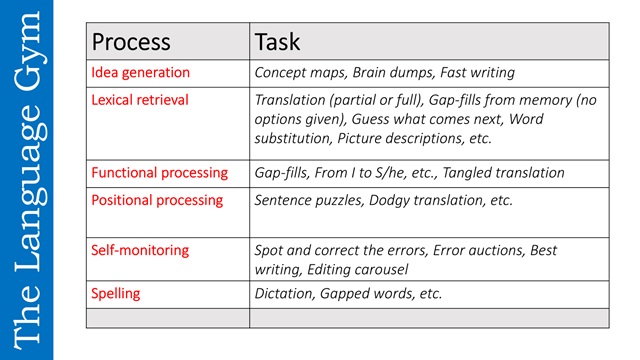
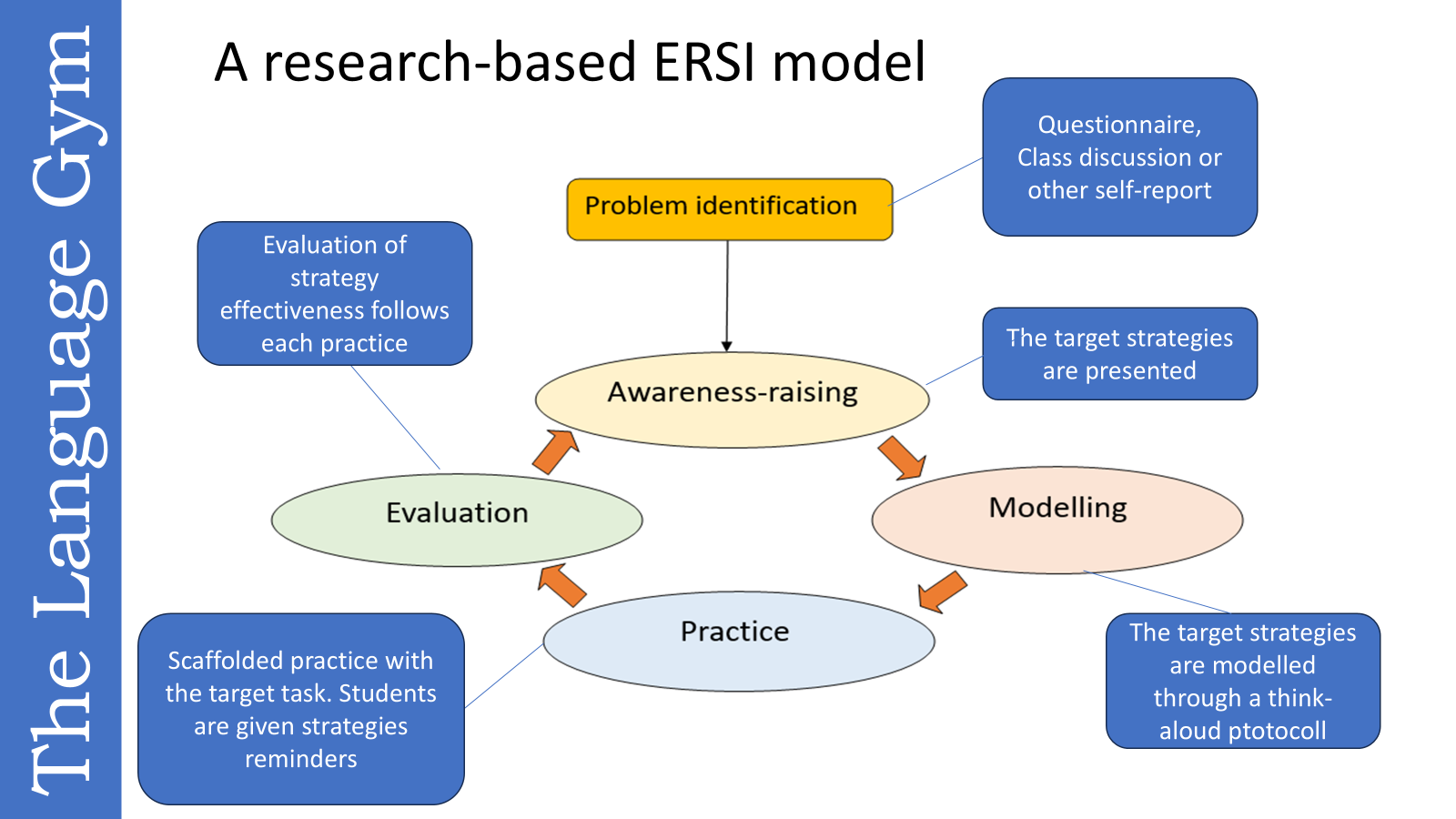

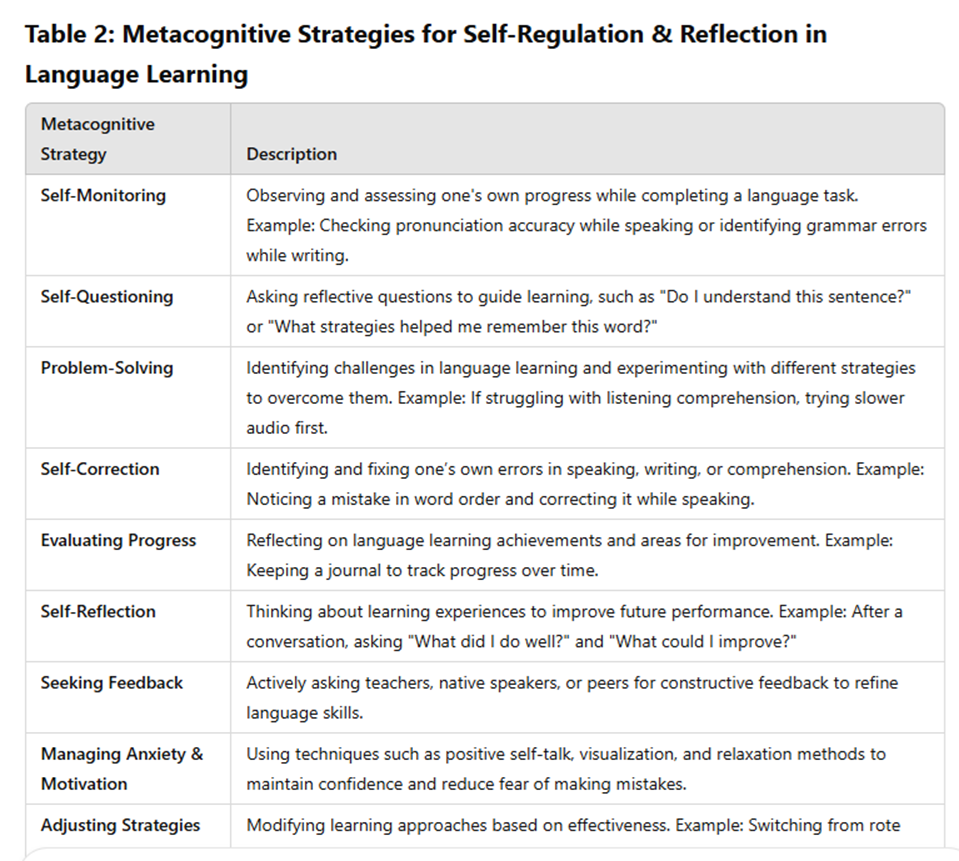
 The Language Gym
You must be logged in to post a comment.