Metacognitive enhancement and error correction: a discussion of the shortcomings of traditional error treatment and of the potential benefits of learner training in self-monitoring strategies
Dr Gianfranco Conti
Garden International School (Kuala Lumpur)
Dr Yoko Sato
Hosei University (Tokyo)
Abstract
This paper evaluates the merits of the most traditional forms of error treatment, Direct and Indirect Error Correction, as applied to L2-writing, highlighting the epistemological, pedagogical and learner-strategy related issues which undermine their efficacy. It also discusses why Explicit Strategy Training in self-monitoring strategies may constitute a more promising alternative in the light of Cognitive theories of L2-learning and of the existing empirical evidence.
1.Background
Research into the impact of teacher corrective response to L2 writers’ sentence level errors indicates that the most popular approaches, Direct and Indirect Correction (i.e. learner errors are either corrected by the teacher, or marked and left for the learners to self-correct) do not have a significantly enhancing effect on L2 writing accuracy and writing proficiency development (Truscott, 1996; Macaro, 2004). As Macaro (2004: 242) rightly observed,
these results are somewhat dispiriting given the amount of effort
that teachers put into providing feedback to written work. …
the evidence does seem sufficiently strong to question the effort
expended.
To make matters worse, other strands of Error Correction (EC) research have identified a number of problems which seriously undermine the efficacy of these techniques. Firstly, teacher feedback is often unhelpful and misleading (Hedgcock and Lefkowitz, 1998). Secondly, learners rarely pay attention to teacher corrections and, when they do, they do it superficially and/or applying ineffective feedback-handling strategies (Cohen, 1987; Cohen and Cavalcanti, 1990). Thirdly, too much correction may engender learner anxiety and error avoidance behaviour, both potential inhibitors of L2 learning (James, 1998). Furthermore, there is no consensus as to which feedback techniques are more effective in which context, and whether feedback on surface level error should be administered at the beginning or at the end of the multi-draft process currently so popular in L2 writing instruction.
The reactions to this state of affairs have ranged from proposing a total ban on correction (Truscott, 1996) to exploring innovative approaches which integrate traditional corrective approaches with other error-treatment techniques (Macaro, 2004). In particular, as we shall argue later, a very promising way forward for error treatment methodology seems to be indicated by a handful of Explicit Strategy Training (EST) studies in Self-Monitoring strategies (Ferris, 1995; Conti, 2001; Macaro, 2001). Below, we evaluate the merits of traditional corrective approaches and those of EST by reviewing what we consider to be the most representative empirical studies published in the core literature (see Ferris, 2004 for a fully comprehensive review).
2 Studies investigating the impact of Direct and Indirect Correction (with or without supplemental focus on form instruction) on L2 writing accuracy
2.1 Different forms of EC compared
Semke (1984) investigated the effects of EC on the writing of 114 American university students of L2-German. She divided her sample into four groups, each receiving one of the following types of teacher correction on their journal entries:
1. Comments on content only
2. Comments on errors only
3. Comments on both contents and errors
4. Errors underlined; learner self-correction expected
Using error-free T-units to measure accuracy, Semke found no significant differences among the groups in terms of error reduction. In addition, Group 1 (comments on content only) wrote longer freewrites at post-test and was significantly better than all the others on fluency and on a cloze test. This was interpreted as indicating that learner progress can be enhanced by practice alone and that EC could not just be unhelpful but even harmful. In fact, Semke reported that corrections may affect learner attitude to writing negatively, especially when they are required to make corrections by themselves.
Similarly, Kepner (1991) investigated the impact of different types of feedback on the journal writing of 60 second year university students of L2-Spanish. The sample was divided into two groups, one receiving DC with explanations and the other comments on the content only . The study covered a term and consisted of six pieces of work. Kepner found that the latter group produced significantly more higher order proposition than the former group, with no statistically significant difference in the number of errors made between the two groups.
Robb et al. (1986) studied the effects of EC on the writing of 134 Japanese university EFL learners randomly assigned to the following groups, each receiving a different form of error treatment:
1. Direct correction, indicating the errors and the correct forms;
2. Correction code to point out type and location of errors;
3. Highlighting the locations of errors without any explanation;
4. Marginal tally of the number of errors for each line, with no cueing as to the
typology or location of the errors
Students were required to redraft their compositions, making the appropriate changes. Writing ability was assessed using 19 objective measures, three of which was used to measure accuracy: the ratio of error-free T-units to the total number of T-units, the ratio of error-free T-units to the total number of words and the ratio of words in error-free T-units to the total number of words. At the end of the course, the researchers found no significant differences in students’ writing ability. Thus, they argued that less time-consuming methods of directing students’ attention to surface error may suffice (Robb et al., 1986: 91).
2.2 The effects of DC with supplemental editing instruction
Polio et al. (1998) set out to investigate whether additional editing instruction – the innovative feature of the study – would enhance learners’ ability to reduce errors in revised essays. 65 learners on a university EAP course were randomly assigned to an experimental and a control group who wrote four journal entries each week for seven weeks. Whereas the control group did not receive any feedback, the experimental group was involved in (1) grammar review and editing exercises and (2) revision of the journal entries, both of which were followed by teacher corrective feedback. On each pre- and post-tests, the learners wrote a 30-minute composition which they were asked to improve in 60 minutes two days later. Linguistic accuracy was calculated as a ratio of error-free T-units to the total number of T-units in the composition. The results suggested that the experimental group did not outperform the control group. The researchers conjectured that the validity of their results might have been undermined by the assessment measure used (T-units) and/or the relatively short duration of the treatment. They also hypothesised that the instruction the control group received might have been so effective that the additional practice for the experimental group did not make any difference.
2.3 The impact of selective DC
Other studies had a much narrower focus as they investigated the effects of EC on only a few selected structures. Loewen (1998), for instance, conducted a small-scale investigation of the effects of selective EC on the writing of twelve mixed nationality ESL learners. Loewen divided the learners into two groups, one focusing on the Simple Past and Plural s, and the other on the third person –s and the passive voice. The treatment was provided in the form of Direct Corrections on the seven essays written by both groups. At the end of the semester no significant improvements were observed for either group. Loewen acknowledged that the small sample size and the absence of control groups were important limitations of the study. What might have also affected the results was the infrequent occurrence of three of the four target structures, partly due to the learners’ avoidance, and partly due to the type of expository writing the students engaged in, which did not present many obligatory occasions for the use of those structures.
2.4 The effect of IC on re-drafts
Another set of studies investigated the short-term effects of IC on the accuracy of student rewrites (Fathman and Whalley, 1990; Ashwell, 2000; Chandler, 2003); the students were corrected on their writing and then asked to rewrite the same paper, taking the corrections into consideration. These studies indicate that even when the students are solely focused on form and are told where the mistakes are, they can only correct from 1/3 to1/2 of the errors. The success rate increases to 90% when they are given the actual rule and need only copy – which means that even in the best conditions they still miss 10% of the errors. Not unsurprisingly, Krashen (2005) concludes his review of these studies stating that their findings constitute ‘hardly a compelling case for correction’. Finally, it should be noted that, none of these studies being longitudinal, we do not know whether the error treatment had any long-term impact on the participants’ proficiency development.
3 Why Traditional Approaches to Error Correction do not work
In drawing conclusions from the existing research, one has to bear in mind that EC studies differ greatly across a number of important design and procedural features, such as corrective techniques, learner types, languages, time scale and assessment measures. This makes the comparison across studies difficult thereby impinging on the generalisability of the findings (Ferris, 2004). Moreover, there are major flaws in design and methodology that need to be taken into account. Firstly, the measures of accuracy adopted by many studies, error-free T-units based counts, are not the most effective instruments for detecting error reduction, especially over relatively short periods of time and at lower levels of proficiency. For instance, even if a student goes from producing an average of ten errors per T-unit at pre-test to producing only one error at post-test, the Error-Free T-unit count will not register any improvements whatsoever.
Secondly, the number of written pieces the past studies involved was sometimes far too small to ensure sufficient practice of the problematic items and exposure to the relevant corrective feedback (e.g. in Kepner, 1991) .
Thirdly, several studies were either not transparent as to the inter-rater reliability procedures adopted to validate the error counts (if any) or did not publish the figures (Ferris, 2004). For instance, Robb et al (1986) stated that their reliability score was .87; however, they did not tell us to which of the 19 objective measures they used that score refers. It would appear that the score was the average of all the 19 measures (which included objective measure like number of words, number of clauses and T-units). Thus, we do not know the reliability of the actual coding of the accuracy measures used. The fact is that it is undoubtedly easier to get a high reliability on measures like number of words, number of clauses and T-units; it remains to see if, taken in isolation, the measures-of-accuracy inter-reliability scores would have, by themselves, been sufficiently significant .
Furthermore, very few studies provided information as to the learning background and beliefs of their participants, which may play crucial roles in the success of a corrective approach. A student who has little metalinguistic knowledge may find grammar feedback daunting. On the other hand, someone who feels that Direct Correction with grammar explanations has worked very well for him/her in the past may resist other corrective treatments, especially if he/she knows that they are only temporary measures for an experiment. It should also be noted that when one tests an instructional technique, one is also testing the effectiveness of the teacher who delivered it, his/her rapport with the students (with its enormous implications on motivation) among other things. None of the published EC studies reported on this crucial element of learning. In fact, in reviewing the above research, one cannot help notice the absence of qualitative data about the human factors that may have interacted favourably and unfavourably with the treatment under investigation.
In view of the above limitations, the existing empirical evidence cannot be said to conclusively prove that EC does not work. It does, however, strongly indicate that Direct Correction (with or without rule explanation) and Indirect Correction do not significantly improve L2-writer accuracy. The finding that the combination of Direct Correction (DC) with grammar instruction and peer editing may not work is particularly important given that a host of EFL books and materials promote and/or provide practice in this kind of approach (Ferris, 1999). It is also noteworthy that Indirect Correction (IC) may induce some degree of learner disaffection (Robb et al, 1986).
A number of factors undermine the effectiveness of EC, the most important ones being the following:
1) Learners’ attitude to correction is often superficial and their feedback-handling strategies are poor.
The effectiveness of DC depends largely on two factors: (a) how effective the corrections are in helping the learners restructure their assumptions about a given L2 item and (b) what the learners do with the feedback. As Truscott (1996) noted, numerous studies have revealed that the quality of teacher feedback is often poor. Furthermore, there are findings that learners tend to have a superficial attitude to correction and invest very little cognitive effort in handling teacher feedback, often simply looking briefly at the mistakes and making a mental note of them (Cohen, 1987; Cohen and Cavalcanti, 1990; Conti, 2001). IC does partly address this issue by involving the learners more actively in the feedback-handling and editing process through self-correction. However, learners may not be able to correct (Krashen, 2005), may correct wrongly (Conti, 2001), or may be frustrated if asked to self-correct what is well beyond their current grasp of the language. In addition, accurate self-correction could be the results of applying the ‘guessing’ strategy’ “if a given item can only be X or Y and X in this case is wrong, then the correct form must be Y” (Conti, 2005). In such cases the students’ accurate self-correction may fool the teacher into believing that the learners have learnt the target item. More importantly, IC falls short of promoting learning of new structures and of re-learning of existing Interlanguage structures in that it concerns itself mostly with self-correctable mistakes. Thus, it leads at best to raising learners’ awareness of their mistakes and consolidating old material.
The role of the quality of teacher corrections and of students’ feedback-handling is crucial to L2 acquisition. The negative evidence provided by the teacher is often (especially in an FL environment characterised by low L2 input) the only way for students to realise that their usage of a given L2 item is wrong and needs restructuring. This process of “noticing” (Schmidt, 1990) marks the beginning of conscious L2 learning which, according to Skill-Theory , will eventually lead to the acquisition of the noticed item after extensive practice (e.g. Anderson, 2000; Johnson, 1996). However, this can only occur if the teacher’s corrections are clear and learnable (i.e. not beyond the learner’s grasp or level of acquisition) and if the learners pay sufficient attention to and apply any productive feedback-handling strategies (e.g. make a written note of the correction, ask an L2 expert for clarification, do follow-up remedial grammar work). Any form of instruction in order to be effective require the learner to take an active role and deep processing of the target information must take place. As Cohen (1987), Cohen and Cavalcanti (1990) and Conti (2004)’s study have shown, students’ cognitive investment in the corrective process is low and teachers do not seem to demand or even encourage it.
(2) DC and IC on their own are short-term measures which do not involve the learners in a sustained long-term effort to eradicate error.
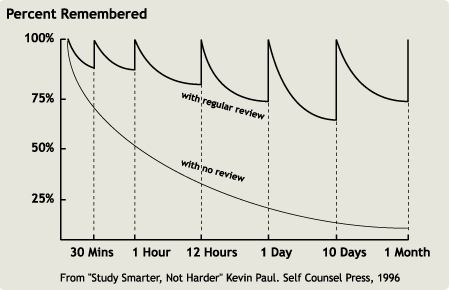
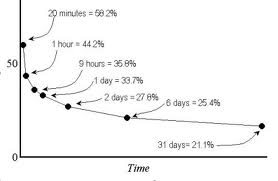
This is problematic for two reasons. Firstly, the rate of human forgetting is such that after one week only 80% of whatever the students learn from the corrections would be lost without reinforcement. Thus, without some form of instructional follow-up, the impact of correction is likely to be minimal. Secondly, it should be pointed out that for any language items to be successfully learned, they must be practised with success (i.e. with positive feedback from the environment) on numerous occasions over a long period of time (Anderson, 2000). This implies that a one-off follow-up remedial lesson to address learners’ mistakes has very limited long-term learning potential. After all, two factors are crucial in any kind of learning: frequency of exposure and the amount of attention devoted to the target item/s; thus, for a correction to be learnt, any learners should be exposed to it frequently enough to first notice it, then learn it declaratively, and, finally, proceduralise it. In the case of fossilized items, in particular, the issue is complicated by the fact that de-fossilization is a very lengthy process. Furthermore, it is crucial that learners’ attention is constantly focused on the target item. This may not happen if learners are corrected on a large number of items over a relatively short period of time, and students are not asked or do not decide to prioritise certain items over others. Also, as Loewen (1998) pointed out, this will not happen if the structures targeted by the treatment, are not likely to recur often enough in the type of expository writing the participants are engaging in.
(3) DC and IC do not usually systematically attempt to identify the causes of errors, and tend to offer the same blanket-treatment to all mistakes and to all students.
It is one of the most fundamental assumptions of modern pedagogy that the success of any instructional programme depends largely on the correct identification of the target learners’ needs (Littlewood, 1984). Applied to the area of remedial instruction, this principle translates as follows; error treatment is likely to be more effective if teachers identify accurately the root causes of their learners’ mistakes. For instance, it would not make much sense for an L2 writing instructor to treat self-correctable mistakes caused by processing inefficiency (performance errors) in the same way as he/she treats errors due to lack of knowledge. The former may require training in editing strategies (see below) and a lot of practice; the latter, cognitive restructuring or, if they refer to grammar structure well beyond the learner’s developmental stage, possibly no treatment at all. The possibility that the “failure” of the above reviewed studies may be due to this issue cannot entirely be discounted.
(4) DC and IC rarely attempt to raise learner intentionality and motivation to eradicate error.
In the way DC and IC are usually administered, teachers do not systematically attempt to raise the learner’s intentionality to eradicate their errors. This is an important shortcoming since learner intentionality appears to play an important role in the success of any kind of instruction (Schmidt, 1994). For EC to work, learners must want to eradicate errors. As Johnson (1996) observed, the issue of intentionality is particularly important in the area of mistakes which do not impede communication and which learners may consequently not perceive as important – the so-called ‘minor’ mistakes. Learner perceptions of the importance and gravity of mistakes will depend on a number of factors. One such factor refers to the relevance to their academic success. If, as in the case of UK examination boards, a student can obtain a grade ‘A’ at GCSE having made a relatively high number of such minor mistakes, he/she will not put much effort on eliminating these mistakes. Another important factor will be the bias in corrective feedback consciously or subconsciously conveyed by the teacher to their students. If a teacher applies selective EC which prioritises effective communication over grammatical correctness, the learners may perceive the former as more important than the latter with consequences for the orientation of their intentionality.
Similarly, DC and IC may impact negatively on the motivation of those learners who do not know how to improve on their mistakes. In these writers’ professional experience, the perception of not being able to address one’s learning problems is a common and powerful catalyst of learner anxiety. Thus, whereas in highly self-efficacious learners correction may spark a productive form of arousal and/or facilitative anxiety (James, 1998), in less self-efficacious ones the opposite is often true. A counter-productive form of anxiety sets in and the students often linger in a state of learning inertia and disaffection. This issue is exacerbated when the correction on those problems is recurrent, judgmental and carried out without the due tact and sensitivity (Edge, 1989). Simply reminding learners of their inadequacies or asking them to self-correct what is beyond their ability could only be demotivating and detrimental to learning. As the resultative hypothesis (Skehan, 1989) posits, learners need to feel empowered with effective instruments for overcoming their problems and must experience success in their performance in order to gain confidence and feel motivated.
(6) EC is not traditionally a learner-centred process and does not aim at learner autonomy.
The emphasis on learner–centredness and autonomy is one of the most innovative features of modern L2 pedagogy. Yet, EC is still largely carried out through models of feedback provision whereby the teacher is the exclusive manager of the corrective process. The fact that teachers select the errors to be treated may have negative consequences on the motivation of those learners for whom self-determination is an important personal value. For such learners, an approach whereby the teacher allows the student to make an informed choice as to which errors they want to address may be more beneficial. Another issue with teacher-centredness and lack of learner autonomy relates to self-correctable errors often left in learners’ writing due to poor editing and carelessness. A number of studies have shown that many of the errors in L2 writing are self-correctable if their presence is pointed out by the teacher (e.g. Conti, 2004). As Ferris (1999) noted, L2 students must learn to become self-reliant and effective editors in preparation for their academic and/or professional life when teacher help will no longer be available. Eliminating self-correctable errors also has the practical advantage of allowing the teachers to devote their time to errors which the learners cannot correct by themselves. However, traditional EC does not equip learners with effective editing skills or instruct them to apply more attention and commitment on the editing process.
(7) Traditionally, Error Correction does not explicitly promote the enhancement of error-related metacognition.
Related to the previous point is EC’s failure to systematically develop learners’ awareness of their problematic areas. The effects of heightened learner self-awareness are manifold; the most obvious is that it may prevent specific errors from re-occurring by sparking a process of self-monitoring. This, in turn, may lead to more effective editing (e.g. “If I know that I make a mistake on this item, I will be more careful in using it in the future”) and/or independent learning (“Since I keep making mistakes on this item, I’d better learn more about it”). It may also trigger intentionality by bringing into the learner’s focal awareness the full extent of his/her lack of commitment and/or gaps in his/her mastery of the items (e.g. “So many silly mistakes! I must do something about it!”). Conti (2004) found that student -generated error checklist which included familiar mistakes noted in previous essay played a significant role in reducing self-correctable routinised mistakes due to processing inefficiency, especially those related to function words. These errors, as Johnson (1996) notes, are the most impervious to correction as they usually refer to less semantically salient items which often go unmonitored (Johnson, 1996) and unless brought into learner focal attention will keep going unmonitored until they are fossilized (Conti, 2004).
4 The way forward: Explicit Strategy Training in self-monitoring as an effective alternative
Should we ban EC altogether then, as Truscott (1996) advocated? This has been a thorny issue for the last decade or so and no-one as yet has refuted Truscott’s arguments convincingly. Surveys of student opinion clearly show that students want their errors to be corrected (Ferris, 2004). Authoritative Cognitive theories of L2 acquisition posit the crucial importance of EC as a catalyst of L2-learning (e.g. Byalistock, 1980; McLaughlin, 1987; Anderson, 2000); and there is some research evidence, however scant and controversial, that it can indeed work (Ferris, 2004). It seems that the real issue is not whether to abolish EC or not, but how to find a more effective alternative. As already stated at the beginning of this paper, alternative models of error treatment can already be found in the literature, in a handful of successful Explicit Strategy Training (EST). It should be noted that the remedial approaches adopted in these studies did not do away with EC, but rather integrated it with strategic instruction.
4.1 Rationale for the adoption of Explicit Strategy Training
The rationale behind the adoption of EST is that many of the factors which undermine the effects of EC may be viewed as strategic deficits, more specifically:
(1) the inadequacy of student interaction with teacher-correction maybe viewed as referring to a lack of effective feedback-handling strategies;
(2) the fact that students do not engage in long-term targeting of their errors, as stemming from a deficit in Self-Monitoring strategies;
(3) the recurrence of self-correctable ‘sloppy’ mistakes, as resulting from poor editing strategies;
(4) the lack of learner autonomy in the area of error-treatment, as caused by low levels of self-regulation (i.e. metacognitive strategies);
(5) the lack of declarative knowledge which is at the root of many errors may also be seen as the result of ineffective learning skills;
(6) finally, the disaffection of those learners who feel unable to improve may be seen as relating to the domain of affective strategies (e.g. resilience )
Viewed from this angle, remedial instruction which effectively addresses the above strategic deficits (e.g. Explicit Learner Training), should, at least in theory, have a more beneficial impact on learning than DC and IC.
4.2 Approaches to EST
The existing EST studies share the following features, which were lacking in the traditional forms of EC reviewed above:
(a) Enhancement of learner error-related metacognition
(b) A long-term process of self-monitoring
(c) Modelling of and extensive practice in the use of effective self-correction / editing strategies
(d) Personalisaton of error treatment
(e) Focus on the process rather than the product of writing and learning in general
(f) Synergistic use of various forms of EC
EST programmes typically consist of the following phases (O’Malley and Chamot, 1990; Cohen, 1998; Macaro, 2001):
(1) Pre-test needs assessment: The learners’ needs are assessed, usually through a combination of different instruments (e.g. questionnaires, interviews, think-aloud protocols and other forms of self-reports) in order to strengthen the validity of the data.
(2) Introductory phase: The rationale for the training is given and the target strategies are presented and modelled.
(3) Scaffolding phase: The learners receive extensive practice in the target strategies with the help of “scaffolding”, i.e., activities and materials which remind and encourage the learners to apply the target strategies.
(4) Autonomous phase: The learners are left to their own devices without any intervention on the part of the teacher.
(5) Evaluative phase: The learners’ use of the target strategies and their impact on their performance are verified. Normally the same diagnostic instruments used at pre-test are re-deployed here.
The rationale for adopting EST as an alternative to EC and IC lies in the fact that it addresses the deficits of traditional corrective methodologies that we have identified thus far, namely: (1) it is a learner-centred instructional methodology which has at its core the assessment of learner needs ( i.e. the analysis of the sources of errors in the context of error treatment). These enable the teacher to deliver more personalised, fine-grained instruction for different learners and different types of errors. (2) EST programmes usually include components for attitudinal change and for enhancing self-efficacy and motivation as well as metacognitive awareness (Wenden, 1987; 1991). These would in turn help to develop the learners’ self-regulation and intentionality to act on their learning deficits. (3) EST addresses the strategic deficits which undermine the effects of traditional EC (note 2). (4) being based on Skill Theory, which postulates that acquisition occurs only after extensive practice and numerous instances of feedback from the environment (Anderson, 2000; Johnson, 1996), EST provides/scaffolds extensive contextualised practice of the target strategies through tailor made resources/activities (Macaro, 2001).
Moreover, although empirical research in EST is still scant, some promising results have been yielded in a small number of existing studies in the area of L2 writing.
Lalande’s (1982) study, although the researcher did not refer to the study as an EST experiment, is considered as the oldest of the studies in this area since it involves metacognitive enhancement and strategic instruction. Lalande compared the effects of two different types of feedback on the writing of FL German learners: DC and IC. Upon reception of the marked essays the learners were asked to correct their mistakes and re-write the entire essay. For the experimental group, this involved interpreting the codes. As the course progressed, the experimental group learners monitored the frequency and recurrence of error types by referring to Error Awareness Sheets (error charts in which students logged their mistakes). Lalande found that “the combination of error awareness and problem solving techniques had a significant beneficial effect on the development of writing skills” and “effectively prevented students from making more grammatical and orthographic errors.” (Lalande, 1982: 78)
Ferris (1995) set out to improve 30 ESL writers’ essay accuracy through EST in editing skills which involves a strong metacognitive component (awareness-raising and self-monitoring). The corrective treatment included the following: self-correction, peer feedback, teacher- and learner-generated editing checklists, learners’ error chart, awareness-raising, remedial grammar instruction and exercises, and classroom editing activities. The essays were analysed in terms of five categories of errors: noun, verb, sentence structure, punctuation, miscellaneous. The results showed that nearly all her learners (28/30) made significant progress in reducing the overall percentage of errors in at least some of the five error-categories. However, they were not always successful in reducing their percentages of error in specific categories on which they had been advised to focus. Also, there was considerable variation in error reduction in the targeted categories across both error category and writing context (home or class). These mixed results, Ferris concluded, “show how individual a process editing really is” and that “personalized instruction and guidance in editing may be most effective” (1995a: 52).
Conti (2001) conducted a quasi experimental study involving 20 university students of L2 Italian of intermediate writing proficiency. He compared the accuracy of 250 essays written by two groups (about 10 per participant): one who received EST in feedback handling, error targeting and production monitoring strategies, and the other who received traditional DC. The results showed that the experimental group’s error rate decreased significantly from the first to last essay across all the categories of errors investigated. A comparison with the control group indicated a significant advantage for the independent variable. In fact, increases in error rate were observed for several comparison group learners. Analysis of think-aloud protocols collected during the writing of the last in-class essay revealed that most of the corrections by the experimental group students were through the application of the target strategies, as agreed by two independent inter-coders). The final questionnaires and interviews indicated that the experimental group felt their accuracy had improved substantially due to the training whereas the other group felt their accuracy had either improved slightly or not at all. It is noteworthy that there was no difference in the quality of the content of essays by the two groups as assessed by independent raters.
Macaro (2001) implemented an EST aimed at enhancing the writing skills of three groups of secondary school L2 French students. The training focused on composition and editing strategies using scaffolding techniques similar to Conti (2001). A set of memory, cognitive and metacognitive strategies were modelled and scaffolded over a semester in order to improve learner accuracy in the areas of tenses use, and noun-adjective agreement. The performance of three experimental groups was compared with three control groups who received DC. The results showed a significant advantage for the experimental groups.
It should be noted that with the exception of Macaro (2001), the existing EST studies investigated relatively small samples of students and each study investigated different foreign languages. This obviously undermines the generalisability of the findings. In addition, the comparability of the experimental and control/comparison groups had hardly been established statistically. Furthermore, apart from Conti (2001), none of the above studies calculated inter-rater reliability in analysing errors and strategy use, and this further threatens the validity and reliability of the findings. Nevertheless, the above review suggests the potential of EST as a more effective alternative to traditional EC in treating errors in L2 writing.
5 Conclusions
This paper has attempted to show why EST has the potential to be a more effective alternative to traditional EC. As discussed above, the existing research evidence strongly suggests that traditional EC does not work due to a number of intrinsic and extrinsic flaws. The intrinsic ones related to the epistemological assumptions that learning occurs by simply looking at the teacher correction; the extrinsic ones to the way teachers provide feedback or to the learners’ often superficial interaction with the correction. There are also other reasons for the failure of traditional EC not previously discussed in the literature: 1) lack of the identification of root causes of errors, whether cognitive or strategic, and of the treatment of errors accordingly, 2) insufficient provision of practice of and exposure to problematic items, and 3) lack of active development of learners’ motivation, intentionality and editing skills needed to become effective, self-autonomous writers. On the other hand, EST addresses these deficits. It 1) assesses learners’ deficits that lead to error-making or inadequate feedback-handling, 2) raises learners’ awareness of problematic areas and engages learners in a long-term process of self-monitoring of recurrent errors, 3) provides instruction and extensive practice in strategies that suit learners’ needs and have the potential, if used effectively, to enhance their performance and 4) gradually shifts the responsibility of the error-treatment process to the learners, who become self-reliant writers.
In the absence of a solid body of research, it is difficult to say with certainty that EST will definitely work and which form of EST is effective with what kind of learners. More studies should be carried out testing out the efficacy of the EST instruction with larger samples of students in a variety of contexts using more valid research methods than the existing ones. This state of affairs may deter teachers from adopting it in their classroom practice, especially when EST programmes are not easy to set up and implement as they require a lot more time, effort and know-how than simply correcting or coding learners’ errors. Furthermore, teachers must be trained in the use of needs assessment tools such as questionnaires, interviews and error analysis, and students need to be persuaded that the time and effort they are going to invest in the training are conducive to learning. Nevertheless, EST is worth the effort if one considers its long-term benefits. In fact, after the initial stages of the training where the learners require substantial cognitive and affective support, the students will become more self-reliant, and the teacher’s work will be limited to helping the learners solely with the errors that they cannot cope with. As the students mature linguistically and metacognitively year after year, the need for the teacher to intervene will be reduced even further. To start with, we suggest teachers incorporate in their practice the most important features of EST: 1) personalised error treatment, 2) enhancing the learning outcome of student-interaction with teacher feedback and 3) long-term, repeated instruction on problematic language items.
References
Anderson, J.R. 2000. Cognitive psychology and its implications (5th edition). New York: Worth Publishing.
Cohen, A.D. 1987. Student processing of feedback on their compositions. In A.L. Wenden and J.
Rubin. (eds.) Learner strategies in language learning. Englewood Cliffs, NJ: Prentice Hall, 57-69.
Cohen, A.1998. Strategies in learning and using a second language. Harlow: Longman.
Cohen, A.D. and Cavalcanti, M. 1990. Feedback on composition: teacher and student verbal report. In B.
Kroll. (ed.) Second language writing: Research insights for the classroom. New York: Cambridge University Press, 155- 177.
Conti, G. (2001) E possibile migliorare I’efficacia della correzione attraverso 1’istruzione strategica? –
Tuttitalia, 23, 4,14
Conti, G. (2004). Metacognitive enhancement and error correction: An investigation in the impact of self monitoring strategies on L2 Italian student writing. Unpublished Doctoral Dissertation, University of Reading, United Kingdom.
Edge, J. 1989. Mistakes and correction. London: Longman.
Ferris, D.R. 1995b. Teaching ESL composition students to become independent editors. TESOL Journal. 4(4): 18-22.
Ferris, D.R. 1997. The influence of teacher commentary on student revision. TESOL Quarterly. 31(2): 315-339.
Ferris, D.R. 1999. The case for grammar correction in L2 writing classes: A response to Truscott (1996). Journal of Second Language Writing. 8(1): 1-11.
Ferris, D.R. 2004. The ‘‘Grammar Correction’’ Debate in L2 Writing: Where are we, and where do we go from here?(and what do we do in the meantime …?) Journal of Second Language Writing. 13(1): 49–62
Frantzen, D. 1995. The effects of grammar supplementation on written accuracy in an intermediate Spanish content course. Modern Language Journal. 79 (3): 329-344.
James, C. 1998. Errors in language learning and use: Exploring error analysis. Harlow: Longman.
Johnson, K. 1996. Language teaching & skill learning. Oxford: Blackwell.
Kepner, C. 1991. An experiment in the relationships of types of written feedback to the development of second-language writing skills. Modern Language Journal. 75(3): 305-313
Lalande, J.F. 1982. Reducing composition errors: An experiment. Modern Language Journal. 66 (2): 140-149.
Lee, I. 1997. ESL learners’ performance in error correction in writing: Some implications for teaching. System. 25(4): 465-477.
Littlewood, W. 1984. Foreign and second language learning, language acquisition research and its implications for the classroom. Cambridge: Cambridge University Press.
Loewen, S. 1998. Grammar correction in ESL student writing: How effective is it? Retrieved on June 6, 2003 from http://www.temple.edu/gradmag/fall98/loewen.htm.
Macaro, E. 2001. Learner strategies in second and foreign language classrooms. London: Continuum.
McLaughlin, B. 1987. Theories of second language acquisition. London: Edward Arnold.
O’Malley, J.M. and Chamot, A.U. 1990. Learning strategies in second language acquisition. Cambridge: Cambridge University Press.
Polio, C., Fleck, C. and Ledere, N. 1998. “If I only had more time”: ESL learners changes in linguistic accuracy on essay revisions. Journal of Second Language Writing. 7(1): 43-68.
Robb, S., Ross, T. and Shortreed, I. 1986. Salience of feedback on error and its effect on EFL writing quality. TESOL Quarterly. 20(1): 83-96.
Schmidt, R. 1990. The role of consciousness in second language learning. Applied Linguistics. 11(2): 129- 158.
Semke, H. 1984. Effects of the red pen. Foreign Language Annals. 17(3): 195-202.
Skehan, P. 1989. Individual differences in second language learning. London: Edward Arnold.
Truscott, J. 1996. The case against grammar correction in L2 writing classes. Language Learning. 46(2): 327-369.
Wenden, A. 1987. Incorporating learner training in the classroom. In A. Wenden and J. Rubin. (eds.)
Learner strategies in language learning. Englewood Cliffs: Prentice Hall International, 159-168.
Wenden, A. 1991. Learner strategies for learner autonomy. London: Prentice Hall International.



 The Language Gym
You must be logged in to post a comment.