Why does training L2 learners in METACOGNITION often fail?

Introduction

In the 80s and 90s, metacognition – one’s awareness and regulation of one’s own thinking and learning processes – was a big deal in educational circles. L2 researchers like O’Malley and Chamot, Wenden, Cohen and, in England, Professors Macaro (my PhD supervisor) and Graham (my PhD internal examiner), advocated vehemently for the implementation of training in metacognitive strategies as a means to improve learning outcomes.

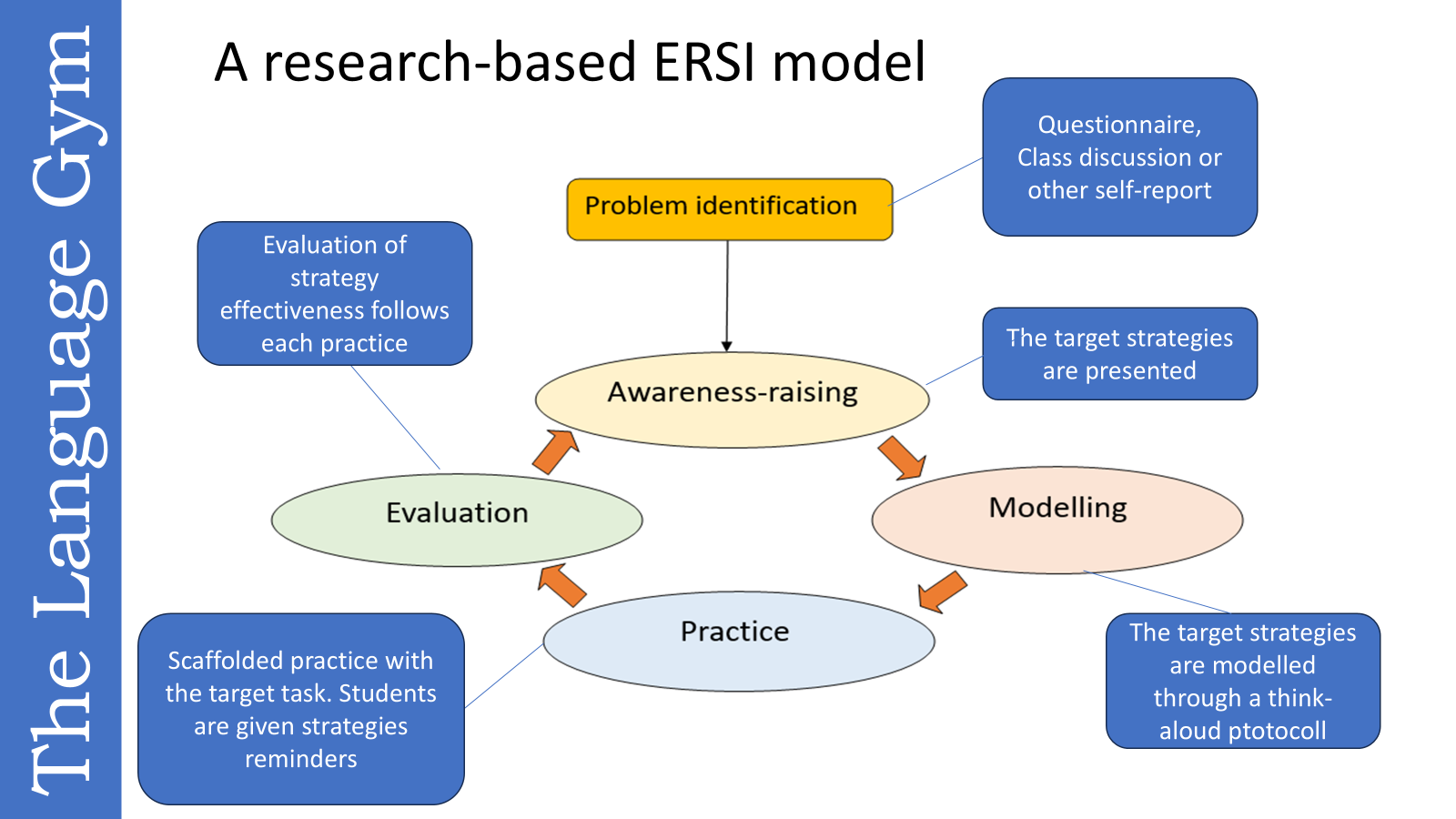
These advocates postulated, based on evidence from a handful of promising studies, that metacognition could be effectively taught following a principled framework (Explicit Strategy Training) which unfolded pretty much like the model in the picture below (ERSI = Explicit Reading Strategies Instruction), significantly enhancing L2 students performance across all four language skills.

Figure 1 – Explicit Strategy Training model

As often happens in our field, the interest fizzled out pretty soon, as language educators quickly realised that the time and effort they had to put in in order for metacognitive training (henceforth MT) to yield some substantive benefits was more than they could afford. There were other issues too, which I will explore below, to do with developmental readiness, teacher expertise and motivation, which deterred many language educators from buying into MT.

I experienced first-hand how time consuming, effortful and complex implementing an MT program is, during my PhD in Self-Monitoring strategies as applied to L2 essay writing. Mind you, the results were excellent: the training managed to significantly reduce a wide range of very stubborn errors in my students’ writing. However, the time and effort I invested in the process was something that I could have never been able to put in, had I been a teacher on a full timetable.

40 years on since its golden age, metacognition and MT are trending again in educational circles. Many schools are now implementing metacognition enhancement programs in the hope to increase learner planning, monitoring and self-evaluation skills. However, at least from what I have gleaned from my school visits, conversations with colleagues and other anecdotal data, many of these programs exhibit a number of flaws which seriously undermine their efficacy. Before delving into them, let me remind the reader of what metacognition and metacognitive strategies are about.

Metacognition and metacognitive strategies – what are they?

Having written about metacognition before, I will very briefly remind the reader of what metacognition entails.

Metacognition is the awareness and regulation of one’s own thinking and learning processes. It involves three key components:

(1) Metacognitive Knowledge—understanding how one learns best;

(2) Metacognitive Regulation—planning, monitoring, evaluating and adjusting learning strategies; and

(3) Metacognitive Experience—reflecting on past learning to improve future performance.

In language learning, metacognition helps learners set goals, choose effective strategies, and evaluate progress. It fosters independence, problem-solving, and long-term retention. Effective metacognitive strategy training enables learners to become more self-aware and adaptable, improving comprehension, speaking, and writing skills. Ultimately, metacognition transforms learners into active, strategic thinkers who optimize their own learning.

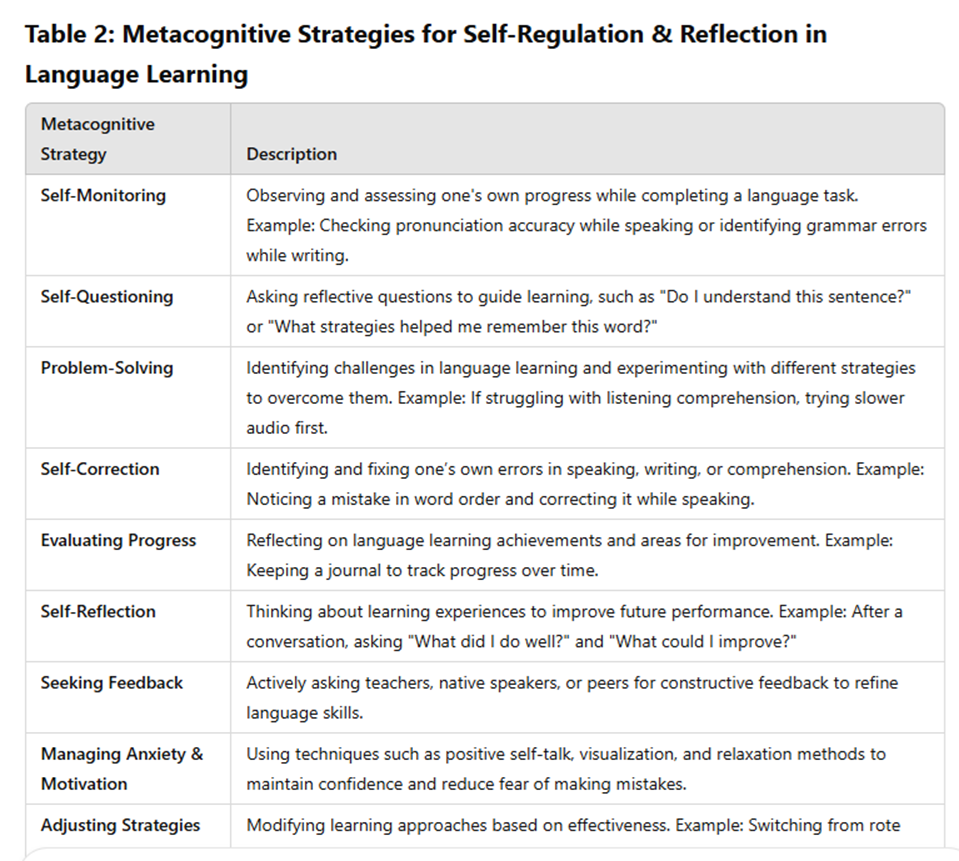
Metacognitive strategies include actions, mental operations and techniques that L2 learners undertake in order to improve their performance by planning, monitoring, self-evaluating and setting goals, Tables 1 and two below categorize metacognitive strategies into those that help with planning & monitoring and those that support self-regulation & reflection, making them easier to implement systematically.

Common shortcomings of metacognitive training programs

1️ Insufficient or Inconsistent Training Duration

Many programs do not provide enough time for learners to fully develop and internalize metacognitive strategies. Effective strategy use requires regular and long-term practice and reinforcement lasting 3 to 6 months or even longer, yet some programs last only a few weeks. This is the most common reason as to why MT programs fail according to the literature.

Example Issue:

🔹 A 4-week metacognitive training program may not show strong results because learners haven’t had enough exposure to develop automatic strategy use.

Solution:

✅ Longer programs with progressive scaffolding (e.g., training over an entire semester or year).
✅ Periodic strategy reinforcement instead of one-time instruction.


2.  Lack of Explicit Training

Why It Matters

Some teachers assume that learners will naturally pick up metacognitive strategies just by being exposed to them. Implicit instruction (modeling, indirect feedback) can play an important role but on its own is often not enough—students need explicit training on how and when to use these strategies.

Example Issue:

🔹 A study where learners are simply given reading comprehension tasks but are not explicitly taught how to plan, monitor, and evaluate their reading may fail to show significant improvements.

Solution:

Explicit strategy instruction with step-by-step guidance (e.g., teaching learners to pause, summarize, and predict while reading).
✅ Use of think-aloud protocols where instructors demonstrate metacognitive strategies.


3. Lack of Learner Awareness & Readiness

Why It Matters

Not all learners instinctively use metacognitive strategies. Beginners or low-proficiency learners may lack the cognitive capacity to focus on both language processing and strategy application at the same time.

Example Issue:

🔹 A program implementing high-level reflection strategies with beginner learners may find little impact because they struggle with basic comprehension, making strategy use overwhelming.

Solution:

✅ Gradual introduction of simple strategies first, then progression to more complex ones.
✅ Differentiated instruction based on learner proficiency.


4. Misalignment Between Metacognitive Strategies and Task Demands

Why It Matters

Some strategies may not be suitable for the specific language task the students are being training to perform. If the strategy does not align with the nature of the task, learners may misuse or underuse it.

Example Issue:

🔹 Testing metacognitive listening strategies (predicting, summarizing) on a phoneme discrimination task may not see much improvement because phoneme recognition relies more on cognitive than metacognitive skills.

Solution:

✅ Ensure the right strategies are taught for the right tasks (e.g., metacognitive strategies are most useful for reading, writing, and listening comprehension).
✅ Train students when to use which strategy effectively.


5. Limited Learner Motivation or Engagement

Why It Matters

Some students do not see the immediate value of metacognitive strategies and fail to engage with them actively. If students are not motivated, they are unlikely to consistently apply the strategies outside of training sessions.

Example Issue:

🔹 A study assumes that students will automatically use metacognitive strategies in their self-study time, but without motivation, many learners simply do not apply them.

Solution:

✅ Increase strategy relevance by linking them to real-world benefits (e.g., improving exam performance, fluency, or confidence).
✅ Use gamification and self-reflection exercises to keep learners engaged.


6. Failure to Account for Individual Differences

Why It Matters

Learners differ in cognitive styles, motivation, and prior strategy knowledge. Some learners naturally use metacognitive strategies, while others struggle even after training.

Example Issue:

🔹 A study may average the results across all learners without considering that some learners benefited while others did not.

Solution:

✅ Conduct pre-tests to determine baseline strategy use before training.
✅ Use personalized strategy training rather than a one-size-fits-all approach.


✅ Use multiple assessment methods (e.g., think-aloud protocols, task-based assessments, real-time monitoring).
✅ Measure language proficiency gains alongside self-reports.


7. Teacher Expertise & Implementation Issues

Why It Matters

Some teachers may not be adequately trained in metacognitive instruction, leading to ineffective delivery.

Example Issue:

🔹 A program on listening strategy training fails to show strong results because teachers do not provide clear modeling or feedback.

Solution:

✅ Ensure teacher training in explicit strategy instruction.
✅ Use standardized instructional methods across all participants.


8. Short-Term vs. Long-Term Impact Measurement

Why It Matters

Some program measure effects immediately after training, missing potential long-term benefits. Metacognitive strategies often require time to internalize before showing clear benefits.

Example Issue:

🔹 A program finds no significant impact after 4 weeks, but if measured after 6 months, the results might be different.

Solution:

✅ Conduct longitudinal follow-ups to check delayed improvements.
✅ Use delayed post-tests to assess strategy retention.


Conclusion: Why do many metacognitive training programs fail?

Many MT programs fail to show strong effects because of:

  • Too short training duration – Not enough time for mastery.
  • The students may not be cognitively ready – MT does require the application of higher order skills
  • The students may simply not be interested – they are there to learn a language and may not see the long-term benefits or what you are trying to achieve
  • Lack of explicit strategy instruction – Students don’t know how to use the strategies effectively.
  • Poor alignment of strategies with tasks – Wrong strategies for the wrong skills.
  • The teachers simply do not have the know-how to teach metacognitive skills

Any Language educator wanting to teach metacognition should bear the above issues in mind before embarking on an MT program. Following a trend can be a very perilous endeavour, especially in a field like L2 acquisition, in which the research evidence that MT programs actually work is very fragmented and inconclusive.

If you want to know more about Metacognition and metacognitive training, you can attend any of my workshops organised by http://www.networkforlearning.org.uk

The most frequent words that MFL learners don’t learn; why and what you can do about it

Introduction

The words in any given language can be divided in content and function words. Content words include nouns, adjectives, verbs and adverbs, i.e. words that carry meaning. Function words, on the other hand, are grammatical words that serve structural purposes in a sentence rather than carrying lexical meaning. They help establish relationships between content words and provide grammatical cohesion.

Function words include: articles, prepositions, pronouns, conjunctions, auxiliary verbs, negation words, question words and particles. Table 2 below provides the full list of function words with examples from French and Spanish.

Why Are Function Words SO Important?

Function words are essential because they structure sentences, provide grammatical cohesion, and clarify meaning. Without function words, communication would be disjointed, ambiguous, or even incomprehensible. In other words, they are the glue that holds sentences together and in speech they improve our students’ communication and fluency. They are also very useful for comprehension, as they help language learners predict sentence meaning even if they don’t know all the content words in a sentence.

The following stats will give you an idea of how essential they are to communication and how important it is for our students to learn them:

  • although they constitute 1% of the entire lexicon of a language, they make up 55% of any text.
  • they dominate the most frequent 200 words in most languages (e.g. English, French and Spanish)
  • 50% of the top 1,000 words in any language are function words

With the above statistics in mind it will be immediately clear how important these words are in the context of the new GCSE, whose core vocabulary is based on word-frequency lists: they will consitute a massive chunk of the vocabulary your GCSE students are expected to learn for the new GCSE. A telling example: the definite article ‘le’ is ranked n 1 in French, in terms of frequency, on those lists…

The least focused-on words in language curricula and the most lately acquired ones too!

Although they are so key to communication and fluency, these words are notoriously the most neglected and the least successfully taught words in most MFL curricula! It is not uncommon to find that even our A-level students struggle with these words. At GCSE, the vast majority of our students, including the more able, have problems recalling and using function words in spontaneous speech and writing. In fact, you may be surprised to learn that these words are acquired late in our native language too. But why is it?

The main reason why these words are the least successfully learnt by our students refer to five main issues summarised in the table below:

Points 1, 2 and 3 in Table 3 are key and compound one another. If a word is already not too important for meaning, is weakly stressed in speech and is abstract, it is obvious that the the average language learner is unlikely to notice and learn it. Add to this the fact that these words do not always have a straightforward translation in the students’ L1 and that often the translation varies (e.g. ‘en’ in French can mean in, at, to and whilst).

Many traditional instructional practices make the intrinsic challenges these words pose to the learner even greater. These are a few examples of such practices:

  1. Most of the listening and reading activities staged by language teachers do focus the students on comprehension, but rarely do they explicitly target these words.
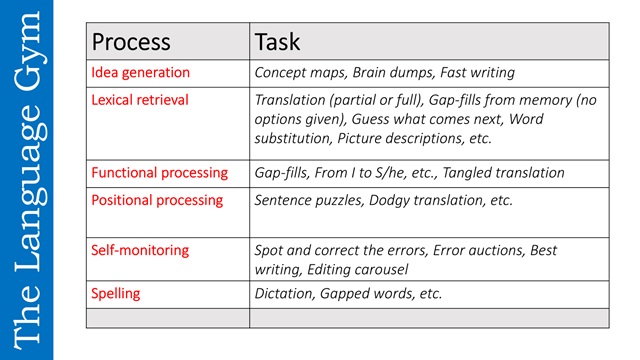
  2. The speed of delivery of aural texts doesn’t often allow the learners, especially at lower levels of proficiency, to notice these words. In EPI, on the other hand, the teacher models the sentences using a slow to moderate pace and uses a number of techniques and tasks to make these words noticeable and learnable, e.g. (1) input enhancement (to make function words stand out), (2) input-flood (to induce repeated processing of these words), (3) gapped dictations or the ‘Spot the missing detail’ task ; (4) gapped and tangled translations (where the focus is on these words); (5) Faulty transcript/Spot the difference; (6) Listen and spot the error (where function words are used incorrectly); etc.
  3. Many teachers and published instructional resources teach words in isolation. The Linguascope website is the most flagrant example of this, with lists of ten words to learn on their own completely decontextualised – which, according to research, is the most ineffective way of learning vocabulary for beginners. In EPI, the focus being on learning chunks of language, the students are introduced to and practise function words all the time and repeatedly, in context, and through masses of highly comprehensible input.
  4. Teachers rarely deliberately plan for the regular recycling of these words overtime through distributed practice. This is a big shortcoming because function words, by virtue of their abstractness and low saliency, are harder to commit to memory, hence they may require even more recycling than content words.

Implications for teaching

First of all, language teachers may want to use sentence builders or any other modelling tools which present function words in context through highly comprehensible input.

Secondly, when modelling the use of function words orally, they should do so using input enhancement techniques. Modelling through listening-whilst-reading techniques (as we do in EPI) at a slow-to-moderate pace whilst emphasizing these words through vocal and visual input enhancement techniques is very effective in facilitating noticing, especially in the presence of the assimilation phenomenon which causes a function words to blend in with the first syllable in the next word (e.g. in ‘il y a beaucoup de gens’ where ‘de’ is hardly audible in naturalistic speech).

Thirdly, teachers should stage a number of receptive and productive retrieval practice activities which deliberately target function words (as per the examples provided in the previous paragraph). Sentence-combining tasks can also be powerful in practising these words meaningfully, especially when it comes to connectives.

Fourthly, the curriculum should deliberately recycle function words many times over, constantly engaging the students in retrieval practice episodes. Aim at 30 to 40 encounters overall across all four skills.

Fifthly, do raise your students’ awareness of the importance of these words and, by regularly drawing their attention to them when dealing with written and oral texts, sensitize them to their existence. Also, encourage them to experiment with the function words that will enhance their oral and written output, such high-frequency discourse markers, indirect or emphatic pronouns, etc.

Lastly, since these words are notoriously difficult to commit to long-term memory, besides tons of recycling, do endeavour to be as multimodal as possible, employing gestures, images, songs, rhymes, digital, miniwhiteboard as well as paper-based learning, mnemonics, etc. Table 4 below lists a number of possible techniques you could use.

In which order should we teach grammar structures based on SLA research?

Introduction

I was recently asked by a member of the Facebook group I co-founded with Dylan Vinales, Global Innovative Language teachers how grammar structures should be sequenced in a curriculum. The easy answer is: from easier to difficult, of course. But how do we establish which structures are more easily learnable than others?

A researcher by the name of Manfred Pienemann, attempted to answer this question with a landmark study Pienemann, M. (1984). “Psychological Constraints on the Teachability of Languages.” Studies in Second Language Acquisition, 6(2), 186-214. This study laid the groundwork for his later development of Processability Theory (1998), which further expanded on how learners acquire grammatical structures in a fixed sequence.

Manfred Pienemann’s Learnability Theory suggests that language acquisition follows a predictable sequence due to human working memory’s cognitive constraints. His Processability Theory (PT) builds on this by explaining how learners acquire grammatical structures step by step, as their cognitive processing abilities develop.

Key concepts of Learnability Theory

  1. Developmental Stages: Language structures are acquired in a sequence, meaning some grammatical forms cannot be learned before others.
  2. Teachability Hypothesis: Instruction can only be effective if it aligns with the learner’s current stage of acquisition. Trying to teach advanced structures too early is ineffective.
  3. Processing Hierarchy: Learners process simpler linguistic structures before tackling more complex ones.

Stages of French Language Acquisition Based on Processability Theory

Pienemann’s theory outlines a six-stage sequence for second language acquisition. Below is how this sequence applies to French learners:

Stage 1: Single Words and Fixed Phrases (No Real Grammar Processing)

At this pre-syntactic stage, learners rely on memorized words and formulaic phrases without grammatical manipulation.

  • Bonjour ! (Hello!)
  • Merci ! (Thank you!)
  • Comment ça va ? (How’s it going?)
  • Moi, Marie. (Me, Marie.)

Key Characteristics:

Learners do not yet process word order or inflections.
Responses are often formulaic and learned as whole chunks.


Stage 2: Simple Word Order (Canonical Word Order – SVO)

At this stage, learners start forming simple Subject-Verb-Object (SVO) sentences.

  • Je mange une pomme. (I eat an apple.)
  • Il aime le chocolat. (He likes chocolate.)
  • Marie regarde la télé. (Marie watches TV.)

Key Characteristics:

Learners can construct basic declarative sentences.
No agreement processing yet (gender, number).
No word order variation (such as inversion for questions).


Stage 3: Morphological Inflections (Lexical Morphology)

Learners begin processing grammatical markers like plural (-s), gender agreement, and verb inflections.

  • Les pommes sont rouges. (The apples are red.) → (Plural agreement)
  • Un petit garçon / Une petite fille (A small boy / A small girl) → (Gender agreement)
  • Je finis mon travail. (I finish my work.) → (Present tense verb inflection)

Key Characteristics:

Learners begin applying regular inflections (e.g., plural -s, feminine -e).
Still inconsistent with irregular forms.
Errors in agreement (e.g., les grande maison instead of les grandes maisons).


Stage 4: Sentence Internal Reordering (Question Formation & Object Pronouns)

At this stage, learners acquire word order changes beyond the basic SVO structure. This includes:

1. Question Formation (Simple & Inversion)

  • Tu as un chien ? (You have a dog?) → (Rising intonation, no inversion)
  • Est-ce que tu as un chien ? (Do you have a dog?) → (Fixed structure)
  • As-tu un chien ? (Have you a dog?) → (Inversion – more advanced)

2. Object Pronoun Placement

  • Je vois Marie. (I see Marie.) → Basic SVO order
  • Je la vois. (I see her.) → (Pronoun before verb – first instance of reordering)
  • Je ne la vois pas. (I don’t see her.) → (More complex negative structure)

Key Characteristics:

Learners start reordering elements in sentences.
Questions evolve from declarative word order to inversion patterns.
Object pronouns begin appearing in correct positions.
Errors still common (e.g., Je vois la instead of Je la vois).


Stage 5: Subordinate Clauses & Complex Structures

Learners begin processing embedded clauses and subordinate structures.

  • Je pense qu’il viendra demain. (I think that he will come tomorrow.) → (Subordination)
  • Le livre que j’ai lu est intéressant. (The book that I read is interesting.) → (Relative clause)
  • Si j’avais le temps, je voyagerais. (If I had time, I would travel.) → (Conditional sentences)

Key Characteristics:

 Learners can link ideas in longer sentences.

They produce relative clauses, conditionals, and reported speech.

Errors in conjugation and agreement still occur.


Stage 6: Full Processing of Advanced Structures

At this final stage, learners acquire full sentence reordering, advanced agreement, and complex clauses.

  • Le professeur dont je t’ai parlé est ici. (The teacher whom I told you about is here.) → (Relative pronoun “dont”)
  • Si j’avais su, je serais venu plus tôt. (If I had known, I would have come earlier.) → (Past conditional)
  • Il faut que tu viennes demain. (You must come tomorrow.) → (Subjunctive mood usage)

Key Characteristics:

Learners master subjunctive, advanced conditionals, and complex reordering.
Proficiency level approaches native-like fluency.
Errors become minor and infrequent.


How Learnability Theory Guides French Teaching

  1. Teach in the right order:
    • Start with simple sentences before introducing agreement rules.
    • Teach basic questions (Tu as un chien ?) before inversion (As-tu un chien ?).
    • Introduce object pronouns before relative clauses.
  2. Respect processing constraints:
    • How many cognitive steps does the execution of a specific grammar structure involve? If working memory can only process about 4-6 items in younger learners and 5 to 9 in 16+ learners, will they cope with the cognitive load posed by the target structure?  

Example 1: the perfect tense with ETRE involves 6 or 7 mental operations/substeps. Are we sure that the target language learners can process all of them?

Example 2: A beginner won’t use the subjunctive correctly (Il faut que tu viennes) if they haven’t mastered basic verb conjugations first.

  1. Trying to teach complex tenses (e.g., Si j’avais su, je serais venu) before learners are ready leads to confusion.
  2. Provide appropriate input:
    • At early stages, focus on high-frequency structures (e.g., present tense, SVO order).
    • Gradually introduce complex grammar once learners can process simpler structures.

In considering the cognitive load posed by the target grammar structures in an attempt to sequence them in your curriculum in a easier to harder flow, it is key to consider the challenges posed by each of them, summarised in the table below, from my workshop on Grammar Instruction.

Why do younger learners find learning grammar challenging?

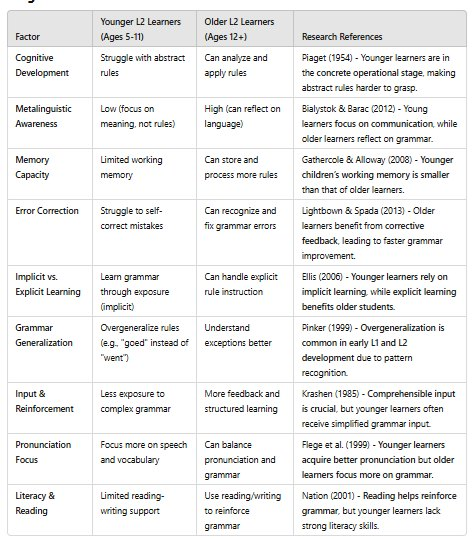
Younger second language (L2) learners often struggle with grammar acquisition due to cognitive, linguistic, and developmental factors. Unlike vocabulary, which they can pick up more naturally, grammar rules require abstract thinking, memory, and metalinguistic awareness, which are still developing in young learners. Below are the key reasons why younger L2 learners find grammar learning challenging:

1. Limited Cognitive development

1.1 Abstract Thinking is Not Fully Developed

  • Grammar rules involve abstract concepts (e.g., verb conjugations, subject-verb agreement, and tenses).
  • Piaget’s (1954) Cognitive Development Theory states that children under 11 operate in the concrete operational stage, meaning they struggle with abstract rules.
  • Older learners (adolescents and adults) use formal operational thinking (age 12+), making them better at understanding syntactic structures

1.2 Working Memory Limitations

  • Younger children have smaller working memory capacity (Gathercole & Alloway, 2008), meaning they struggle to hold and process multiple grammar rules at once.Older learners can store and manipulate grammatical structures more efficiently.
  • Older learners can store and manipulate grammatical structures more efficiently.

2. Lack of Metalinguistic Awareness

2.1 Younger learners do not consciously analyze language

  • Metalinguistic awareness is the ability to think about and manipulate language structures, which develops with age.
  • Studies (Bialystok & Barac, 2012) show that younger L2 learners focus more on communication rather than explicit grammar rules.

2.2 Struggle with Error Correction

  • Because of their lack of metalinguistic awareness and limited levels of LAA* (language analytical ability), younger learners do not benefit much from error correction
  • Older learners can self-correct grammatical mistakes by applying rules.
  • Younger children often repeat mistakes without realizing why they are incorrect.

3. Implicit vs. Explicit Learning Differences

  • Younger learners rely more on implicit learning (unconscious absorption of rules), while older learners benefit from explicit instruction. That is why using EPI, which relies heavily on structural priming (subconscious learning of grammar) is so powerful at primary.
  • Grammar requires explicit learning (Ellis, 2006), and young children struggle with rule-based learning since they primarily learn through exposure and repetition rather than conscious analysis.

4. Difficulty Generalizing Grammar Rules

4.1 Overgeneralization of rules

  • Younger L2 learners tend to overgeneralize grammatical patterns (e.g., saying “goed” instead of “went”).
  • This happens because they rely on patterns rather than understanding exceptions, which is common in early L1 and L2 learning (Pinker, 1999).Grammar Rules Change Based on Context

4.2 Grammar Rules Change Based on Context

  • Some grammatical structures vary depending on context (e.g., past tense in regular vs. irregular verbs).
  • Young learners struggle to apply rules flexibly in different contexts.

5. Limited Input and Reinforcement

5.1 Grammar exposure in early L2 learning is inconsistent

  • Young learners often hear simplified language (e.g., teachers and caregivers speaking in basic sentences).
  • Without frequent rich input, grammar structures take longer to acquire.

5.2 Grammar Rules Change Based on Context

  • Young learners struggle to apply rules flexibly in different contexts.
  • Some grammatical structures vary depending on context (e.g., past tense in regular vs. irregular verbs).

6.6. Pronunciation and Phonological Constraints Affect Grammar Learning

Syntax and morphology take longer to develop, especially in languages with complex word order (e.g., German, Russian).

Younger learners focus more on pronunciation and vocabulary, delaying grammar acquisition.

7. Limited Literacy Skills

Reading and writing skills support grammar acquisition

  • Older learners benefit from written reinforcement (e.g., textbooks, grammar exercises).
  • Younger learners, especially pre-literate children, lack exposure to written forms of grammar.

Conclusions

Younger L2 learners acquire vocabulary naturally but struggle with grammar because it requires abstract thinking, rule analysis, and memory capacity.

Older learners are better at learning grammar explicitly due to stronger cognitive abilities and metalinguistic awareness.

Young learners need repeated exposure, interactive learning, and implicit reinforcement rather than direct rule-based teaching. The exposure must be as multimodal as possible and .cognizant of the TAP (transfer appropriate processing) phenomenon, i.e. the context-dependency of memory (e.g. a grammar rule learnt through rehearsing a song many times over is not likely to be transferred to other contexts and tasks, but is going to sty confined to that song).

The grammar content needs to be light and informed by the learners’ readiness to acquire the target structures.

The students should not be asked to produce language too soon and in the contexts of tasks that challenge them beyond their current level of competence. This applies to learners of any age, but it is particularly true of primary-age students, as they are low monitors of grammar accuracy.

EPI (Extensive Processing Instruction) is very powerful in this respect as it capitalizes on subsconscious learning through syntactic priming, i.e. where exposure to a specific sentence structure increases the likelihood of using the same structure in subsequent speech or writing. It occurs in both first (L1) and second language (L2) learning, reinforcing grammatical patterns through repetition. For example, if someone hears “The cat was chased by the dog” (passive voice), they are more likely to later produce another passive sentence like “The book was read by the student.” Studies (Bock, 1986) show syntactic priming helps L2 learners internalize complex structures, aiding fluency and reducing cognitive load during sentence formation.

Here’s a summary of the above points:

*Language Analytical Ability (LAA) refers to the cognitive skill that enables learners to analyze, understand, and manipulate linguistic structures in a second language (L2). It is crucial for explicit grammar learning, problem-solving in language acquisition, and recognizing language patterns.

Why do primary children find it more difficult to learn and retain vocabulary than secondary students?

Introduction

There is a myth whereby acquiring a new language for younger chidren is easier. Nothing could be further from the truth, in instructed second language acquisition settings, at least, especially with one hour or less a week. In fact, encoding in long-term memory (LTM) is slower for younger children due to biological, cognitive, and experiential factors that influence memory formation and retrieval. Tran Thi Tuyet, in her 2020 article “The Myth of ‘The Earlier the Better’ in Foreign Language Learning or the Optimal Age to Learn a Foreign Language,” contends that the assumption “the earlier, the better” in foreign language learning is often misleading. She suggests that investing too early in children’s foreign language education may lead to suboptimal outcomes if not appropriately aligned with effective teaching methodologies and the child’s developmental readiness.

Additionally, a publication by the Centre for Educational Neuroscience titled “Avoiding the Hype Over Early Foreign Language Teaching” emphasizes the lack of substantial evidence supporting the notion that early foreign language instruction guarantees superior language proficiency later in life. The paper advises education professionals to critically assess the evidence before implementing early language programs, suggesting that premature introduction without proper pedagogical support might not yield the desired benefits

Research indicates that students who begin foreign language study in secondary school can often catch up to, or even surpass, peers who started in primary school. This suggests that the advantages of early language learning might not be as significant as commonly believed.

A study by Muñoz (2006) examined the long-term proficiency of early, middle, and late starters in foreign language learning. The findings revealed that older learners often progress more rapidly than younger learners, leading to comparable or even superior proficiency levels over time. This challenges the assumption that an earlier start guarantees greater language proficiency

Why do younger learners struggle more than older learners when it comes to L2-word learning?

Here’s a detailed breakdown:


1. Brain Maturation & Neural Development

  • Hippocampal Immaturity:
    • The hippocampus, which plays a central role in memory formation, is still developing in younger children (Gómez & Edgin, 2016).
    • Studies using fMRI have shown that hippocampal connections strengthen with age, leading to more efficient encoding and retrieval of information in older children (Ghetti & Bunge, 2012).
  • Synaptic Pruning & Myelination:
    • Younger children have a higher number of neural connections, but they are not as efficient as in older learners.
    • Synaptic pruning (elimination of weaker neural connections) and myelination (fatty sheath around neurons improving transmission speed) increase memory efficiency with age (Paus et al., 2001).

2. Working Memory Limitations

  • Younger children have a lower working memory capacity, which affects how much information they can hold before transferring it to long-term storage (Gathercole & Alloway, 2008).
  • Miller’s Law (1956) suggests an average working memory span of 7±2 items in adults, while younger children may only retain half that – with great variation amongst children in the same class.
  • Reduced chunking ability: Older children and adults use chunking (grouping information into meaningful units), which improves memory retention, whereas younger children struggle with this strategy (Schneider et al., 2011).

3. Underdeveloped Memory Strategies

  • Lack of Rehearsal Techniques:
    • Older children use active rehearsal (repeating words mentally) to strengthen memory storage, while younger children often fail to engage in spontaneous rehearsal (Flavell, 1970).
  • Limited Use of Mnemonics & Organization Strategies:
    • Older children categorize words by meaning (e.g., grouping “apple, banana, orange” as “fruits”), making retrieval easier.
    • Younger children lack this organizational ability, leading to weaker memory recall (Bjorklund & Jacobs, 1985).

4. Episodic Memory & Schema Development

  • Less Developed Episodic Memory:
    • Episodic memory (memories of specific events) is less developed in younger children, making it harder for them to link new words to prior experiences (Nelson, 1993).
  • Lack of Established Schemas:
    • Older children have more structured knowledge frameworks (schemas), allowing them to fit new vocabulary into existing memory networks.
    • Younger children lack these schemas, making encoding slower and retrieval less efficient (Chi, 1978).

5. Slower Consolidation of Memories

  • Sleep & Memory Consolidation Differences:
    • Deep sleep (slow-wave sleep) aids in memory consolidation, but research suggests memory-related sleep processes are less efficient in young children (Wilhelm et al., 2012).
    • Older children and adults show better overnight retention of new information than younger children.

6. Less Exposure & Repetition Opportunities

  • Older children encounter more words in different contexts (reading, conversations, writing), reinforcing long-term retention.
  • Younger children need more repetitions to store words permanently in LTM (Webb, 2007).

Summary Table: Why retaining new vocabulary is slower in younger children

FactorYounger Children (Ages 7-11)Older Children (Ages 12+)
Brain MaturationHippocampus still developingMore mature hippocampal function
Neural EfficiencyLess myelination, weaker synaptic pruningFaster neural transmission
Working MemoryLimited (4-6 items)Stronger (7-9 items)
Rehearsal StrategiesRarely use spontaneous rehearsalRegularly use repetition
Mnemonics & CategorizationStruggle with categorizationGroup and organize words for better recall
Episodic MemoryLess developedStronger recall of contextual experiences
Schema DevelopmentLack structured knowledge networksUse existing schemas to reinforce learning
Sleep & Memory ConsolidationWeaker overnight memory retentionMore efficient sleep-based memory strengthening
Exposure to VocabularyLimited real-world exposureMore frequent and varied word encounters

Key Takeaways & pedagogical implications

  • Younger children CAN encode words into long-term memory, but it takes more repetitions and contextual learning.
  • Older children process and store words more efficiently due to better neural pathways, stronger working memory, and more effective learning strategies.
  • Memory strategies like rehearsal, categorization, and spaced repetition can help younger learners retain words more effectively.
  • Younger children are led by the principle of pleasure more than older children are, hence, their motivation to learn is more dependant on fun
  • Multimodal learning is key with language learners based on what we know about their working memory limitations. The more ways a word gets encoded in their younger brain, the more neural associations are created, which leads to longer term retention
  • Training in memorization techniques – as long as you make it fun – pays enormous dividends

How EPI has enhanced modern language teaching in hundreds of primary and secondary Catholic Schools across Victoria (Australia) – Guest post by Chloe Briand T & L lead teach at Melbourne Archdiocese

1. The author: Chloe Briand, Teaching and Learning Languages Lead at Melbourne Archdiocese of Catholic Schools

The author of this post, Chloe Briand is a secondary French/Spanish teacher with over 20 years teaching experience. She is currently the Teaching and Learning Languages Lead at Melbourne Archdiocese of Catholic Schools, supporting over 300 primary and secondary schools’ language programs and their language teachers. Chloe was previously the Head of Languages at Methodist Ladies College (Melbourne), where she supported the implementation of EPI in all programs from Year 7 to Year 12 across four different languages with great success.

1.1. The journey

Four years after my first post on Dr Conti’s blog, I return to writing with great excitement, this time no longer as a language teacher and head of department, but as Lead for Teaching and Learning Languages at MACS (Melbourne Archdiocese of Catholic Schools) in Victoria, Australia. With just under two and half years in the role, the transition to no longer being in the classroom has been enormous, and I am truly grateful to have learnt so much about supporting many teachers and students with their language learning.

In this post, I would like to share with you the journey that has taken place in our primary sector, through the initiative called “Teachers as Co-Learners” (TCL). This program was born in 2017, with 2 schools participating in the launch of this exciting venture. The starting point was the idea that a once-a-week lesson for primary students was not the most effective way for them to learn a language efficiently. To move past this realisation, it became clear that short daily language lessons would be far more beneficial, as they would counteract Ebbinghaus’ forgetting curve and provide students with the chance to truly retain language over time. Another key idea was that this program would be delivered by the classroom teacher, who would not be a trained language specialist, and who be supported by a language teacher/expert who spoke the language fluently during the week. Students and classroom teachers would share the journey and learn together. Add to the mix a focus on communicative language for use throughout the day, and this was how TCL was born.

Fast forward a few more years, COVID added to severe language teacher shortages. When I started the role, we saw more and more primary schools dealing with major issues with staffing their language programs (note for non-Victorian schools, languages are one of the key learning areas mandated by the Victorian Curriculum, and they form part of the compliance requirements from the Victorian Registration and Qualifications Authority (VRQA), our statutory authority). Therefore, the need for systemic support in the shape of fully built programs and resources was significant. Writing full scopes and sequences for Foundation to Year 6 students of Italian, French, and Indonesian, including all teaching material, weekly planners, daily lessons, resources and materials, assessments and marking rubrics was the key to many schools adopting this program and delivering language through this model. The other key component was that it had to be accessible to teachers who did not speak the language and engage all participants alike.

This is where E.P.I. came into play. When we first started to write the program, we imagined that MARS’ EARS would be our guide to planning sequences of activities which would be easily understandable by teachers and enjoyable by students. It was, but also so much more.

Coming from the secondary sector and transitioning into curriculum design for the primary setting was an incredible challenge. As we wrote and re-wrote our curriculum, teachers and students continued to give us feedback every term, and it became pretty clear pretty quickly that Dr Conti’s language approach is the only one I have come across which is sustainable from the very first year of language learning in Foundation all the way to Senior secondary. Of course, activities are much more scaffolded to match the cognitive developmental stages of students in this context, but the same principles apply all the way.

What we have also embedded in our programs are explicit links to literacy, and types of literacy activities which classroom teachers are familiar with (what is called pop-up grammar/phonics in EPI), so that they can start to connect the dots between all languages. I can happily report that our TCL teachers are frequently commenting to us now that “all language is Literacy”. Students are highly engaged, and their language skills are absolutely staggering (we are now starting to hear rumblings from secondary schools in TCL catchment areas about needing to create entry pathways into Year 7 for those students, as they are far too advanced to start at Year 7 beginner level). The most unexpected part in this is the realisation from classroom teachers, almost in disbelief, that not only can they ‘do this’, but also, that they are ‘good at languages’. Coming from adults who consider themselves to be monolinguists, this truly is the icing on the cake.

Conclusions and way forward

We are now in a huge growth phase of the TCL network, with 50 schools currently in Melbourne, and we anticipate more in the years to come. This model is proving to be the most effective way to teach languages in primary schools, because of the high frequency of lessons and the delivery by the classroom teacher with whom students have an established rapport. However, this all hinges on the success of language acquisition due to a robust pedagogical approach, EPI, which actively promotes all students experiencing success. Of course, we are also working on getting our trained language teachers involved in the program, as this success is also reliant on language experts who support classroom teachers’ and students’ learning. This will be the next piece of the puzzle to fall into place, and I can anticipate that TCL clusters sharing a language teacher to deliver the program will bring schools and communities even closer together as they all partake in common success.  

Integrating EPI – by Ryan Cockrell HoD

Introduction

Here’s a very interesting guest post by a very talented and committed Coventry-based Head of Department working in a very large comprehensive school, who recently attended one of my workshops. When he told me about how he has implemented and adapted EPI to his setting, I was so impressed with the passion, determination and creativity which he injected into the process, that I felt compelled to ask him to write a blog post about it. Here’s the post. It has inspired me and I am sure it will inspire you too. Please note that I haven’t changed the original draft that Ryan sent to me a few days ago in a bid to preserve its authenticity,

Start with a why

My name is Ryan Cockrell and I am Head of Languages at a large comprehensive secondary school in Coventry. I have written this blog for those who are thinking of integrating EPI and MARSEARS but are unsure as to how they will introduce these ideas to their team.

As it stands, my department is at the end of its first academic year of implementing EPI and the MARSEARS sequence. As a department, we believe in our curriculum intent and we believe in EPI as the best implementation method to deliver that curriculum intent. Logistically, we have settled on a combination of centralised student booklets and teacher PowerPoint documents to support staff in delivering our curriculum. Despite my initial plan to focus specifically on redeveloping the Year 9 curriculum only, we now finish the year with the entirety of KS3 Spanish completely overhauled (French is on its way), a feat that would have been impossible without the dedication and work ethic of our hardworking staff who have bought into these ideas and are reaping the rewards as a result. However, we still have a lot of work to do, particularly around the implementation of these ideas at KS4.  

A metaphorical introduction

Imagine you are exploring an area that is long-believed to have been abandoned, abandoned so long ago that no one seems to remember what was there. As you delve deeper into the forest (or other interesting setting), you come across a wall, a wall that is blocking your exploration. What should you do? Time is of the essence; this land must be explored. Some people would tear down the wall and continue with their exploration; the purpose of the wall is meaningless and only stands in the way of the truth, the new truth. Others, perhaps more wisely, would build over the wall, continuing their exploration of ‘new’ ground but also assuming that the wall must have some purpose. What would you do?

Upon taking the role of Head of Languages last summer, I faced a similar (although much less dramatic) situation. I had my vision, my ideas and my beliefs, but there was a ‘wall’. Years of work from professional, intelligent colleagues had formed a wall that I felt I needed to work around. Some of the bricks were strong but some parts of the wall were falling apart. It is not that what existed was ‘bad’, but it wasn’t mine and I certainly wasn’t able (or willing) to justify ideas that weren’t my own. Mainly, however, it was my view that this wall was not supporting all of our students.

I won’t disparage the work of my colleagues; I will share some of my concerns.  

  • The curriculum was structured around grammar and vocabulary but lacked relevance and communicative function.
  • There was an over reliance on online textbooks (ActiveLearn?). PowerPoint resources were screenshots of the digital textbook. I don’t have a phobia of text books; my issue is that textbooks are generic and are not designed with our learners in mind.  
  • There was little consistency. A lack of centralised resources forced teachers to plan their own lessons without a common aim. The most surreal moment was when one Year 10 group was sitting Speaking mocks but no other groups were whilst two teachers had organised a listening mock in the hall for their groups but not the others.  

So you can see that we had a problem, mainly consistency (this was also evident in the school’s faculty improvement plan and the previous Ofsted feedback). I knew we had to take action but I could not start the year off by pointing out all the problems without providing solutions. I wanted to relay some bricks, not tear the wall down.

First steps

First, I organised EPI training for all MFL teachers. This was a profound moment; in our next meeting, we shared our ideas and it was clear that we all understood where we were heading. In this meeting, I also shared the 14 principles that we would be focusing on in our first year of EPI (we will adapt these as we learn more about who we are as a department and what our students needs, but it was a helpful starting point).

Secondly, I made the decision to keep the Long Term Plan (LTP) in place, securing the foundations of the wall. It made clear to the team that we were not throwing everything out the window; we were developing our implementation, not the intent.

To develop the implementation specifically, I shared a Lesson Format with staff. The Lesson Format made direct, explicit reference to the MARSEARS sequence, a clear indication of our commitment to this teaching method. Much of this format was borrowed from www.katemayclassroom.com.

Our own twist was ‘the situation’, the story of the lesson, the contextual relevance and  communicative function of the lesson. We wanted language learning to be relevant and we tried to create different, real-world solutions where the content of the lesson would be applicable.

Then, we decided to provide students with whiteboard packs to aid AFL and the EPI delivery method. All packs included two mini-whiteboards, two WB pens, a WB rubber, two red pens, two rulers and a glue sticks (these were removed later on).

Now, this did not solve all of our problems; the wall looked prettier but it was still unstable. These ideas were more readily implemented by certain members of staff and ownership and accountability was difficult to instil in resources that lacked a truly school-based identity. This is where we changed the most.

Curriculum characters

By Christmas, our best lessons were completely transformed by EPI and MARSEARS. Students were retaining language and growing in confidence every lesson. Students who had previously not enjoyed languages were proactively taking part and behaviour had improved across the board. I recognise this is anecdotal, but this blog is written as testimony to the transformative impact of these methods.

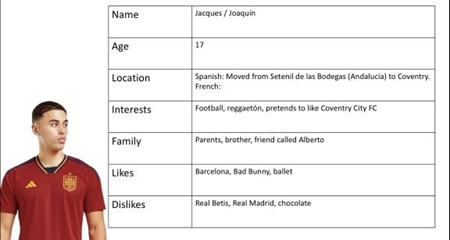
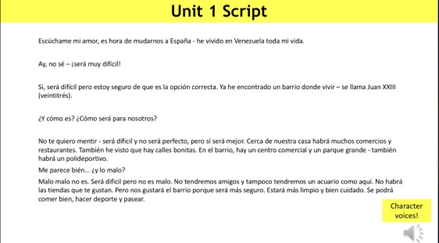
Over Christmas, I read an article about the use of longer texts and stories as the basis for relevance and authenticity in the curriculum. Immediately, I knew this was something we could replicate and create a true identity for our curriculum. I wrote a letter from the perspective of Joaquín to his friend Alberto. In the letter, Joaquín spoke about his recent holiday, his recent plans and reminisced about their childhood together – the idea was to deliver our teaching of the past tense through the story of Joaquín. The text was also translated into English and Dodgy English. I won’t overstate the impact, but it was pretty clear that students bought into the characters and embraced the uniqueness of the story. It felt real – some students asked whether Joaquín was a real person. I developed a scheme of learning with lessons based around different paragraphs from the letter. Again, however, I had to present this idea to staff and hope that it would not feel like too much change. In my mind, this was a direct development of ‘the situation’ that, in theory, should actually reduce the need to constantly come up with new situations. Instead, we would invest in high quality, semi-authentic and personal texts in the target language.

Upon reflection, I don’t know what I was worried about. The staff received this so positively that we immediately started brainstorming different characters. We had teachers creating backstories for a Chilean girl named Julieta, a Venezuelan man named Luciano and a French boy named Xavier. We had teachers planning the likes/dislikes of each character and we had teachers producing engaging resources with stock images for each character (Microsoft Office provides so many for free). By the following week, we had invested in a subscription to AI that generates authentic voices in all language/accents based on your input. Luciano didn’t just have a wife and children, they all had Venezuelan accents! The characters were now alive. It also dawned on us later that we could use this software to create custom exam-style listening tasks.

Booklets

At the same time, we also began to trial the use of booklets as the main resource for lesson delivery. Inspired by Sophie Newnham (she was kind enough to share her work with me), we set out on creating booklets that followed our school’s lesson framework (big picture, small picture; I do, We do, You do; AFL; etc…). The aim was was to establish consistency in our implementation through effective, explicit instruction and, as a result, raise the floor level of all language lessons. Some people worry that centralised resources limit teacher autonomy; I disagree and, unfortunately, we won’t be having that argument here. As HoD, you are accountable for what is being taught and how it is being taught so you need to believe in it.  

Students would no longer use exercise books and teachers would not need to prepare individual PowerPoint lessons. Most importantly, teachers would not need to spend time (or money) on printing resources for each class. Teachers would display their copy of the booklet on the board with a visualiser and guide students through a series of I do and We do tasks before handing over to students to complete You do tasks independently. Each booklet would feature one Sentence Builder and would represent one Unit. Each Unit would be separated into MAR and SEA. After completing four Units of MAR/SEA, students would complete an RS booklet based on the previous four Units (this would serve as their assessment).  

We started with Year 9 and, after a successful trial, we tried it with Year 8. As mentioned before, booklets are now used across KS3 French and Spanish. To really emphasise the success

Below, I have shared some screenshots from our Year 9 booklets. I have also made some resources available via my Twitter account (@RyanCockrell14). Soon, complete resources will be posted to TES but I will announce this on my Twitter account. If you want to see what a whole booklet looks like, here is the link to the whole year 9 booklet:

https://drive.google.com/drive/folders/1gVicuoQ4_0_sjMK7RGznJGW4vCkoSlrG

Ofsted

I won’t be going into too much detail in this section (as I’m sure you will understand) but I wanted to tell a brief story. In January, we were subject to a deep dive (my first ever). In regards to our intent, feedback was extremely positive. The best lessons that were observed made extensive use of EPI and booklets for explicit instruction and the engagement of students with EPI methods matched the intent perfectly. We knew what our feedback would be and it gave us even more encouragement that we were onto something special. My proudest moment was when the lesson I taught was praised in terms of its planning as well as its delivery. However, I had barely adapted the plan from the centralised EPI booklet resource produced by an ECT MFL teacher. To me, this is a clear indication that we are on the right track.

What next?

I wish we were in a position where our curriculum was complete. However, at the end of our first academic year I am incredibly proud of the effort of staff and students alike to get on board with our vision for language learning at our school. We have a lot of work ahead of us but we absolutely trust the process.

Our school is a true comprehensive; we have every kind of learner. This year, we have moved to establish Languages as an optional GCSE course; before this year, Languages had been compulsory at GCSE for five years. I was nervous about how many GCSE students we would recruit. However, at the first time of asking, we maintained 3/5 Spanish groups, 2/5 French groups and we very nearly ran a German group without teaching German at KS3! We have also recruited students for French and Spanish A Level after a couple of years of not doing so.

A special thank you to Dr. Gianfranco Conti who has inspired us so much along the way.

If anyone is interested in more of the nitty-gritty Head of Department side of things (faculty review documents, Ofsted deep-dive, ECM deep-dive, difficult conversations, lesson observations and learning walks, challenging difficult staff, behaviour management, etc…), I would be happy to provide more information and discuss my experience. I am currently planning a webinar that covers this specific angle so stay tuned if you are interested. Get in contact in the following ways:-        Twitter: @RyanCockrell14-        Email: ryan.cockrell@hotmail.co.uk

Links to external sources that were mentioned:

Sophie Newnham – Twitter: @MissNewnham-       

Article about texts (https://gianfrancoconti.com/wp-content/uploads/2023/08/88961-12-huhlanguages.pdf)-       

Barry Smith Podcast – Parallel texts (https://podcasters.spotify.com/pod/show/barry-smith95/episodes/French-using-parallel-texts-e1a8nv1)

Voice AI software (https://www.getlisten2it.com

The real MARSEARS: how an EPI sequence TRULY unfolds (the real ‘Conti method’)

Gianfranco Conti, Phd (Applied Linguistics), MA (TEFL), MA (English Lit.), PGCE (Modern Languages and P.E.)'s avatarThe Language Gym

Why this post?

This post aims at providing language educators interested in my approach with an up-to-date description of the MARSEARS instructional sequence faithful to the ‘letter’ and ‘spirit’ of EPI, as opposed to the many adaptations and hybridizations floating on social media these days, which may be as or even more effective, but often substantively misrepresent the original framework.

The MARSEARS sequence

Fig…

As can be seen in figures 1 & 2 below, a typical unit of work lasts a term and consists of five sub-units: four of which deal with new material and consist of MARSEA (Modelling, Awareness-raising, Receptive processing, Structured Production, Expansion and Autonomy) and two of RS (Routinization and Spontaneity) which aim at consolidating and automatizing that material, as well as interweaving it with materials from previous units (e.g. in Term 2 in year 8, you will interweave core vocabulary and grammar from Term 1 in…

View original post 1,933 more words

How to become an accredited EPI teacher

Many CPD providers around the world are currently delivering courses on the implementation of EPI. Whilst I welcome the fact that the ‘Word’ is being spread, often it is spread incorrectly, sending mixed message and often misrepresenting the approach. This is because many of these providers have not received extensive training in the approach, haven’t fully understood it and/or haven’t implemented it in the classroom for long enough or in a sufficiently wide range of learning contexts to fully master it.

Consequently, I have been asked by many classrooms practitioners and CPD providers, mainly from the UK, Australia, North America, the Middle East and South-East Asia, to stage an accreditation programme which would assure that whoever delivers courses on EPI has received thorough training in the approach across the main areas of language teaching and learning.

The programme, which is organized and delivered in partnership with the University of Bath Spa (UK) consists of two levels: Level 1, for those who want to obtain the “EPI teacher accreditation” and Level 2, for those who want to become accredited EPI teacher trainers. The completion of the L1 course is of course a prerequisite for accessing Level 2.

Please note that no professional development provider has completed Level 1 yet, although quite a few people are already three quarters of the way. This means that no CPD provider yet is an EPI-accredited teacher or trainer and whilst people can deliver by all means FREE EPI CPD, they shouldn’t charge fees for it. This is unfortunately happening in England and constitutes a breach of copyright.

The Level 1 programme comprises the following modules:-

(1) Becoming an EPI teacher

(2) Curriculum Design & Lesson Planning in MFL

(3) Phonics and Grammar

(4a) Implementing EPI at Key Stage 4 or
(4b) Implementing EPI at Key Stage 2

(5) Final Assessment: delegates will need to create a detailed design of a MARS EARS sequence for KS2/3 or 4 inclusive of overview, activities and pedagogic rationale for the selection and sequencing of tasks . This includes:-

  • Online tutorial with Dr Conti to introduce this module (1 hour)
  • Input and feedback from Dr Conti on Scheme of Work

Course fee for all of the above is £700 per delegate. Fee includes the 5 modules above and programme certification. If you prefer, you can book and pay for each course individually as you go along.

If you have completed some of the modules already, you do not need to repeat them. Please let us know dates when informing us of each course which you have previously attended.

Information on Becoming an Accredited EPI Trainer to follow. Please register your interest with Denise – d.martin@bathspa.ac.uk. Delegates on this trainer course will have completed the above Becoming an Accredited EPI Teacher modules first. Please book yourself onto the correct module.

Here are the Becoming an EPI Teacher Dates for those of you living in the Western hemisphere. Please note that Australia/Eastern-hemisphere friendly dates in April and May will be published very soon on the Network for Learning website (www.networkforlearning.org.uk) and on this blog.

15 & 29 March 4pm to 6.30pm on both dates Online

24 March 9.30am to 4pm Watford, Herts (face to face)

28 April 9am to 4pm Online

29 June 9.30am to 4pm Oxford (face to face)

30 June 9.30am to 4pm London (face to face)

Curriculum Design & Lesson Planning in MFL Dates:

28 Feb & 14 Mar 4pm to 6.30pm on both dates Online

30 March 9.30am to 4pm Birmingham (face to face)

9 May 9am to 4pm Online

Please note that the face-to-face events above are those staged by Network For learning. There are (and will be) also other events hosted by schools in the UK in Australia. You can find the upcoming ones this month, listed here.

Details about the Level 2 programme will be published in Autumn 2023.

There’s more to L2 grammar acquisition than meets the eye: learned attention and its implications for teaching

Introduction

Learned attention (Nick Ellis, 2012) is a phenomenon whereby the way we parse input in the L1 constrains the way we process the L2 . In other words, our first language has conditioned us over the years to parse language through cues in the input which may be different in the target language.

For instance, English speakers learning Spanish may not notice Spanish nouns/adjectives’ masculine or feminine endings in the input we provide them with, because the notion of gender does not exist in their first language. By the same token, English learners of French may not notice that a French verb is in the simple future because in English the simple future is cued by ‘will’ whereas in French it is indicated by a bound morpheme (i.e. inflectional changes to the verb ending). For English learners of German, the issue is of course even more complex as word order requires parsing mechanisms which are completely different in their L1 and cases do not exists at all in English.

This is particularly important when teachers stage traditional listening and reading comprehension tasks whereby the texts are flooded with an L2 language feature which is processed differently in the L1. Since the brain can’t process meaning and form (e.g. grammar) simultaneously, when carrying out such tasks, many learners are not likely to notice the target L2 feature, especially in listening, when the time window for parsing any given sentence is about 1 to 2 seconds. Flooding aural/written texts is only effective when listening and reading tasks include alongside focus-on-meaning tasks a substantive focus-on-form component which directs the learners’ attention to form, i.e. prosody (e.g. intonational patterns), grammar (e.g. verb endings), syntax (word order), etc.

It should be noted that grammar structures are not merely acquired through productive use, as many believe, but also through many repeated encounters in the aural and written input they process. However, if our students are blind and deaf to the target linguistic features because they are ‘blocked’ by our L1-induced learned attention, this is not likely to happen. This is very important considering that in many UK classrooms a big chunk of the daily classroom work occurs through reading – even when the students engage in writing, it is often with the support of reading materials or written scaffolds (e.g. knowledge organizers), which is basically… reading!

But isn’t it enough to simply raise their awareness, do a nice PPP (presentation – practice – production) lesson and lots of gap-fills, translations and other structured drills? The answer: for starters, these are productive (usually written) tasks which won’t necessarily transfer to listening and reading (according to the Transfer Appropriate Processing principle). Secondly, learned attention has been automatised (learnt subconsciously) through thousands and thousands of hours of first language use. Hence, any training aiming at successfully ‘rewiring’ the brain must be regular and sustained over time– if you believe it’s a priority, of course.

Figure 1 – Learned attention defined

Obviously, the blocking effect of L1-induced learned attention is stronger, the more demanding the parsing of a text is from a cognitive-load point of view. So, for instance, sentences which are longer, more syntactically complex and/or contain unfamiliar vocabulary are more likely to exacerbate the phenomenon. The same happens when a grammar feature is redundant in terms of meaning building; for example, in the sentence ‘Demain on va aller au stade’ (Tomorrow we are going to go to the stadium), the time marker already cues the students to the fact that the action is future and the subject pronoun ‘on’ that it is ‘us’ going. This means that there is no need for the learner to pay attention to the verb ‘aller’ (‘va’) and to the syntactic pattern underlying the construction ‘present of aller + infinitive’.

Based on Tomlin and Villa’s (1997) model of attention (see figure 2 below) we may posit that the detection of a target linguistic feature is more likely to occur when language learners are alert to it. In other words, a learner who has been alerted to a specific feature in the input may orientate their attention to it and eventually notice it. Hence the importance of helping learners notice less salient L2 items by making them more distinctive; of raising their awareness of cross-linguistic differences in processing those items; of staging activities which focus them regularly and deliberately on those items by making them task essential (i.e. necessary for the successful completion of a task).

Figure 2 – Tomlin and Villa’s model of attention

Implications for the classroom

Whilst language teachers are usually aware of other ways in which our first language may work against L2 acquisition (aka L1 negative transfer), learned attention is in my experience a phenomenon many are less aware of and don’t deliberately plan for. Yet, this phenomenon has important implications for teaching, especially when we ask our students to process aural/written texts. Here are some of them:

(1) since the brain cannot process simultaneously meaning and form (e.g. grammar & syntax), traditional reading and listening comprehension or ‘Find the French equivalent in the text’ sort of tasks will not help learners consolidate the target grammar structures, as many teachers think, it doesn’t matter how much they flood the texts with instances of the target grammar features. Texts need also be exploited, as we do in EPI, in ways which target all levels of processing, i.e.: spelling, sound to spelling correspondence, grammar, syntax, etc (figure 3).

Figure 3 – In EPI, texts are exploited by staging activities which ‘hit’ every single level of processing

(2) input-enhancement techniques (Sharwood-Smith, 1994) aimed at making the features ‘blocked’ by our learned attention SALIENT maybe used (e.g. acoustic cues such as raising your voice whilst reading aloud/speaking or visual cues such as highlighting word endings (figure 4)

Figure 4: Input enhancement used in the modelling phase to help learners of L2 Italian notice masculine and feminine endings in the past participle of verbs requiring Essere in the perfect tense

3) noticing activities such as (i) deep processing techniques contrasting (inductively or through guided discovery) the way a target grammar structure is deployed in the L1 and the L2 may be used to make it more salient and memorable such as ‘Dodgy translation’, ‘Faulty echo’, ‘Track the structure’ or ‘Write it as you hear it’ and (ii) receptive tasks (e.g. Partial dictations, Track the structure,) which make the target grammar structure task essential (see figures 5 to 7 ); (iii) editing activities in which the students are given texts flooded with errors with a specific grammar structure;

(4) daily efforts to ‘rewire’ the brain by training it to direct attention to inflectional endings may also be desirable in the early stages of instructed second language acquisition;

(5) in planning grammar instruction, it is key to identify the L1 ‘blocking’ mechanisms which may impede our learners’ noticing of the target structures, then try to counter them by raising learner awareness and by providing tons of practice, as already suggested above;

(6) it is key to model and practise the problematic items vulnerable to learned attention in highly familiar contexts so as to reduce cognitive load;

(7) if these structures are very important, like word order in German, for instance, make them your universals, as we call them in EPI – i.e. the core non-negotiables that you will focus on almost obsessively for a whole year.

Figure 5, 6 and 7: Activities which help enhance the saliency of blocked linguistic features

Concluding remarks

In conclusion, teaching grammar is not just about teaching rules through examples on a powerpoint or YouTube videos and ask the students to practise them through oral and written tasks. To enable language learners to see and hear the L2 linguistic features ‘blocked’ by learned attention, grammar instruction is also, and possibly more importantly at the early stages of ISLA, about redirecting the learners’ attention when they read and listen to L2 input, by training them day in day out to focus their eyes and ears on parts of the target language words and sentences they wouldn’t normally see or hear because of their first language processing habits. Grammar and Syntax are not only acquired by doing a few gap-fills and drills here and there, but also by processing masses of aural and written input many times over.

Processing input for meaning only isn’t sufficient, especially aural input, which is particularly fragile due to its fleeting nature (it decays from sensory memory after 2 seconds only and every new incoming sentence erases every physical trace of the previous one…). Hence, teachers need to find the way to rewire the way their learners process L2 input and create an alertness to the features which are processed differently in their first language. This means that curriculum design should consider, especially when dealing with beginner learners, the ways in which L1 learned attention majorly hinders the effective parsing – and, subsequently the learning – of the language features they purport to teach. Once identified the potential areas to target, teachers should provide a regular diet of brain-rewiring receptive activities, deliberately targeting those areas. This can be done through minimal prep/high impact receptive tasks such as: Faulty echo, Partial dictations, Listen and correct, Spot the silent endings, Track the structure, Dodgy translation, Editing tasks, Choose the correct endings; Complete the endings with the options provided, etc. In other words, the bread and butter of EPI.