L.I.F.T. – an effective writing-proficiency and metacognition enhancer

14322719_10153708319066744_962110694165759072_n

Many years ago, as an L2 college student writer of English and French I often had doubts about the accuracy of what I wrote in my essays, especially when I was trying out a new and complex grammar structure or an idiom I had heard someone use.  However, the busy and under-paid native-speaker university language assistants charged with correcting my essays rarely gave me useful feedback on those adventurous linguistic exploits of mine. They simply underlined or crossed out my mistakes and provided their correct alternative. As an inquisitive and demanding language learner I was not satisfied. I wanted more.

So, I decided to try out a different approach; in every essay of mine I asked my teachers questions about things I was not sure about, in annotations I would write in the margin of my essays (e.g. should I use ‘with’ or ‘by’ here?; should this be ‘whose’ or ‘which’?) eagerly awaiting their replies – which I regularly got. Knowing my teachers were busy I would focus only on five or six things I had particular issues with and only after looking through my books and dictionaries in search for clues as to whether I was right or wrong.

This process ‘forced’ my teachers to give me more feedback than I had been getting; consequently, not only I learnt more, but I also became more ‘adventurous’ and ‘daring’ in my writing. This strategy really helped me a lot.

Later on in life, when I became a foreign language teacher, I recycled this strategy with my students. I call it L.I.F.T (Learner Initiated Feedback Technique). Although I had been using it for a long time already, a few years ago I decided to put its effectiveness to the test by conducting a little experiment. I used L.I.F.T. with one of two groups of able 14 years old I was teaching, whilst I used traditional error correction with the other. The students were asked to underline anything they were not sure about and write a question on margin explaining briefly what their problem or doubt was about; one condition I put was that they had to research the issues they were asking me about using web-based resources (e.g the www.wordreference.com forums). I used exactly the same teaching materials and covered the same topics with both groups.

When I compared how the two groups evolved over the time of the ‘experiment’, what I found out was interesting: they both made more or less the same type and number of mistakes; however, the group I had tried L.I.F.T. with had generally written longer and more complex sentences using more ambitious grammar structures and idioms. Moreover, I found that the questions the students were asking in their annotations had become increasingly more complex; a sign that they were becoming more inquisitive, ambitious and risk-taking. Why?

One reason refers, I think, to the fact that learners, especially the less confident ones, usually tend to avoid structures or idioms they are not sure about. However, L.I.F.T counteracts this avoidance behavior as it encourages them to try new things out and take risks; knowing the teacher is encouraging and endorsing this kind of risk-taking by ‘pushing’ them to ask for feedback elicits the use of this technique even more.

Moreover, since I made clear to them that they had to try and solve the problems by themselves first and then write down their questions, my students reported doing more independent study than before, especially the less committed ones. I also felt that they became more inquisitive as a result of the process as they were asking themselves and me more questions about grammar and vocabulary usage that google had no answer for (not a straightforward and easy-to-find one, at least).

Finally, quite a few of them reported paying more attention to my corrective feedback than before as they had requested it in the first place!

Another benefit was that, as part of the process, giving feedback became more interesting and enjoyable for me because it felt like a real dialogue between the students and myself, especially with the more adventurous and ambitious linguists; not just a top-down approach totally directed and owned by  the teacher. Also, because I felt that– most of the time, not always – they had indeed tried to answer the questions themselves, I put more effort into it.

Also, and more importantly, this process provided me access to some of my students’ thinking process and to the kind of hypotheses they formulated about how French worked.

Recently I discovered a study by Andrew Creswell (2000) who used a very similar approach with higher proficiency students than mine and reported very similar gains. His students reacted very favourably to the technique and he states that training learners in this technique created ‘a context in which students were able to work responsibly’.

I strongly recommend this technique not only for the benefits reported above, but also because if your students eventually do incorporate this technique into their learning strategies repertoire, they will acquire a powerful life-long metacognitive strategy that they might transfer to other domains of their learning and professional life.

More on this  and on my appraoch to language teaching and learning in the book I co-authored with Steve Smith “The Language Teacher Toolkit’, available here

11 questions I ask myself before the start of a new academic year

thinker-1k2loe9

The following are some of the teaching-and-learning-related questions that I ask myself a week or two before the start of each academic year and endeavor to act upon. They help me re-focus on my classroom teaching after the long summer break and set myself quality professional development goals. Although language acquisition and pedagogy are something I reflect on a lot on a daily basis, I always ask myself questions 1 and 2, below, too. Why? Because although my main espoused theory of language acquisition remains the same, I do review and revise some of my beliefs about L2 pedagogy every year that goes by as I read about research, reflect on my practice, listen to my students’ feedback and exchange ideas with colleagues in my department, at CPD events or on social media.

  1. What are my beliefs about how languages are best taught and learnt? – this is a question that, in my experience, not many teachers ask themselves and that many find very difficult to answer. Try it yourself right now and you will get what I mean;
  1. Does my teaching truly reflect those beliefs? – often teachers end up using the textbook or other resources available in the department as it is the easier way; however, that is unlikely to result in professional fulfillment and the fact that one does not really ‘believe’ in the approach one is using may impact learning negatively;
  1. Is my teaching ‘task-driven’ or ‘methodology-driven’? – as I discussed in a previous post, it is our methodology and understanding of language acquisition that should determine the way we teach and/or our students learn in class and at home; not the resources or tasks we like or are readily available. Sometimes we like certain tasks, games, apps or other resources we found or created so much that they end up driving our teaching at the expenses of sound methodology; I see this happen in far too many ‘techy’ lessons – including mine…
  1. What was my best lesson last year? What made it such a great lesson? – I find this question very useful to motivate myself, remind myself of what I am like at my best and help me set goals;
  1. What did not work well last year that I may want to improve on next year? – this is the hardest question to answer and one which requires a lot of honesty and ‘courage’.
  1. What was my worst lesson? Why? How can I prevent ‘bad’ lessons like that one from happening again?
  1. Which skills/areas did I not focus on enough last year? Why? How did this benefit and/or damage my students’ linguistic development? We all emphasize certain skills over others in our daily practice; for instance, I tend to overemphasize oral/aural skills over reading and writing with my younger students. My next academic year resolutions include focusing more on those two skills, for example;
  1. (Imagine yourself talking to a weak, an average and a talented student from each of the year groups you teach, at the end of the next academic year) What would I like him/her to be able to understand and say to me by the end of the year in the context of a target-language spontaneous conversation across various topics? How does this fit with the schemes of work in use in the department? – This is possibly the most useful question of all. It really helps me set my learning objectives for the year, much better than any schemes of work or government or school rubrics. You can obviously apply the same question to all four macro-skill;
  1. What would I like my students to do INDEPENDENTLY (i.e. without any prodding on my part) to enhance their mastery of the target language? How can I get them to WANT to listen, speak, read and write independently? – This is in my view the most neglected area of teaching and learning in secondary schools around the world; yet, it is the most important. We need to reflect on this important aspect of learning and try to foster it as much as humanly possible considered the limited time and resources available;
  2. (Imagine yourself happy and fulfilled at the end of the perfect lesson you have just taught to a specific year group that you find very challenging) What happened in that lesson? Why did it all flow so perfectly? Why did so much learning occur? – This builds on the best-lesson question above but brings it to the next level thereby giving me an aspirational goal to work towards; but also, and more importantly,it makes me reflect on the obstacles on the way;
  3. Who or what resources can help me be that happy, fulfilled and contented teacher? How can I go about obtaining that help? – Be honest here: have you asked for the help and resources needed to address the issues in the way of your professional fulfillment in the classroom? Is there anyone in your department who may lend you a hand? Put aside your pride or ego and ask.

Eight motivational theories and their implications for the classroom

images

In a couple of previous posts I briefly touched on theories of motivation and on how they can be tapped into to raise student achievement. In particular I concerned myself with a relatively unknown and yet powerful catalyst of motivation, self-efficacy, or expectancy of success, which, if nurtured regularly and adequately in the classroom can majorly impact learning. In this post I will very concisely outline the main principles underpinning other influential motivational theories and how I deploy them in my every day teaching in an attempt to enhance my students’ motivation.

Here is a very minimalistic overview of 8 of the 20 theories of motivation I brainstormed before writing this article. Please note that their tenets and implications for the classroom have been overly simplified; hence, if you are keen to apply them to your specific teaching context, you may want to find out more about them.

  1. Cognitive dissonance

Cognitive dissonance occurs when there is an unresolved conflict in our mind between two beliefs, thoughts or perceptions we hold about a given subject. The level of tension resulting from such conflict will be a function of:

  • How strong the conflict is between the two dissonant thoughts;
  • How important the issue they relate to are to  a specific individual or group;
  • How difficult it is to rationalize (justify through logical or pseudo-logical reasoning) the dissonance.

Cognitive dissonance is a very powerful motivator which, as I shall discuss in a future post, is often used in transformational change programs both in the business and educational world. The reason why it is so powerful is because, when used effectively, Cognitive dissonance creates a sense of discomfort in an individual which in order to be resolved results in one of two outcomes:

  • The individual changes behavior (possibly replacing the existing behavior with the newly modelled one);
  • The individual does not adopt the new behavior and justifies his/her behaviour by changing the conflicting cognition created by the new information, instead.

Implications for the classroom: Whenever you want to change a student’s attitude, first identify the beliefs at the heart of that attitude; when you have a fairly clear picture induce cognitive dissonance by producing powerful information and arguments which counter those beliefs. The degree of cognitive dissonance should be as high as possible for the attitudinal change we purport to bring about to be effective. For example, when dealing with a misbehaving child, to simply tell them off for what they did will be way less effective than raising their awareness of the ways their conduct affected others negatively and explaining why is morally/ethically wrong. Or, to impose a new methodology to one’s team of teachers by saying it is more effective than the one currently in use by merely providing statistics from a few research studies which point to its greater effectiveness will not be as powerful as explaining to them why the old approach is failing the target students and the new can more effectively address the identified shortcomings. Another example in the realm of language learning: many foreign language students in England hold negative views about the country(i-es) where the target language is spoken. If one wants to change such attitudes one may want to first find out what beliefs are at the root of those attitudes (e.g. are they xenophobic stereotypes?); then in a lesson or series of lesson (at the beginning of the year, maybe?) provide objective and solid reasons to prove that those beliefs are indeed false using supporting evidence which will resonate with the students’ sub-culture, thereby creating cognitive dissonance. Research suggests that over-using statistics may be detrimental and that engaging the target students in a discussion on the issues-in-hand after the new information has been provided, will enhance the chances of attitudinal change to occur. This process may induce the learners to restructure their cognition.

  1. Drive reduction theory

This theory is centred on the notion that we all have needs that we attempt to satisfy in order to reduce the tension or arousal they cause. The internal stimuli these needs produce are our main drives in life. There are Primary drives which refer to basic needs (food, sleep, procreation, etc.) and Secondary drives which refer to social identity and personal fulfillment.

As we act on our needs we are conditioned and acquire habits and subconscious responses. So, for example: when a child needs to feel good about himself, he may recite a poem, sing a song, perform a dance or other ‘feats’ to his parents knowing he is going to get some recognition. Whenever he needs recognition in other contexts, this individual will possibly use the same tactics in order to get the same response from any other figure of authority – including teachers.

When the driven action does not satisfy his needs or the enacting of drives is frustrated, negative emotions (e.g. anxiety) arise. To go back to the previous example: if the boy is looking for a chance to show off to an authority figure his ‘skills’ but he is not given the opportunity to do so, he will feel frustrated, angry and/or unappreciated – a very common scenario in school, often dismissed as the child being ‘naughty’ or ‘unruly’.

Implications for the classroom: find out what drives your students, especially the difficult ones. Instead of approaching the problem by ‘punishing’ them, have a one-on-one chat with them and try to discover what is that they find fulfilling and see if you can find opportunities in your lessons for them to enact their drives. For instance, if you have a student passionate about drama who does not seem to enjoy language learning, ask them to contribute their acting skills by myming vocabulary or sentences in lessons or setting up a mini-production in the target language.

  1. Attribution theory

When we make a mistake or ‘fail’ at something we tend to go through a two-step process. We first experience an automatic response involving internal attribution (i.e. the error is our fault); then a conscious, slower reaction which seeks to find an alternative external attribution (e.g. the error is due to an external factor). This is because we all have a vested interest in ‘looking good’ in our own eyes – a sort of survival mechanism. This type of response, however, is unlikely to lead to self-improvement, as it results in an individual not addressing the real cause of their error/bad performance in the future. Roesch and Amirkham (1997) found that more experienced and successful athletes made more self-serving attributions which lead to identifying and addressing the internal causes of their performance errors.

Implications for the classroom: when dealing with students who complain about not progressing because the subject, skill or task is too hard for them, show them – where applicable – that the reasons why they are not improving is not intrinsic in the nature of that subject, skill or task , but has more to do with other factors under his/her control (e.g. the study habits, such as lack of systematic revision). This will create cognitive dissonance and may have an impact on their attitude, especially if they are shown strategies that may help them improve in the problematic area(s) of their learning. The afore mentioned research by Roesch and Amirkham (1997) and their findings could be drawn upon and discussed with your students to reinforce the point; I often do, citing the example of famous athletes the students admire and pointing out how they learn from their mistakes by watching videos of themselves playing a match over and over again or asking peers/experts for feedback in order to identify and address their shortcomings.

  1. Endowed progress effect

When people feel they have made some progress towards a goal, they will feel more committed towards its achievement. Conversely, people who are making little or no progress are more likely to give up early in the process. In my work with very low achieving ‘difficult’ students when I operated in challenging inner-city-area schools,sitting with them at the beginning of a task and guiding them through open questioning often ‘did the trick’ where threatening them with sanctions had failed miserably.

Implications for the classroom: Whatever the task you engage your students in, ensure that they all experience success in the initial stages. This may call for two approaches which are not mutually exclusive: (1) design any instructional sequence in a ‘stepped’ fashion, with ‘easy’ tasks that become gradually more difficult; (2) provide lots of scaffolding (support) at the initial stages of teaching.

  1. Cognitive Evaluation Theory

When looking at a task, we assess it in terms of how well it meets our need to feel competent and in control. We will be intrinsically motivated by tasks we believe fall in our current level of competency and ‘put off’ by those which we deem we will do poorly at. This issue is often more about self-perception of one’s levels of competency than objective truth.

Implications for the classroom:  we need to ensure that before engaging students in challenging tasks that they may perceive as being beyond their levels of competence we prepare them adequately, cognitively and emotionally. For instance, in language learning, before carrying out a difficult listening comprehension task, students should be exposed several times to any unfamiliar vocabulary or other language item contained in the to-be-heard recording so as to facilitate the task.  Moreover, modelling strategies that may facilitate the tasks and giving them the opportunity to experience some success in similar tasks through those very strategies may increase their sense of self-efficacy; this will give them greater expectancy of success and a feeling of empowerment which will feed into their sense of competency and control.

Another important implications relate to the way we design the curriculum and assessment. For effective progression from a lower level to a higher one to be possible, students must be given plenty of opportunities to consolidate the material processed at the lower level before moving on. This does not often happen in courses which rely heavily on textbooks. For instance, in most of the institutions I have worked in over 25 years of teaching, I was asked to teach a unit of work every six-seven weeks, a totally unrealistic pace when contact time is limited to one or two hours a week. The result: the weaker children are usually left behind. 

  1. Self-determination theory; Intrinsic and Extrinsic motivation.

Individuals differ from one another in terms of PLOC (personal locus of causality). Some will feel that their behavior is self-determined; they are the initiators and sustainers of their actions and their PLOC will be internal. Others will see external forces as determinants of their lives; coercing them into actions. These people’s PLOC will be external. The internal locus is connected with intrinsic motivation, whilst the external locus is connected with extrinsic motivation.

Extrinsic motivation is when one is motivated by external factors, such as rewards, social recognition or fear of punishment. This kind of motivation focuses people on rewards rather than action.

Intrinsic motivation, on the other hand, refers to the desire to do things because we enjoy doing them, hence it is a stronger motivator than Extrinsic motivation. Three needs lead to intrinsic motivation:

  • Being successful at what we do (i.e. I enjoy French because I am good at it);
  • Being connected with others (i.e. I love my French class because I have bonded well with the rest of the class)
  • Having autonomy (see below)

An important factor leading to Intrinsic Motivation creation is providing learners with the oppportunity to develop effectance. Effectance refers to one of the 3 points made above (being successful at what we do) and is given rise to when the learner accomplishes success at something that they perceive challenging and falling in what Deci (1997)  terms ‘Optimal zone of development’ – i.e.: a task that it is perceived as difficult enough to be challenging but within the stretch of the learner’s ability. Effectance does not arise when we simply give students ‘easy’ work; that is why the ‘easy wins’ strategy often fails with students with poor intrinsic motivation; students are not stupid, they know you are dumbing down the work to make them feel good and the ensuing praise will not affect their self-regard as learners of your subject.

Self-determination theory assumes that there are individuals for whom a feeling of being in control of their life and responsible for their actions is very important for their personal fulfillment and, consequently, for their motivation.

Implications of Self-Determination theory for the classroom: it may be useful to identify which students in your classes have an internal or external PLOC. In my experience this is not difficult. Once identified the internal PLOC of the target individuals, it is very important to cater for their self-determination needs and grant them a degree of autonomy in and ownership over their learning. E.g.: when staging a reading session in the classroom;  carrying out a project; asking students to practise vocabulary online, let them choose how to go about it (whilst setting some guidelines for the sake of consistency). People with high internal PLOC thrive in self-directed learning tasks and contexts; teachers must endeavour to exploit to the fullest this personality trait’s greater potential for autonomy in L2 learning. People with a high external PLOC will need more praise, direction from and a sense of accountability to teachers and caretakers.

Implications of Intrinsic and Extrinsic motivation theory: Pretty obvious. The main ones: (1) make lessons as enjoyable as possible and make them experience EFFECTANCE regularly in your lessons, as this may help boost their intrinsic motivation; (2) Plan every single one of your lessons with the following questions in mind: ‘How can I make sure that every student goes out of my lessons feeling they have progressed?; (3) foster connectedness in the class by creating a team spirit and a sense that the whole class is working towards the same goal and that every student feels comfortable working with everyone else (e.g. make sure that people do not work with the same partners all the time when staging group work); give plenty of opportunities for positive peer feedback (e.g. get students’ to celebrate other students’ achievements). (4) Show them the benefits of learning the TL for their future job prospect, personal growth, etc. and of every activity you stage in lessons in terms of learning benefits; use praise as a means to validate their efforts but ensure that you do not over-praise or it will lose its motivational power (most students can sense when you are just trying to bribe them with compliments; this may engender complacency and even loss of motivation in the long-run). 

There is a myth circulating amongst some educators these days (including some of my colleagues) that Extrinsic motivation should not be tapped into  as a strategy to encourage students to improve. However, there is no sufficient credible evidence that Extrinsic Motivation is detrimental to learning to do away with it; on the contrary, research shows consistently  that extrinsic motivation, when not overused and deployed in synergy with some of the other strategies discussed in this post, can eventually bring about Intrinsic motivation. Example: a student that does not enjoy French may, through experiencing a sense of effectance and obtaining consistent (thoroughly deserved and proportionate) praise and rewards become more appreciative of the subject, especially if she is experiencing steady growth in her mastery of the language and feels connected and supported by his peers.

It is self-evident that using Extrinsic motivation will work with certain individuals rather than others; hence, as already mentioned, identifying the orientation of their Personal Locus Of Causality (PLOC) is fundamental, prior to carrying out any intervention.

  1. Valence- Instrumentality- Expectancy (VIE) theory

In this paradigm, motivation refers to three factors

  • Valence: what we think we will get out of a given action/behaviour (what’s in it for me?)
  • Instrumentality: the belief that if I perform a specific course of action I will succeed (clear path?)
  • Expectancy: the belief that I will be definitely able to succeed (self-efficacy)

Implications for the classroom:

(1) make clear to students why a specific outcome is desirable (e.g. getting and A/A* at GCSE speaking exams). Make sure you list as many benefits as possible, especially those that most relevant to their personal preferences, interests and life goals;

(2) provide them with a clear path to get there. This may involve showing them a set of strategies they can use (e.g. autonomously seeking opportunities for practice with native speakers in school) or a clear course of action they can undertake which is within their grasp (e.g. talk to your teacher about how to improve your essay writing; identify with their help the two or three main issues; work out with them some strategies to address those issues; monitor with their help through regular feedback and meetings with them that their are working and if they are not why; etc.). A clear path gives a struggling student a sense of empowerment, especially if they feel that they are being provided with effective tips and support to overcome the obstacles in the way;

(3) support their self-belief that that outcome can be achieved (e.g. by mentioning to them examples of students from previous cohorts of similar ability who did it)  and by reminding them of similar/comparable challenges they successfully undertook in the past. 

  1. Goal-related theory

In order to direct ourselves in our personal, educational and professional life we set ourselves goals. These can be:

  • Clear (so we know what to do and what not to do)
  • Challenging (so we get some stimulation)
  • Achievable (so we do not fail)

If we set goals ourselves, rather than having them imposed on us, we are more likely to work harder in order to achieve them. Moreover, Locke and Kristoff (1996) identified specific and challenging goals as those which are more likely to lead to higher achievement.

Implications for the classroom: instead of setting goals for your students in a top-down fashion, involve them actively in the process of learning. Moreover, help the students narrow down the goals set as much as possible and gauge them as accurately as possible to their existing level of competence. E.g.: instead of simply telling a student to check his next essay more accurately next time around and give them a lengthy error checklist, sit down with them and ask them to choose three challenging error categories that they would like to focus on and to aim to attain 80, 90 or even 100% accuracy in those categories in their essay due the following week. Make sure that  the knowledge required by the learners to prevent or fix the target errors is learnable and that the students are provided with learning strategies which will assist them in achieving the set goals. I did this in my PhD study with excellent results. 

I picked the above theories as they are the ones that I have been using more successfully over 25 years as a classroom teacher and subject leader. It goes without saying that in order to apply them effectively one has to ensure first and foremost that they know and listen to the learners they are dealing with. Cognitive and emotional empathy are a must for the success of any of the above motivational strategies.

These strategies work best in synergy rather than in isolation. In a future post, for instance, I will endeavour to show how attitudinal change may be brought about by using a combination of the above principles to achieve the desired outcomes.


Why MFL teachers may have to rethink their approach to foreign language reading instruction

images

Introduction

In a previous post I already concerned myself with reading instruction; more specifically, I advocated that much reading skills instruction in UK classrooms tends to revolve around comprehension tasks. I also pointed out how such practice is detrimental to the development of reading proficiency, as it does little more than testing students on their ability to find details in a text rarely engaging students in real life tasks. As I advocated in that post, reading instruction should do much more than that: should inspire L2 learners to read independently and equip them with effective reading skills and learning strategies (e.g. using online dictionaries or knowing how to exploit the full learning potential of an online article). Moreover students should be given a degree of choice in terms of the to-be-read-texts.

Thus, foreign language teachers need first and foremost to develop their students’ self-efficacy as readers, i.e. the belief that they can read, they can comprehend L2 texts whilst making reading an enjoyable experience. To believe that s/he can be effective at reading an L2 text a learner will need more than a growth mindset; s/he will have to experience repeated episodes of success in reading tasks and a feeling of progression.

For teachers to enable students to experience such success they need to be able to understand the cognitive processes involved in the L2-learner comprehension of L2 written text. Most importantly, they need to be conversant with some recent research findings which are somewhat counter-intuitive and may force them to reconsider the way they teach not just reading, but all the other three macro-skills too.

Thus, in this post I set out to concisely outline how the human brain processes foreign language written text and explain why UK teachers may have to change their current instructional approach to reading.

Top-down processing accounts of L2 reading

Before the early 70’s the dominant theory of reading comprehension was that the reconstruction of the intended meaning of a text proceeds ‘bottom-up’, i.e. from the decoding of the smallest units (letters) to incrementally larger units, i.e.: words, then clause, then sentences, etc. Reading was seen as a linear process of recognizing one word after the other until the entire meaning of a sentence is grasped. This view of the reading process was discounted by subsequent research.

Seminal work by Goodman (1972) and subsequently Rumelhart (1980) turned reading theory upside-down (literally!). Rumelhart’s model of reading proposed that the human brain processes written text using top-down rather than bottom-up processing. His theory, rooted in cognitive psychology and still widely accepted by many scholars and researchers, posited the existence of cognitive structures called schemata which encapsulate all of our background knowledge with regards to specific life situations or concepts and consist of elaborate frameworks of objects and relations which we use to make sense of the world. For instance, when we think about a ‘haunted house’ we will activate schemata which contain all the experiences we had stored over the years about haunted houses – whether mediated by fiction or in real life. Schemata being also culturally situated, a Chinese learner’s schemata about a haunted house may be different from an Italian or a Maori’s. Schemata are, in this sense, the building blocks of cognition and “reflect the experiences, conceptual understanding, attitudes, values, skills, and strategies …[we] bring to a text situation” (Vacca & Vacca, 1999, p. 15).

To go back to the haunted house example. Imagine one is reading a short story about a haunted house (in their native language). Top down processing theory posits that that learner, in order to comprehend the text will apply his/her knowledge about the topic (content schemata) and of the genre-specific features of short-story texts (discourse schemata). Content and discourse schemata will be activated by cues in the text and applied to reconstruct the intended meaning; so, for instance the sentence ‘she saw a ghost’ will activate a range of expectations about the consequences of seeing a ghost (e.g  ‘she screamed’, ‘she ran’); one of them may match automatically what comes next or may not. Failure to understand, then, may mean that (a) the cue in the text is ineffective or (b) there is no schema in the brain which matches that cue and that text. In this sense, reading is not just a receptive skill, but require construction of meaning and cognition, in that, if we find in the text information we do not have a schema for, that information may result in the creation of a new one.

This model has been applied by L2 theorists and researchers to L2 reading, too: L2 learners would apply their content and formal schemata to makes sense of L2 text. Consistent with this theory, schemata application would not require the reader to recognize every single lexical item and morpheme. This psycholinguistic framework, viewing reading as a game of guessing, sampling, predicting, and verifying top-down hypotheses, emphasizes the role of higher level syntactic and semantic processes and minimizes the role of component and bottom-up processes.The application of schemata entailing that one does not need to decode every single word in the text, you may now understand why on your PGCE you were told that you should teach students to look for key words to enable them to understand texts. And I am sure quite a lot of you still model this strategy with GCSE, IB or A level groups.

However, just as I did, you too will have found that this inferential approach does not work all the time. In the absence of a solid and wide-ranging vocabulary repertoire, this inferential approach often leads students to making wrong assumptions about the intended meaning of L2 text. So, when someone uses the typical UK textbook with simple and predictable texts packed with known word and cognates about very familiar topics like daily routine, free time and hobbies, etc… this approach may work. With more complex and less predictable texts (e.g. authentic texts) however, this is often not the case.

Interactive models of L2 reading

Hence, more recently, the pendulum has swung back again: in recent years, scholars and researchers have re-discovered the importance of bottom-up processing in reading comprehension. New cognitive accounts of the reading process have been proposed which are widely accepted by the academic community: interactive models which recognize the synergy of top-down and bottom-up processing in reconstructing the intended meaning of L2-texts. From this perspective, it is claimed that information processing of text is driven by both bottom up and top-down information’ i.e. the processing of the physical stimuli (bottom-up processing) and the context provided by expectation and previous knowledge (top-down processing) (Carrell et al., 1998).  Prior knowledge with the help of accelerated bottom-up processes influences the perception, speed, and conceptual framework in reading processes. This view proposes multiple, independent, parallel routes simultaneously processing information with a cross-checking mechanism. Active routes are contingent upon the information presented, the individual’s knowledge and the task demands (Grabe, 2004).

In conclusion, whilst we read in the L2 our working memory activates different systems simultaneously to process the different levels of the text in an attempt to comprehend the author’s intended meaning: higher order skills (e.g. content schemata) and lower order skills (e.g. letter and word recognition).

The role of phonological processing and oral fluency in reading proficiency

One specific set of lower order skills has received particular attention in recent years: lower level verbal processing in working memory and, in particular phonological processing. There is a vast body of research evidence indicating that poor readers exhibits deficits in phonological processing and ability in general.

There are a number of reasons as to why efficient phonological processing correlates with high level of reading proficiency. Firstly, as discussed in previous posts (e.g. ‘Words in the minds’) the establishment of a complete and solid phonological representation for a word appears to be the first and the most important requisite for success in early L2 vocabulary acquisition for a young L2 learner (Segalowitz et al, 1991)

Secondly, there is clear evidence that meaning activation in Working Memory is mediated through phonology (e.g. Metsala & Ehri, 1998; Proctor, Carlo, August, and Snow, 2005). This is because when we learn a word, we encode it through its phonological representation (see my description of the role of articulatory loop in ‘Eight important facts about working memory’ for more info on this point); hence, when we identify a word, its phonological representation is automatically and very rapidly activated and precedes the retrieval of its meaning from Long-term memory. In other words, meaning activation is mediated by phonology.

Thirdly, rapid lower level verbal processing means that the brain can free up cognitive space in Working Memory during reading; this means that there is more space available for higher level cognitive processing, from the application of formal schemata (e.g. the analysis of grammar/syntax) to the application of content schemata.

Another important set of evidence points to a strong correlation between oral fluency and reading proficiency (e.g. Geva and Ryan, 1993 and Droop and Verhoeven, 2004). Droop and Verhoeven’s study is particularly interesting as the two groups they compared were equivalent at pre-test in terms of knowledge of vocabulary but not in terms of oral fluency; the group with higher levels of oral fluency were the more proficient readers. Hence better oracy skills correlated with more effective reading skills.

General implications for reading instruction in the foreign language classrooms

Effective reading comprehension being dependent on how effective top-down and bottom-up processing are performed, L2 reading instruction must concern itself with, on the one hand, training students in the skillful application of schemata; on the other, it must provide learners with masses of instruction in (a) topic-specific vocabulary and word-recognition skills; (b) metalinguistic knowledge (the ability to recognize parts of speech, noun/verb/adjective inflections, syntactic order, etc.) ; (c) discourse markers (connectives) and their function as text organizers and, much more than it is usually done, (d) phonological awareness.

It should be pointed out that of the four elements just listed, two, range of vocabulary and phonological awareness are the most widely acknowledged by research as effective enhancers of reading proficiency. Hence I strongly recommend these should take priority in our teaching of reading skills.

Practical implications

The obvious corollary of the above discussion for the foreign language classroom is that a sound approach to reading instruction must include fairly traditionally activities such as:

  • Schemata activation activities – These should include; (1) pre-reading activities activating the background knowledge students have about the topic(s) dealt with in the to-be-read text (e.g. brainstorming student assumptions as to why people smoke before reading an article on the causes of smoking); (2) activities which require students to predict / infer what comes next in a text based on their knowledge of the world, e.g. jigsaw reading or ‘guess what comes next’ tasks (whereby a very short story where only the opening line is visible to start with is displayed on the classroom screen and the students have to infer what the next line is about); (3) before reading a challenging L2 text students may be asked to read similar texts in the L1- an idea originated with Krashen;
  • Vocabulary building activities of the likes found at language-gym.com (work-outs section). These should be carried out routinely prior to engaging students in any reading task and should focus on the words included in the to-be-read texts in order to lessen cognitive load during reading; they should also be carried out after each reading task for consolidation purposes;
  • Metalinguistic tasks engaging students in contextualized structural analysis of the target text (e.g. whereby students are asked to identify to what part-of-speech category words belong to)
  • Extensive practice in the recognition of discourse markers (e.g. gap-fill or translation tasks);
  • Narrow reading tasks – these kill a lot of birds with one stone as narrow reading helps enhancing vocabulary by constantly recycling it from text to text (five or six texts should be used) and by requiring the application of the same schemata set;
  • Metacognitive retrospective tasks – students are asked to reflect on two or three main issues that impeded their understanding of the target text and what they could do to overcome them.

The most important implications for L2 reading instruction, however, refer to oral fluency and phonological skills and their link with reading proficiency. Teachers may have to focus much more than they currently do, in my experience on enhancing phonological awareness. In a previous post on ‘Listening micro-skills enhancers’ (https://gianfrancoconti.wordpress.com/2015/06/16/seven-micro-listening-enhancers-you-may-not-be-using-often-enough-in-your-lessons/)  I indicated several examples of very-easy-to-set-up activities that students enjoy, which focus on this hyper-neglected dimension of oracy.

Moreover, the evidence that higher levels of oral fluency correlate with higher levels of reading proficiency even when vocabulary range is equivalent entails that ways must be find to integrate lots of oral practice in the foreign language classroom – a pedagogical recommendation that I have often made in my posts, advocating that a substantial chunk of each lesson should be devoted to learner-to-learner oral interaction tasks (of the communicative sort).

Conclusions

Based on the above discussion teachers may have to rethink the way they teach reading skills. Firstly, their approach to reading skill instruction should focus systematically on both top-down and bottom-up processing skills. The two skills can be taught separately, obviously; they do not have to be explicitly integrated in every single lesson. Oral fluency, vocabulary building and phonological awareness must be focused on much more than it is currently done in foreign language lessons as they are pivotal to the development of reading proficiency.

‘Growth mindset’ – Panacea or double-edge weapon?

The principles embedded in Carol Dweck’s Growth mindset theory have played a great role in my life, especially in recent years. They are inspiring, motivating and reassuringly universal. However, they are nothing new. Every single one of Tony Robbins or Eric Thomas’ motivational videos disseminate exactly the same ideas. In the realm of social learning theory, Bandura’s (1994) produced very similar findings and his self-efficacy theory overlaps with Dweck’s work in many ways. Another psychologist, Herman (1980), codified in his resultative hypothesis very similar principles, too. Finally, at the risk of trivializing the present discussion, Rocky Balboa’s famous ‘motivational’ speech to his son, in Sylvester Stallone’s movie, could be seen as a forerunner of many of Dweck’s principles…

So why all the fuss now? Why is ‘Growth mindset’ all the rage in the business and education world at this moment in our history? Why do, these days, so many diagrams displaying Carol Dweck’s commandments pop up in so many Tweets and Facebook posts day in day out? Why is it that nowadays every business and educational establishment prides themselves in adopting a growth mindset? Does it mean they did not before? Why is everyone jumping on the ‘Growth mindset’ bandwagon all of a sudden?

The answer to the question is manifold. The fact that Dweck is a Stanford professor obviously helps, to start with, rendering it more credible than the aphorisms of a motivational guru of the likes of Eric Thomas. Secondly, the label ‘Growth mindset’ is much more intelligible and appealing to the masses than the obscure jargon used by other psychologists (e.g. ‘Self.-efficacy theory”, ‘Resultative hypothesis’). Thirdly, Dweck’s theory is clearly packaged and presented; it is very inspirational and versatile in its application. But, most importantly, it comes at the ‘right time in our history – a time of deep global societal and financial crisis; a time in which every single one of us needs to believe that hard work, grit, positivity and the will to succeed can pull us through the frightening uncertainty and precariousness of today’s world. In this, lies the main reason for the success of Dweck’s theory and its resonance with so many of us.

Of course, there is another, more sinister interpretation of Dweck’s success, which verges on conspiracy theory, but cannot be totally discounted. This interpretation has less to do with the author’s theory than with its opportunistic use by businesses and educational establishments. Whereas Growth mindset has great potential for motivating and inspiring staff, it can also be used to support a more autocratic/ top-down leadership style. For instance, the notion that ‘if one cannot accept negative criticism’ exhibits a fixed mindset is one that I could not agree more; however, what if the criticism is ‘incorrect’, not constructive, biased, badly formulated, in other words, bad criticism. Does it mean that if one does not accept this kind of criticism one exhibits a ‘fixed mindset’? It is easy to see how this can be easily used by a manager to silence any ‘dissonant’ voices amongst their staff.

The same goes for not being open to new challenges – another marker of a fixed mindset. Excellent to ‘silence’ anyone who is against a given innovation in a business or educational establishment. What if there are valid reasons to speculate that a new initiative will not be more effective – despite major time and financial investment by all the stakeholders – than the to-be-replaced existing practice? Should one be silent for fear of being ‘dubbed’ a ‘fixed mindset employee’?

My argument here is basically that, at a crucial time in the lives of many businesses and educational establishments, when transformational change is rampant and cost-effectiveness is a must, Carol Dweck’s theories can be a powerful double-edge weapon by constituting a great source of inspiration, motivation and resilience which pushes people to work beyond their comfort zone whilst – when used unethically – being very effective in silencing criticism or any resistance to change, even when they are legitimized by common sense, objective evidence and/or ethical considerations. Is it why the Growth mindset principles have become so popular?

In conclusion, Dweck’s ‘Growth mindset’ theory provides an excellent reference framework for self-improvement which can have many productive and motivation-enhancing applications in business as well in the foreign language classroom and education at large. It sends a positive and inspirational message which has an intuitive cognitive and affective appeal for anyone. However, one should be concerned when the people who use a ‘minimalistic’ application of Dweck’s theory – like the ones crystallized in the fancy diagrams circulating on Twitter-  ‘learnt’ through two or three CPD sessions, rather than through extensive and ‘deep processing’ of Dweck’s publications, as a means to pre-empt healthy criticism and constructive debate.

Of the ‘curse’ of tense-driven progression in MFL learning

download (7)

For too many years the UK National Curriculum posited the ‘mastery’ of tenses as the main criteria for progression along the MFL proficiency continuum. A learner would be on Level 4 if s/he mastered one tense + opinions, on Level 5 if s/he mastered two, etc. This preposterous approach to the benchmarking of language proficiency has always baffled me and has caused enormous damage to MFL education in the UK for nearly two decades. Not surprisingly I felt relieved when the current British government ‘scrapped’ the National Curriculum Levels. Sadly, this approach to progression is so embedded in much UK teaching curriculum design and practice that it will be very difficult to uproot, especially considering that some Examination boards still place too much emphasis on tenses in their assessment of GCSE examination performance.

But why am I so anti- tense-driven progression? There are two main reasons. First and foremost, the expressive power of a speaker/writer in any language is not a function of how many tenses s/he masters; it is more a function of – in no particular priority order:

  1. How much vocabulary (especially verbs, nouns and adjectives) s/he has acquired;
  2. How flexibly s/he can apply that vocabulary across context;
  3. How intelligible his/her output is;
  4. How effectively s/he can use time- markers (which will clearly signpost the time dimension we are referring to in communication);
  5. How effectively s/he masters the various functions of discourse (agreeing, disagreeing, evaluating, etc.) which will hinge on his/her knowledge of discourse markers (however, moreover, etc.) and subordination;
  6. How effectively s/he masters L2 syntax; etc.

In fact, in several world languages tenses do not really exist. In Bahasa Malaysia, for instance, one of the official languages of the beautiful country I live in, tenses – strictly speaking – do not exist. The past, the present and the future are denoted by time adverbials, e.g. one would say ‘Yesterday I leave my wallet in the hotel room’. Sentences like this one, would convey more meaning than the more accurate ‘I left my wallet in the hotel room’, since it is perfectly intelligible and more useful if one needs to tell the owner of the hotel one stayed in last week, when the wallet was left behind. Yet, according to the former National Curriculum Levels the second sentence would be a marker of higher proficiency…

Placing so much emphasis on the uptake of tenses skews the learning process by channeling teachers and students’ efforts away from other equally or even more important morphemes and aspects of the languages, which somehow end up being neglected and receiving little emphasis in the classroom and textbooks. It also creates misleading beliefs in learners about what they should prioritize in their learning.

This is one of the main problems with tense-driven progression, but not the main one. The most problematic issue refers to the pressure that it puts on teachers and learners to acquire as many tenses as possible in the three KS3 years. This is what, in my view, has greatly damaged British MFL education in the last 20 years, since the UK National Curriculum Levels were implemented. Besides resulting in overemphasizing tense teaching, such pressure has two other very negative outcomes.

Firstly, many teachers end up neglecting the most important dimension of learning – Cognitive Control. This occurs due to the fact that not enough time is devoted to practising each target tense; hence MFL students often learn the rules governing the tenses but cannot use them flexibly, speedily and accurately under communicative and/or time pressure. The pressure to move up one notch, from a lower level to a higher level – often within the same lesson – reduces the opportunities for practice that students ‘badly’ require to consolidate the target material, unduly increasing cognitive overload.

Secondly, often students are explicitly encouraged or choose to memorize model sentences which they embed in their speech or writing pieces in order to achieve a higher grade, learning them ‘ad hoc’ for a scheduled assessment. This would be acceptable if it led to acquisition or if it were supported by a grasp of the tenses ; but this is not always the case.

In conclusion, I advocate that the benchmarking criteria that UK teachers adopt explicitly or implicitly, consciously or subconsciously to assess progression in MFL learning should be based on a more balanced approach to the measurement of proficiency; one which emphasizes discourse functions, range of vocabulary (especially mastery of verbs and adjectives) and pronunciation, much more than it currently – a year since the National Curriculum Levels were abolished –  still does. As I have often reiterated in my posts, teaching should concern itself above all with acquisition of cognitive control rather than with the learning of mere rule knowledge. Progression should be measured more in terms of speed and accuracy of execution under real-life-like communicative pressure, width of vocabulary, functions and structures mastered as well as syntactic complexity. Tenses are important, of course, but they should not take priority over discourse features which are more crucial to effective communication.

Six writing research findings that have impacted my teaching practice

images

Every now and then I post concise summaries of research findings from studies I come across in my quest for emprical evidence which supports or negates my intuitions or experiences as a language teacher and learner. As I have mentioned in a previous post (‘ten reasons why you should not trust ground-breaking educational research’), much of the research evidence out there is far from being conclusive and irrefutable, due to flaws in design, data elicitation and analysis procedures which often undermine both their internal and external validity. However, when three or more  reasonaby well-crafted studies (however small) find concurring evidence which challenge commonly held assumptions  and/or resonates with our own ‘hunches’ or experiences about teaching and learning, it is reasonable to assume that ‘there is no smoke without fire’.

The following studies have been picked based on the above logic. They are small and less than perfect in design, but do reflect my professional experience and indicate that the validity some dogmata many teachers hold about language teaching and learning may be questionable.

1. Baudrand-Aertker (1992) – Effects of journal writing on L2-writing proficiency

21 students of French in the third year at a high school in Louisiana were asked to keep a journal over a nine-month period. They were required to write two entries per week at least and were not engaged in any other type of writing tasks for the whole of the duration of the study. The teacher responded to the students’ journal entries focusing only on content – not on form. Using a pre-/post-test design Baudrand-Aertker found that:

  • The students’ written proficiency improved significantly as evidenced by the post-test and their own perception;
  • The students felt that the journals helped them improve their overall mastery of the target language;
  • The students reported positive attitudes towards the activity;
  • The vast majority of the students did not want to be corrected on their grammatical mistakes when engaging in journal writing.

Although this study has important limitations in that there was no control group to compare the independent variable’ effects with, I find the results interesting and I intend to give journal-writing a try myself next year.

  1. Cooper and Morain (1980) – Effects of sentence combining instruction

The researchers investigated the effect of grammar instruction involving sentence combining tasks on the essay writing of 130 third quarter students of French. The subjects were divided into two groups: the experimental group received 60 to 150 minutes instruction per week through sentence combining exercises whilst the control group was taught ‘traditionally’ through workbook exercises. The experimental group outperformed the control group on seven of the nine measures of syntactic complexity adopted. Although the study did not look at the overall quality of the informants’ essays but only at the syntactic complexity, its findings are very interesting and has encouraged me to incorporate sentence combining tasks more regularly in my teaching strategies. Here is an discussion of the merits of sentence combining instruction and how it can be implemented

  1. Florez Estrada (1995) – Effects of interactive writing via computer as compared to traditional journaling

In this small scale study (28 university students of Spanish) Florez-Estrada compared a group of learners exchanging e-mail and chatting online with native-speaking partners with another group of students engaged in interactive paper writing with their teachers. The researcher found that the computer group outperformed the control group on the accuracy of key grammar points such as preterite vs imperfect, ‘ser’ vs ‘estar’, ‘por’ vs ‘para’ and others. The findings of this study were echoed by another study of 40 German students, Itzes (1940), which involved students in chatting via computer amongst themselves in the TL. A notable feature of this study is that the students chose the topics they wanted to chat about. These two studies confirms finding from my own practice; I often use Edmodo or Facebook to create a slow student-initiated chat on given topics in which the whole class is involved, every students sharing their opinions/comments with their peers with the assistance of the dictionaries. I have found this activity very beneficial even with groups of less able learners.

  1. Nummikoski (1991) and Caruso (1994) – Effects of extensive L2-reading on L2-writing proficiency as contrasted with written practice.

Both studies investigated if L2 learners who are engaged in extensive L2-reading (with no writing instruction/practice) write more effectively than L2 learners who are involved in writing tasks but do no reading. The results of both studies show a significant advantage for the writing-only condition. These studies, which are by no means flawless, do challenge the commonly held assumption that we can improve our students’ writing proficiency by engaging them in extensive reading.

  1. Martinez-Lage (1992) – Comparison of focus-on-form with focus-on-form-free writing

The researcher investigated the impact of two writing-task types on the writing output of 23 second-year university Spanish students. The same students were asked to write (a) typical assigned compositions and (b) dialogue journals in which they were told they would not be assessed on grammar accuracy. The surprising finding was that the syntactic complexity across both task types was equivalent but the focus-on-form-free task type (journal writing) was grammatically more accurate. I concur with Martinez-Lage on this one as I have tried this strategy myself with many of my AS groups over the years.

  1. Hedgcock and Lefkowitz (1992) – Effect of peer feedback in L2 writing

The researchers studied 30 students in an accelerated first year college French class, who wrote two essays involving three separate drafts. The experimental group was involved in peer feedback (essays were read aloud to each other and oral feedback was given), whilst the other group received written teacher feedback. In terms of performance from the first to the second essay both groups made significant improvements, but in different areas: the peer-feedback group got worse in grammar but did better on content, organization and vocabulary; the teacher feedback group, exactly the opposite. It should be noted that a previous study by Piasecki (1988) which adopted a very similar design but lasted much longer (8 weeks) and involved 112 students of third-year high school students of Spanish, found no significant differences between the two conditions. This confirms my reservations about using peer-feedback as an effective way to correct learner output and as a blanket corrective strategy; in my opinion it may work quite well with certain groups of individuals with highly developed grammar knowledge and critical thinking skills but not with others.

What is the most effective approach to foreign language instruction? – Part 1

download (6)

Introduction – Of metaphors teachers live by and pedagogy ‘evangelists’

Every single one of us lives by metaphors, behavioural templates which we acquire through our interaction with the environment we grow up and live in. The language learning metaphors that are at the heart of our teaching come to a large extent from our experiences as language learners. These images of learning are so strongly embedded in our cognition that according to researchers it takes years of training and teaching practice to replace them with new templates; in certain cases, they are even impervious to  ‘conditioning’, despite the demands of teacher trainers, course administrators or students – I have observed this phenomenon first-hand time and again in most of the schools I have worked at.

Our beliefs about L2 learning play an enormous role in determining what teachers we will become and our response to any new methodology that we are asked to adopt. Some individuals will reject new instructional approaches in the belief that if they are such good linguists and their teachers’ approach worked so well for them, why should it not work for their own students? Some others – like I did, for instance, during and after my PGCE – will integrate elements of their existing belief system with the new methodology (-ies) to create a sort of personalized ‘hybrid’ – a ‘syncretistic’ approach. Others, instead – what I call the ‘radical converts’ – will espouse the new methodology with some kind of fanaticism often becoming zealous evangelists of their new pedagogic ‘dogmata’

It is the third attitude that one must be wary of: the blind allegiance to any approach that claims to have found a universal pedagogical fit for every learner. Any such claim will be unfounded because every learner brings to bear on the learning process a range of genetic and acquired individual variables that play an important role in language aptitude as well as in the cognitive/emotional response to teachers and their methodology. Whilst some guiding principles may be ‘universal’ in that they refer to general mechanisms that regulate human cognition across age, race, gender, G.I. factor and language aptitude, their implementation will ALWAYS be conditioned by contextual variables.

Consequently, I am not going to play the ‘know-all L2-pedagogue’, here, and tell teachers what the best approach is. After all, if your students are happy, motivated and learning lots, you have found the best approach already. You may want to enhance and vary your repertoire of teaching strategies, but after all, if the vast majority of your students are getting where you want them to be in the time and with the resources that you have been allocated by your course administrators, you do not need anyone to tell you how to teach; unless someone throws the spanner in the works, that is, and tells you that you must ‘integrate’ new technology, life-long learning skills, etc. into your healthy and balanced teaching echo-system…

Psychology, however, does give us some clear indication of how humans acquire cognitive skills. So, if one believes, as it is logical to presume, that language acquisition involves the same processes and mechanisms involved in the acquisition of any other cognitive ability, it is possible to identify some core pedagogical principles as crucial to any form of explicit foreign language instruction. Moreover, there is some sound research empirical evidence out there that should inform our teaching; to claim that it is conclusive and irrefutable would be preposterous, but to ignore it because it is not would be irresponsible. After all, what teachers must do with research evidence is to make an informed choice and ask themselves the questions: do these findings resonate with me and my past experiences? Is it worth trying this out? And, after trying it out: did it work? And if it didn’t, you can modify it or reject it altogether and look elsewhere.

Thirteen pedagogic principles rooted Cognitive psychology

The following are the pedagogical principles rooted in Cognitive psychology theory and research that worked for me. I am no evangelist, thus I am not positing them as the Gospel’s truths: these are merely some of the beliefs I formed in more than 2 decades of primary, secondary and tertiary MFL teaching, researching and, most importantly, reflecting on my own practice and listening to my students.

I am not concerning myself explicitly with the most important issue– motivation. It goes without saying that no methodology will ever be effective unless the teacher brings about a high level of his/her learners’ cognitive and emotional arousal and develops their self-efficacy.

Finally, let me reiterate that the principles below are based on the epistemological assumption that language skills are acquired in the same way as any other cognitive human skill.

  1. Practice makes perfect – Every language skill and item, in order to be acquired, is subject to the ‘Power Law of Practice’ (Anderson, 2000). Hence Listening, Speaking, Reading, Writing, Translation/Interpreting, Grammar and any other skills must all be practised extensively. This entails that any instructional approach (e.g. Grammar Translation and PBL) which does not emphasize all four skills in a balanced manner is defective. Instruction can be successful only through extensive practice and recycling of the kind envisaged in the next two points.
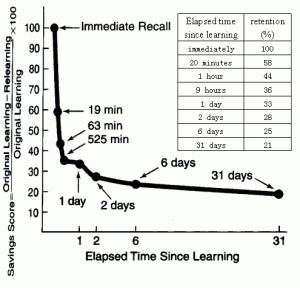
  1. Recycling must start from day one – forgetting starts occurring immediately after a given item has passed into Long-term Memory (Anderson and Jordan,1998). As the diagram below clearly shows, after 19 minutes one loses 40 % of what was recalled at time 0; after 9 hours, 56 % and after 6 days, 75 %. Recycling is imperative and must be of the spaced, distributed kind (a bit every so often) not of the massed kind (a lot of it once a week). Moreover, recycling must start on the same day something has been learnt. Instruction must model independent vocabulary learning habits which focus on autonomous recycling; it must also be mindful of human forgetting rate and provide for consolidation accordingly.

ebbinghaus-graph

  1. Effective language learning = high levels of cognitive control – A language item can be said to be acquired only when it can be performed accurately and efficiently (with little hesitation) under real time conditions in unmonitored execution (e.g. spontaneous conversation). This means that acquisition occurs along a conscious to automatic continuum; it starts from a declarative stage where the application of the knowledge about a specific language item is applied slowly under the brain’s conscious control and it ends when the execution of that item is fully automatic and bypasses working memory (Johnson, 1996). Instruction must involve extensive practice which starts with highly structured tasks (i.e. gap-fill or audiolingual drills) which become increasingly less structured with time and aim at developing cognitive control (the ability to perform effectively in real operating conditions).
  1. Production should always come after extensive receptive processing – Humans learn languages by imitating others’ linguistic input. Instruction should engage learners in masses of receptive practice before engaging them in production. Thus, ideally, extensive listening/reading practice (in the way of comprehensible input) should always precede speaking/writing practice. This rules out reading or listening comprehension tasks as valuable receptive practice, as these are tests, not effective sources of modelling; reading/listening for personal enjoyment or enrichment would be more conducive to learning in this regard.
  1. Cognitive overload should be prevented and controlled for – cognitive overload occurs when learners are engaged in tasks that pose challenging demands on their working memory. Teachers ought to prepare their students for a given task by facilitating their cognitive access to each level of challenge posed by that task. Thus, before reading a challenging text, the learners should be taught the key vocabulary and grammar points it contains and effective strategies to tackle it. Moreover, the text could be adapted to incorporate more contextual clues that may facilitate inference of unfamiliar lexis.
  1. Focus on micro-skills as much as you do on the macro- ones – To execute any task in the L2 (e.g. an unplanned role-play) effectively, the brain must acquire effective cognitive control over both the higher meta-components (e.g. generating meaning) and the lower order skills involved (e.g. pronunciation and intonation). By automatizing lower order language skills, the brain frees up space in learner Working Memory thereby facilitating processing efficiency and cognitive control and, consequently, performance – this is like learning to drive a car whereby a driver automatizes the basic skills such as changing gear or accelerating so that s/he can focus on the road. Instruction must identify and systematically address every set of macro- and micro-skills that typical language tasks involve. Following on from (2) such micro-skills must be practised extensively, too.
  1. Learning is enhanced by depth of processing, distinctiveness of input and personal investment – Learning of any language item does not simply involve practice, but also depth of processing. Instruction must engage learners in semantic analysis and association in order to strengthen the memory trace and to increase the range of context-dependent cues at encoding which will enhance the recall of any target item. The distinctiveness of instructional input (how outstanding and memorable it is) is also an important learning enhancing factor. Personal investment, how much the learning taps into an individual’s emotions and personal background increases retention, too. Hence, in choosing topics and learning materials learner opinions and tastes should always be taken into account (e.g. personalized reading-for-enjoyment activities).
  1. Grammar taught explicitly can be acquired – On condition that it is practised extensively, in context, and through masses of communicative practice which starts from controlled tasks and progresses through increasingly challenging unstructured ones. The process is a lengthy one so it may require training students to work on it independently, too. Implications: recycling is imperative and must occur mostly through the cognitive-control enhancement dimension, i.e. less gap-fills and written translation and more oral semi-structured and unstructured tasks. To enhance grammar acquisition the exceptions to the rule governing an ‘X’ structure should be taught before the dominant rule, e.g. irregular before irregular forms (see my article ‘Irregular before regular…’ for the psycholinguistic rationale for this approach).
  1. Corrective feedback is important, especially at the early stages of instruction – However, in order to be effective it must be processed by the brain long and deeply enough for it to be rehearsed in Working Memory and stored permanently in Long-term memory. Hence, any feedback practice on an erroneous executed ‘X’ item must :
  • Be distinctive;
  • Engage learners in deep processing;
  • Recycle the corrective feedback;
  • Be carried out through various means in order to provide more contextual cues for its recall;
  • Not limit itself to treating the symptom (i.e. the error) but also and more importantly the root cause (whether lack of knowledge, processing inefficiency, etc.)
  • Bring about learner intentionality to eradicate the error (i.e. motivate them to address the error in the future in a sustained effort to eliminate it).

(Conti, 2004)

  1. Learning strategies can be taught – On condition that a persuasive rationale for their instruction is provided; that they are modelled and scaffolded effectively and are practised very extensively through a variety of contexts (Cohen, 1998; Macaro, 2007)
  1. Metacognition should be modelled regularly – enhancing learner metacognition is imperative as a learner who knows how to learn and perform best is a learner who is bound to be more successful. Research shows clearly that highly metacognizant individuals are more successful at L2 learning (Macaro, 2007). Ideally, teaching should regularly scaffold holistic and task specific metacognition by prompting students to monitor and evaluate every level of their language learning and performance. The same approach concisely outlined in point 9 applies here.
  1. Individual variables must be assessed at the beginning of instruction – Learner individual factors may inhibit or facilitate learning. Ideally, at the beginning of instruction it may be helpful (but not always viable, I know…) to obtain as much information as to the following students’ characteristics
  • Previous history as language learners;
  • Personality traits;
  • Learning strategies;
  • Learning preferences (NOT learning styles – but rather how one enjoys learning)
  • Language proficiency across all skills;
  • Language aptitude;
  • Personal interests;
  • Processing efficiency (e.g. how well learners process language);

    This is very time consuming and does require quite a lot of resources and expertise.

  1. Sources of divided attention must be controlled for – This is the most obvious learning principle (Eysenk, 1988); that is why I placed it last. In a lot of UK state school classrooms to expect every student to be focused 100 % of the time is unrealistic. However, in settings where behavior management is not an issue, teachers should endeavour to minimize any distraction stemming from any sources which are directly under their control. One of them is the excessive manipulation of digital media (e.g. app smashing) which hijacks learners’ finite attentional resources away from language processing. Digital media can be effective target language learning enhancers, but must be used judiciously to expand not shrink learning.

In conclusion, as already stated above, the above list is by no means exhaustive. It only includes some of the many pedagogic principles which, in my opinion, ought to underlie any instructional approach regardless of the educationl setting and espoused theory. Unfortunately, something important is missing: how should one implement the above principles in curriculum design, lesson planning and across all four macro-skills? Some of the answers can be found in the other articles on this blog. More answers will be provided in the sequel to this article in the very near future, in which I will concern myself with how those principle should inform pedagogy vis-à vis the four macro-skills, grammar, translation and learning strategy instruction.

Irregular before regular – maximizing explicit grammar instruction by inverting traditional instructional sequences

images (7)

In most coursebooks and schemes of work adopted by UK MFL education providers, the exceptions to a given grammar structure are usually taught after the dominant rule governing that structure has been imparted. In the present post I argue that in many cases inverting the teaching sequence may have a more beneficial impact on acquisition. The rationale for this approach is rooted in the way the brain forms and revise the L2 Interlanguage system.

When a learner is taught a grammar rule, the brain creates a cognitive ‘structure’ that s/he will consolidate through much receptive exposure and production. As already discussed in my post on how L2 grammar ‘rules’ are acquired, when a grammar structure is in the process of being automatised, the brain tends to be extremely circumspect in accepting as ‘correct’ – and consequently ‘learnable’ – any use of that structure which does not match the declarative knowledge (or mental rule representation) stored in Long-Term Memory which refers to it. This is particularly true of the final stage in L2 grammar structure acquisition – Andersons’s (2000) Strengthening process. During this stage, the brain needs to be particularly impervious to any alteration to the rule system referring to that structure in order for that system to be stable and avoid encoding ambiguity. For any successful cognitive restructuring of an existing grammar rule to occur two conditions must be met:

  • The grammar rule one wants to restructure must be fully acquired for any exception to it to be incorporated; only then will the brain be more likely to ‘see’ the exception to that rule as a separate subsystem which does not pose any ‘threats’ to the dominant rule system;
  • The exception to the rule must be processed by the brain numerous times in salient and meaningful contexts; this entails that exceptions to a given rule which do not occur frequently in the language processed in classroom or out-of-the-classroom L2-based activities are less likely to be internalized as they will be ‘masked’ so to speak by the dominant rule.

Let us look at an example: teaching the Passé Composé in French. Coursebooks normally begin with the verbs forming this tense with ‘Avoir’ and after a few lessons move on to the ‘Etre’ verbs. Whilst some of the more able and focused learners can cope with this, in my experience many learners cannot. Very often, teachers may believe students have acquired mastery over the two sets of rules based on their learners’ ability to perform successfully at cloze tasks or other mechanical grammar activities. However, in less structured activities (e.g. spontaneous speech) errors in this area will be usually rife.

Issues in acquiring the exception to the dominant Passé Composé rule are exacerbated by the fact that very few of the verbs requiring Etre are high frequency verbs, hence the students do not usually receive great exposure to them when processing classroom or naturalistic French input. This will make restructuring of the ‘have + past participle’ rule more difficult.

In this case, teaching the ‘Etre’ verbs before the ‘Avoir’ ones is a more effective strategy; once acquired the exception (Etre + past participle) through extensive modelling and practice, the learners will find it easier to learn the dominant rule due to the very frequent occurrence of ‘Avoir Verbs’ in classroom or naturalistic target language input.

The same applies to any other grammar structure where the exceptions to the rule do not occur very frequently in the instructional or naturalistic target language input. Think about irregular past participle such as ‘reçu’, ‘vecu’, ‘su’, etc. which are notoriousy less easy for students to acquire than ‘pris’ or ‘fait’, for instance.

In conclusion, L2 teachers, curriculum designers and course-book writers may want to invert the traditional instructional sequence whereby irregular forms are taught after the regular ones. Moreover, before moving from the less dominant ‘X’ rule sub-system to the dominant one, they ought to ensure as much as possible that the former has been internalized through masses of practice; in other words, that the learners master the use of the target grammar structure not simply in terms of knowing the rule but also in terms of cognitive control over its use, under Real Operating Conditions (see my post on ‘Cognitive Control’ if not clear as to what I mean here).

The case for translation in foreign language instruction

Introduction

This article was inspired by www.frenchteacher.net Steve Smith’s very informative and insightful post ‘What is the point of translation” (http://tinyurl.com/ooxjxeg) in which he clearly outlines the pros and cons of adopting translation in the MFL classroom. I strongly recommend Steve’s brilliant article – a must-read for MFL teachers. The present post is meant as a way to add a research ‘edge’ to and expand on Steve’s very valid points.

The controversy over translation

Whether translation is a useful  learning tool or not is still very controversial amongst L2 educators (Brown, 2002). Why? Mainly because not much research has been carried out on the extent of its impact on L2 proficiency. Moreover, at least until recently, translation has been out of favour with large part of the teacher community because of the following reasons:

  • It is associated with the Grammar translation approach;
  • It is assumed that L1 use in the classroom hampers L2 acquisition;
  • Translation is seen by many as a mechanical transfer of meaning from one language to another – not a communicative activity;
  • Translation tasks are perceived as boring;
  • Translation is seen as independent of the other four skills;
  • Translation takes up lots of valuable time that could be devoted to more beneficial communicative activities;
  • Translation is believed to be appropriate only for training translators.

However, attitudes towards translation have been gradually shifting recently, especially in the last 10 -15 years. As Duff (1994) points out, translation is a real-life task that happens everywhere around the world in a wide range of contexts. In the MFL classroom, students translate for their classmates L2 items they do not understand on a daily basis. When visiting a foreign country, L2-knowers translate for non L2-knowers signs, notices, announcements, etc. When socializing with foreigners, interpreting is a common occurrence, too. And I would add to this that, when using the internet, our learners draw upon translation more than often in their interaction with social media or other knowledge sources – whether through dictionaries or other digital tools. Finally, Kern (1994) found that most teachers agree that mental translation into one’s L1 is inevitable when reading.

Moreover, research in Good Language Learner Strategies has found that more effective students often “refer back to their native language(s) judiciously [translate into L1] and make effective cross-lingual comparisons at different stages of 293 language learning” (Naiman et al, 1978:14). Increasingly, studies suggest a facilitative role of translation or L1 transfer in students’ language learning (e.g. Omura, 1996; Prince, 1996; Cohen & Brooks-Carson, 2001). In Horwitz’s (1988) study the majority of German (70%) and Spanish (75%) students believed that learning a foreign language is largely a matter of learning to translate from English into their L1. Prince (1996) noted that students often believe that learning through translation, with the new word being linked to its native-language equivalent, is more effective than learning vocabulary in context.

Hsieh (2000) reported that translation benefited his Taiwanese students’ L2 reading strategies, vocabulary acquisition, whilst enhancing their cultural background knowledge: 85% of his informants reported that translating helped them pay attention to the coherence and contextualization of English reading text; 65% thought that they became more aware of multiple meanings of an English word; and 62% felt that translation helped extend vocabulary knowledge and reading skills. On the whole, these students believed that the adoption of translation had a desirable effect on their English reading and vocabulary learning.

Several studies (Zhai, 2008; Cumming, 1989; Uzawa, 1996; Kobayashi & Rinnert,1992; Cohen & Brooks-Carson, 2001) have investigated the effect of composing in L1 and then translating into L2. Zhai (2008) concluded that the lower-level learners benefit most from the translated writing. Similarly, Cumming (1989) reported that inexpert French ESL writers use their first language to generate content, and expert writers, in contrast, use translation not just to generate content but to verify appropriate word choice

Dagiliene (2012) found that “ translation activities are a useful pedagogical tool. When introduced purposefully and imaginatively into language learning programme, translation becomes a suitable language practice method for many students. When integrated into daily classroom activities translation can help students develop and improve reading, speaking, writing skills, grammar and vocabulary. Translation in foreign language classes enhances better understanding of structures of the two languages and also strengthens students’ translation skills. It is an effective, valid tool in the foreign language learning and can be used in the university classroom to improve knowledge in English. Still, translation should not be overused and should be integrated into language teaching at the right time and with the right students”.

My case for translation

Before being a teacher I worked as an interpreter and translator (English to French /Italian and viceversa) for about three years. A lot of the written translations involved highly specialized vocabulary that is not normally learnt in school or in a naturalistic setting. It was very challenging, but I learnt loads and not just in terms of vocabulary and grammar; it definitely improved my accuracy, especially in terms of those ‘horrible’ little function words that every L2 learner struggles with: e.g. prepositions.

L2-to-L1 translation tasks, especially when carried out with the support of a bilingualised dictionary and pitched at the right level of challenge can do marvel in terms of linguistic proficiency enhancement; provided, that is, that they are carried out as part of a well-sequenced inter- and intra-lesson series of tasks which recycles the target vocabulary and structures systematically. The following are, in my view, the most important benefits of translation as an instructional tool:

  • Vocabulary consolidation and expansion – this is demonstrated by a number of studies and is pretty self-evident;
  • Noticing grammar and lexical collocations in context– by this I refer to Schmidt’s (1990) noticing hypothesis, whereby spotting the difference between the L1 and L2 usage of a given grammar structure sparks off the acquisition process of that structure ( i.e. the cross-lingual comparison that Naiman et al, 1978, mentioned above, alluded to). An example from a recent lesson: I wanted my students to notice verb-subject inversion in Spanish, but I wanted them to do so in context and without any input whatsoever from me. As I was working out a teaching strategy which would prompt that process I immediately thought of translation; it would have definitely forced them to ask me and/or themselves the question: where is the subject of this sentence? And indeed, when I did ask them to translate a text which included a few instances of verb-subject inversion the next day, it did spark off many questions along this line.
  • Rigor / Focus on accuracy – In the most common reading tasks staged in MFL classrooms, student can ‘get away’ with just ‘getting’ the main gist of the text or spot the required details through the use of para-textual or contextual cues. However, when asked to translate, they cannot operate impressionistically all of the time. They need to interpret the meaning of each and every word and make sense of each syntactic unit. This focuses the learner on grammar and syntax as well since, even when they use dictionaries, they will often have to analyze the grammar to infer meaning.
  • Resourcing’ strategies enhancement – in my Ph.D study I identified ‘resourcing’ as one of the most powerful language learning strategies in terms of vocabulary, spelling and grammar knowledge acquisition. Translation tasks whether from the L1 to the L2 or viceversa will require students to resort to dictionaries, more advanced target language knowers or online forums (e.g. http://www.wordreference.com).
  • Ease of differentiation – It is easy to cater for different abilities through translation tasks. If the translation involves sentences, one can create subsets of sentences for each ability group in the class; when it involves longer texts (e.g an 80 words e-mail), one can design them in such a way that the language starts easy and becomes increasingly complex.
  • Control on input/output – It is one of the tenets of my approach to foreign language instruction that before involving students in unstructured / unplanned activities one should engage them in fairly extensive controlled practice (from easy to incrementally challenging). Translation is very valuable in the context of this approach as it is one of very few tasks that gives the teacher total control on student output. An example: your students are going to perform an oral task that you have carried out several times before in the past in the same topic areas. You will have practised the relevant lexical items already as discrete items and in the context of reading and listening texts. Now, prior to the task you may want to prepare them for the larger units of meaning they are going to attempt to convey in the oral interaction (i.e. sentences); knowing what kind of sentences they are likely to produce in the performance of the target task – based on past experience – you can ask the class to translate them on mini-boards, on a google-doc (displayed on the classroom screen/interactive whiteboard/Apple tv) or through a card game. That should facilitate the ensuing task.

Important caveats and guidelines for translation tasks implementation

The reader should note the following important caveats which, in my view, should be heeded in the adoption of translation as a learning tool:

  1. Translation tasks are best given as homework, unless they are used as relatively short and snappy starters, plenaries or pre-task warm-ups with more confident learners;
  2. Translation tasks must be logically integrated in the learning flow of a lesson or series of lessons. L2 to L1 translation, can occur at any point in an activities sequence; however, L1 to L2 translation tasks should only be staged after extensive practice in the vocabulary and grammar structures they include have been practised extensively. In the language-gym.com/work-outs modules, for instance, L2 to L1 translation only occurs at end of a sequence of 10-15 vocabulary building/reading activities;
  3. Translation tasks are not for everyone; teachers need to be careful in adopting translation with less able or less motivated earners;
  4. Comprehensible input (from L2 to L1) and achievable output (from L1 to L2) should be the guiding principle in the selection or design of translation tasks. Vigotsky’s zones-of-proximal-development should be borne in mind in designing or selecting translations;
  5. Since translation is perceived by many students as a ‘boring’ task (Dagiliene, 2012), teachers need to ensure that translation tasks are as stimulating and imaginative as possible as well as relevant to what the students are learning, the objective of the lesson and the preceding sequence of activities;
  6. Translations should not be randomly selected using merely relevance to the topic as a guiding principle; they should recycle as much as possible the target vocabulary and grammar;
  7. In L2 to L1 translation, the target sentences / texts should contain as many contextual clues as possible in order to facilitate the inference of unfamiliar language items;
  8. Students should be given access to bilingualised dictionaries (e.g. http://www.wordreference.com);
  9. Unless one is dealing with very advanced students, L1 to L2 translation including challenging and connotative language or complex idioms ought to be avoided; language should preferably be denotative and straightforward to translate;
  10. In order to avoid cognitive overload, sentences including complex subordination should be avoided in L2-to-L1 translation with less advanced learners;
  11. It may be advisable to scaffold L1 to L2 translation for less advanced learners by cueing students to the problematic nature of specific language items. Colour coding, symbols or simply different fonts could be used to this effect. For example: in the sentence “I live in a big city” the adjective big may be written in bold as a reminder that there is something to be aware of in translating it into French (big in French precedes the noun, unlike the majority of French adjectives);
  12. Translation should not be overused as a classroom and even homework task, unless we are dealing with highly motivated and able learners.

In conclusion, translation can be very useful as a learning tool if one bears in mind the above caveats and guidelines. I believe the arguments I have put across in this article make a sufficiently strong case for adopting it in the MFL classroom or as homework fairly regularly – but judiciously, without overusing it. I particularly recommend the adoption of translation to teachers who, like myself, lay a lot of emphasis on unplanned oral interaction, as a way to balance the emphasis on communicative fluency with focus on form and accuracy.