Of the ‘curse’ of tense-driven progression in MFL learning

download (7)

For too many years the UK National Curriculum posited the ‘mastery’ of tenses as the main criteria for progression along the MFL proficiency continuum. A learner would be on Level 4 if s/he mastered one tense + opinions, on Level 5 if s/he mastered two, etc. This preposterous approach to the benchmarking of language proficiency has always baffled me and has caused enormous damage to MFL education in the UK for nearly two decades. Not surprisingly I felt relieved when the current British government ‘scrapped’ the National Curriculum Levels. Sadly, this approach to progression is so embedded in much UK teaching curriculum design and practice that it will be very difficult to uproot, especially considering that some Examination boards still place too much emphasis on tenses in their assessment of GCSE examination performance.

But why am I so anti- tense-driven progression? There are two main reasons. First and foremost, the expressive power of a speaker/writer in any language is not a function of how many tenses s/he masters; it is more a function of – in no particular priority order:

  1. How much vocabulary (especially verbs, nouns and adjectives) s/he has acquired;
  2. How flexibly s/he can apply that vocabulary across context;
  3. How intelligible his/her output is;
  4. How effectively s/he can use time- markers (which will clearly signpost the time dimension we are referring to in communication);
  5. How effectively s/he masters the various functions of discourse (agreeing, disagreeing, evaluating, etc.) which will hinge on his/her knowledge of discourse markers (however, moreover, etc.) and subordination;
  6. How effectively s/he masters L2 syntax; etc.

In fact, in several world languages tenses do not really exist. In Bahasa Malaysia, for instance, one of the official languages of the beautiful country I live in, tenses – strictly speaking – do not exist. The past, the present and the future are denoted by time adverbials, e.g. one would say ‘Yesterday I leave my wallet in the hotel room’. Sentences like this one, would convey more meaning than the more accurate ‘I left my wallet in the hotel room’, since it is perfectly intelligible and more useful if one needs to tell the owner of the hotel one stayed in last week, when the wallet was left behind. Yet, according to the former National Curriculum Levels the second sentence would be a marker of higher proficiency…

Placing so much emphasis on the uptake of tenses skews the learning process by channeling teachers and students’ efforts away from other equally or even more important morphemes and aspects of the languages, which somehow end up being neglected and receiving little emphasis in the classroom and textbooks. It also creates misleading beliefs in learners about what they should prioritize in their learning.

This is one of the main problems with tense-driven progression, but not the main one. The most problematic issue refers to the pressure that it puts on teachers and learners to acquire as many tenses as possible in the three KS3 years. This is what, in my view, has greatly damaged British MFL education in the last 20 years, since the UK National Curriculum Levels were implemented. Besides resulting in overemphasizing tense teaching, such pressure has two other very negative outcomes.

Firstly, many teachers end up neglecting the most important dimension of learning – Cognitive Control. This occurs due to the fact that not enough time is devoted to practising each target tense; hence MFL students often learn the rules governing the tenses but cannot use them flexibly, speedily and accurately under communicative and/or time pressure. The pressure to move up one notch, from a lower level to a higher level – often within the same lesson – reduces the opportunities for practice that students ‘badly’ require to consolidate the target material, unduly increasing cognitive overload.

Secondly, often students are explicitly encouraged or choose to memorize model sentences which they embed in their speech or writing pieces in order to achieve a higher grade, learning them ‘ad hoc’ for a scheduled assessment. This would be acceptable if it led to acquisition or if it were supported by a grasp of the tenses ; but this is not always the case.

In conclusion, I advocate that the benchmarking criteria that UK teachers adopt explicitly or implicitly, consciously or subconsciously to assess progression in MFL learning should be based on a more balanced approach to the measurement of proficiency; one which emphasizes discourse functions, range of vocabulary (especially mastery of verbs and adjectives) and pronunciation, much more than it currently – a year since the National Curriculum Levels were abolished –  still does. As I have often reiterated in my posts, teaching should concern itself above all with acquisition of cognitive control rather than with the learning of mere rule knowledge. Progression should be measured more in terms of speed and accuracy of execution under real-life-like communicative pressure, width of vocabulary, functions and structures mastered as well as syntactic complexity. Tenses are important, of course, but they should not take priority over discourse features which are more crucial to effective communication.

What is the most effective approach to foreign language instruction? – Part 1

download (6)

Introduction – Of metaphors teachers live by and pedagogy ‘evangelists’

Every single one of us lives by metaphors, behavioural templates which we acquire through our interaction with the environment we grow up and live in. The language learning metaphors that are at the heart of our teaching come to a large extent from our experiences as language learners. These images of learning are so strongly embedded in our cognition that according to researchers it takes years of training and teaching practice to replace them with new templates; in certain cases, they are even impervious to  ‘conditioning’, despite the demands of teacher trainers, course administrators or students – I have observed this phenomenon first-hand time and again in most of the schools I have worked at.

Our beliefs about L2 learning play an enormous role in determining what teachers we will become and our response to any new methodology that we are asked to adopt. Some individuals will reject new instructional approaches in the belief that if they are such good linguists and their teachers’ approach worked so well for them, why should it not work for their own students? Some others – like I did, for instance, during and after my PGCE – will integrate elements of their existing belief system with the new methodology (-ies) to create a sort of personalized ‘hybrid’ – a ‘syncretistic’ approach. Others, instead – what I call the ‘radical converts’ – will espouse the new methodology with some kind of fanaticism often becoming zealous evangelists of their new pedagogic ‘dogmata’

It is the third attitude that one must be wary of: the blind allegiance to any approach that claims to have found a universal pedagogical fit for every learner. Any such claim will be unfounded because every learner brings to bear on the learning process a range of genetic and acquired individual variables that play an important role in language aptitude as well as in the cognitive/emotional response to teachers and their methodology. Whilst some guiding principles may be ‘universal’ in that they refer to general mechanisms that regulate human cognition across age, race, gender, G.I. factor and language aptitude, their implementation will ALWAYS be conditioned by contextual variables.

Consequently, I am not going to play the ‘know-all L2-pedagogue’, here, and tell teachers what the best approach is. After all, if your students are happy, motivated and learning lots, you have found the best approach already. You may want to enhance and vary your repertoire of teaching strategies, but after all, if the vast majority of your students are getting where you want them to be in the time and with the resources that you have been allocated by your course administrators, you do not need anyone to tell you how to teach; unless someone throws the spanner in the works, that is, and tells you that you must ‘integrate’ new technology, life-long learning skills, etc. into your healthy and balanced teaching echo-system…

Psychology, however, does give us some clear indication of how humans acquire cognitive skills. So, if one believes, as it is logical to presume, that language acquisition involves the same processes and mechanisms involved in the acquisition of any other cognitive ability, it is possible to identify some core pedagogical principles as crucial to any form of explicit foreign language instruction. Moreover, there is some sound research empirical evidence out there that should inform our teaching; to claim that it is conclusive and irrefutable would be preposterous, but to ignore it because it is not would be irresponsible. After all, what teachers must do with research evidence is to make an informed choice and ask themselves the questions: do these findings resonate with me and my past experiences? Is it worth trying this out? And, after trying it out: did it work? And if it didn’t, you can modify it or reject it altogether and look elsewhere.

Thirteen pedagogic principles rooted Cognitive psychology

The following are the pedagogical principles rooted in Cognitive psychology theory and research that worked for me. I am no evangelist, thus I am not positing them as the Gospel’s truths: these are merely some of the beliefs I formed in more than 2 decades of primary, secondary and tertiary MFL teaching, researching and, most importantly, reflecting on my own practice and listening to my students.

I am not concerning myself explicitly with the most important issue– motivation. It goes without saying that no methodology will ever be effective unless the teacher brings about a high level of his/her learners’ cognitive and emotional arousal and develops their self-efficacy.

Finally, let me reiterate that the principles below are based on the epistemological assumption that language skills are acquired in the same way as any other cognitive human skill.

  1. Practice makes perfect – Every language skill and item, in order to be acquired, is subject to the ‘Power Law of Practice’ (Anderson, 2000). Hence Listening, Speaking, Reading, Writing, Translation/Interpreting, Grammar and any other skills must all be practised extensively. This entails that any instructional approach (e.g. Grammar Translation and PBL) which does not emphasize all four skills in a balanced manner is defective. Instruction can be successful only through extensive practice and recycling of the kind envisaged in the next two points.
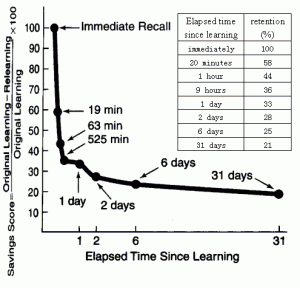
  1. Recycling must start from day one – forgetting starts occurring immediately after a given item has passed into Long-term Memory (Anderson and Jordan,1998). As the diagram below clearly shows, after 19 minutes one loses 40 % of what was recalled at time 0; after 9 hours, 56 % and after 6 days, 75 %. Recycling is imperative and must be of the spaced, distributed kind (a bit every so often) not of the massed kind (a lot of it once a week). Moreover, recycling must start on the same day something has been learnt. Instruction must model independent vocabulary learning habits which focus on autonomous recycling; it must also be mindful of human forgetting rate and provide for consolidation accordingly.

ebbinghaus-graph

  1. Effective language learning = high levels of cognitive control – A language item can be said to be acquired only when it can be performed accurately and efficiently (with little hesitation) under real time conditions in unmonitored execution (e.g. spontaneous conversation). This means that acquisition occurs along a conscious to automatic continuum; it starts from a declarative stage where the application of the knowledge about a specific language item is applied slowly under the brain’s conscious control and it ends when the execution of that item is fully automatic and bypasses working memory (Johnson, 1996). Instruction must involve extensive practice which starts with highly structured tasks (i.e. gap-fill or audiolingual drills) which become increasingly less structured with time and aim at developing cognitive control (the ability to perform effectively in real operating conditions).
  1. Production should always come after extensive receptive processing – Humans learn languages by imitating others’ linguistic input. Instruction should engage learners in masses of receptive practice before engaging them in production. Thus, ideally, extensive listening/reading practice (in the way of comprehensible input) should always precede speaking/writing practice. This rules out reading or listening comprehension tasks as valuable receptive practice, as these are tests, not effective sources of modelling; reading/listening for personal enjoyment or enrichment would be more conducive to learning in this regard.
  1. Cognitive overload should be prevented and controlled for – cognitive overload occurs when learners are engaged in tasks that pose challenging demands on their working memory. Teachers ought to prepare their students for a given task by facilitating their cognitive access to each level of challenge posed by that task. Thus, before reading a challenging text, the learners should be taught the key vocabulary and grammar points it contains and effective strategies to tackle it. Moreover, the text could be adapted to incorporate more contextual clues that may facilitate inference of unfamiliar lexis.
  1. Focus on micro-skills as much as you do on the macro- ones – To execute any task in the L2 (e.g. an unplanned role-play) effectively, the brain must acquire effective cognitive control over both the higher meta-components (e.g. generating meaning) and the lower order skills involved (e.g. pronunciation and intonation). By automatizing lower order language skills, the brain frees up space in learner Working Memory thereby facilitating processing efficiency and cognitive control and, consequently, performance – this is like learning to drive a car whereby a driver automatizes the basic skills such as changing gear or accelerating so that s/he can focus on the road. Instruction must identify and systematically address every set of macro- and micro-skills that typical language tasks involve. Following on from (2) such micro-skills must be practised extensively, too.
  1. Learning is enhanced by depth of processing, distinctiveness of input and personal investment – Learning of any language item does not simply involve practice, but also depth of processing. Instruction must engage learners in semantic analysis and association in order to strengthen the memory trace and to increase the range of context-dependent cues at encoding which will enhance the recall of any target item. The distinctiveness of instructional input (how outstanding and memorable it is) is also an important learning enhancing factor. Personal investment, how much the learning taps into an individual’s emotions and personal background increases retention, too. Hence, in choosing topics and learning materials learner opinions and tastes should always be taken into account (e.g. personalized reading-for-enjoyment activities).
  1. Grammar taught explicitly can be acquired – On condition that it is practised extensively, in context, and through masses of communicative practice which starts from controlled tasks and progresses through increasingly challenging unstructured ones. The process is a lengthy one so it may require training students to work on it independently, too. Implications: recycling is imperative and must occur mostly through the cognitive-control enhancement dimension, i.e. less gap-fills and written translation and more oral semi-structured and unstructured tasks. To enhance grammar acquisition the exceptions to the rule governing an ‘X’ structure should be taught before the dominant rule, e.g. irregular before irregular forms (see my article ‘Irregular before regular…’ for the psycholinguistic rationale for this approach).
  1. Corrective feedback is important, especially at the early stages of instruction – However, in order to be effective it must be processed by the brain long and deeply enough for it to be rehearsed in Working Memory and stored permanently in Long-term memory. Hence, any feedback practice on an erroneous executed ‘X’ item must :
  • Be distinctive;
  • Engage learners in deep processing;
  • Recycle the corrective feedback;
  • Be carried out through various means in order to provide more contextual cues for its recall;
  • Not limit itself to treating the symptom (i.e. the error) but also and more importantly the root cause (whether lack of knowledge, processing inefficiency, etc.)
  • Bring about learner intentionality to eradicate the error (i.e. motivate them to address the error in the future in a sustained effort to eliminate it).

(Conti, 2004)

  1. Learning strategies can be taught – On condition that a persuasive rationale for their instruction is provided; that they are modelled and scaffolded effectively and are practised very extensively through a variety of contexts (Cohen, 1998; Macaro, 2007)
  1. Metacognition should be modelled regularly – enhancing learner metacognition is imperative as a learner who knows how to learn and perform best is a learner who is bound to be more successful. Research shows clearly that highly metacognizant individuals are more successful at L2 learning (Macaro, 2007). Ideally, teaching should regularly scaffold holistic and task specific metacognition by prompting students to monitor and evaluate every level of their language learning and performance. The same approach concisely outlined in point 9 applies here.
  1. Individual variables must be assessed at the beginning of instruction – Learner individual factors may inhibit or facilitate learning. Ideally, at the beginning of instruction it may be helpful (but not always viable, I know…) to obtain as much information as to the following students’ characteristics
  • Previous history as language learners;
  • Personality traits;
  • Learning strategies;
  • Learning preferences (NOT learning styles – but rather how one enjoys learning)
  • Language proficiency across all skills;
  • Language aptitude;
  • Personal interests;
  • Processing efficiency (e.g. how well learners process language);

    This is very time consuming and does require quite a lot of resources and expertise.

  1. Sources of divided attention must be controlled for – This is the most obvious learning principle (Eysenk, 1988); that is why I placed it last. In a lot of UK state school classrooms to expect every student to be focused 100 % of the time is unrealistic. However, in settings where behavior management is not an issue, teachers should endeavour to minimize any distraction stemming from any sources which are directly under their control. One of them is the excessive manipulation of digital media (e.g. app smashing) which hijacks learners’ finite attentional resources away from language processing. Digital media can be effective target language learning enhancers, but must be used judiciously to expand not shrink learning.

In conclusion, as already stated above, the above list is by no means exhaustive. It only includes some of the many pedagogic principles which, in my opinion, ought to underlie any instructional approach regardless of the educationl setting and espoused theory. Unfortunately, something important is missing: how should one implement the above principles in curriculum design, lesson planning and across all four macro-skills? Some of the answers can be found in the other articles on this blog. More answers will be provided in the sequel to this article in the very near future, in which I will concern myself with how those principle should inform pedagogy vis-à vis the four macro-skills, grammar, translation and learning strategy instruction.

Irregular before regular – maximizing explicit grammar instruction by inverting traditional instructional sequences

images (7)

In most coursebooks and schemes of work adopted by UK MFL education providers, the exceptions to a given grammar structure are usually taught after the dominant rule governing that structure has been imparted. In the present post I argue that in many cases inverting the teaching sequence may have a more beneficial impact on acquisition. The rationale for this approach is rooted in the way the brain forms and revise the L2 Interlanguage system.

When a learner is taught a grammar rule, the brain creates a cognitive ‘structure’ that s/he will consolidate through much receptive exposure and production. As already discussed in my post on how L2 grammar ‘rules’ are acquired, when a grammar structure is in the process of being automatised, the brain tends to be extremely circumspect in accepting as ‘correct’ – and consequently ‘learnable’ – any use of that structure which does not match the declarative knowledge (or mental rule representation) stored in Long-Term Memory which refers to it. This is particularly true of the final stage in L2 grammar structure acquisition – Andersons’s (2000) Strengthening process. During this stage, the brain needs to be particularly impervious to any alteration to the rule system referring to that structure in order for that system to be stable and avoid encoding ambiguity. For any successful cognitive restructuring of an existing grammar rule to occur two conditions must be met:

  • The grammar rule one wants to restructure must be fully acquired for any exception to it to be incorporated; only then will the brain be more likely to ‘see’ the exception to that rule as a separate subsystem which does not pose any ‘threats’ to the dominant rule system;
  • The exception to the rule must be processed by the brain numerous times in salient and meaningful contexts; this entails that exceptions to a given rule which do not occur frequently in the language processed in classroom or out-of-the-classroom L2-based activities are less likely to be internalized as they will be ‘masked’ so to speak by the dominant rule.

Let us look at an example: teaching the Passé Composé in French. Coursebooks normally begin with the verbs forming this tense with ‘Avoir’ and after a few lessons move on to the ‘Etre’ verbs. Whilst some of the more able and focused learners can cope with this, in my experience many learners cannot. Very often, teachers may believe students have acquired mastery over the two sets of rules based on their learners’ ability to perform successfully at cloze tasks or other mechanical grammar activities. However, in less structured activities (e.g. spontaneous speech) errors in this area will be usually rife.

Issues in acquiring the exception to the dominant Passé Composé rule are exacerbated by the fact that very few of the verbs requiring Etre are high frequency verbs, hence the students do not usually receive great exposure to them when processing classroom or naturalistic French input. This will make restructuring of the ‘have + past participle’ rule more difficult.

In this case, teaching the ‘Etre’ verbs before the ‘Avoir’ ones is a more effective strategy; once acquired the exception (Etre + past participle) through extensive modelling and practice, the learners will find it easier to learn the dominant rule due to the very frequent occurrence of ‘Avoir Verbs’ in classroom or naturalistic target language input.

The same applies to any other grammar structure where the exceptions to the rule do not occur very frequently in the instructional or naturalistic target language input. Think about irregular past participle such as ‘reçu’, ‘vecu’, ‘su’, etc. which are notoriousy less easy for students to acquire than ‘pris’ or ‘fait’, for instance.

In conclusion, L2 teachers, curriculum designers and course-book writers may want to invert the traditional instructional sequence whereby irregular forms are taught after the regular ones. Moreover, before moving from the less dominant ‘X’ rule sub-system to the dominant one, they ought to ensure as much as possible that the former has been internalized through masses of practice; in other words, that the learners master the use of the target grammar structure not simply in terms of knowing the rule but also in terms of cognitive control over its use, under Real Operating Conditions (see my post on ‘Cognitive Control’ if not clear as to what I mean here).

How the brain acquires foreign language grammar – A Skill-theory perspective

Caveat: Being an adaptation of a section of a chapter in my Doctoral thesis, this is a fairly challenging article which may require solid grounding in Applied Linguistics and Cognitive Theories of Skill Acquisition.

1. L2-Acquisition as skill acquisition: the Anderson Model

The Anderson Model, called ACT* (Adaptive Control of Thought), was originally created as an account of the way students internalise geometry rules. It was later developed as a model of L2-learning (Anderson, 1980, 1983, 2000). The fundamental epistemological premise of adopting a skill-development model as a framework for L2-acquisition is that language is considered as governed by the same principles that regulate any other cognitive skill. A number of scholars such as Mc Laughlin (1987), Levelt (1989), O’Malley and Chamot (1990) and Johnson (1996), have produced a number of persuasive arguments in favour of this notion.


Although ACT* constitutes my espoused theory of L2 acquisition, I do not endorse Anderson’s claim that his model alone can give a completely satisfactory account of L2-acquisition. I do believe, however, that it can be used effectively to conceptualise at least three important dimensions of L2-acquisition which are relevant to type of Explicit MFL instructional approaches implemented in many British schools: (1) the acquisition of grammatical rules in explicit L2-instruction, (2) the developmental mechanisms of language processing and (3) the acquisition of Learning Strategies.


 Figure 1: The Anderson Model (adapted from Anderson, 1983)


The basic structure of the model is illustrated in Figure 1, above. Anderson posits three kinds of memory, Working Short-Term Memory (WSTM), Declarative Memory and Production (or Procedural) Memory. Working Memory shares the same features discussed in previous blogs (see ‘Eight important facts about Working Memory’) while Declarative and Production Memory may be seen as two subcomponents of Long-Term Memory (LTM). The model is based on the assumption that human cognition is regulated by cognitive structures (Productions) made up of ‘IF’ and ’THEN’ conditions. These are activated every single time the brain is processing information; whenever a learner is confronted with a problem the brain searches for a Production that matches the data pattern associated with it. For example:


IF the goal is to form the present perfect of a verb and the person is 3rd singular/


THEN form the 3rd singular of ‘have’


IF the goal is to form the present perfect of a verb and the appropriate form of ‘have’ has just been formed /


THEN form the past participle of the verb


The creation of a Production is a long and careful process since Procedural Knowledge, once created, is difficult to alter. Furthermore, unlike declarative units, Productions control behaviour, thus the system must be circumspect in creating them. Once a Production has been created and proved to be successful, it has to be automatised in order for the behaviour that it controls to happen at naturalistic rates. According to Anderson (1985), this process goes through three stages: (1) a Cognitive Stage, in which the brain learns a description of a skill; (2) an Associative Stage, in which it works out a method for executing the skill; (3) an Autonomous Stage, in which the execution of the skill becomes more and more rapid and automatic.


In the Cognitive Stage, confronted with a new task requiring a skill that has not yet been proceduralised, the brain retrieves from LTM all the declarative representations associated with that skill, using the interpretive strategies of Problem-solving and Analogy to guide behaviour. This procedure is very time-consuming, as all the stages of a process have to be specified in great detail and in serial order in WSTM. Although each stage is a Production, the operation of Productions in interpretation is very slow and burdensome as it is under conscious control and involves retrieving declarative knowledge from LTM. Furthermore, since this declarative knowledge has to be kept in WSTM, the risk of cognitive overload leading to error may arise.


Thus, for instance, in translating a sentence from the L1 into the L2, the brain will have to consciously retrieve the rules governing the use of every single L1-item, applying them one by one. In the case of complex rules whose application requires performing several operations, every single operation will have to be performed in serial order under conscious attentional control. For example, in forming the third person of the Present perfect of ‘go’, the brain may have to: (1) retrieve and apply the general rule of the present perfect (have + past participle); (2) perform the appropriate conjugation of ‘have’ by retrieving and applying the rule that the third person of ‘have’ is ‘has’; (3) recall that the past participle of ‘go’ is irregular; (4) retrieve the form ‘gone’.


Producing language by these means is extremely inefficient. Thus, the brain tries to sort out the information into more efficient Productions. This is achieved by Compiling (‘running together’) the productions that have already been created so that larger groups of productions can be used as one unit. The Compilation process consists of two sub-processes: Composition and Proceduralisation. Composition takes a sequence of Productions that follow each other in solving a particular problem and collapses them into a single Production that has the effect of the sequence. This process lessens the number of steps referred to above and has the effect of speeding up the process. Thus, the Productions


P1 IF the goal is to form the present perfect of a verb / THEN form the simple present of have


P2 IF the goal is to form the present perfect of a verb and the appropriate form of ‘have’ has just been formed / THEN form the past participle of the verb would be composed as follows:


P3 IF the goal is to form the present perfect of a verb / THEN form the present simple of have and THEN the past participle of the verb


An important point made by Anderson is that newly composed Productions are weak and may require multiple creations before they gain enough strength to compete successfully with the Productions from which they are created. Composition does not replace Productions; rather, it supplements the Production set. Thus, a composition may be created on the first opportunity but may be ‘masked’ by stronger Productions for a number of subsequent opportunities until it has built up sufficient strength (Anderson, 2000). This means that even if the new Production is more effective and efficient than the stronger Production, the latter will be retrieved more quickly because its memory trace is stronger.


The process of Proceduralisation eliminates clauses in the condition of a Production that require information to be retrieved from LTM memory and held in WSTM. As a result, proceduralised knowledge becomes available much more quickly than non-proceduralised knowledge. For example, the Production P2 above would become


IF the goal is to form the present perfect of a verb


THEN form ‘have’ and then form the past participle of the verb


The process of Composition and Proceduralisation will eventually produce after repeated performance:


IF the goal is to form the present perfect of ‘play’/ THEN form ‘ has played’


For Anderson it seems reasonable to suggest that Proceduralisation only occurs when LTM knowledge has achieved some threshold of strength and has been used some criterion number of times. The mechanism through which the brain decides which Productions should be applied in a given context is called by Anderson Matching. When the brain is confronted with a problem, activation spreads from WSTM to Procedural Memory in search for a solution – i.e. a Production that matches the pattern of information in WSTM. If such matching is possible, then a Production will be retrieved. If the pattern to be matched in WSTM corresponds to the ‘condition side’ (the ‘if’) of a proceduralised Production, the matching will be quicker with the ‘action side’ (the ‘then’) of the Production being deposited in WSTM and make it immediately available for performance (execution). It is at this intermediate stage of development that most serious errors in acquiring a skill occur: during the conversion from Declarative to Procedural knowledge, unmonitored mistakes may slip into performance.


The final stage consists of the process of Tuning, made up of the three sub-processes of Generalisation, Discrimination and Strengthening. Generalisation is the process by which Production rules become broader in their range of applicability thereby allowing the speaker to generate and comprehend utterances never before encountered. Where two existing Productions partially overlap, it may be possible to combine them to create a greater level of generality by deleting a condition that was different in the two original Productions. Anderson (1982) produces the following example of generalization from language acquisition, in which P6 and P7 become P8


P6 IF the goal is to indicate that a coat belongs to me THEN say ‘My coat’


P7 IF the goal is to indicate that a ball belongs to me THEN say ‘My ball’


P8 IF the goal is to indicate that object X belongs to me THEN say ‘My X’


Discrimination is the process by which the range of application of a Production is restricted to the appropriate circumstances (Anderson, 1983). These processes would account for the way language learners over-generalise rules but then learn over time to discriminate between, for example, regular and irregular verbs. This process would require that we have examples of both correct and incorrect applications of the Production in our LTM.


Both processes are inductive in that they try to identify from examples of success and failure the features that characterize when a particular Production rule is applicable. These two processes produce multiple variants on the conditions (the ‘IF’ clause(s) of a Production) controlling the same action. Thus, at any point in time the system is entertaining as its hypothesis not just a single Production but a set of Productions with different conditions to control the action.


Since they are inductive processes, Generalization and Discrimination will sometimes err and produce incorrect Productions. As I shall discuss later in this chapter, there are possibilities for Overgeneralization and useless Discrimination, two phenomena that are widely documented in L2-acquisition research (Ellis, 1994). Thus, the system may simply create Productions that are incorrect, either because of misinformation or because of mistakes in its computations.


ACT* uses the Strengthening mechanism to identify the best problem-solving rules and eliminate wrong Productions. Strengthening is the process by which better rules are strengthened and poorer rules are weakened. This takes place in ACT* as follows: each time a condition in WSTM activates a Production from procedural memory and causes an action to be deployed and there is no negative feedback, the Production will become more robust. Because it is more robust it will be able to resist occasional negative feedback and also it will be more strongly activated when it is called upon:


The strength of a Production determines the amount of activation it receives in competition with other Productions during pattern matching.Thus, all other things being equal, the conditions of a stronger Production will be matched more rapidly and so repress the matching of a weaker Production (Anderson, 1983: 251)


Thus, if a wrong Interlanguage item has acquired greater strength in a learner’s LTM than the correct L2-item, when activation spreads the former is more likely to be activated first, giving rise to error. It is worth pointing out that, just as the strength of a Production increases with successful use, there is a power-law of decay in strength with disuse.


2.Extending the model: adding a ‘Procedural-to-Procedural route’ to L2-acquisition
 
One limitation of the model is that it does not account for the fact that sometimes unanalysed L2-chunks of language are through rote learning or frequent exposure. This happens quite frequently in classroom settings, for instance with set phrases used in everyday teacher-to-student communication (e.g. ‘Open the book’, ‘Listen up!’). As a solution to this issue Johnson (1996) suggested extending the model by allowing for the existence of a ‘Procedural to Procedural route’ to acquisition whereby some unanalysed L2-items can be automatised with use, ‘jumping’, as it were, the initial Declarative Stage posited by Anderson.
 
This means that teaching memorised unanalysed chunks can work in synergy with explicit language teaching, as happens in my approach. See my blog post on how I teach lexicogrammar.

Why do our L1-English learners of French/Spanish find it hard to acquire agreement rules? What can teachers do to facilitate the process?

images

In a previous post I already dealt with the dichotomy declarative knowledge vs procedural knowledge and control. To put in a nutshell, the former refers to knowing the set of ‘rules’ governing the use of a given target grammar or lexical structure (having its mental representation) whereas the latter refers to its effective application during real operation conditions (e.g. in spontaneous speech or writing under time constraints). As I have often reiterated in many of my posts, language learning ought to aim at bringing about high levels of target language control (as close as possible to automatization), whilst viewing declarative knowledge as the necessary starting point in an L2-learner’s journey towards acquisition.

In my experience, students find it relatively easy to grasp the rules underlying the application of noun (or pronoun)-adjective rules but rarely manage to acquire effective control, and even at A-level and University many mistakes continue slipping into performance (especially in oral output). Why is it? And what can be done about it?

In a previous post I discussed how agreement errors are often due to the fact that, in less expert L2 speakers/writers, whenever Working Memory experiences cognitive overload, the brain tends to focus only on the most semantically salient features of the output (the ones that convey most of the intended meaning) and neglects the features which do not contribute much to meaning. However, this is not the whole truth. The picture is much more complicated than that.

Let us look at the cognitive operations and knowledge involved in the process of applying adjectival agreement rules in the production of L2 French/Italian/Spanish/German output (i.e. speaking or writing) under real operating conditions (henceforth ROC). The L2 speaker/writer must:

  1. Retrieve the required French adjective;
  2. Remember to make it agree with the noun in terms of gender and number – which is not always straightforward as they may be relatively far from each other – separated by a copula and an intensifier, for instance;
  3. Know whether the nouns is masculine or feminine;
  4. Know whether it is irregular or regular;
  5. Apply the rule;
  6. (in speaking) pronounce it correctly / (in writing) spell it correctly.

These are quite a lot of cognitive operations to perform under ROC. To top it off, the cognitive load posed by these operations is exacerbated by the fact that there are often other permutations that the learner will have to execute in the same sentence (e.g. subject-to-verb agreement).

As pointed out in previous posts, if our learners keep making this kind of mistakes day in day out whenever they engage in spontaneous or pseudo-spontaneous communication, the errors end up being fossilized (automatized) and incorporated permanently in their Interlanguage. This explains why a lot of L2 learners keep making those mistakes all the way up to university. So what can be done to fix this problem earlier on? Lots of old-fashioned drills? Or how about, as the ‘Krashenites’ amongst us would suggest, exposing the students to lots of comprehensible input and avoid involving them in any language production until later stages in the instruction process? Neither of these solutions are in my opinion, a bad idea. In fact, any sound approach to this issue, would have to involve a bit of both.

To come up with an effective solution one should, in my opinion, consider first the three main psycholinguistics causes of the issue, which refer to the six operations listed above.

  1. The gender of nouns – the notion that words can be masculine and feminine (or neuter if one is learning German) is completely alien to an L1 English native speaker. Yet, how often and how strongly is this notion firmly placed in the students’ focal awareness and ‘drummed in’ across all four language skills during the early stages of acquisition – and later on, too – by MFL instructors? Enhancing their focus on this notion does not simply involve teaching them the gender of the target nouns; it also involves changing their mindset, the way their cognition works. Hence, teachers must ensure, since the very early days of L2 learning, that students are constantly reminded of this concept, both explicitly (e.g through work on noun morphology) and implicitly (e.g. through colour coding).
  1. Focus on word endings – the anglo-saxon brain is wired to focus on the beginning of words; hence, instinctively, an English native speaker would focus his/her attention on the opposite end to where s/he should indeed be focusing it on. This also entails another disadvantage: students may not learn much from any L2 written input they read since, by focusing mainly on the beginnings of words, may not notice the endings in the texts at all.To get an anglo-saxon brain to invert the ‘instinctive’ focus of its attention is no easy task, especially with adult learners. This process will require extensive day-in-day-out scaffolding and practice.
  1. The saliency of agreement – this issue compounds the problem identified in point 1, in that an L1 English speaker is not only at odds with the notion of gender, but will also find the notion of agreement unfamiliar and redundant. Hence their brain will automatically place the saliency of agreement low down in their list of attentional priorities. The challenge for teachers is to ensure that agreement is constantly in the learners’ focal awareness until it becomes ‘second nature’ – as it is for any French, Spanish, Italian and German native speaker. By making the application of agreement become ‘second nature’, I mean that whenever an adjective is retrieved by Working Memory, a ‘program’(or Production, as it is called by Skill theorists) in the learner’s brain is automatically activated  that operates something like this:


        If condition: if I use an adjective in a phrase/sentence…

       Then condition: …then I must make it agree with the noun it modifies


The speed at which the brain will activate the above Production (i.e. the extent of its Proceduralisation) will play a big role in determining how efficiently and effectively the agreement rule will be applied.

The implications for teaching are pretty obvious. MFL teachers must focus on developing processing efficiency under ROC (i.e. cognitive control), whilst addressing the three issues just discussed, by moving them into their learners’ focal awareness until, after day-in-day-out scaffolding (in the way of reminders) and practice (only a few minutes a day), they become automatic. I have already discussed fairly extensively how control can be enhanced in a previous post (“Control – the most neglected, yet most important factor in MFL grammar teaching”); as far as the other issues are concerned, here are a few possible teacher tactics. The reader should bear in mind that in my approach one should always start with receptive skills and move on to the productive ones at a later stage.

Focus on gender – here are some suggestions on how to focus students on gender:

  • Present masculine and feminine nouns always with the (indefinite/definite) article or any other determiner (e.g. mon/ma) and using different colour coding (this is common practice in many MFL classrooms);
  • When providing vocabulary lists, make sure that the masculine and feminine nouns are grouped separately (you may use colour-coding as background to enhance the contrast) ;
  • Model and practice extensively ‘rule of thumbs’ which may work as ‘aide-memoire’ in the identification of the gender of nouns (e.g. noun endings in ‘ion’ are usually feminine). Engaging inductive activities can be staged in class whereby the students are given lists of words and with the help of dictionaries need to work out by themselves such rules of thumbs.
  • After involving the students in a reading or listening-based activity, get them to identify (based on their determiners) the gender of a set list of nouns whose gender you want to focus on;
  • Involve the students, on a regular basis – I do one every single day – in quizzes based on gender identification e.g. odd one out’s (given three nouns, spot the feminine one) and gap-fills (where the article must be inserted);
  • Give the students a short passage containing X number of mistakes with (the gender of) articles or other determiners and challenge them to find them under time conditions with the help of the dictionary. This can be done as a way to practise the modelling of ‘rule of thumbs’. Students usually enjoy this activity;
  • The classroom environment can be used as a way to remind the students of the issue and to display any rule of thumbs modelled or worked out by the students.

              Focus on adjectival endings

  • Colour-code feminine endings – as well masculine endings when dealing with irregular adjectives (e.g. travailleur vs travailleuse);
  • When providing vocabulary lists include both the feminine and masculine endings of the target adjectives(it is tedious and time consuming but it pays off);
  • Listening activities involving focus on endings should be carried out regularly (e.g. minimal pairs, where the feminine and masculine forms of the same adjective are contrasted);
  • ‘Error hunt’ tasks where students need to identify a set number of agreement errors in a text – students usually enjoy this kind of activities;
  • Old-fashioned drills (e.g. multiple choice gap-fills; ending manipulation tasks; translations, etc.)
  • Give the students a checklist with the following guiding questions, for example, as a way to scaffold the focus on adjectival endings and agreement when they are producing written output, e.g.: (1) Which noun does the adjective refer to? (2) Is the noun feminine or masculine, singular or plural? How do you know? Have you double-checked, if in doubt? (3) Is the adjective regular or irregular? Have you double-checked, if in doubt?

Placing ‘agreement’ in the students’ focal awareness – As far as this issue is concerned, the above activities, if practised regularly, ‘should do the trick’. The above mentioned activity involving work on ‘authentic’ essays written by previous cohorts of students containing numerous mistakes with adjectival agreement could be used as a reminder of how common this type of error is. Also, in setting targets as part of feedback on writing or speaking, one of the three or four targets identified should include adjectival agreement if it is a recurrent source of error in the output. A narrow-focus corrective approach, whereby the feedback and feed-forward on a student’s written output centers mainly on one or two issues only (see my article on this approach, could be implemented, too. In this approach, the students could be focused solely on agreement issues for a few weeks so as to channel all of his/her attentional resources in the editing process only on this aspect of grammar accuracy.

In conclusion, the cognitive challenges posed by the acquisition and application of agreement rules are manifold. In this article I have endeavoured to outline a few. Most teachers do address such challenges, in my experiences, but not consistently and extensively enough to prevent them from causing these errors to recur and become fossilized in their learners’ interlanguage. Some practitioners adopting strong CLT approaches may not feel that agreement errors are important enough to deserve the allocation of dedicated teaching time in each lesson. I can relate to this argument, as I agree that fluency should come before accuracy as a priority.

However, agreement mistakes, when they are recurrent, can be stigmatizing and irritating to native speaker readers or listeners and may be interpreted by them as signs of poor linguistic competence. Hence, I advocate that a few minutes’ work on the above issues should feature regularly at the early stages of L2 instruction until one feels that the learners have finally acquired a sufficiently high level of focal awareness of and control over this structure.

Cognitive control – the most important, yet most neglected factor in foreign language grammar teaching

download (2)

Cognitive control, as I mentioned in previous posts, refers to the ability to perform a task in real operating conditions. For instance, an L2 learner of French who has had only a few lessons on the Passé Composé may be able to conjugate the verb ‘Aller’ perfectly in the context of a gap-fill exercise; however, when required to use it in spontaneous speech he will produce wrong utterances like ‘J’allé’ or ‘J’ai allé’. Most experienced teachers will be very familiar with this phenomenon – and with this specific mistake.

The reason for the mistake is that the learner has not yet acquired cognitive control over that specific form of the Passé Composé; he has a clear idea of how to form it, has the correct mental representation of the rule (or Declarative knowledge, as Skill theorists call it), but cannot apply it in real time when his brain has to juggle all of the following demands in the very short time available to him to ‘stay’ in the conversation:

  1. Understand what the person he is talking to is saying;
  2. Plan what to reply;
  3. ‘Fetch’ from Long-term Memory the French words that match that plan;
  4. Arrange the words into a syntactically correct sentence;
  5. Store that sentence in Working Memory;
  6. Modify word endings when necessary (i.e. verbs must be conjugated, feminine/plural endings added, etc.),
  7. Evaluate its accuracy, which means monitoring the sentence whilst rehearsing it in Working Memory;
  8. Pronounce it correctly.

This is a tall order for a novice foreign language speaker as it requires the ability to orchestrate many skills at the same time. Teachers often take it for granted as they are, after all, very good linguists and may not remember how they themselves struggled with that as learners…

To go back to the example I gave at the very beginning of this article, what is ironic is that what the student who gets the ‘je suis allé’ wrong in spontaneous speech will often get by his teacher is a reminder of the rule – that the boy already knows – and more gap-fill exercises – which will not prepare him for effective performance in spontaneous speech at all.

But how do we develop L2 learners’ high levels of executive control (also called ‘Procedural Knowledge’) over a given structure or skill? Surely not simply by getting them to memorize scores of conjugation tables and practice through gap-fill exercises. These activities can be useful as a starting point along the acquisition continuum, but ultimately, the only way to acquire the ability to apply a grammar rule in real operating conditions (i.e. spontaneous speech; essay writing under timed conditions; chatting on the web, etc.) is practice which starts with very easy recognition tasks and culminates several lessons later into more challenging unplanned communicative tasks (e.g. spontaneous conversation). This is an example of a sequence of (easy-to-prepare) activities to develop control in speaking for a year 9-10 class, which would take at least three lessons:

  • Presentation / Modelling of the target rule: Explicit (e.g. typical Power Point presentation explaining the rule) or Inductive (e.g. students are given a text or sentences with examples of the target rule and they must work it out by themselves)
  • Lots of receptive practice where students see examples of the target grammar structure’s application in the context of a written passage;
  • Gap-fill exercises and/or audiolingual-style drills (e.g. students are simply required to repeat a set sentences but change a verb or adjectival ending)
  • Easy (English to French) oral translations (e.g. students are given very basic role-plays in English to put into French orally);
  • Picture-based tasks (i.e. given a very clear and simple picture, students have to briefly describe it using the target structure);
  • Structured ‘narrow’ tasks eliciting basic responses containing the target structure (e.g. basic conversations, surveys or ‘Find someone who’ tasks including questions such as ‘Qu’est-ce que tu as fait hier soir au cinema?’);
  • Challenging GCSE style role-plays with cues eliciting the target structure;
  • Typical unstructured communicative tasks eliciting spontaneous speech (e.g. GCSE style conversation tasks)

As the above sequence clearly show, the implication is that the acquisition of high levels of executive control over any grammar structure requires a lot of practice through a model that goes from ‘easy’ receptive tasks, to gradually more challenging production tasks which are fairly easy and highly structured to start with and become increasingly demanding on Working Memory capacity. In my experience, learners are way too often required to skip steps and go much too soon from the gap-fill / easy permutation stage to fairly challenging GCSE conversation-like tasks. This is very much the equivalent, in real life, to showing a person how to drive in a motionless car and ask them a few minutes later to drive the same car flat out on a trafficked highway.

In conclusion, the notion of control that I have dicussed in this article should be heeded by language instructors to a much greater extent than it is currently done in many L2 classrooms. One would not claim to be able to play tennis after reading a book about it, or after having bounced the ball with one’s racket against a wall a few times. However, this is pretty much what many teachers do when they limit their teaching of grammar to a presentation of the rule, a few gap-fills and one or two rounds of questions around the class to check understanding – followed  maybe by a short essay or narrative eliciting the use of the target structure.

The achievement of high levels of procedural knowledge must be the ultimate goal of foreign language learning; hence, the development of effective cognitive control must be at the heart of everything we do in every lesson.

Six ‘useless’ things foreign language teachers do

images (1)

  1. Recasts

Recasts are the most frequent form of feedback that teachers give students in the course of oral interactions. They consists of utterances by the teacher that repeat the student’s erroneous utterance but ‘fix’ the mistake(s) without changing the meaning in any way. Example:

Student: hier j’ai allé au cinéma

Teacher: je suis allé au cinéma

Recasts, according to research (e.g. Doughty, 1994) are extensively used in the classroom representing up to 60 or even 70 % of all teacher feedback on oral performance. An interesting finding by Doughty is that recasts tend to concern themselves with minor errors rather than big problems.

As several studies have clearly shown, recasts do not really ‘work’ as they are not noticed most of the time. Havranek (1999) investigated to what extent learners recall corrective feedback from the teacher or their own or their peers’ mistakes. She found that less than one third of the learners who were corrected remembered having been corrected; peers did not pay attention to the correction of others and, most importantly, whether the corrections were recalled or not made little difference to whether the errors were or were not committed later.

The main reason why recasts do not work is that when the learners’ Working Memory is interrupted in the middle of speech production by the correction, it will not rehearse that correction for the time necessary to commit it to long-term memory -because it will be concentrating on resuming the interrupted conversation flow. Hence, the content of the correction will often be lost – which explains why Havranek’ subjects did not recall more than two thirds of the correction.

In view of the little surrender value of recasts in terms of acquisition, interrupting the students to correct them whilst they are talking may do more harm than good. Not only it may have a negative cognitive impact by disrupting their prospective memory; but it may also affect their self-esteem, especially if the correction relates to minor errors – as Doughty’s study found.

The above are valid reasons not to engage in recasts. It may be more productive and less threatening for the learners if teachers made a mental note of the mistakes noticed and treat them later on in contexts in which the learner’s attentional resources can be more productively channelled.

  1. Direct and Indirect error correction of written errors

Direct correction, whereby the teacher corrects an erroneous grammatical form and provides the correct version of that structure with an explanation on margin is pretty much a waste of valuable teacher time. Why? Tons of research (e.g. Cohen and Cavalcanti, 1990; Truscott,1996; Conti, 2001 and 2004) have demonstrated that most students do not process the correction in a way that is conducive to learning; most of them simply look at the mark, quickly read the comment and put the essay away, never to look at it again. Unless, as I argued in my post “Why teacher should not bother correcting errors in their students’ writing”, teachers engage students in more productive ways of processing teacher feedback, Direct correction is not going to enhance L2 acquisition. Error correction can be valuable when it places the errors into the students’ focal awareness, engages them in deep processing of teacher corrections, generates their intentionality to eradicate error and keeps it up for a sufficiently long period of time for any remedial learning to occur.

Indirect correction, on the other hand, is not likely to contribute much to acquisition as the learner will not be able to correct what s/he does not know (e.g. I cannot self-correct an omission of the subjunctive if I have not learnt it) and if s/he is indeed able to correct, s/he will not really learn much from it. To learn more about my views on this issue read my blog “Why asking students to self-correct their errors is a waste of time”.

  1. One-off learning-to-learn sessions

Not long ago I came across a beautiful Power Point on a teaching-resources website which purported to train students in effective approaches to the memorisation of vocabulary. It contained numerous slides packed with interesting suggestions on how to best commit vocabulary to memory and lasted long enough to cover a whole lesson. In the past, I myself produced similar Power Points and delivered one-off sessions on learning strategies which the students usually found quite interesting and engaging. But did they actually learn from them?

The problem is that, unless there are several follow-up sessions and some form of scaffolding reminding the students to use the strategies that the Power Point presented, thirty years of research (see Macaro, 2007) clearly show that this approach does little more than raising learner awareness of the existence of these strategies, but will not result in learner uptake, i.e. very few if any learner will incorporate these strategies in their active repertoire of learning strategies.

For any learner training to be successful it must involve learners in extensive practice of the target strategies.

  1. Identifying students’ learning styles and planning lessons accordingly

Research has clearly shown that learning styles and multiple intelligences are invalid constructs totally unsupported by theory and research. Moreover, there is not a single shred of evidence to show that teaching students based on their alleged learning style actually enhances their learning. Teachers should not waste valuable teaching time administering questionnaires or other ‘tests’ in an attempt to identify students’ learning style or ‘dominant intelligence(s)’. Most importantly, they should not bother planning lessons or remedial learning programs based on the findings obtained.

In view of the invalidity of these constructs, labelling students as visual, kinesthetic or other may lead them, especially the younger ones, to form a self-fulfilling prophecy that may ultimately be detrimental to their learning.

  1. Asking pre-intermediate/lower intermediate learners to peer assess oral performance

Although it has some (modest) surrender value in terms of metacognitive enhancement, the practice of involving fairly inexperienced learners in peer assessment is not justified by the learning gains it produces, especially in terms of language acquisition. Firstly, as these learners do not usually possess enough declarative knowledge of the language to be able to assess and feedback on language use in a way that can significantly benefit the recipient of the feedback; secondly, and more importantly, they do not possess sufficient levels of procedural knowledge to be able to apply any declarative knowledge they have whilst processing what they hear their classmates say – which means they cannot effectively evaluate their oral output.

In fact, even with more proficient learners peer assessment practice may not always be beneficial. In a little experiment I made last year, I got 16 students that I had practised peer assessment with almost on a daily basis to assess their classmates after a typical IGCSE conversation, using the CIE evaluation rubrics. When I compared their assessment scores to mine the discrepancies were huge, most of them having been on average 25 % more generous than me in allocating marks.

  1. Asking students to create digital artefacts in class

As I wrote in my blogs ‘Five central psychological challenges of foreign language learning’ and ‘Of SAMR and Samritans”, creating a digital artefact in class is not likely to be conducive to language acquisition enhancement at pre-intermediate to intermediate levels of L2 proficiency. The main reason is that human cognitive resources being finite, the working memory of an intermediate/lower intermediate MFL learner will not usually be able to process language effectively and efficiently whilst concurrently focusing on the operations he/she will be performing, e.g. cutting, pasting, ‘googling’ pictures, videoing, recording, ‘smashing’ Apps, etc.

Hence, forgetting by divided attention often occurs with not much learning at all taking place. I will never forget a group of Year 6 students telling me, after being involved for 5 weeks in making an iMovie about the topic ‘Ma maison’ in class, that all they remembered was the French for the rooms in the house.

Students, when involved in such activities should not do any ‘digital manipulation’ in lessons, unless we believe that this is very likely to enhance their target language proficiency. Classroom time should be devoted to learning the target language.

You can find out more about my approach to language teaching and learning in the book I co-authored with Steve Smith: “Breaking the sound barrier: teaching learners how to listen” available for purchase here

IF YOU WANT TO FIND OUT MORE, DO ATTEND MY ONLINE COURSES ORGANIZED BY THE UNIVERSITY OF BATH SPA, HERE: http://www.networkforlearning.org.uk

Five things NOT to do when you teach grammar

download (6)

The following are some of the ‘mistakes’ common to many lessons I have observed in 25 years of modern foreign language teaching. I have been guilty of most of these myself in the past. Most experienced teachers will be aware of these pitfalls, so, I guess, this post is mainly aimed at less experienced colleagues.

1. Do not use the target language when the structure is complex and cognitively challenging

If the target grammar structure is complex and it is likely to cause cognitive overload to our students, it is preferable to avoid using the target language in order to prevent divided attention. After all, we want all of their attentional resources focused solely on understanding the grammar point(s) we are aiming to ‘teach’.

2. Do not use unfamiliar language in your examples of target-grammar-structure usage

This point relates to the previous one. When modelling the deployment of any given target grammar structure, we may want to prevent any potential source of divided attention from impairing the students’ focus on that structure. Hence, any sentence used to model or even practise the target structure at the early stages ought to occur within linguistic contexts that are very familiar to the students. Any new term or structure which the teacher will ‘throw’ in his/her modelling examples will be a potential source of confusion and distraction with very low surrender value. If one does want to use modelling sentences which contain new items, it would be good practice to provide the translation aside (e.g. in brackets) at least.

3. Do not make students go ‘productive’ straight away

In order to reduce the cognitive load in the first stages of acquisition of a given structure, students (especially the less able or confident ones) should be involved in receptive tasks and not, as often happens, ‘thrown’ straight into productive ones (e.g. translate  sentence into the target language). After a fair amount of receptive processing of the target structure through various modalities (see point 5, below) students will be better prepared for its deployment in the context of productive tasks. Thus, for example, before being asked to use the target morpheme in a structured or unstructured task, students may be involved in recognition tasks (e.g. scanning a text for examples of the target structure); grammaticality judgment tasks (where students need to evaluate how accurately the target structure has been used); multiple choice gap-fills; metalinguistic quizzes; L2 to L1 (fairly easy) translations; etc.

Of course this recommendation should not be over-generalised. There are indeed students who can ‘go productive’ straight away. However, as a norm, in every class there will be a fair amount of students who would benefit greatly from having receptive practice beforehand.

4. Do not just focus on intellectual knowledge and cloze tasks

Very often, in grammar teaching sessions, L2 instructors focus mainly on passing on intellectual knowledge about a structure and then practise that structure through masses of gapped exercises or other mechanical drills, including audiolingual-style ones. This is fine, but grammar instruction must endeavour to go beyond that by providing opportunities for the students, once they have become more versed in the use of a target structure, to use it in the context of less structured activities. The aim: to develop procedural knowledge – what skill-theorists call ‘executive control’.

Executive control is the ability to use any given grammar structure accurately in real operating conditions, i.e.: in real time, under time constraints and communicative pressure, not in a vacuum as a lot of grammar practice takes place, but in contexts in which there is negotiation of meaning between two individuals or between a student and an in-put source (e.g. radio or television). One’s degree of ‘executive control’ over a grammar structure will ultimately determine to what extent one can say one has acquired that grammar structure. So, for example, a student whose control over a given structure limits itself to being able to fill in gaps in a text accurately will be positioned at the very beginning of the acquisition continuum; conversely, someone who can apply the same structure flexibly and correctly across various semantic and syntactic contexts in unplanned speech, will be located at the opposite end of that continuum. Hence, although intellectual knowledge, gap-fills and mechanical drills can be a useful starting point in L2 structural acquisition (Anderson, 2000), grammar morphemes can only be acquired through unplanned communicative practice.

5. Do not forget there are four macro language skills, not just one or two

Often teachers practise and ‘test’ the uptake of a target grammar structure through the written medium (e.g. through translation). However, in real life, students are as likely to ‘hear’, ‘read’ and ‘speak’ that structure as they are to ‘write’ it. Thus, teachers ought to provide the students with plenty of opportunities to process that structure through all four modalities (Listening, Reading, Speaking and Writing); to verify uptake of a grammar structure (at the end of a lesson or cycle of lessons) one should involve students in activities which require them to ‘recognize’ and ‘produce’ it in the context of spontaneous spoken or written text/production. For instance, at the end of a lesson or cycle of lessons on negatives, students may be asked to:

  • Listen through a number of utterances containing the negatives and demonstrate understanding of the meaning of each utterance. N.B. teachers should ensure that the vocabulary contained in such utterances is as familiar as possible to the learners (as per point two);
  • Read through a number of sentences containing the negatives and demonstrate understanding of the meaning of each sentence;
  • Engage in structured (audiolingual-style mechanical drills) or semi-structured (communicative) speaking task in which the students are required to use the target negative structure(s).
  • Deploy negatives in highly structured writing tasks (e.g. through translation) or less structured activities (e.g. producing negative sentences based on cues such as pictures).

Five common pitfalls of foreign language grammar instruction

Five common pitfalls of L2-grammar instruction

Most teachers nowadays agree that grammar instruction plays an important role in effective foreign language instruction. There are, however, a number of important factors that one has to take into consideration in the planning, delivery and evaluation of the effects of grammar instruction which are often overlooked, thereby undermining its efficacy. Such factors, which relate to both our epistemological assumptions about the nature of language learning and to neuroscience in general, can seriously undermine the effectiveness of our teaching as well as be important causes of daily teacher frustration. Here are five of the most common pitfalls of grammar instruction that I have witnessed in nearly three decades of MFL teaching.

Pitfall 1: too much focus on declarative knowledge 

A few years back I inherited from a colleague the ‘dream year 9 class’, a class that is, which included la crème de la crème of the students in my school. I was excited as I had taught some of these students before and I knew how keen and bright they were. On the first day of meeting them, one boy, Shaneel, told me ‘Sir, we have already learnt ALL of the (French) tenses!’. I was a bit skeptical but gave them the chance to show off their prodigious knowledge of the five tenses in question by asking them to translate sentences from English to French on mini-boards. The result was disastrous. ‘Wait, Sir’ this is not how we learnt it!’ protested Shaneel, we learnt them like this, and he recited to me  – fairly accurately – scores of verb conjugation tables much in the same way I had learnt Latin at Grammar School.

In other words, Shaneel had declarative knowledge of the Present, Perfect tense, etc. and all of the other grammar structures he had been taught, but was not able to transfer that knowledge to real life use (especially in the oral medium) across various semantic contexts. The reason? He had not been given enough opportunities in lessons, to acquire executive control over the target grammar structures across the following dimension of learning: (a) skills/modalities (L,R,S and W); (b) semantic areas; (c) communicative pressure.

The dichotomy Declarative/Procedural refers to the distinction between having intellectual knowledge about a target structure as opposed to the ability to apply the same knowledge subconsciously bypassing working memory’s attentional systems. According to many models of second language acquisition these two types of knowledge are completely separated, and several of them (see Stephen Krashen’s, for instance) posit that declarative knowledge can NEVER be converted into procedural knowledge. In other words, knowing a grammar rule, does not equate in the least with being able to use it spontaneously and automatically in unmonitored communication.

The obvious Implication for grammar instruction is that to assume that students have acquired a given structure based on their recall of grammar conjugation (by rote) or their effective executions of gap-fill activities is completely erroneous. The acquisition of a grammar structure takes a very long time and cuts across many dimension of morphology, syntax and meaning; hence, teachers should not feel as frustrated as in my experience often do at seeing structures that have been taught over and over again being deployed erroneously by their students in their oral or written output. It may simply mean that more extensive practice is required – not necessarily more intellectual knowledge.

In conclusion, online verb conjugation trainers (e.g. www.language-gym.com), Gap-fill exercises and all other activities aiming at enhancing morphological manipulation skills are useful but must be used in conjunction with translation and scores of real time communicative (oral and written) tasks.

Moreover, if we accept the notion advanced by most psycholinguists that intellectual knowledge about grammar (which is the one student obtain through correction and formative assessment) does not really impact acquisition, we will understand why error correction often has very little impact on our students’ mastery of the most complex structures (see the first article on this blog, below)


Pitfall 2: Developmental ‘unreadiness’

The Natural Order of Morpheme Acquisition Hypothesis is a theory based on a fairly large body of evidence which seems to indicate that humans acquire grammar in an order predetermined by nature. Although I do not espouse this theory of Language Acquisition, researchers working in this paradigm have gathered useful evidence indicating that there are some developmental constraints which limit our brain’s ability to learn the target language grammar structures. Such constraints are due to the challenges posed by such structures to the developing linguistic skills of the L1/L2 learner at given moments in time. To use an analogy: before teaching someone how to park, you would teach them how to start the engine, reverse, how to engage the clutch,etc. By the same token if grammar structure X requires the knowledge of grammar structure Y for its effective execution, one would have to be able to perform Y effectively before being able to learn X. The list below shows, for instance, the order of first language acquisition of English Morphemes in R. Brown (1973):

1 Present progressive (-ing)

2/3 in, on

4 Plural (-s)

5 Past irregular

6 Possessive (-’s)

7 Uncontractible copula (is, am, are)

8 Articles (a, the)

9 Past regular (-ed) 10 Third person singular (-s)

11 Third person irregular

12 Uncontractible auxiliary (is, am, are)

13 Contractible copula

14 Contractible auxiliary

Although I do not believe that the above order is necessarily correct and all of the evidence produced in its support valid, the Natural Order Hypothesis points to the importance of developmental readiness and has  one important implication for language learning: that without getting bogged down with which morpheme comes first or second or thirdwe need to sequence the order in which we teach grammatical structures  judiciously, based more on our cognitive empathy with the students and our experience of teaching equivalent groups of learners in the past rather than on the textbook or schemes of work provided by the Ministry of Education of Local authorities. Our presumptions of what constitutes an easy or challenging grammar structure for our students may not coincide with our student’s developmental readiness to acquire it. Grammar structures must be taught and corrected only when the students are developmentally ready to acquire them, in order for grammar instruction to be effective.


Pitfall 3: The rate of human forgetting / Poor recycling

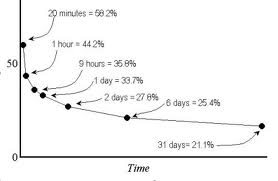
Picture 1, below, shows the way us humans ‘forget’ the information we have been initially exposed to. As many studies have clearly proven, after only two days 70% of what we have been taught/processes on day 1, is lost. After seven days without any memory rehearsal, about 80 % of it is forgotten. Unless, through constant recycling, the modelling of effective revision strategies and continuous formative and summative mini-assessments teachers keep the memory traces alive, the human rate of forgetting is such that even the best grammar lesson will be forgotten.

Picture 1- Rate of human forgetting
download

Unfortunately, in my career I have rarely seen grammatical structures (or even vocabulary) being recycled constantly and in a principled way – fear of interference being often the obstacle, e.g. : if I revise the present tense now that I have just introduced the Perfect Tense, my students will be confused. Constant recycling, however, is absolutely imperative.

Poor recycling often also explains the inefficacy of a specific type of grammar instruction, correction, and why spending hours recording formative feedback on an App like Explaining everything may simply not impact learners much. The intellectual knowledge – which may not become procedural for the reason mentioned above – produced by these means will be mostly lost unless teachers provide constant recycling of that feedback over the five six weeks following the provision of that feedback (honestly: how many teachers actually do that?).

Pitfall 4: Low cognitive empathy

Cognitive empathy is a term I coined a couple of days ago during a discussion with a colleague. My point being that to be an effective teacher you must not simply be emotionally empathetic but also in sync with the learners’ thought processes and general cognitive development. AFL strategies do help a lot in terms of giving us an insight into how well our students our doing in learning what we are teaching them. However, they do not give us sufficient insight into the cognitive barriers to acquiring a specific target grammar structures. For instance, in the planning phase of teaching the Perfect tense in French one should think about all the possible obstacles posed by the following to the students cognitively (not just in terms of intellectual learning, but also in terms of acquisition as defined above):

  • The learners’ grammar background (how well do they master the present tense of AVOIR and ETRE?; do they know how to pronounce ‘e’ with an acute accent?; etc.)
  • The native language (does their native language have an equivalent of this tense? Will it cause interference?)
  • The various steps needed to be able to master the perfect tense (deciding whether it is the correct context for Perfect Tense use, correctly choosing the required form of the correct auxiliary; deciding if the verb is regular or irregular, select the correct regular or irregular form of the past participle; pronouncing it correctly)
  • The time available for it to be learnt DECLARATIVELY;
  • The time available for it to be learnt PROCEDURALLY (i.e. automatized)

Another useful strategy to deploy whilst planning our lessons is to cast our mind back to the days when we learnt the same grammar structures as L2 learners of French: what did we find hard? What strategies did we come up with to facilitate our own learning? How long did it take us to learn that tense? Our (L1 English) students will have more or less the same issues, after all. This should enhance our cognitive empathy.

Finally, there are useful techniques that I have used several times to gain a better insight into our students’ learners cognitive processes. One of them is think-aloud protocols a very powerful (if time consuming process) tool to get into our students’ minds:  students perform a task (e.g. writing an essay) whilst verbalizing every single thought that goes through their heads. Getting them to write an account of a past holiday after a cycle of lessons on the Perfect tense in front of you while thinking aloud will provide you with a clearer understanding of how well they master the Perfect Tense in real operating conditions and of their problems with that tense (http://en.wikipedia.org/wiki/Think_aloud_protocol )

I have observed poor cognitive empathy in many lessons over the years. Students resent it as much as they resent lack of emotional empathy or humour. High levels of cognitive empathy are, in my opinion, the marker of an excellent practitioner.

Pitfall 5: Lack of a common metalanguage

If teacher and students do not share a common metalanguage, grammar instruction is less effective. Several studies have shown that students who do have a solid repertoire of metawords (adjectives, mood, tense, ect.) learn grammar more effectively both in and outside the classroom (independently). They also learn more effectively from corrective feedback. One anecdote I will never forget was when I inherited a class from my former colleague Gill Bruce and since she had taught her students the difference between an adverb and an adjective, I could –for the first time ever – very quickly get my students to understand the difference between ‘mal’ et ‘mauvais’ in French by simply saying: one is an adverb and the other one is an adjective.

The implications for teachers is that we need to use metalanguage from the very start and make constant reference to it (in our marking, too).

In conclusion, in planning and delivering our grammar lessons one has to be very mindful of all of the above factors. We are often reminded by scholars and educators of the importance to empathize with our students emotionally since, as my colleague Dr Michael Browning rightly said to me once: “if they like you a lot they will learn better anyway, regardless of which technique or technology you use”. However, empathizing cognitively in terms of truly attempting to (a) sync our teaching to their specific individual linguistic needs and (b) to the way their brain works when acquiring a foreign language (as posited by neuroscience) is imperative in order for us to pace our teaching effectively and to intervene effectively through adequate remedial instruction.