by Gianfranco Conti, PhD. Co-author of 'The Language Teacher toolkit', 'Breaking the sound barrier: teaching learners how to listen', 'Memory: what every teacher should know' and of the 'Sentence Builders' book series. Winner of the 2015 TES best resource contributor award, founder and CEO of www.language-gym.com, co-founder of www.sentencebuilders.com and creator of the E.P.I. approach.
Extensive Processing Instruction (EPI) is strongly aligned with Rosenshine’s Principles of Instruction, although EPI goes considerably further by providing a language-specific, psycholinguistically informed instructional sequence which operationalises many of those principles through the MARS EARS framework.
The important distinction is that, whereas Rosenshine identifies broad principles of effective instruction, EPI translates many of them into a coherent progression from modelling and input processing to structured production, automatisation and spontaneous communication.
How EPI aligns with Rosenshine’s 10 Principles of Instruction
Rosenshine’s principle
How EPI operationalises it through MARS EARS
1. Begin a lesson with a short review
Systematic retrieval of previously taught chunks, vocabulary and structures through starters, cumulative listening and reading texts, recycled sentence builders and interleaving. Retrieval is distributed throughout the lesson, not confined to its beginning.
2. Present new material in small steps
New language is introduced through carefully selected high-frequency chunks and sentence patterns. Cognitive load is managed by controlling novelty and gradually increasing processing demands, moving from supported recognition to independent production.
3. Ask many questions and check all responses
Frequent comprehension checks, meaning-focused questioning, aural discrimination, mini-whiteboards, true/false tasks and error detection ensure active participation and provide evidence of learning across the class.
4. Provide models
Sentence builders, teacher modelling, aural input, worked examples and repeated encounters with target patterns establish accurate phonological, lexical and syntactic representations before independent production.
5. Guide student practice
Structured Production progresses through paired chunking and reading aloud activities, vocabulary building and micro-writing, paired oral retrieval, mini-roleplays, automaticity activities and communicative tasks. Scaffolding is progressively withdrawn.
6. Check for student understanding
Diagnostic checks during Awareness-raising and Receptive Processing, alongside Autonomy checkpoints, establish whether learners can recognise, understand, manipulate and independently retrieve the target language. Frequent use of mini whiteboards in both the receptive and productive activities occurs throughout the MARSEARS sequence providing tons of formative data.
7. Obtain a high success rate
Comprehensible input, carefully controlled task demands, extensive scaffolding and gradual increases in difficulty maximise successful processing and retrieval without eliminating appropriate challenge.
8. Provide scaffolds for difficult tasks
Sentence builders, narrow input, partially completed texts, visual support, substitution tables and guided production reduce unnecessary cognitive demands. Scaffolds are systematically faded as competence increases.
9. Require and monitor independent practice
Autonomy, Routinization and Spontaneity progressively require learners to retrieve, assemble and use language without sentence builders. Teachers monitor accuracy, fluency, retrieval speed and independent communicative performance.
10. Engage students in weekly and monthly review
Spaced retrieval, cumulative recycling, interleaving and recurring high-frequency constructions ensure previously taught language is revisited across lessons, units and terms in varied communicative contexts.
Where EPI goes beyond Rosenshine
Although the correspondence is substantial, EPI should not be presented merely as Rosenshine applied to languages. It offers several additional dimensions which Rosenshine’s principles do not explicitly specify.
Additional dimension
What EPI contributes
Psycholinguistic sequencing
A principled progression from phonological and meaning-focused processing to syntactic encoding, retrieval, automatisation and spontaneous production.
Listening-first instruction
Systematic development of phonological representations, speech segmentation and aural processing before learners are expected to produce unfamiliar language independently.
Input processing before output
Extensive sentence-level and connected-text receptive work designed to strengthen form–meaning mappings before learners undertake increasingly demanding production.
Lexicogrammatical instruction
Vocabulary and grammar are taught together through high-frequency constructions and chunks, with explicit grammatical awareness developed in context.
Automaticity and fluency
Dedicated Routinization activities aim to increase retrieval speed, processing efficiency and the automatic deployment of familiar language.
Spontaneous communication
The instructional sequence culminates in less predictable communicative performance, requiring learners to retrieve, assemble and adapt language with decreasing external support.
Diagnostic autonomy checkpoints
Low-stakes assessments at the end of MARSEA sub-units check independent listening, reading, writing and speaking performance, generating evidence for responsive teaching.
An important qualification
The alignment is both conceptual and pedagogical, but, of course, not evidence that Rosenshine experimentally validated EPI. Whilst Rosenshine’s principles synthesise broad findings about effective instruction, EPI goes much further by integrating those principles with solid theories and evidence concerning second-language acquisition, cognitive processing, skill acquisition and memory.
In other words Rosenshine tells teachers what effective instruction should generally involve; EPI provides language teachers with a more specific account of how to sequence instruction so that learners move from understanding language to retrieving, assembling and using it fluently and spontaneously.
In that sense, Rosenshine provides many of the instructional principles, while MARS EARS provides a language-specific instructional architecture through which those principles can be enacted.
Engagement, attention, motivation and the challenges of teaching languages in the age of AI
Introduction
A few months ago, I delivered a keynote in Sydney entitledLanguage Teaching at a Crossroads: Engagement, Evidence, and the AI Disruption. In that talk, I explored some of the challenges confronting language education today, from declining uptake and growing disengagement to the impact of digital technology, fragmented attention and artificial intelligence on how young people learn. This article revisits the keynote’s central arguments, focusing particularly on something that I believe deserves much more attention:the growing mismatch between the cognitive and affective environment in which today’s students are growing up and the conditions required for successful language acquisition.
My central contention is that, while the fundamental mechanisms underpinning human learning have not changed, the habits, expectations and experiences that students bring into our classrooms may be changing in ways that make language learning increasingly challenging. We are dealing with learners who have grown up in an environment characterised by instant access to information, rapid stimulation, increasingly sophisticated digital assistance and opportunities for immediate gratification, yet we are asking them to engage in a learning process that demands sustained concentration, extensive repetition, tolerance of ambiguity, delayed rewards and a willingness to make mistakes… often publicly!
This is what I call the Great Mismatch.
Before proceeding, however, an important qualification is necessary. I am not suggesting that an entire generation has somehow become cognitively inferior, that all young people are less resilient than their predecessors or that digital technology is inherently detrimental to learning. Such claims would be both simplistic and difficult to substantiate.
Rather, my argument is that some of the environments in which today’s adolescents spend much of their time may be fostering habits and expectations that sit increasingly uncomfortably alongside the demands of learning a foreign language. The distinction matters, because what concerns me is not necessarily a change in students’ underlying cognitive capabilities, but a change in how those capabilities are habitually exercised, supported and challenged.
1. The Great Mismatch: when the demands of language learning clash with current teens’ expectations
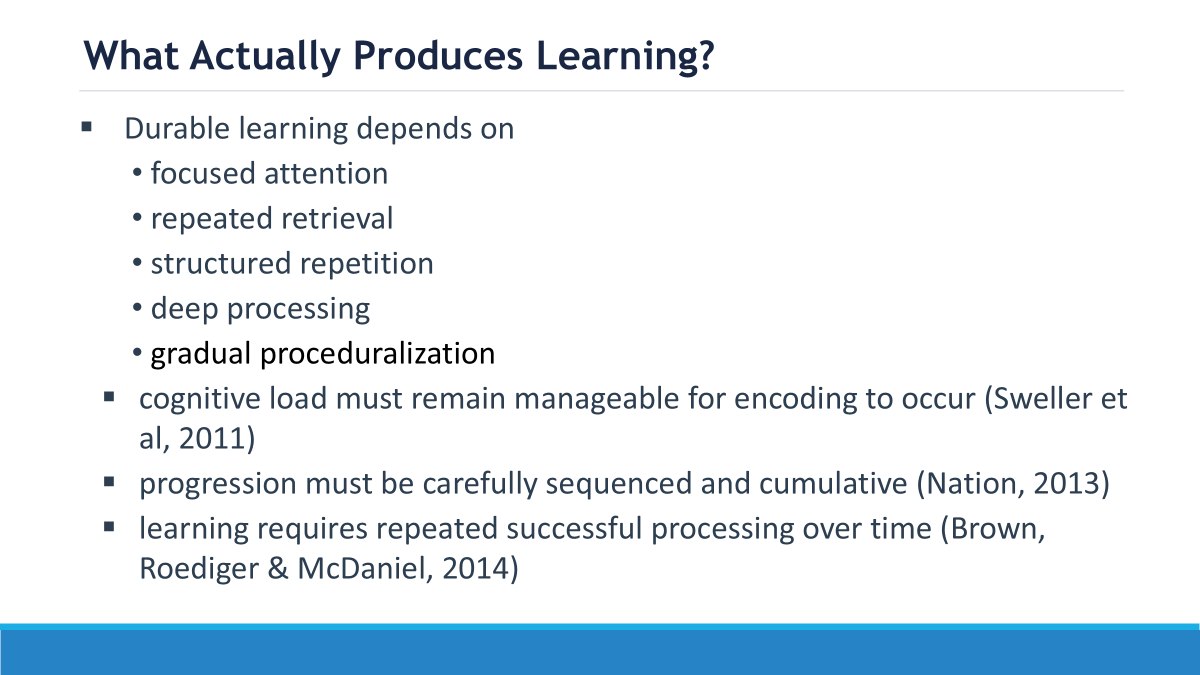
Second-language acquisition is, by its very nature, a gradual and cumulative process. Learners need repeated encounters with language, opportunities to process it meaningfully, retrieval practice and extensive rehearsal before knowledge becomes sufficiently accessible for fluent, spontaneous communication. There are no shortcuts to automaticity. Knowing a word or grammatical structure is not the same as being able to retrieve and use it accurately, rapidly and effortlessly under communicative pressure, since the latter requires time, repeated successful processing and the gradual strengthening of the connections that support retrieval.
However, several characteristics of contemporary digital life may make these demands harder for some learners to accommodate. The constant availability of immediate answers, short-form content, rapid changes of focus and instant feedback can encourage expectations of quick results and continuous stimulation, whereas language learning frequently involves delayed rewards, slow progress, uncertainty and effort whose benefits are not immediately visible.
As we observe in our lessons day in, day out, learners may understand something today and struggle to retrieve it tomorrow; they may recognise a structure in a reading text but be unable to produce it spontaneously; they may perform successfully during a lesson only to discover a week later that much of what they appeared to know has faded. And these experiences are perfectly normal! They are part of learning. Yet students often interpret them as evidence of inability rather than as a sign that more processing and practice are needed.
One of the less obvious consequences of growing up in an environment of instant information is that students may have fewer opportunities, or feel less inclined, to tolerate not knowing. When virtually any question can be answered in seconds, unfamiliar words translated instantly and complex tasks completed with the assistance of AI, uncertainty becomes something that can often be eliminated almost immediately. Yet language learning is fundamentally an exercise in managing uncertainty! Learners must become comfortable with understanding only part of what they hear, inferring meanings from incomplete information, communicating with an imperfect linguistic repertoire and accepting that mastery will remain elusive for some considerable time. In other words: ambiguity tolerance.
Indeed, one of the hallmarks of a developing language learner is the ability to continue processing language despite not understanding everything. This creates a particularly interesting paradox: we may be teaching one of the most ambiguity-heavy subjects in the curriculum to a generation increasingly accustomed to having ambiguity resolved for them. A student who can instantly translate an unfamiliar French sentence may become less willing to persevere with interpreting it independently, while one who expects immediate clarity may find the normal experience of partial comprehension disproportionately frustrating.
The educational challenge, therefore, is not simply to make input more comprehensible, although this remains essential, but to develop learners’ capacity to operate confidently within gradually increasing levels of uncertainty. We need to scaffold ambiguity, not eliminate it, because the ability to tolerate partial understanding is itself an important component of communicative competence.
Another tension concerns the relationship between effort and reward. Much of contemporary digital life operates through exceptionally short feedback loops: an action produces an almost immediate response, a new stimulus is always available and an unrewarding experience can be abandoned with a swipe. Language acquisition, by contrast, operates according to a very different timetable. Students may spend weeks rehearsing a relatively small repertoire of structures before they can retrieve them reliably, months consolidating grammatical patterns before they can manipulate them with reasonable automaticity, and years developing the fluency required for genuinely spontaneous communication.
What concerns me is not simply that some students may be becoming less patient, but that the perceived relationship between effort and reward may be changing. When learners are accustomed to obtaining results with minimal delay, repeated practice without an immediately visible payoff can appear pointless, while the temporary deterioration in performance that sometimes accompanies more demanding retrieval may be interpreted as evidence that learning is not taking place.
This has profound implications for how we structure progression. We need to create more frequent opportunities for learners to recognise genuine improvement without sacrificing the extended practice on which durable learning depends. In other words, we must shorten the feedback loop without pretending that the learning process itself can be shortened to the same extent.
2. The illusion of engagement: are we entertaining students at the expense of learning?
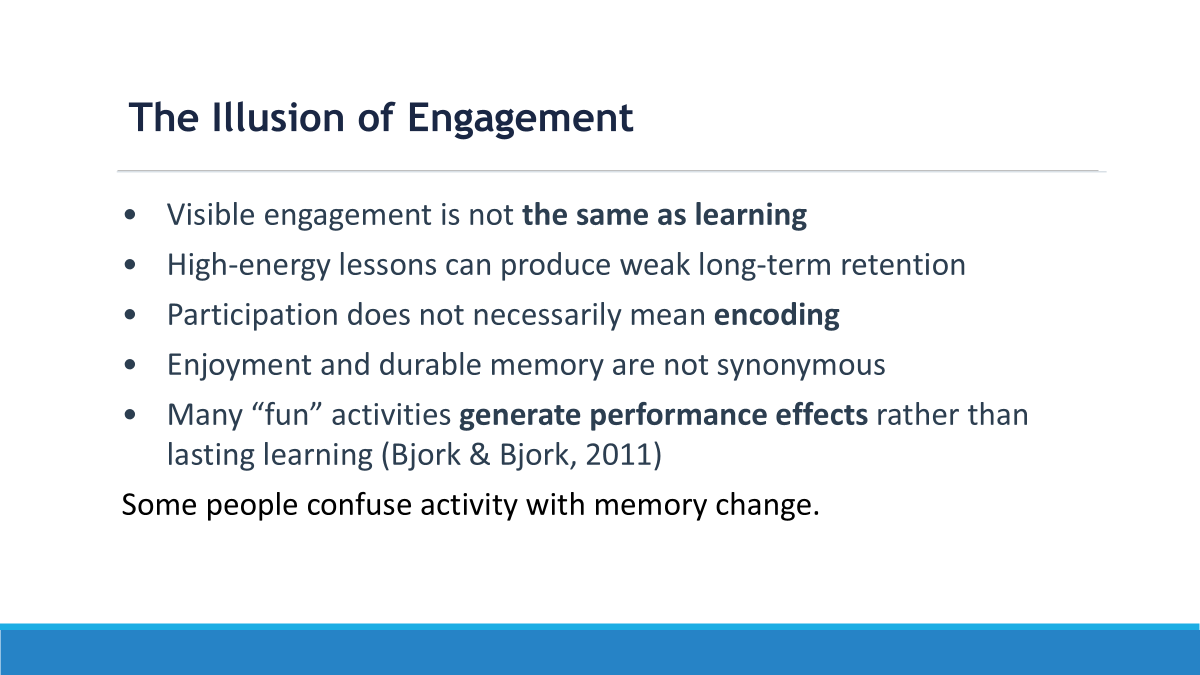
One of the developments that concerns me most is the increasing pressure on teachers to make lessons constantly entertaining. Of course, enjoyment matters, and students who find lessons interesting and rewarding are generally more likely to participate and persist. However, we need to distinguish between engagement with an activity and engagement in the cognitive processes that produce learning.
A classroom can be noisy, energetic and apparently enthusiastic without much durable learning taking place! Students may enjoy a game, participate enthusiastically in a competition or complete an entertaining digital activity while engaging only superficially with the language itself. I have seen this in many lessons I have observed over the years. Conversely, a quieter activity involving careful listening, repeated reading, sentence reconstruction or retrieval practice may look less exciting to an observer while producing much more substantial learning.
The distinction between immediate performance and long-term learning, discussed by Bjork and Bjork (2011), is particularly relevant here, since what students can do successfully during an activity does not necessarily tell us what they will remember or be able to retrieve independently days or weeks later. Hence, the question we should be asking is not simply whether students enjoyed the lesson or appeared engaged, but what cognitive processing the activities required and whether that processing is likely to result in durable learning.
There is, however, another dimension to this problem. If students increasingly spend their leisure time in environments designed to maximise novelty, stimulation and immediate reward, schools may find themselves under growing pressure to compete for their attention on similar terms. Lessons are expected to be faster, more varied, more interactive and more entertaining, with the implicit assumption that any reduction in visible enthusiasm indicates a failure of teaching. Yet I wonder whether, by continually adapting instruction to students’ appetite for stimulation, we risk reinforcing the very attentional habits that make sustained learning more difficult.
After all, if every activity must provide immediate excitement, when do students learn to derive satisfaction from sustained effort, gradual improvement and eventual mastery? If we constantly change tasks to prevent boredom, when do learners develop the patience required to process the same linguistic patterns repeatedly until they become automatic? And if enjoyment becomes our principal measure of instructional quality, are we not in danger of confusing the experience of learning with the experience of being entertained?
Mind you, I am not arguing against fun. I am arguing against confusing fun with effectiveness! Nor am I suggesting that repetitive or cognitively demanding activities must necessarily be dull. On the contrary, carefully designed practice can be highly engaging, particularly when students experience growing competence and recognise that something they previously found difficult has become easier.
The point is that enjoyment should increasingly emerge from the experience of successful learning, rather than learning being subordinated to the pursuit of immediate enjoyment.
3. When failure breeds disengagement: the changing emotional landscape
We frequently talk about a crisis of motivation in language learning, particularly when discussing declining uptake at GCSE and equivalent qualifications. Yet I believe we sometimes reverse the direction of causality. We assume that students fail because they are disengaged, when in many cases they may become disengaged because they repeatedly experience failure.
Consider, for instance, the student in your class who cannot understand spoken French, struggles to remember vocabulary, finds grammatical explanations confusing and freezes when asked to speak. After enough unsuccessful experiences, that student may stop interpreting these difficulties as temporary obstacles and begin seeing them as evidence of a more permanent inability. Their internal narrative becomes not “I need more practice” but the much more tragic “I am rubbish at languages”.
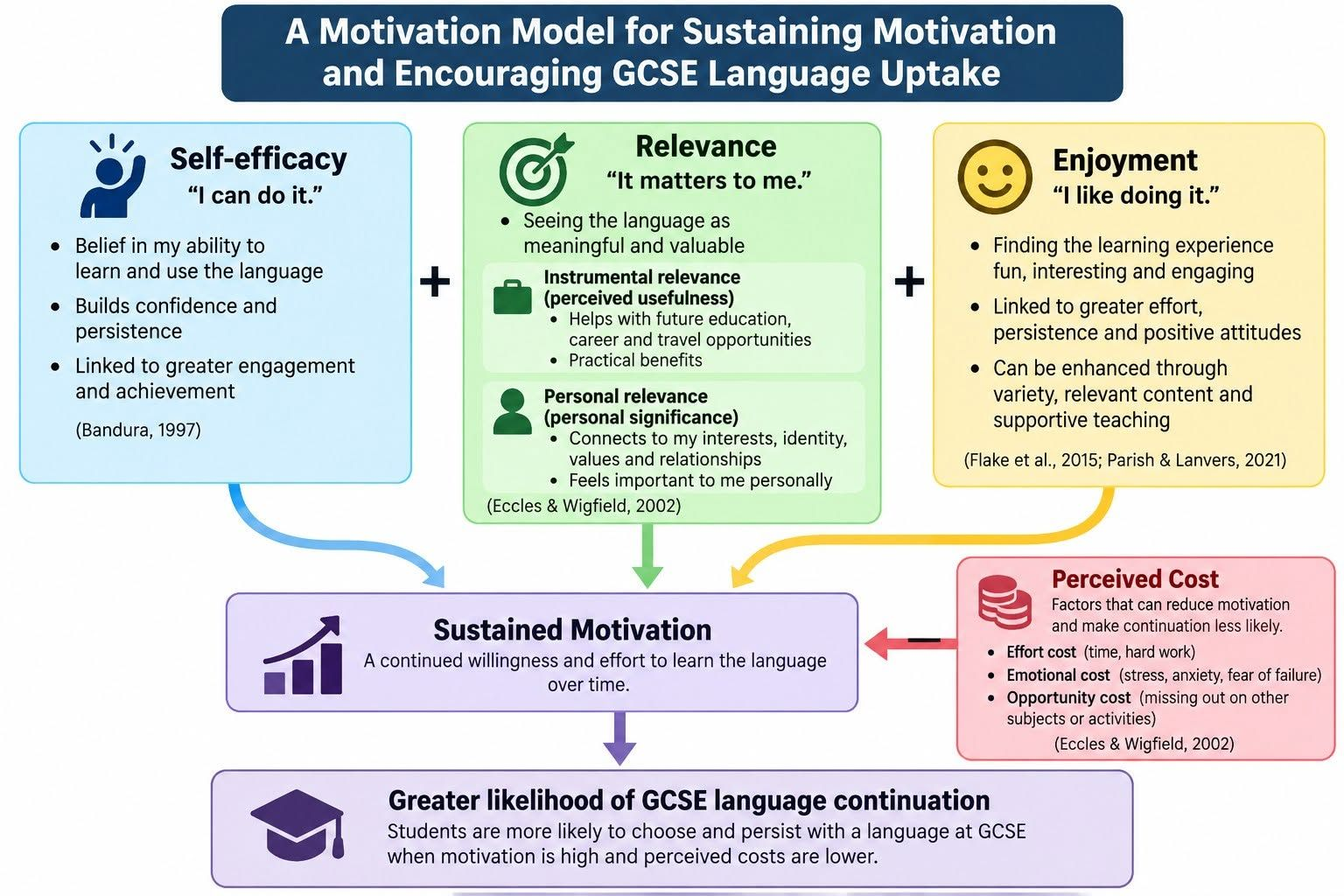
This is where self-efficacy, in Bandura’s (1997) sense, becomes crucial, since learners’ beliefs about their ability to succeed influence the effort they invest, their willingness to persevere and their responses to setbacks. In the keynote, I proposed a model of sustained motivation built around three positive drivers: self-efficacy, relevance and enjoyment, with perceived cost acting as a potential counterweight. Students need to believe that they can succeed, see value in what they are learning and experience sufficient enjoyment to want to continue, while the perceived costs of learning — excessive effort, anxiety, embarrassment or repeated failure — must not become overwhelming.
The changing emotional environment in which adolescents are growing up introduces another challenge that deserves considerably more attention in discussions of language teaching. Research and educational commentary have highlighted concerns about adolescent anxiety, social comparison, perfectionism and sensitivity to failure, although the extent and causes of these developments remain contested. For language teachers, these concerns are particularly relevant because learning to communicate in another language involves a degree of vulnerability that many other school subjects do not expose quite so publicly.
Students must pronounce unfamiliar sounds, attempt sentences they cannot yet formulate fluently, risk making grammatical errors in front of their peers and sometimes communicate ideas in ways that make them sound considerably less articulate than they are in their first language. In an environment where social comparison is increasingly pervasive and public mistakes can carry considerable emotional significance, the perceived cost of participating may become disproportionately high.
A student who is perfectly capable of producing a simple French sentence in a paired activity may nevertheless refuse to do so in front of the class, not because the language is beyond their competence, but because the possibility of embarrassment outweighs the anticipated benefit of participation. This is where risk aversion becomes a pedagogical issue rather than merely a personality characteristic. If students increasingly associate mistakes with threats to their self-image, they may withdraw from precisely those activities through which communicative confidence and automaticity are developed.
The answer, however, cannot be to remove every possibility of failure or avoid challenging students to speak spontaneously, since doing so would merely reinforce the idea that uncertainty and imperfect performance are experiences to be avoided. Instead, we need to design a progression in which linguistic and emotional demands increase together, beginning with highly supported rehearsal, moving through paired retrieval and controlled interaction, and gradually introducing less predictable communicative tasks.
The aim is not to protect students indefinitely from the discomfort of speaking imperfectly, but to give them enough successful experiences to make that discomfort manageable. Psychological safety should be the starting point for developing communicative courage, not a reason for avoiding communicative risk!
Perhaps the most challenging implication of this changing affective environment concerns students’ relationship with cognitive and emotional discomfort. Learning a language necessarily involves experiences that are not immediately pleasurable: struggling to retrieve a word, listening to a passage that cannot yet be fully understood, repeating a structure that has not become automatic or discovering that yesterday’s apparent mastery has faded. These experiences are not necessarily indicators of poor teaching. Within appropriate limits, they are normal features of acquiring complex knowledge and skills.
Yet if learners increasingly interpret frustration, uncertainty or temporary failure as reasons to disengage, the very experiences that should lead to further practice may instead trigger avoidance. We therefore need to distinguish carefully between unproductive struggle, which overwhelms learners and undermines confidence, and productive struggle, which remains within their capabilities and contributes to learning.
Our responsibility is not to make language learning effortless, but to ensure that effort is sufficiently structured, purposeful and successful for students to recognise its value. As I have said many times before in my workshops and blog posts, success is not merely the consequence of motivation. It can also be one of its most powerful sources!
4. Fragmented attention, fragmented learning
Another major concern I explored in the keynote was the impact of increasingly fragmented attention, particularly in light of research on media multitasking, smartphone interruptions and attentional switching, which suggests that frequent distractions can interfere with sustained cognitive processing. Repeatedly switching between tasks incurs cognitive costs, especially when learners are processing unfamiliar information and must devote considerable mental resources to understanding, interpreting and retaining it.
There is, however, an important distinction between distraction and attentional fragmentation that is often overlooked. Traditional distraction involves attention being diverted from a task by an external stimulus, whereas fragmentation describes a more pervasive pattern in which attention is repeatedly redirected between competing stimuli, activities and sources of information. The concern is not simply that students occasionally stop paying attention, but that environments characterised by rapid switching and constant novelty may encourage habits of engagement that are poorly suited to sustained cognitive processing.
This distinction matters enormously in language acquisition because processing language requires continuity of attention. When listening to connected speech, learners must identify sounds, segment the speech stream, recognise words, access their meanings, process grammatical relationships and construct a coherent interpretation, often under considerable time pressure. Crucially, they must also retain earlier information while interpreting what follows, establishing relationships between successive pieces of language and integrating them into a meaningful representation.
If attention is repeatedly interrupted, the problem is not merely that some information is missed; the learner may also lose the contextual and linguistic information needed to interpret subsequent input. Something similar occurs during reading, where constructing meaning across sentences depends on maintaining and updating a mental representation of the text. Speaking and writing place similarly substantial demands on working memory, particularly during the early stages of acquisition, when many of the component processes have yet to become automatic.
Consequently, attentional fragmentation may interfere not only with the amount of language processed, but also with the depth, continuity and coherence of that processing. Students may encounter more information, complete more activities and appear continuously occupied while processing relatively little of that information deeply enough for durable learning to occur. This is one of the paradoxes of our information-rich age… more exposure does not necessarily mean more learning!
We should be careful, however, not to suggest that an entire generation has permanently lost the capacity to concentrate, since the evidence is considerably more nuanced. What research on attentional switching and interruption does establish is that environments characterised by frequent distractions can undermine the conditions required for sustained cognitive processing. Modern adolescents may not be inherently less capable of attention, but many are growing up in environments that repeatedly encourage attention to shift towards novelty and competing stimuli. This is something which is very close to home, having battled with severe ADHD throughout my life and ADHD being characterised by an extreme form of fragmented attention.
A particularly worrying possibility is that schools may inadvertently reinforce the very attentional habits they should be helping students overcome. If we respond to declining concentration by continually shortening activities, accelerating transitions, introducing more novelty and replacing sustained engagement with a succession of entertaining micro-tasks, we may make lessons more immediately palatable while providing fewer opportunities for students to practise concentrating for extended periods.
This does not mean that short activities are inherently ineffective. Carefully sequenced processing cycles, particularly with beginners, can be highly beneficial because they manage cognitive load and allow students to concentrate on specific learning demands. The problem arises when brevity and novelty become ends in themselves rather than serving a clear instructional purpose.
Our pedagogical response should therefore be to protect attention while gradually developing attentional stamina, reducing unnecessary distractions, avoiding excessive multitasking, controlling cognitive load and designing activities that require sustained but manageable engagement with language. In other words, we should adapt instruction to learners’ current attentional needs without allowing those needs to become the permanent ceiling of our pedagogical expectations.
5. Cognitive overload is often mistaken for lack of effort
One of the most important implications of cognitive science for language teaching is that behaviours we commonly interpret as disengagement, inattention or lack of effort may sometimes be the consequence of excessive cognitive demands rather than insufficient motivation.
Consider, for instance, a beginner who is expected to learn unfamiliar vocabulary, manipulate a new grammatical structure, remember word order, monitor agreement and produce a complete sentence simultaneously. Although each of these operations may be manageable in isolation, their combined demands can exceed the learner’s available working-memory resources, resulting in hesitation, avoidance, errors or apparent inattention. In such circumstances, the underlying problem may lie less with the student’s willingness to engage than with the way the learning has been structured.
This becomes particularly significant when we consider the interaction between cognitive overload and the changing emotional environment described earlier. A learner who repeatedly experiences tasks as overwhelming may not merely perform poorly; they may begin to anticipate failure, experience anxiety before attempting similar tasks and eventually avoid participation altogether. What initially presents as a cognitive problem can therefore develop into an affective one, creating a cycle in which excessive task demands undermine performance, unsuccessful performance weakens self-efficacy, and diminished self-efficacy reduces willingness to engage.
This is precisely why instructional sequencing matters so much, and why we need to distinguish between productive difficulty, which encourages meaningful cognitive processing, and unnecessary difficultyarising from poorly structured tasks, insufficient modelling or premature demands for independent production — one of the most common causes of student failure in secondary school settings, in my opinion.
The solution, however, is not to avoid teaching vocabulary and grammar together. On the contrary, presenting grammatical structures through meaningful, carefully selected lexical patterns can support learning by allowing students to process form and meaning in an integrated way. Problems arise when learners are required to handle too many unfamiliar elements simultaneouslywithout sufficient support, particularly when they are expected to produce language independently before the underlying patterns have become sufficiently familiar.
In practical terms, this calls for greater control over the amount of new language introduced, highly comprehensible input, systematic familiarisation with target patterns and extensive receptive processing before learners are expected to produce language independently. Rather than reducing challenge indiscriminately, the objective should be to manage its complexity so that students can devote their limited cognitive resources to the processes most conducive to learning.
Indeed, if there is one thing we should resist, it is the tendency to interpret every instance of hesitation, reluctance or apparent disengagement as evidence that students need more entertainment, more stimulation or greater motivational incentives. Sometimes what they need is simply better instructional design!
6. AI: a shortcut to performance, but not necessarily to learning
Artificial intelligence adds another dimension to this problem, not least because students can now generate sophisticated texts, obtain instant translations, produce apparently fluent answers and complete many language-learning tasks without necessarily engaging in the cognitive processes those tasks were originally designed to elicit.
This creates a potentially serious disconnect between observable performance and underlying competence, whereby the quality of the finished product may tell us remarkably little about what the learner can actually do independently. A student may submit an accurate paragraph in French without having retrieved a single grammatical structure independently, just as another may produce a polished translation without having processed the original text sufficiently to learn from it. Although the resulting work may be impressive, the crucial question is what, if anything, the learner has actually acquired through producing it.
This is very concerning because retrieval, formulation, error detection and repeated language processing are not merely incidental obstacles that stand between students and a successful outcome; they are often integral components of the learning process itself. When AI consistently performs these operations on students’ behalf, it risks depriving them of precisely those opportunities for cognitive engagement through which independent competence develops.
There is also a less obvious affective dimension to this development. When students become accustomed to producing polished work with technological assistance, the gap between what they can achieve with AI and what they can accomplish independently may become increasingly uncomfortable. A learner who can generate an impressive French essay in seconds may find the experience of struggling to formulate a relatively simple paragraph unaided particularly frustrating, especially if they begin to regard the AI-assisted product as the standard against which their own competence should be judged.
In this way, AI may not only reduce opportunities for independent cognitive processing; it may also alter students’ expectations of what successful performance should look like and how much effort achieving it ought to require. The danger is that learners may become increasingly dependent on external assistance precisely because their independently produced language feels inadequate by comparison.
We therefore need to ask whether the widespread availability of AI risks creating a new form of learned dependence, in which students become progressively less willing to tolerate the effort, uncertainty and imperfection associated with genuine skill development. This is not an inevitable outcome, but it is a possibility that educators should take seriously!
None of this means that AI has no legitimate place in language education. Used judiciously, it can generate varied input, create additional retrieval opportunities, support comparison activities and provide material for learners to analyse, critique, correct and improve. Students can evaluate alternative formulations, identify errors, adapt texts for different communicative purposes and use AI-generated language as a springboard for deeper processing.
What matters, therefore, is not simply whether AI is being used, but whether its use supports the cognitive processes underpinning acquisition or substitutes for them. In my view, the guiding principle should be straightforward: AI should enrich the learning process, not remove the thinking that makes learning possible!
7. Designing against the grain: what needs to change?
If the modern cognitive and affective environment increasingly works against some of the conditions required for language acquisition, we need to reconsider how language curricula are designed and delivered. I believe this calls for slimmer, more coherent, more cumulative and more memory-conscious curricula, particularly given the tendency, historically, to prioritise coverage over depth.
Students are frequently exposed to large quantities of vocabulary and numerous grammatical structures without sufficient time being allocated to consolidating them or developing the automaticity required for fluent use, after which we wonder why they struggle to remember what they have been taught or apply it independently.
A more effective approach would begin by prioritising depth over superficial coverage, recognising that a smaller repertoire of high-frequency, useful language which students can retrieve and manipulate confidently is often more valuable than a much larger repertoire that remains fragile and inaccessible.
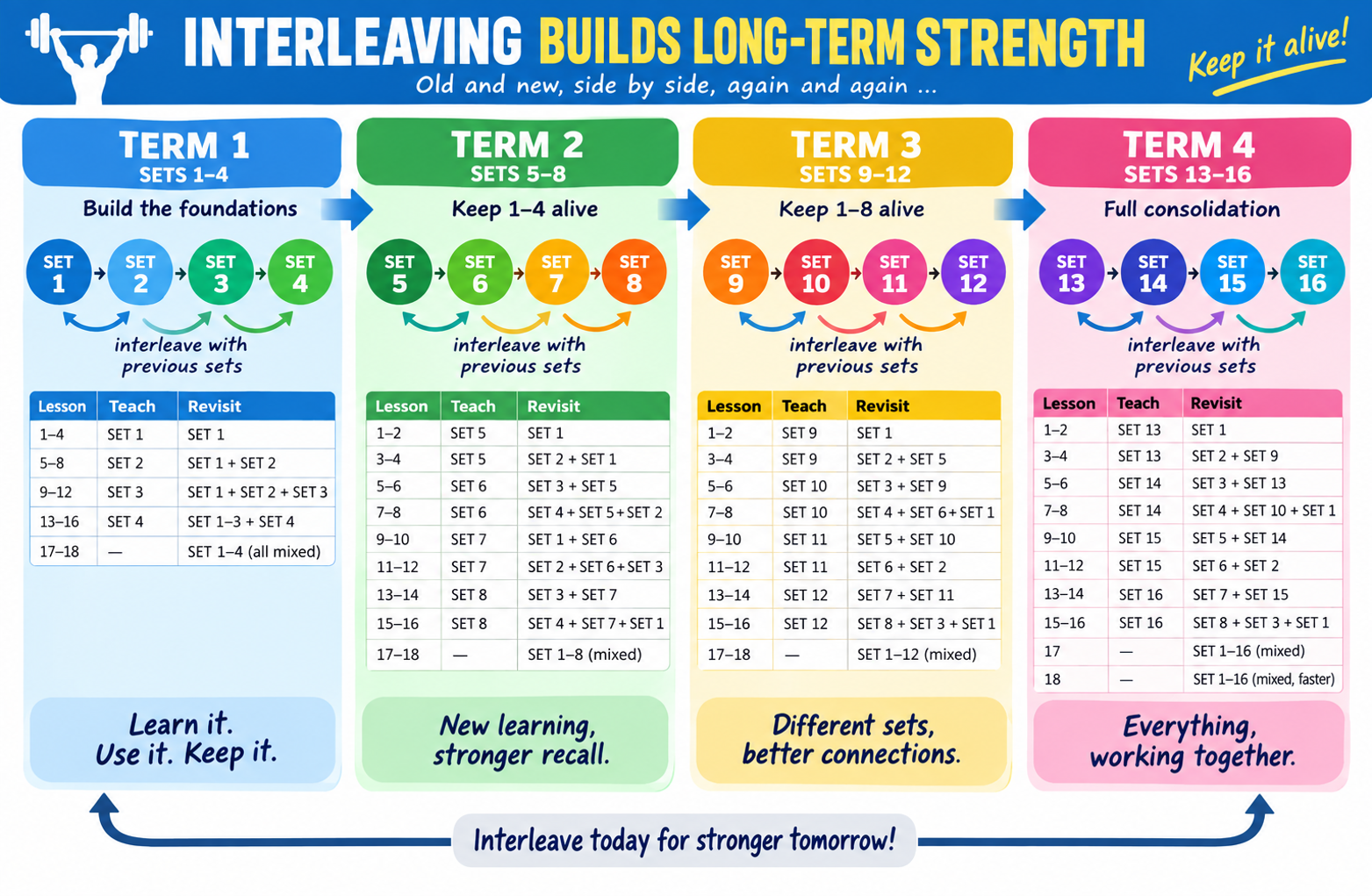
Equally important is the careful sequencing of progression, whereby learners move gradually from highly supported comprehension towards increasingly independent production, with sufficient processing and rehearsal at each stage. Rather than treating recycling as an occasional revision activity, we should make it a central curriculum design principle, ensuring that previously taught language is revisited cumulatively and systematically through spaced retrieval, interleaving and varied contexts (see the retrieval schedule in the image below, for instance)
Another potentially significant consequence of the contemporary appetite for novelty is a reduced tolerance for repetition, particularly when learners perceive repeated activities as evidence that they are not progressing. Yet repetition is not an unfortunate necessity that teachers should disguise or minimise; it is one of the principal mechanisms through which initially effortful linguistic processing becomes increasingly rapid, reliable and automatic.
Students may understand a structure after a few encounters, but understanding is not the same as being able to retrieve it spontaneously under communicative pressure. The transition from recognition to fluent production requires substantially more practice than learners often anticipate, and it is precisely this extended period of consolidation that can appear particularly unrewarding when students expect visible progress at every step.
This creates a pedagogical dilemma. If teachers continually introduce new content to sustain interest, students may experience a satisfying sense of progression while accumulating increasingly fragile knowledge. Conversely, if repetition is insufficiently varied or poorly structured, learners may disengage before the benefits of rehearsal become apparent. The solution lies in distinguishing between repeating the same activity and repeatedly processing the same language.
Through changes in context, modality, retrieval demands and communicative purpose, teachers can provide extensive exposure to a relatively stable repertoire of high-value language without making learning unnecessarily monotonous. In fact, one could argue that the more novelty-driven students’ wider environment becomes, the more deliberately we need to design opportunities for meaningful repetition.
Alongside these priorities, we need to make success more visible so that students regularly experience evidence of their growing competence, rather than simply completing another topic or worksheet. Carefully designed retrieval activities, cumulative assessments and opportunities to compare current performance with earlier attempts can help learners recognise progress that might otherwise remain invisible.
We also need to cultivate students’ tolerance of uncertainty, gradually increasing the unpredictability of tasks as their linguistic competence develops, while ensuring that the demands placed on them remain manageable. Similarly, if students are increasingly reluctant to expose themselves to public error, speaking activities should be sequenced so that confidence develops through repeated successful rehearsal before learners are expected to communicate spontaneously.
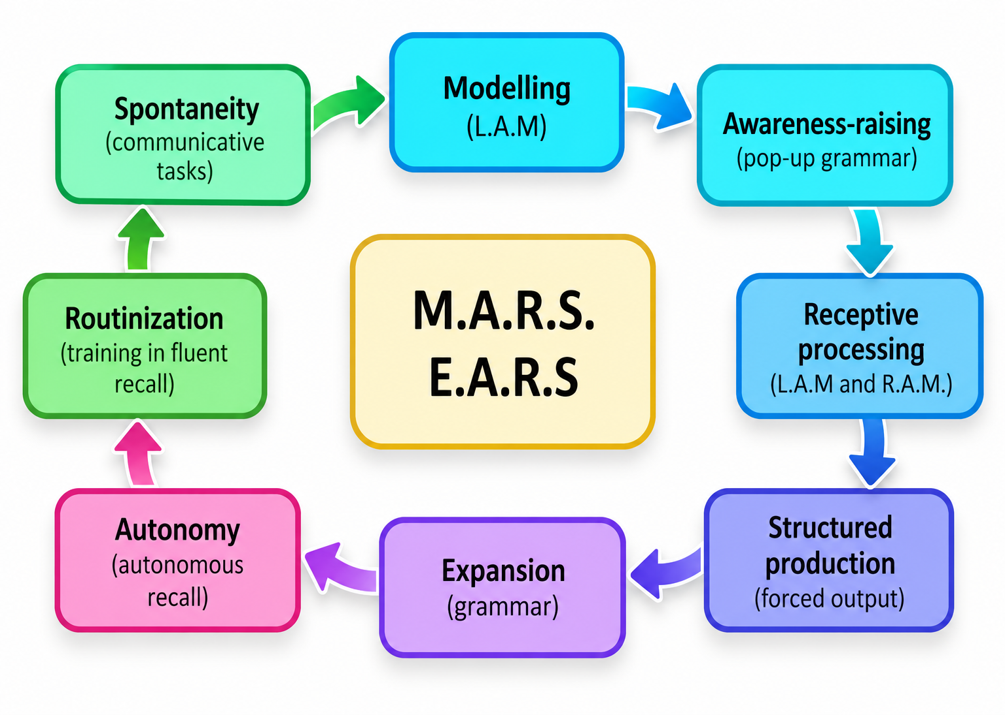
This is where I believe the principles underpinning Extensive Processing Instruction (EPI) become particularly relevant. By systematically moving learners from modelling and awareness-raising through extensive receptive processing, structured production, expansion, autonomy, routinisation and spontaneity, the MARS EARS sequence attempts to reconcile the cognitive demands of acquisition with learners’ need for comprehensibility, confidence and progressive independence.
Its emphasis on repeated processing, carefully scaffolded input-output progression, cumulative recycling and gradual automatisation is not simply a response to the limitations of working memory; it also addresses several of the affective challenges discussed in this article. When students experience early success, develop familiarity with linguistic patterns before being required to manipulate them independently and gradually discover that previously difficult tasks have become manageable, they are more likely to develop the self-efficacy needed to persevere.
However, I would argue that even the best instructional sequence will fall short unless we also pay attention to the habits and expectations that learners bring to the classroom. We need to teach students not only the language itself, but also how to engage productively with the processes through which languages are acquired: how to tolerate partial understanding, how to persist when retrieval is effortful, how to recognise the value of repetition and how to interpret mistakes as information rather than personal failure.
Ultimately, designing against the grain of the modern environment does not mean rejecting technology, abandoning enjoyment or making learning unnecessarily difficult. It means recognising that effective teaching must sometimes counterbalance, rather than merely accommodate, the habits encouraged by students’ wider experiences.
Conclusion: the learner’s environment has changed… but the architecture of learning has not!
We are teaching languages in a world that has changed profoundly, with students whose experiences, expectations and opportunities differ in important ways from those of previous generations. Digital technologies have transformed how information is accessed, how attention is allocated and, increasingly, how tasks are completed, yet the fundamental cognitive mechanisms underpinning human learning have not changed at anything like the same pace.
Attention remains essential, working memory remains limited, repetition and retrieval continue to play a crucial role in acquisition, and fluency still requires extensive practice over time. No technological innovation, however sophisticated, has removed these fundamental requirements.
What makes the present situation particularly challenging is that the cognitive and affective pressures discussed in this article do not operate independently. A learner accustomed to rapid stimulation may find sustained rehearsal increasingly unrewarding; limited rehearsal may then produce fragile knowledge and unsuccessful retrieval; repeated failure may undermine self-efficacy, increase anxiety and encourage further avoidance of challenging tasks. In this way, fragmented attention, impatience with delayed rewards and fear of failure can potentially reinforce one another, creating a cycle in which students become progressively less willing to engage in precisely the kinds of processing that would help them succeed.
Against this backdrop, we should resist the temptation to respond to every emerging challenge by making lessons faster, louder, easier or more entertaining, just as we should avoid romanticising difficulty or assuming that resilience can be developed simply by exposing students to repeated failure.
What is needed instead is instructional design that combines meaningful challenge with appropriate support, protects and gradually strengthens attention, fosters self-efficacy, makes progress as tangible as possible and systematically develops learners’ tolerance of uncertainty, repetition and delayed gratification.
In other words, rather than responding to learners’ potentially decreasing tolerance of cognitive effort by removing that effort from learning, we should seek to make it more manageable, purposeful, successful and rewarding.
Perhaps the future of language teaching depends less on finding ever more entertaining ways of presenting content than on rediscovering how to help students experience the satisfaction of genuinely mastering something difficult. After all, if meaningful engagement is partly sustained by the experience of growing competence, we may need to reconsider whether our increasingly entertainment-oriented approaches to teaching are always serving our students as well as we imagine.
The real challenge is not to redesign language learning around every habit that the modern environment may be fostering in our students, but to design learning experiences that help them develop the habits, confidence and cognitive stamina that successful language acquisition demands.
Because, ultimately, the world may have changed, the learner’s expectations may have changed, and the technology certainly has… but the fundamental architecture of human learning has not!



You must be logged in to post a comment.